

Prone yoga poses are performed while lying face down and include everything from gentle relaxation positions to challenging back-strengthening postures. Whether you are a beginner or an experienced yoga practitioner, these poses can help you develop body awareness, practice controlled spinal movement, and build strength in the muscles along the back of your body.
What Are Prone Yoga Poses?
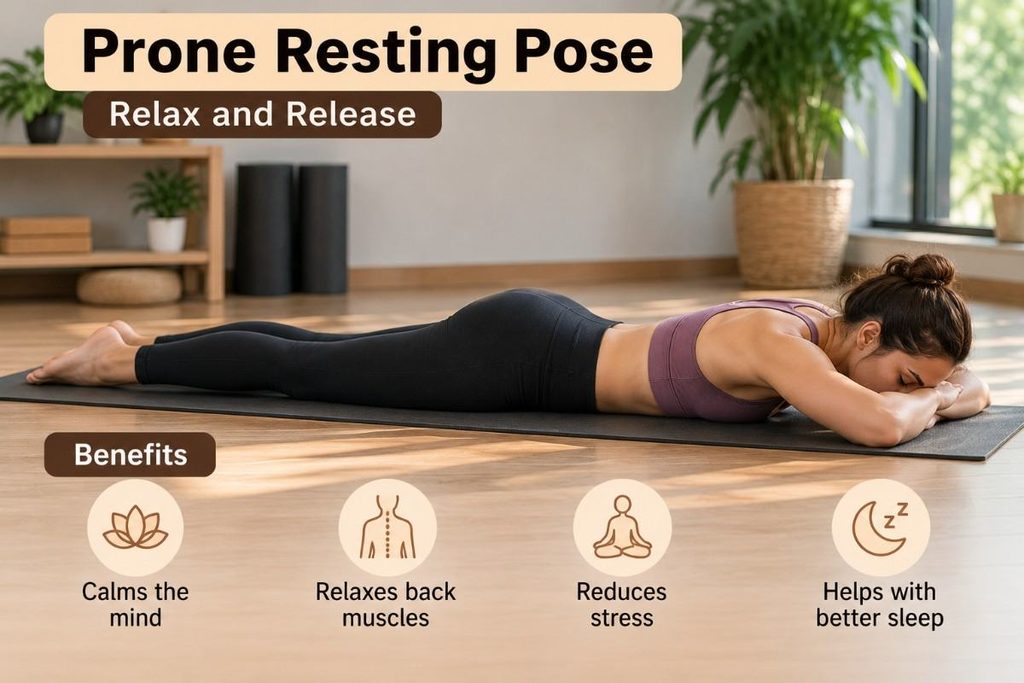
Prone yoga poses are yoga postures performed with the front of your body facing the floor. Depending on the pose, you may rest your forehead on your hands, lift your chest, raise your legs, or extend your arms to challenge your balance, flexibility, and strength.
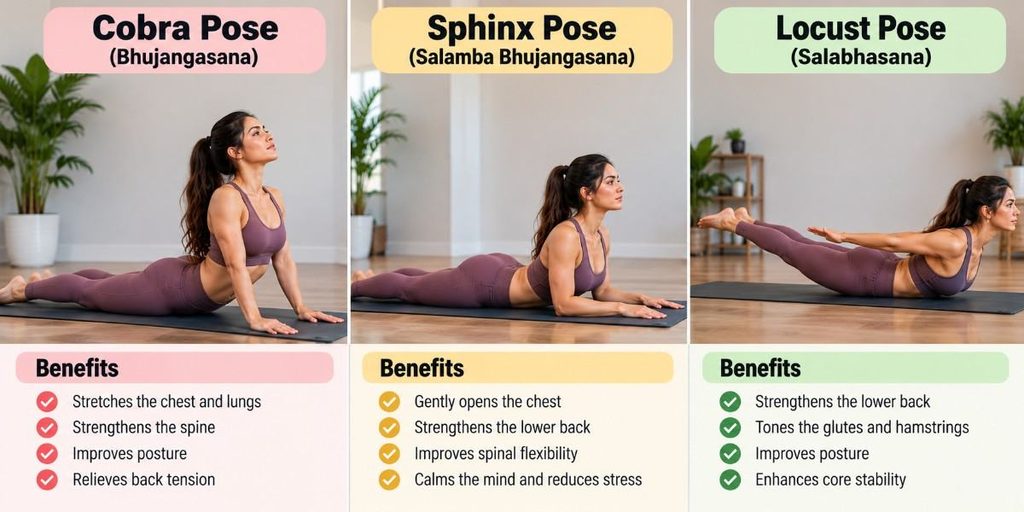
Common examples include Makarasana (Crocodile Pose), Bhujangasana (Cobra Pose), Salabhasana (Locust Pose), and Salamba Bhujangasana (Sphinx Pose). These postures can be adapted to different experience levels by changing the range of motion and amount of effort required.
Why Do Prone Yoga Poses Matter?
Prone yoga poses matter because they offer a variety of ways to practice back-body strengthening, controlled spinal extension, and relaxation. Their effects depend on the specific posture, your technique, and your physical condition.
Potential benefits include:
- Back-body strength: Active poses such as Locust Pose engage the muscles of the back and hips.
- Leg strength: Leg-lifting variations engage the glutes and other muscles that support the hips.
- Flexibility: Gentle backbends can move the spine through extension, while certain positions challenge the front of the body.
- Body awareness: Practicing slowly helps you notice posture, muscle engagement, and breathing.
- Relaxation: Resting positions allow you to pause between more demanding movements.
Not every prone pose is restorative. Some involve substantial muscular effort, so choose a level that suits your ability.
7 Prone Yoga Poses for Beginners and Experienced Practitioners
These seven prone yoga poses range from gentle resting positions to more challenging postures that develop back-body strength and controlled spinal extension.
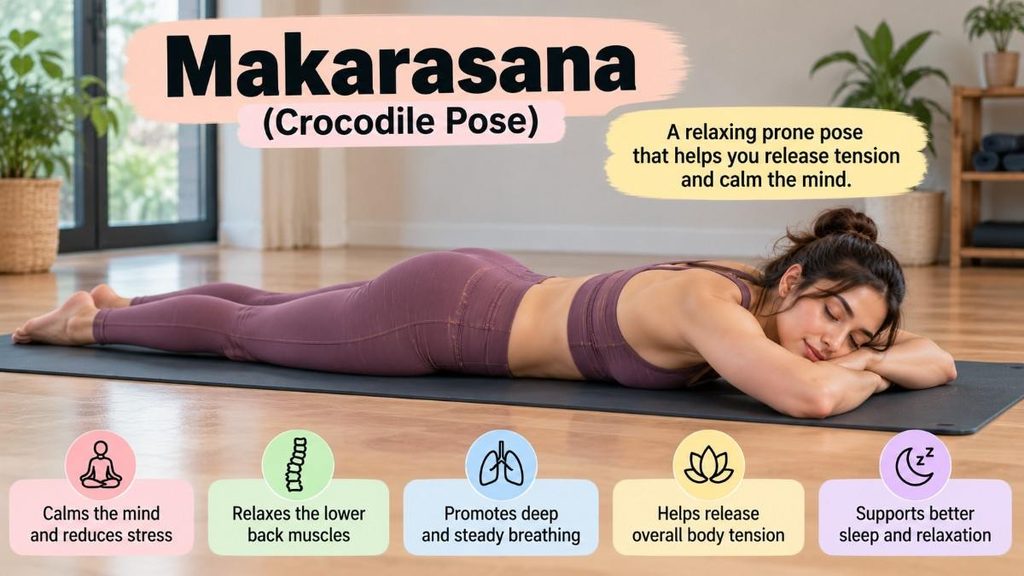
1. Makarasana (Crocodile Pose)
Makarasana is a relaxing prone posture in which you lie face down with your head supported by your hands. It is commonly used as a resting position between more active yoga exercises.
How to do it:
- Lie on your stomach on a comfortable mat.
- Position your legs slightly apart and relax your feet.
- Fold your arms and rest your forehead or head on your hands.
- Relax your shoulders and breathe naturally.
Hold for 1–3 minutes if comfortable.
2. Bhujangasana (Cobra Pose)
Cobra Pose is a gentle-to-moderate backbend that engages the back muscles while opening the front of the torso.
How to do it:
- Lie face down with your legs extended.
- Place your palms near your lower ribs.
- Keep your elbows close to your body.
- Gently lift your chest without forcing the movement.
- Keep your shoulders relaxed and breathe comfortably.
- Lower your chest slowly.
Begin with a low Cobra variation rather than pushing into a deep backbend.
3. Salabhasana (Locust Pose)
Locust Pose is an active prone posture that strengthens the muscles along the back of your body, including the back extensors and glutes.
How to do it:
- Lie face down with your arms alongside your body.
- Keep your legs extended and your neck neutral.
- Engage your core and glutes.
- Lift your chest, legs, or both slightly, according to your ability.
- Hold briefly while breathing normally.
- Lower slowly.
Start with a small lift and avoid forcing your lower back into excessive extension.
4. Salamba Bhujangasana (Sphinx Pose)
Sphinx Pose is a supported back-extension posture that uses the forearms for support. It can be a useful introduction to gentle prone backbends.
How to do it:
- Lie on your stomach.
- Place your elbows beneath or slightly in front of your shoulders.
- Rest your forearms on the mat.
- Gently lift your chest while keeping your pelvis grounded.
- Relax your shoulders and breathe naturally.
Hold for 3–5 comfortable breaths, then lower your chest.
5. Dhanurasana (Bow Pose)
Bow Pose is a more demanding backbend that combines spinal extension with bending at the knees and shoulders.
How to do it:
- Lie face down with your legs extended.
- Bend your knees and bring your heels toward your hips.
- Reach backward to hold your ankles if comfortable.
- Gently lift your chest and thighs.
- Keep your breathing steady without forcing the lift.
- Release your ankles and lower slowly.
Beginners should approach this pose cautiously because it requires greater flexibility and back control.
6. Ardha Shalabhasana (Half Locust Pose)
Half Locust Pose is a single-leg variation of Locust Pose. It lets you practice controlled leg lifting without raising both legs at once.
How to do it:
- Lie face down with your legs extended.
- Keep your pelvis and abdomen supported by the mat.
- Engage your glutes and lift one straight leg a small distance.
- Avoid rotating your hips or arching your back excessively.
- Lower the leg slowly and repeat on the other side.
Start with 5 controlled repetitions per side.
Best Glute Workout for Muscle Growth
7. Viparita Shalabhasana (Superman Variation)
The Superman variation is a prone strengthening exercise in which you lift your arms and legs slightly while keeping your trunk controlled. Names and techniques can vary between yoga and fitness traditions.
How to do it:
- Lie face down with your arms extended forward.
- Keep your neck in a neutral position.
- Gently engage your core and glutes.
- Lift your arms and legs a small distance from the floor.
- Hold briefly without holding your breath.
- Lower slowly and relax.
If lifting both arms and legs feels too difficult, practice lifting only your arms or one leg at a time.
How to Build a Prone Yoga Routine
A beginner-friendly prone yoga routine should combine a resting posture, gentle back extension, and controlled strengthening without causing excessive fatigue.
Try this simple sequence:
| Exercise | Suggested duration |
|---|---|
| Makarasana | 1 minute |
| Sphinx Pose | 3–5 comfortable breaths |
| Low Cobra Pose | 3–5 gentle repetitions |
| Half Locust Pose | 5 repetitions per side |
| Makarasana | 1 minute |
Move slowly between poses and rest whenever necessary. These timings are starting suggestions rather than fixed requirements.
yoga breathing techniques for beginners
Common Mistakes to Avoid
The most common mistakes in prone yoga poses involve forcing a backbend, lifting too high, and losing control of the movement.
- Overarching the lower back: Reduce the height of your chest or leg lift and focus on controlled movement.
- Shrugging the shoulders: Keep your shoulders relaxed and avoid pulling them toward your ears.
- Lifting too high: A smaller, comfortable range can be more appropriate than a deep backbend.
- Holding your breath: Breathe normally throughout each posture.
- Moving too quickly: Enter and leave each pose slowly.
- Ignoring discomfort: Stop if a movement causes sharp pain, tingling, dizziness, or worsening symptoms.
Safety Tips for Prone Yoga Poses
Prone yoga poses are suitable for many healthy adults when performed within a comfortable range, but certain postures may need to be modified or avoided depending on individual circumstances. The U.S. National Center for Complementary and Integrative Health advises people to consider their health conditions and learn yoga from a qualified instructor when appropriate.
Follow these precautions:
- Use a comfortable yoga mat or folded blanket for support.
- Avoid forcing spinal extension or stretching through pain.
- If you are pregnant, ask a qualified healthcare professional about suitable alternatives to lying on your stomach.
- Seek professional guidance if you have a recent injury, a spinal condition, or persistent back pain.
- Stop any pose that causes pain or unusual symptoms.
gentle yoga stretches for flexibility
Conclusion
Prone yoga poses are performed while lying face down and include both relaxing postures and active strengthening movements. Makarasana and Sphinx Pose are accessible starting options for many beginners, while Locust Pose and Bow Pose require greater strength and control.
Start with gentle movements, maintain comfortable breathing, and gradually explore more challenging postures as your technique improves. Choose poses that suit your body rather than forcing a deeper stretch.
FAQs
What are prone yoga poses?
Prone yoga poses are yoga postures performed while lying face down, including Cobra Pose, Locust Pose, Sphinx Pose, and Crocodile Pose.
Which prone yoga pose is best for beginners?
Makarasana and Sphinx Pose are useful starting options for many beginners because they can be practiced with relatively simple positioning and controlled movement.
Do prone yoga poses strengthen the back?
Active prone poses such as Locust Pose and Cobra Pose engage the back muscles. Their training effects depend on the technique, intensity, and consistency of practice.
What is the difference between prone and supine yoga poses?
Prone poses are performed with the front of the body facing the floor, whereas supine poses are performed while lying on the back.
Can I practice prone yoga poses every day?
Gentle prone poses may fit into a daily routine if they remain comfortable. More demanding backbends should be adjusted according to your ability and recovery.
Are prone yoga poses suitable for back pain?
Suitability depends on the cause of the pain and the specific posture. If you have persistent back pain or a diagnosed spinal condition, seek guidance from a qualified healthcare professional before practicing.
Which prone yoga pose helps strengthen the glutes?
Locust Pose and Half Locust Pose engage the gluteal muscles when performed with controlled leg lifting and appropriate alignment.
Do prone yoga poses improve flexibility?
Some prone poses encourage spinal extension and stretch the front of the body. Flexibility improvements depend on regular practice, individual mobility, and comfortable technique.
Sources
- Ministry of Ayush, Government of India. Common Yoga Protocol.
- National Center for Complementary and Integrative Health. Yoga: Effectiveness and Safety.
Disclaimer: This article is for informational and educational purposes only and is not a substitute for personalized medical advice. Consult a qualified healthcare professional before making significant changes to your diet, exercise routine, or supplement use.