

Yin and Yang Yoga combines two complementary approaches to yoga: slow, passive stretching and active, flowing movements. This combination offers a balanced practice that explores flexibility, strength, mobility, and relaxation. Whether you are a beginner or an experienced practitioner, learning both styles can help you create a more varied yoga routine.
What Is Yin and Yang Yoga?
Yin and Yang Yoga is a yoga practice that combines passive, longer-held Yin postures with active Yang movements to balance stillness and physical activity.
Yin Yoga emphasizes relaxation, comfortable stretching, and mindful breathing, whereas Yang Yoga focuses on muscular engagement, movement, and strength.
The two approaches complement each other by introducing different physical and mental experiences within one session.
What Is Yin Yoga?
Yin Yoga is a slow-paced yoga style in which practitioners hold mostly seated, kneeling, or lying positions for extended periods.
Its main characteristics include:
- Holding poses for approximately 2–5 minutes or longer.
- Using yoga blocks, bolsters, and cushions for support.
- Practicing gentle, passive stretching.
- Focusing on comfortable breathing.
- Avoiding unnecessary muscular tension.
What Is Yang Yoga?
Yang Yoga describes more active yoga practices involving muscular engagement, movement, and flowing sequences.
Examples include Vinyasa Yoga, Ashtanga Yoga, and dynamic Hatha Yoga.
Its main characteristics include:
- Active movements and transitions.
- Muscular engagement.
- Standing and balancing postures.
- Coordination between breathing and movement.
- Developing muscular strength and endurance.
Why Does Yin and Yang Yoga Matter?
Yin and Yang Yoga matters because it combines active movement with slower stretching, providing a varied approach to physical activity and relaxation.
Instead of focusing exclusively on flexibility or strength, this practice incorporates different movement styles into one routine.
1. Encourages Flexibility
Yin Yoga incorporates sustained stretching positions that may help improve flexibility and comfortable movement over time.
Yang movements also encourage mobility through repeated, controlled movements.
2. Develops Muscular Strength
Yang Yoga involves active postures that require muscles to support and control the body.
Standing poses, balancing movements, and flowing sequences can challenge muscular strength and endurance.
3. Promotes Relaxation
The slower Yin sequences provide opportunities to focus on breathing, body awareness, and relaxation.
Research suggests that yoga may help support stress management and mental well-being, although evidence specifically examining combined Yin and Yang sessions remains limited. (Source: NCCIH)
4. Improves Body Awareness
Switching between active and passive movements encourages practitioners to pay attention to posture, breathing, balance, and physical comfort.
5. Creates a Varied Yoga Practice
Combining different approaches introduces a wider range of physical challenges than practicing only one style of yoga.
10 Best Yin and Yang Yoga Poses for Beginners
Beginner-friendly Yin and Yang Yoga poses include gentle seated stretches, supported resting positions, standing postures, and active movements.
Here are ten poses to include in your practice.
Yin Yoga Poses
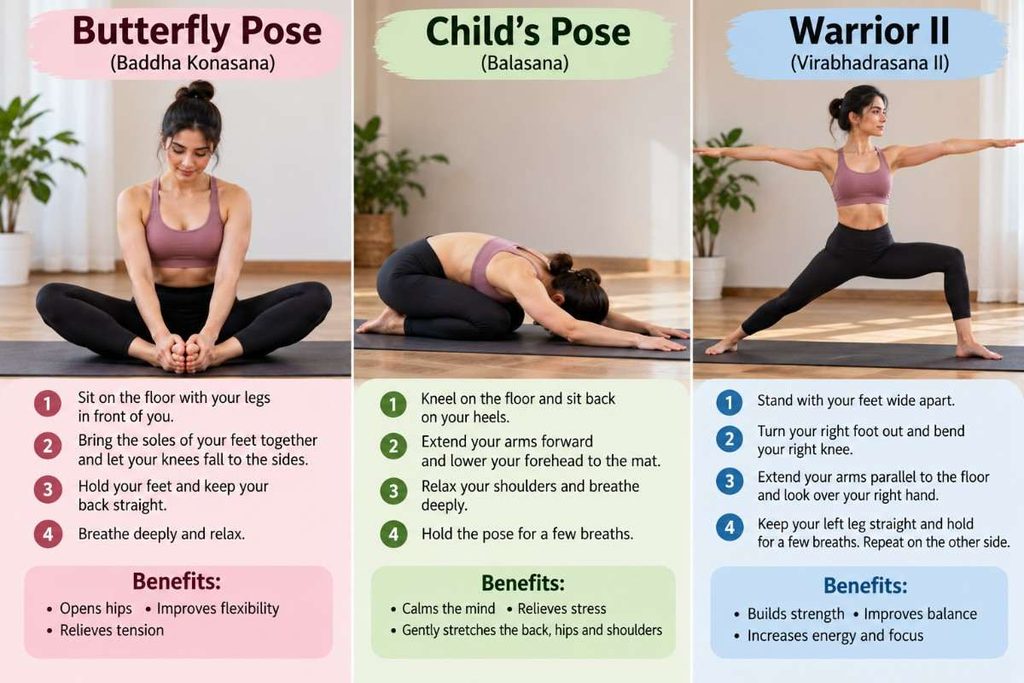
1. Butterfly Pose (Baddha Konasana)
Butterfly Pose is a seated Yin posture that gently stretches the inner thighs and hip area.
How to perform:
- Sit upright on your yoga mat.
- Bring the soles of your feet together.
- Allow your knees to move outward.
- Hold your feet comfortably.
- Gently lean forward if your body allows.
- Remain in the position for 2–3 minutes.
Keep your spine comfortable and avoid pushing your knees toward the floor.
2. Child’s Pose (Balasana)
Child’s Pose is a resting posture that encourages relaxation and gentle stretching.
How to perform:
- Begin on your hands and knees.
- Bring your hips toward your heels.
- Extend your arms forward.
- Lower your forehead toward the mat.
- Relax your shoulders and breathe naturally.
- Hold for 1–3 minutes.
Place a cushion beneath your chest or forehead if you need additional support.
3. Sphinx Pose
Sphinx Pose is a gentle backbend performed while lying on your stomach.
How to perform:
- Lie face down on your yoga mat.
- Position your elbows beneath your shoulders.
- Place your forearms on the floor.
- Gently lift your chest.
- Keep your shoulders relaxed.
- Hold for 1–3 minutes if comfortable.
Avoid forcing your lower back into an uncomfortable arch.
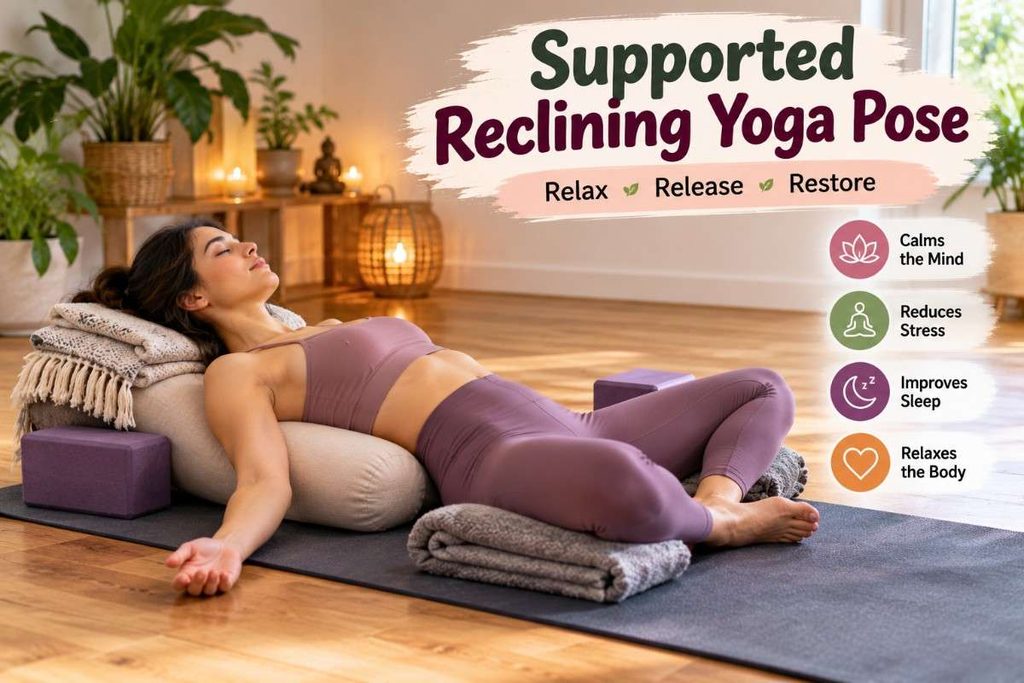
4. Reclining Butterfly Pose
Reclining Butterfly Pose is a relaxed posture performed while lying on your back.
How to perform:
- Lie comfortably on your back.
- Bring the soles of your feet together.
- Allow your knees to fall outward.
- Place cushions beneath your thighs if needed.
- Rest your arms beside your body.
- Remain in the position for 2–5 minutes.
5. Supported Forward Fold
A supported forward fold is a gentle stretching position that can be modified according to your flexibility.
How to perform:
- Sit with your legs extended.
- Place a cushion or bolster over your thighs.
- Slowly lean forward.
- Rest your upper body on the support.
- Relax your neck and shoulders.
- Hold for 1–3 minutes.
gentle yoga stretches for beginners
Yang Yoga Poses
6. Downward-Facing Dog (Adho Mukha Svanasana)
Downward-Facing Dog is an active posture that engages the shoulders, arms, legs, and core.
How to perform:
- Start on your hands and knees.
- Spread your fingers across the mat.
- Lift your hips upward and backward.
- Extend your spine comfortably.
- Keep your knees slightly bent if necessary.
- Hold for 20–30 seconds.
7. Warrior II (Virabhadrasana II)
Warrior II is a standing posture that challenges lower-body strength, balance, and stability.
How to perform:
- Stand with your feet wide apart.
- Turn your front foot outward.
- Bend your front knee comfortably.
- Extend both arms sideways.
- Keep your torso upright.
- Hold for 20–30 seconds.
- Repeat on the opposite side.
8. Chair Pose (Utkatasana)
Chair Pose is an active standing posture that engages the thighs, glutes, and core.
How to perform:
- Stand with your feet hip-width apart.
- Bend your knees.
- Move your hips backward as if sitting on a chair.
- Raise your arms overhead.
- Keep your chest lifted.
- Hold for 15–30 seconds.
9. Tree Pose (Vrksasana)
Tree Pose is a standing balance posture that encourages body awareness and stability.
How to perform:
- Stand upright.
- Shift your weight onto one foot.
- Place the opposite foot against your ankle or inner thigh.
- Bring your hands together in front of your chest.
- Maintain a steady gaze.
- Hold for 15–30 seconds.
- Switch sides.
Avoid placing your foot directly against your standing knee.
10. Cobra Pose (Bhujangasana)
Cobra Pose is a gentle backbend that involves active engagement of the back muscles.
How to perform:
- Lie face down on your mat.
- Place your hands beside your chest.
- Keep your elbows close to your body.
- Gently lift your chest.
- Use your back muscles rather than pushing strongly through your hands.
- Hold for 10–20 seconds.
Yin and Yang Yoga: Main Differences
Yin and Yang Yoga differ mainly in movement style, muscular engagement, intensity, and the duration of postures.
| Feature | Yin Yoga | Yang Yoga |
|---|---|---|
| Practice style | Passive | Active |
| Movement | Slow and still | Dynamic |
| Pose duration | Several minutes | Usually shorter |
| Muscle engagement | Generally relaxed | More active |
| Main focus | Stretching and stillness | Strength and movement |
| Breathing | Calm and mindful | Coordinated with movement |
| Equipment | Blocks, cushions, bolsters | Yoga mat and optional blocks |
| Intensity | Usually gentle | Gentle to vigorous |
Neither approach is universally better. Your choice depends on your preferences, experience, and fitness goals.
Hatha Yoga poses for beginners
How to Create a 30-Minute Yin and Yang Yoga Routine
A beginner-friendly Yin and Yang Yoga routine can combine a short warm-up, active postures, longer-held stretches, and relaxation.
Here is an example of a 30-minute session.
| Exercise | Style | Duration |
|---|---|---|
| Gentle breathing | Preparation | 2 minutes |
| Cat-Cow Pose | Yang | 3 minutes |
| Downward-Facing Dog | Yang | 2 minutes |
| Warrior II | Yang | 3 minutes |
| Chair Pose | Yang | 2 minutes |
| Butterfly Pose | Yin | 3 minutes |
| Child’s Pose | Yin | 3 minutes |
| Sphinx Pose | Yin | 3 minutes |
| Reclining Butterfly | Yin | 3 minutes |
| Final relaxation | Rest | 6 minutes |
| Total | 30 minutes |
Adjust the duration according to your experience and comfort.
Should You Start With Yin or Yang Yoga?
You can start with either approach depending on your preferences.
- Start with Yang: Suitable if you prefer warming up through movement before slowing down.
- Start with Yin: Suitable if you prefer beginning with gentle stretches and gradually moving into active sequences.
- Finish with relaxation: A comfortable resting position can help you transition out of your session.
There is no universally required order. Choose a sequence that feels comfortable for your body.
morning yoga routine for beginners
Best Time to Practice Yin and Yang Yoga
The best time to practice Yin and Yang Yoga depends on your daily schedule and personal preferences.
Morning Practice
A gentle Yang-focused session can help you start your day with movement and body awareness.
Afternoon Practice
A combination of active postures and stretching can provide a movement break during the day.
Evening Practice
A slower Yin-focused session provides an opportunity to relax and practice mindful breathing before bedtime.
There is no scientifically established ideal time for practicing Yin and Yang Yoga.
Common Mistakes to Avoid During Yin and Yang Yoga
Avoiding common mistakes can make your practice more comfortable and reduce the risk of injury.
1. Forcing Deep Stretches
Never push your body into a position simply to achieve a deeper stretch. Work within a comfortable range of motion.
2. Skipping Warm-Ups
Begin active sequences with gentle movements to prepare your body.
3. Holding Your Breath
Continue breathing naturally throughout your practice rather than holding your breath during difficult positions.
4. Ignoring Body Signals
Sharp pain, numbness, tingling, or joint discomfort should never be ignored. Stop or modify the posture when these sensations occur.
5. Practicing Without Proper Alignment
Incorrect positioning can place unnecessary stress on your joints. Beginners should consider learning basic alignment from a qualified yoga instructor.
5 Minute Warm Up Before Workout
Is Yin and Yang Yoga Suitable for Everyone?
Yin and Yang Yoga can be adapted for different fitness levels, but individual abilities and health conditions should guide the choice of poses.
Beginners can start with simple postures, shorter holds, and supportive equipment.
Additional care may be necessary for:
- People with existing knee, hip, or spinal injuries.
- Individuals with significant mobility limitations.
- Pregnant individuals who need pregnancy-specific modifications.
- Older adults with balance concerns.
- People recovering from surgery or other injuries.
Consult a qualified healthcare professional or experienced yoga instructor when you are unsure which poses are appropriate.
Yoga is generally considered safe when performed properly, but sprains and strains can occur. (Source: NCCIH)
restorative yoga for relaxation
Tips to Improve Your Yin and Yang Yoga Practice
A few simple habits can make your practice more comfortable and consistent.
- Use yoga props: Blocks, bolsters, and cushions can make poses more accessible.
- Focus on breathing: Maintain steady, comfortable breathing.
- Practice consistently: Build a manageable routine rather than forcing long sessions.
- Avoid comparisons: Flexibility and balance vary between individuals.
- Choose comfortable clothing: Wear clothing that allows unrestricted movement.
- Stay hydrated: Drink enough water throughout the day.
- Respect recovery: Allow time for rest when needed.
Yin and Yang Yoga vs. Hatha and Vinyasa Yoga
Yin and Yang Yoga combines passive and active approaches, while Hatha and Vinyasa describe other yoga practice styles.
| Yoga Style | Main Characteristics | Movement Level |
|---|---|---|
| Yin Yoga | Long-held passive postures | Slow |
| Yang Yoga | Active and dynamic postures | Varies |
| Hatha Yoga | Physical postures and breathing | Gentle to moderate |
| Vinyasa Yoga | Flowing sequences linked with breathing | Moderate to vigorous |
| Restorative Yoga | Supported relaxation | Very gentle |
People who enjoy flowing movement may prefer Vinyasa Yoga, while those looking for slower, supported relaxation may enjoy Restorative Yoga.
restorative yoga poses for stress relief
Conclusion
Yin and Yang Yoga combines slow, passive stretching with active movements to create a varied and balanced yoga practice. Yin sequences emphasize stillness and comfortable stretching, while Yang sequences focus on muscular engagement, movement, and coordination.
Beginners can start with simple poses such as Butterfly, Child’s Pose, Warrior II, and Downward-Facing Dog. Practice consistently, use modifications when necessary, and focus on comfortable movement rather than achieving perfect poses.
FAQs
What is the main purpose of Yin and Yang Yoga?
The main purpose is to combine passive stretching and stillness with active movement and muscular engagement in one practice.
Is Yin and Yang Yoga good for beginners?
Yes, beginners can practice modified Yin and Yang Yoga routines using simple postures, shorter holds, and supportive props.
How long should a Yin and Yang Yoga session last?
A session can last approximately 20–60 minutes depending on your fitness level, schedule, and experience.
Does Yin and Yang Yoga improve flexibility?
It may help improve flexibility through sustained stretching and active movement when practiced consistently and comfortably.
Can I practice Yin and Yang Yoga every day?
Gentle yoga can be practiced regularly, but intensity should be adjusted according to your fitness level, recovery, and physical condition.
Is Yin and Yang Yoga good for relaxation?
Yes, its slower Yin sequences provide opportunities for mindful breathing, stillness, and relaxation.
Can Yin and Yang Yoga help with weight loss?
It can contribute to physical activity, but weight management also depends on overall energy balance, nutrition, and other forms of exercise.
Which is better: Yin Yoga or Yang Yoga?
Neither is universally better. Yin Yoga emphasizes passive stretching, while Yang Yoga emphasizes active movement. They can complement each other.
What equipment do I need for Yin and Yang Yoga?
A yoga mat is sufficient to begin. Blocks, cushions, bolsters, and blankets can provide additional comfort and support.
Sources
- National Center for Complementary and Integrative Health. Yoga: Effectiveness and Safety.
- National Center for Complementary and Integrative Health. Mind and Body Practices.
- American Heart Association. Flexibility Exercise (Stretching).
- MedlinePlus. Yoga for Health.
Disclaimer: This article is for informational and educational purposes only and is not a substitute for personalized medical advice. Consult a qualified healthcare professional before making significant changes to your diet, exercise routine, or supplement use.