
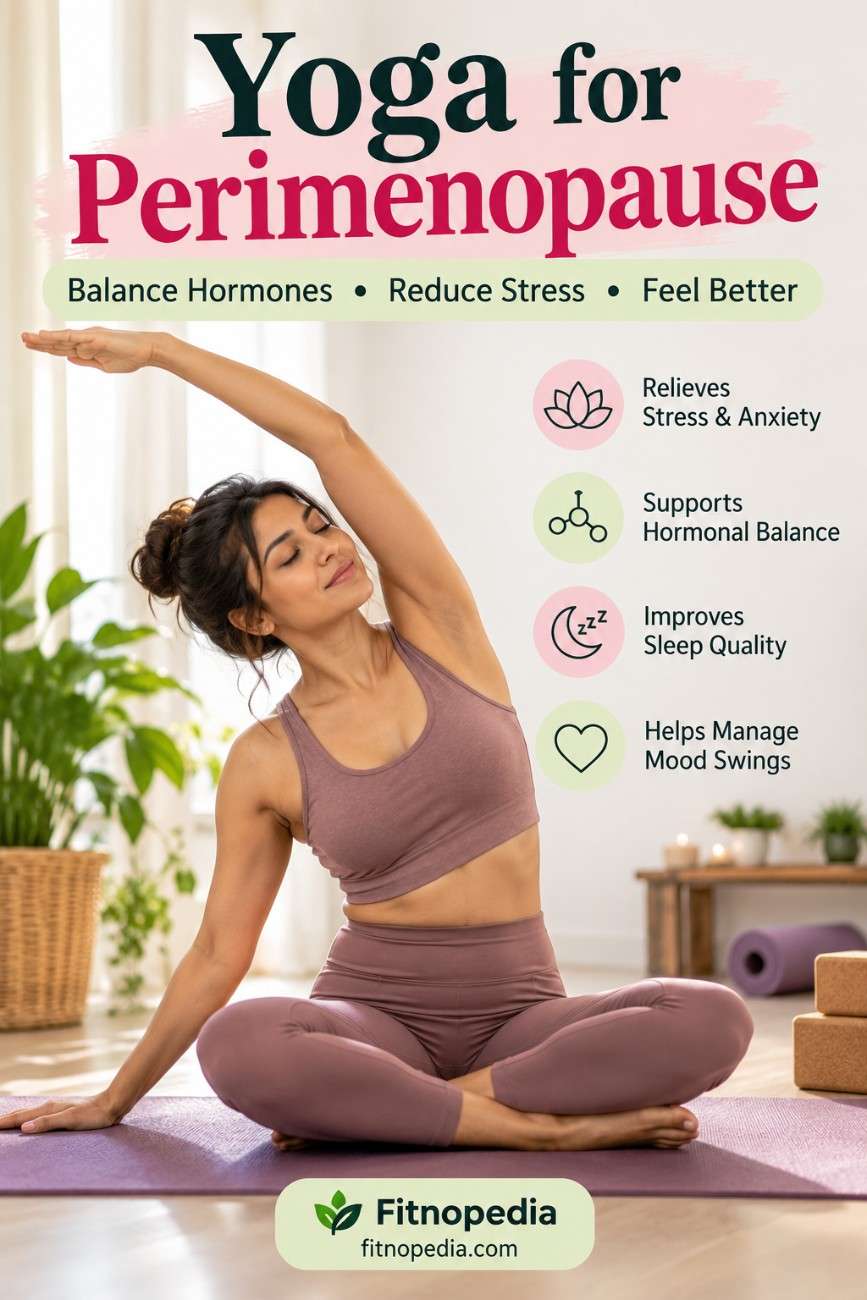
Yoga for perimenopause can help you maintain mobility, manage stress, and support better sleep while your body goes through hormonal changes. The best approach combines gentle movement, comfortable breathing, and restorative poses that you can adapt to your energy levels and symptoms.
What Is Yoga for Perimenopause?
Yoga for perimenopause is an adaptable practice combining physical postures, breathing exercises, relaxation, and mindfulness to support well-being during the transition toward menopause. Perimenopause can involve irregular periods, hot flashes, sleep disturbances, mood changes, and changes in energy levels.
Yoga does not stop hormonal fluctuations or guarantee relief from symptoms, but it may help some people manage stress, improve flexibility, and develop a more relaxing bedtime routine.
Why Does Yoga for Perimenopause Matter?
Yoga may support perimenopausal well-being by encouraging regular movement, relaxation, balance, and body awareness. These benefits can be particularly useful when sleep, mood, or energy levels become less predictable.
Potential benefits include:
- Stress management: Slow movement and mindful breathing can help you relax.
- Better sleep habits: A calming evening routine may make it easier to wind down before bed.
- Flexibility and mobility: Gentle stretches can help maintain comfortable movement.
- Balance and coordination: Standing poses can challenge balance and body control.
- Mind-body awareness: Yoga can help you recognize when to rest or modify your activity.
Research specifically examining yoga for perimenopause is still developing. Yoga should therefore be viewed as a complementary wellness practice rather than a proven treatment for every menopausal symptom.
Best Yoga Poses for Perimenopause
The best yoga poses for perimenopause are comfortable, low-impact movements that can be adjusted to your symptoms, flexibility, and experience. You do not need to perform advanced poses to benefit from a regular practice.
1. Child’s Pose
Child’s Pose is a gentle resting posture that encourages relaxation and stretches the back and hips.
How to do it:
1. Kneel on a yoga mat with your knees comfortably apart.
2. Sit your hips back toward your heels, using a cushion if needed.
3. Extend your arms forward or rest them beside your body.
4. Breathe naturally for 30–60 seconds, if comfortable.
Place a pillow between your thighs and calves if kneeling feels uncomfortable. Skip this pose if it causes knee pain or makes breathing difficult.
2. Cat-Cow Pose
Cat-Cow is a gentle spinal mobility exercise that moves the back through comfortable flexion and extension.
How to do it:
1. Start on your hands and knees, with wrists under shoulders and knees under hips.
2. Inhale as you gently lift your chest and tailbone.
3. Exhale as you round your back without forcing your chin toward your chest.
4. Repeat slowly for 6–10 comfortable cycles.
Use a folded towel beneath your knees. If getting onto the floor is difficult, perform a similar movement while seated in a sturdy chair.
3. Supported Bridge Pose
Supported Bridge Pose gently opens the front of the hips and may feel relaxing after a long day.
How to do it:
1. Lie on your back with your knees bent and feet flat on the mat.
2. Lift your hips slightly, only as high as feels comfortable.
3. If desired, place a firm yoga block or suitable support beneath your pelvis.
4. Relax into the supported position for 20–30 seconds, then carefully lower your hips.
Avoid forcing the back into an arch. If lying on your back causes dizziness, breathlessness, or discomfort, choose a seated alternative.
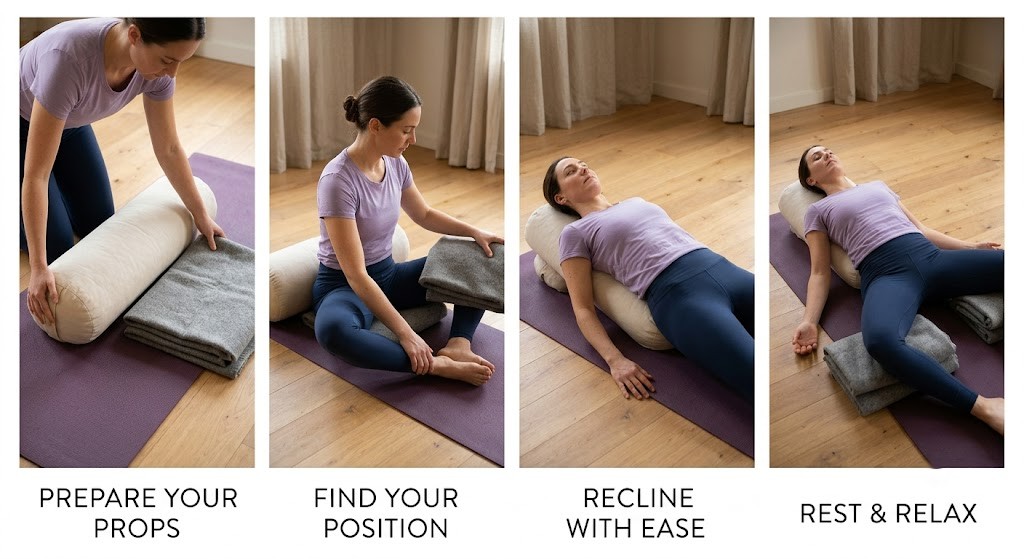
4. Legs-Up-the-Wall Pose
Legs-Up-the-Wall is a restorative position that may help you relax after a busy day.
How to do it:
1. Sit sideways beside a wall.
2. Gently lie back and bring your legs up the wall, if comfortable.
3. Rest your arms beside your body and breathe naturally.
4. Stay for 2–5 minutes, then roll onto your side before sitting up.
Move away from the wall if your hamstrings feel strained. Skip the pose if it worsens reflux, dizziness, or other symptoms.
5. Seated Forward Fold
A seated forward fold offers a gentle stretch for the back of the legs and hips when performed without forcing the movement.
How to do it:
1. Sit on a folded blanket with your legs extended or slightly bent.
2. Lengthen your spine as you inhale.
3. Hinge forward gently from your hips as you exhale.
4. Rest your hands on your thighs or shins and hold for 15–30 seconds.
Keep your knees bent if your hamstrings feel tight. Stop if you experience sharp pain or tingling.
Post Workout Stretching Routine
6. Seated Side Stretch
A seated side stretch gently lengthens the sides of the torso and can help relieve stiffness from prolonged sitting.
How to do it:
- Sit comfortably on a chair or cross-legged on a mat.
- Raise one arm overhead.
- Lean gently to the opposite side without twisting your body.
- Hold for 15–20 seconds, then switch sides.
Keep both hips grounded and avoid pulling your neck or shoulder.
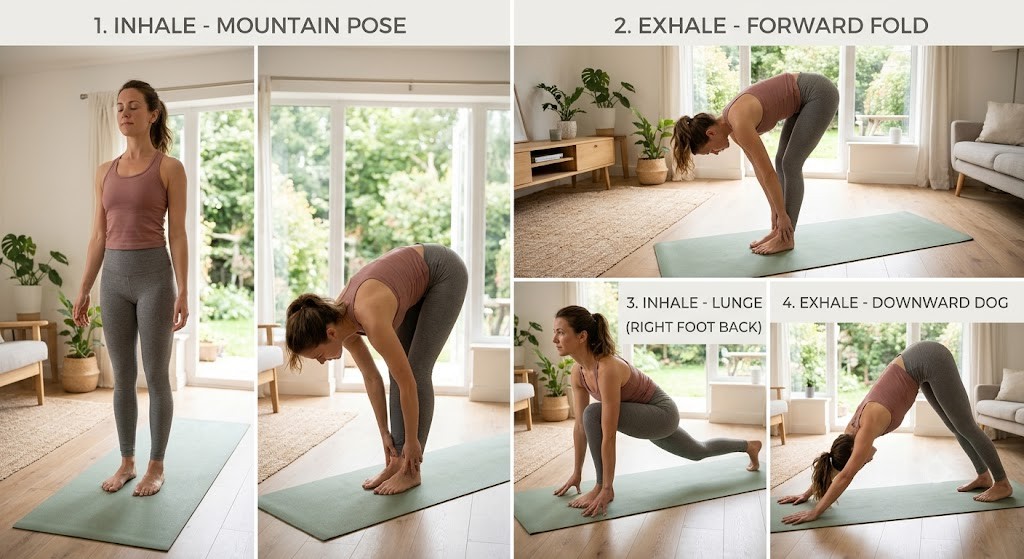
7. Mountain Pose
Mountain Pose is a simple standing posture that encourages upright alignment and body awareness.
How to do it:
- Stand with your feet hip-width apart.
- Keep your knees soft and distribute your weight evenly.
- Relax your shoulders and let your arms rest by your sides.
- Breathe naturally for 30–60 seconds.
Stand beside a wall or chair if you need extra support for balance.
A 15-Minute Yoga Routine for Perimenopause
A short yoga routine for perimenopause can be easier to maintain than a long workout, particularly when fatigue or sleep disruption affects your energy. Try the following sequence at a comfortable pace.
| Exercise | Duration | Main purpose |
|---|---|---|
| Seated breathing | 2 minutes | Relaxation |
| Cat-Cow Pose | 2 minutes | Spinal mobility |
| Mountain Pose | 1 minute | Posture and balance |
| Seated Side Stretch | 2 minutes | Gentle stretching |
| Child’s Pose | 2 minutes | Rest and relaxation |
| Supported Bridge Pose | 2 minutes | Hip movement |
| Legs-Up-the-Wall Pose or seated relaxation | 4 minutes | Unwinding |
The durations are a suggested routine, not a medically established prescription. Modify the sequence or take breaks as needed.
For a more balanced weekly movement plan, combine yoga with low-impact cardio exercises. Yoga supports mobility and balance, but it should not be your only form of exercise for maintaining muscle and bone strength.
Breathing Exercises for Perimenopause
Slow, comfortable breathing can be a useful part of a yoga practice for perimenopause because it encourages relaxation and helps create a pause during stressful moments.
Diaphragmatic Breathing
Diaphragmatic breathing involves breathing gently while allowing your abdomen to expand naturally.
- Sit in a supported position or lie down comfortably.
- Place one hand on your abdomen.
- Breathe in gently through your nose if comfortable.
- Let your abdomen rise naturally without forcing a deep breath.
- Exhale slowly and comfortably.
- Continue for 2–5 minutes.
Avoid holding your breath or breathing rapidly. Stop if you feel light-headed, dizzy, or uncomfortable.
Can Breathing Exercises Stop Hot Flashes?
Breathing exercises are not a guaranteed way to stop hot flashes. Although relaxation may help with stress, evidence for breathing techniques as a treatment for hot flashes is limited. Yoga and breathing exercises are best considered complementary practices rather than substitutes for established treatment options. (Source: The Menopause Society, n.d.)
If hot flashes or night sweats are affecting your daily life, speak with a healthcare professional about suitable options.
Yoga for Common Perimenopause Symptoms
Yoga may help with relaxation and general well-being, but its effects differ from person to person and it does not treat every symptom equally.
| Perimenopause concern | How yoga may help | Additional consideration |
|---|---|---|
| Stress and anxiety | Gentle movement and mindful breathing may encourage relaxation. | Seek professional support if anxiety persists or worsens. |
| Sleep difficulties | A calming evening routine may help you wind down. | Keep a regular sleep schedule and discuss persistent insomnia with a clinician. |
| Stiffness | Gentle mobility exercises may help maintain comfortable movement. | Modify poses for joint pain or injury. |
| Low energy | A short, gentle session may feel more manageable than strenuous exercise. | Rest when needed and investigate persistent or severe fatigue. |
| Hot flashes | Yoga may support overall well-being, but symptom relief is uncertain. | Discuss frequent or disruptive symptoms with a healthcare professional. |
The National Center for Complementary and Integrative Health notes that research suggests possible benefits of yoga for some menopause symptoms, sleep, stress, and psychological well-being. However, results vary across studies and yoga styles. (Source: National Center for Complementary and Integrative Health, n.d.)
For additional support, explore sleep hygiene tips for better rest and Yoga for Pelvic Floor.
How Often Should You Practise Yoga During Perimenopause?
Practising yoga for 10–20 minutes on several days each week is a reasonable starting point if you are new to it. There is no single ideal frequency for everyone experiencing perimenopause.
A practical approach is to:
- Begin with two or three short sessions per week.
- Choose gentle sessions on days when your energy is low.
- Increase duration gradually if you feel comfortable.
- Include rest days or lighter movement when needed.
- Notice whether a particular time of day works better for your sleep and routine.
You can also keep a simple Best Yoga for Menopause to record sleep, hot flashes, mood, and exercise. This may help you notice patterns to discuss with your healthcare professional.
Safety Tips for Yoga During Perimenopause
Yoga is generally considered safe for healthy people when practised appropriately, but poses should be modified to suit your abilities and medical needs. (Source: National Center for Complementary and Integrative Health, n.d.)
Follow these precautions:
- Avoid overheating: Choose a cool, well-ventilated room, particularly if you experience hot flashes or night sweats.
- Use support: A chair, wall, folded blanket, or yoga block can make poses more comfortable.
- Avoid forcing stretches: Move within a comfortable range rather than trying to achieve a particular shape.
- Be cautious with balance poses: Use a stable support if you feel unsteady.
- Skip extreme practices: Avoid forceful breathing, advanced inversions, or movements that cause pain.
- Modify for existing conditions: Consult a qualified instructor and healthcare professional if you have osteoporosis, significant joint problems, high blood pressure, glaucoma, or a recent injury.
Stop exercising if you experience chest pain, faintness, unusual breathlessness, or severe pain, and seek appropriate medical attention.
Yoga is not a replacement for medical evaluation or treatment. Seek advice if symptoms interfere with your quality of life, and arrange a medical assessment for unusually heavy bleeding, bleeding between periods, or other concerning changes.
Conclusion
Yoga for perimenopause can be a practical way to support relaxation, flexibility, balance, and a calming daily routine. Start with gentle poses such as Cat-Cow, Child’s Pose, and Mountain Pose, and adjust your practice according to your comfort and energy levels.
For the best overall support, combine yoga with regular walking, strength training, nutritious meals, and healthy sleep habits. If perimenopause symptoms are persistent or disruptive, consult a healthcare professional about additional treatment options.
FAQs
Which yoga is best for perimenopause?
Gentle Hatha yoga, restorative yoga, and beginner-friendly yoga are reasonable options. Choose a style that feels comfortable and allows you to modify poses.
Can yoga help with perimenopause symptoms?
Yoga may support stress management, sleep, and general well-being. Research suggests possible benefits for some menopause symptoms, but results are mixed and yoga does not reliably relieve every symptom.
Can yoga reduce belly fat during perimenopause?
Yoga can contribute to physical activity and overall fitness, but it does not specifically target belly fat. A balanced approach involving strength training, regular movement, nutrition, and sleep is more appropriate for managing body composition.
Is morning or evening yoga better during perimenopause?
Neither time is universally better. Morning yoga may help you establish a movement routine, while gentle evening yoga may help you unwind before bed. Choose the time that suits your schedule and symptoms.
How long should I do yoga for perimenopause?
Start with 10–15 minutes per session and adjust according to your comfort. Short, consistent sessions may be easier to maintain than occasional long practices.
Can yoga help with perimenopause insomnia?
Yoga may help some people improve sleep, but it is not a guaranteed treatment for insomnia. Seek medical advice if sleep difficulties continue or affect your daily functioning.
Should I avoid hot yoga during perimenopause?
If you experience hot flashes or night sweats, a cooler yoga environment may be more comfortable. Hot yoga increases exposure to heat and can increase the risk of overheating and dehydration.
Can beginners practise yoga during perimenopause?
Yes. Beginners can start with gentle poses, seated stretches, supported positions, and comfortable breathing exercises. A qualified instructor can help adapt the practice to individual needs.
Sources
- National Center for Complementary and Integrative Health. (n.d.). Yoga: Effectiveness and Safety.
- National Center for Complementary and Integrative Health. (n.d.). Menopausal Symptoms: In Depth.
- NHS. (n.d.). Things You Can Do to Help Menopause and Perimenopause Symptoms.
- The Menopause Society. (n.d.). Hot Flashes.
Disclaimer: This article is for informational and educational purposes only and is not a substitute for personalized medical advice. Consult a qualified healthcare professional before making significant changes to your diet, exercise routine, or supplement use.