
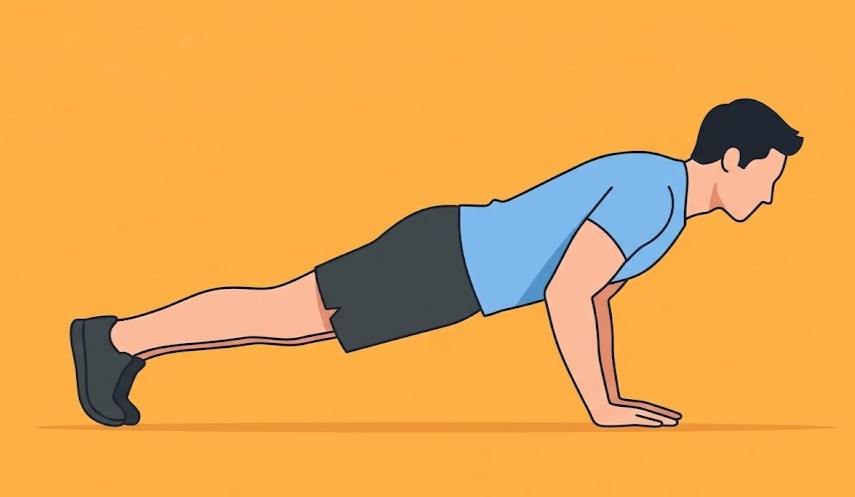
Calisthenics is one of the most effective ways for beginners to build strength, improve flexibility, and develop better overall fitness using only bodyweight exercises. Unlike traditional gym workouts that rely on heavy weights and expensive machines, calisthenics uses natural body movements like push-ups, squats, planks, lunges, and pull-ups to improve strength and endurance.
One of the biggest reasons beginners choose Calisthenics Workout Plan for Beginners at Home is because it is affordable, accessible, and beginner-friendly. You can train at home, in a park, or while traveling without needing a gym membership. Whether your goal is fat loss, muscle gain, better posture, mobility, or general fitness, a structured beginner calisthenics workout plan can help you progress safely and consistently.
Many people think calisthenics is only for advanced athletes performing handstands, muscle-ups, and human flags. However, every advanced athlete started with basic bodyweight exercises. The key to success is building a strong foundation before progressing to more difficult skills.
What Is Calisthenics Workout Plan for Beginners at Home and How Does It Work?
Calisthenics is a form of strength training that uses your body weight as resistance. Instead of lifting external weights, you train by controlling your body through movement patterns that activate multiple muscle groups at once.
For example, push-ups train the chest, shoulders, triceps, and core simultaneously, while squats strengthen the legs, glutes, and lower body stability. Because calisthenics exercises engage multiple muscles together, they improve coordination, balance, posture, and functional fitness more effectively than many isolated gym exercises.
Calisthenics Workout Plan for Beginners at Home Another major advantage of calisthenics is scalability. Beginners can start with easier exercise variations and gradually increase difficulty as strength improves. Someone unable to perform a standard push-up can begin with incline push-ups or knee push-ups until they gain enough upper-body strength.
According to the American College of Sports Medicine, bodyweight training improves muscular endurance, balance, mobility, and overall physical fitness when performed consistently.
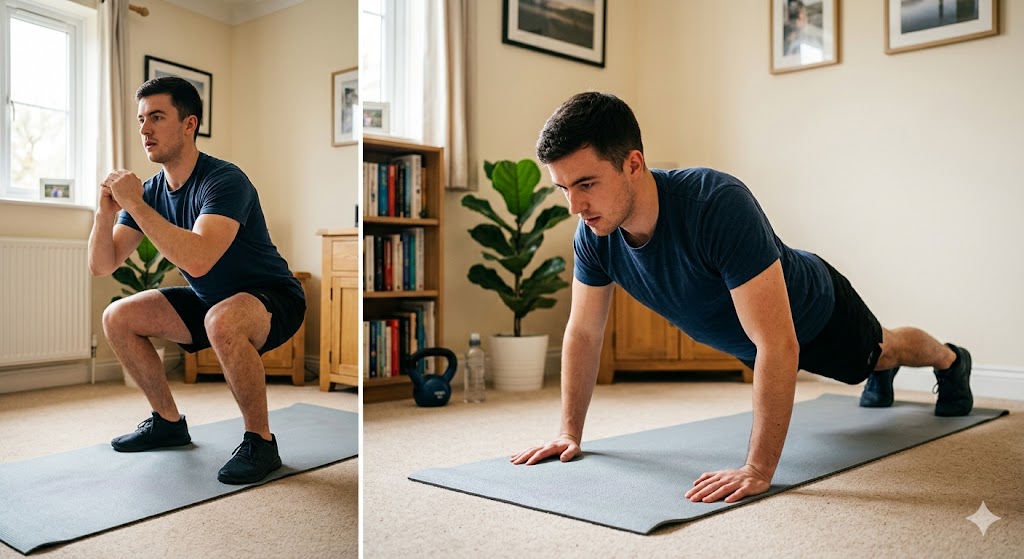
Benefits of Calisthenics for Beginners
Calisthenics provides several physical and mental health benefits for beginners while requiring minimal equipment.
Improves Functional Strength
Functional strength helps you perform daily activities more efficiently. Exercises like squats, lunges, and push-ups improve movement patterns used during walking, lifting, climbing stairs, and maintaining posture.
Enhances Mobility and Flexibility
Bodyweight exercises allow joints to move naturally through full ranges of motion, improving flexibility, mobility, and muscle control.
Supports Weight Loss Goals
Calisthenics workouts increase calorie burn while building lean muscle mass. Full-body movements also improve cardiovascular endurance and metabolism.
Builds Better Coordination and Balance
Because many calisthenics exercises require body stabilization, beginners develop better balance, coordination, and body awareness over time.
Affordable and Beginner-Friendly
One of the biggest advantages of calisthenics is convenience. You can train almost anywhere without expensive equipment or gym memberships.
Calisthenics Workout Plan for Beginners at Home According to the World Health Organization, physically active adults significantly reduce the risk of cardiovascular disease and lifestyle-related health problems.
Essential Principles Before Starting Calisthenics
Beginners who understand the basic principles of calisthenics progress faster and avoid unnecessary injuries.
Why Warm-Ups Matter
Warm-ups prepare the muscles, joints, and nervous system for physical activity. Skipping warm-ups can increase injury risk and reduce workout performance.
Before every workout, spend 5–10 minutes performing dynamic warm-up exercises such as:
- Arm circles
- Jumping jacks
- Hip rotations
- High knees
- Light jogging
Research from the Journal of Strength and Conditioning Research shows that dynamic warm-ups improve exercise performance and movement efficiency.
Why Proper Form Is Important
Proper exercise technique matters more than high repetitions.
For example, performing 10 controlled push-ups with correct form is far more effective than doing 30 fast repetitions incorrectly. Good form improves muscle activation, builds proper movement patterns, and reduces stress on joints.
Beginners should always prioritize movement quality over quantity.
What Is Progressive Overload in Calisthenics?
Calisthenics Workout Plan for Beginners at Home Progressive overload means gradually increasing workout difficulty so the body continues adapting and getting stronger.
In calisthenics, progressive overload can include:
- Increasing repetitions
- Improving exercise control
- Increasing workout volume
- Slowing movement tempo
- Progressing to harder variations
For example:
- Knee push-ups → incline push-ups → standard push-ups
- Assisted pull-ups → negative pull-ups → pull-ups
Why Recovery and Nutrition Matter
Recovery is essential because muscles repair and grow stronger after workouts.
Beginners should focus on:
- Getting 7–9 hours of sleep
- Drinking enough water
- Eating balanced meals
- Including rest days
- Performing stretching and mobility work
Protein-rich foods like eggs, fish, chicken, yogurt, lentils, tofu, and nuts support muscle recovery and growth.
According to the National Sleep Foundation, adequate sleep improves physical recovery and athletic performance significantly.
daily protein intake for muscle growth
Best Beginner Calisthenics Exercises
The best beginner calisthenics exercises are foundational bodyweight movements that improve total-body strength safely.
Push-Ups
Push-ups strengthen the chest, shoulders, triceps, and core. Beginners can start with wall push-ups, incline push-ups, or knee push-ups before progressing to standard push-ups.
Squats
Bodyweight squats strengthen the quadriceps, glutes, hamstrings, and core while improving lower-body stability and functional movement.
Planks
Planks improve core strength, posture, and spinal stability. Beginners should focus on maintaining a straight body line instead of holding planks for excessive time.
Lunges
Lunges improve leg strength, balance, coordination, and hip mobility. Reverse lunges are especially beginner-friendly because they reduce knee pressure.
Glute Bridges
Glute bridges strengthen the glutes and lower back while improving posterior-chain stability.
Mountain Climbers
Mountain climbers combine cardio and core training while improving coordination and endurance.
Assisted Pull-Ups or Rows
Pulling exercises strengthen the back, shoulders, arms, and grip. Resistance bands help beginners learn proper pulling mechanics safely.
Leg Raises
Leg raises strengthen the lower abdominal muscles and hip flexors. Beginners can slightly bend their knees to reduce difficulty.
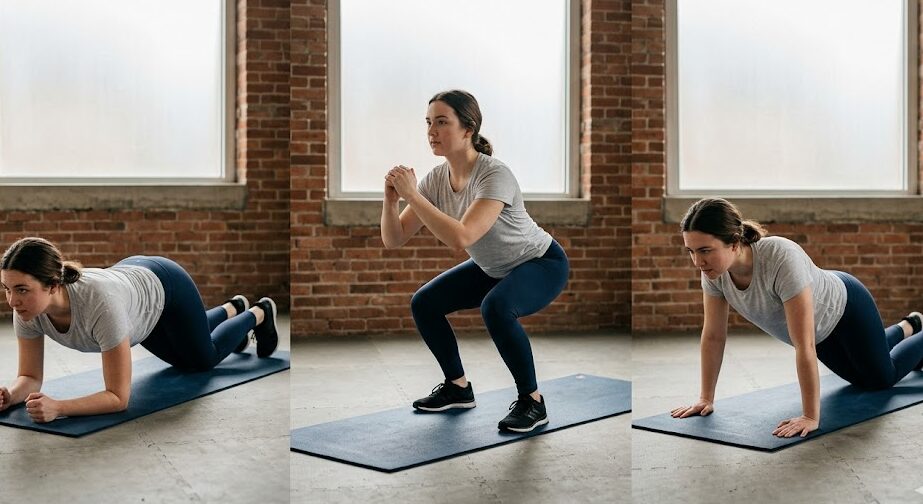
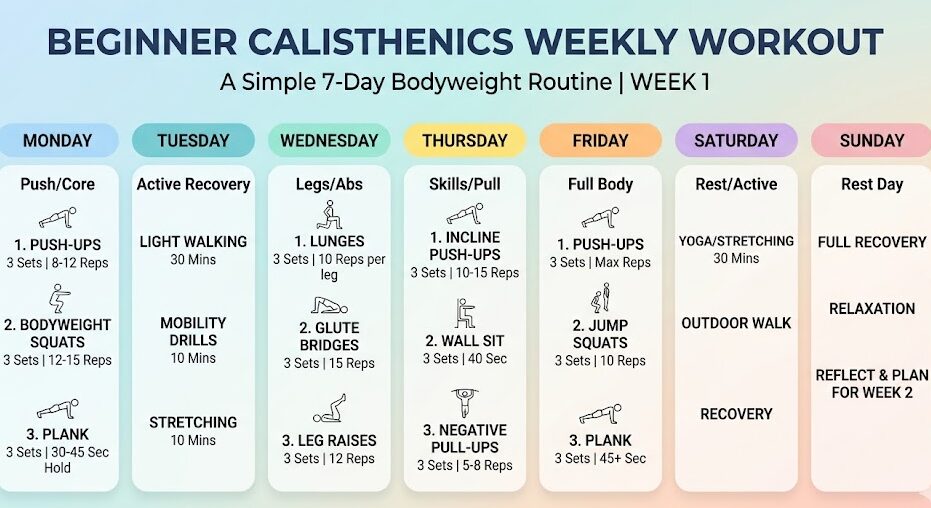
7-Day Beginner Calisthenics Workout Plan
| Day | Workout Focus | Duration |
|---|---|---|
| Monday | Full-Body Strength Workout | 35–45 minutes |
| Tuesday | Active Recovery + Walking | 20–30 minutes |
| Wednesday | Full-Body Strength Workout | 35–45 minutes |
| Thursday | Mobility + Stretching | 20 minutes |
| Friday | Full-Body Strength Workout | 35–45 minutes |
| Saturday | Light Cardio or Yoga | 20–30 minutes |
| Sunday | Full Rest Day | Recovery |
Beginner Full-Body Workout Routine
Perform the following exercises for 2–3 rounds:
- Push-Ups — 8–12 reps
- Bodyweight Squats — 12–15 reps
- Planks — 20–30 seconds
- Lunges — 10 reps per leg
- Glute Bridges — 12–15 reps
- Mountain Climbers — 20 reps
- Assisted Rows — 8–10 reps
- Leg Raises — 10–12 reps
Rest for 60–90 seconds between rounds.
Focus on controlled movement instead of speed. Slower repetitions improve muscle activation and reduce injury risk.
According to Harvard Health Publishing, Calisthenics Workout Plan for Beginners at Home moderate resistance training significantly improves beginner strength and metabolic health.
Common Beginner Mistakes to Avoid
Skipping Warm-Ups
Skipping warm-ups increases injury risk and reduces exercise performance.
Training Too Hard Too Quickly
Many beginners attempt advanced exercises before building foundational strength.
Ignoring Recovery
Overtraining can reduce performance, increase fatigue, and slow progress.
Using Poor Exercise Form
Bad technique places unnecessary stress on joints and muscles.
Expecting Instant Results
Most beginners notice meaningful improvements within 6–12 weeks of consistent training.
Can You Build Muscle With Calisthenics?
Yes, beginners can absolutely build muscle with Calisthenics Workout Plan for Beginners at Home.
Bodyweight exercises create muscle tension similar to weight training when performed correctly and progressively overloaded. Beginners often experience rapid strength improvements during the first few months of training.
Muscle growth improves further when combined with:
- Consistent workouts
- Sufficient protein intake
- Proper recovery
- Quality sleep
Visible results depend on workout consistency, nutrition, and overall activity levels.
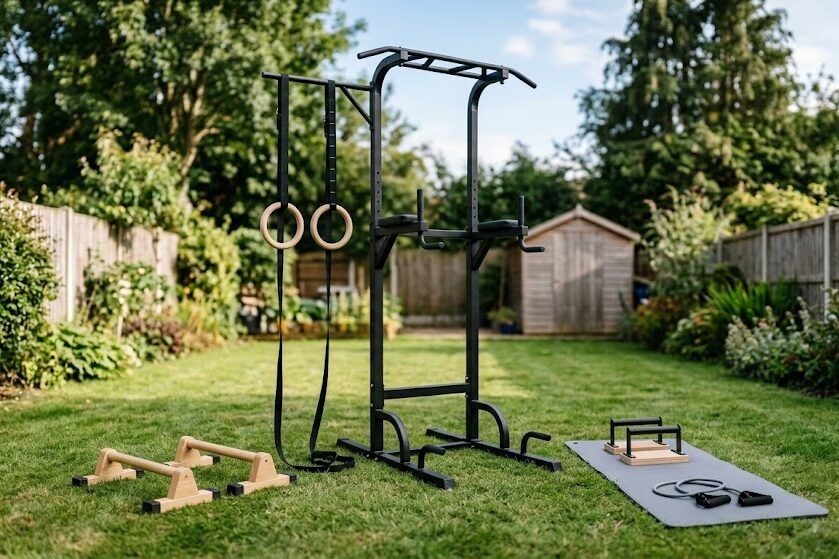
Best Equipment for Beginner Calisthenics
Although calisthenics requires little equipment, a few affordable tools can improve workout variety and progression.
| Equipment | Purpose |
|---|---|
| Resistance Bands | Assisted pull-ups and mobility |
| Pull-Up Bar | Upper-body strength |
| Yoga Mat | Comfort for floor exercises |
| Parallettes | Wrist-friendly push-up variations |
| Foam Roller | Recovery and mobility |
Workout tracking apps can also help beginners stay motivated and monitor progress.
How Long Does It Take to See Results From Calisthenics?
Most beginners notice improvements within 6–12 weeks of consistent training.
Early results often include:
- Increased strength
- Better posture
- Improved endurance
- More push-up repetitions
- Improved body control
Calisthenics Workout Plan for Beginners at Home Visible body composition changes depend on nutrition, sleep, consistency, and workout intensity.
Tracking progress through workout logs and photos helps maintain motivation during slower transformation phases.
How to Progress From Beginner to Intermediate Calisthenics
Progressing to intermediate calisthenics requires patience, stronger exercise variations, and consistent training.
Beginner Strength Benchmarks
Most beginners should aim for:
- 20 clean push-ups
- 40 bodyweight squats
- 60-second plank
- 10 assisted pull-ups or rows
- Consistent training for 3–6 months
Intermediate Calisthenics Goals
After mastering beginner movements, you can progress toward:
- Pull-ups
- Dips
- Pike push-ups
- Hanging leg raises
- Handstand progressions
Conclusion
A beginner calisthenics workout plan provides a simple, affordable, and highly effective way to build strength using bodyweight exercises.
By focusing on foundational movements, progressive overload, recovery, and long-term consistency, beginners can safely improve fitness without expensive gym equipment.
Whether your goal is muscle gain, fat loss, flexibility, endurance, or general health, calisthenics offers a practical training method that can be performed almost anywhere.
Calisthenics Workout Plan for Beginners at Home Start with simple exercises, stay consistent, track your progress, and focus on gradual improvement over time. Small weekly improvements eventually lead to major long-term fitness transformations.
FAQs
Is calisthenics good for complete beginners?
Yes, calisthenics is highly beginner-friendly because exercises can be modified based on fitness level.
Can I start calisthenics at home without equipment?
Yes, beginners can start with push-ups, squats, planks, lunges, and glute bridges without any equipment.
How many days per week should beginners train?
Most beginners should train 3–4 days weekly with recovery days between sessions.
How long should beginner calisthenics workouts last?
Most beginner workouts should last between 30–45 minutes.
Can calisthenics help with weight loss?
Yes, calisthenics burns calories, improves metabolism, and builds lean muscle mass.
Is calisthenics better than gym workouts?
Calisthenics is excellent for beginners seeking affordable and functional home workouts, while gym training may allow faster heavy resistance progression.
How long does it take to see calisthenics results?
Most beginners notice strength and endurance improvements within 6–12 weeks of consistent training.
Can you build muscle using only bodyweight exercises?
Yes, progressive bodyweight training can build muscle effectively when combined with proper nutrition and recovery.
What should beginners eat for calisthenics?
Beginners should eat balanced meals containing protein, healthy fats, complex carbohydrates, fruits, and vegetables.
Do beginners need supplements for calisthenics?
No, supplements are not necessary for beginners. Proper nutrition and consistent training are more important.
What is the best first calisthenics exercise for beginners?
Push-ups, squats, planks, and lunges are among the best beginner exercises.
Should beginners train every day?
No, beginners need recovery days to allow muscles to repair and grow stronger.
Can older adults start calisthenics?
Yes, calisthenics can be adapted for different ages and fitness levels safely.
Is stretching important for calisthenics?
Yes, stretching and mobility exercises improve flexibility, recovery, and movement quality.
Can calisthenics improve posture?
Yes, bodyweight exercises strengthen the core and back muscles, which can improve posture over time.
2 thoughts on “Calisthenics Workout Plan for Beginners at Home”