
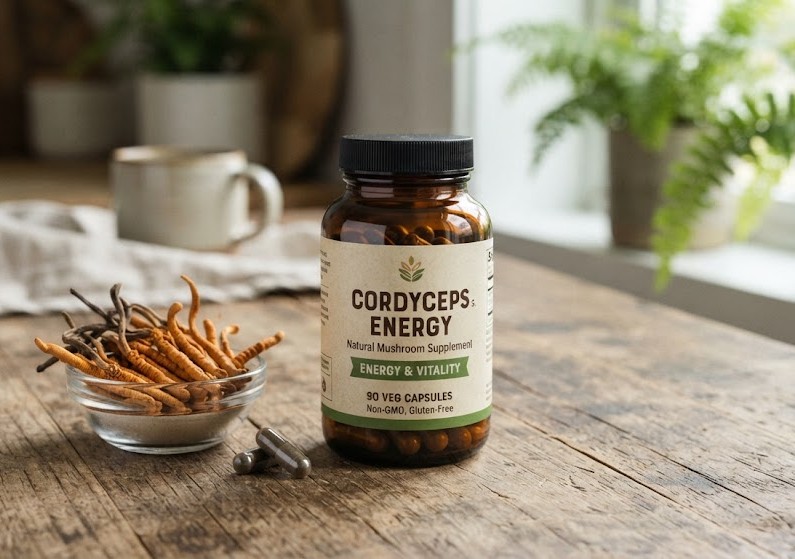
Cordyceps has become a popular mushroom supplement among people looking for better energy, stamina, endurance, and workout performance. But there is an important distinction between feeling more energetic and actually improving the body’s ability to sustain physical activity.
A Cordyceps Supplement for Energy is not necessarily comparable to a conventional stimulant such as caffeine. Instead, cordyceps has been studied for potential effects on exercise endurance, fatigue, oxygen utilization, and energy-related physiological processes.
In this guide, you’ll learn what cordyceps is, how it may affect energy and physical performance, what human research has found, how much has been used in clinical studies, potential side effects, and how to choose a quality cordyceps supplement.
What Is a Cordyceps Supplement for Energy?
Cordyceps supplements are mushroom-based dietary supplements commonly studied for their potential effects on exercise performance, endurance, fatigue, and energy-related processes. Cordyceps refers to fungi that have been used traditionally and are now widely incorporated into modern dietary supplements.
Products may feature cultivated species such as Cordyceps militaris or materials marketed as Cordyceps sinensis. The actual contents can vary considerably between products.
A cordyceps supplement may contain:
- Whole mushroom material
- Mycelium
- Mushroom powder
- Concentrated extracts
- Mushroom blends
Therefore, two products labeled “cordyceps” may not be equivalent. They can contain different species, fungal materials, extraction methods, concentrations, and serving sizes.
mushroom supplements for energy
What Is Cordyceps Used For?
Cordyceps is commonly used as a supplement for exercise endurance, stamina, physical performance, and general wellness. However, it should not automatically be considered a stimulant.
Unlike caffeine, cordyceps does not necessarily produce a rapid sensation of alertness or stimulation. Someone using cordyceps may instead be interested in supporting sustained physical performance during activities such as running, cycling, or resistance training.
For example, an athlete might use cordyceps with the goal of supporting endurance during a longer training session rather than expecting an immediate surge of energy.
How Does Cordyceps Affect Energy and Physical Performance?
Cordyceps may influence energy metabolism and exercise performance, but human research has produced mixed results and does not establish it as a guaranteed energy booster.
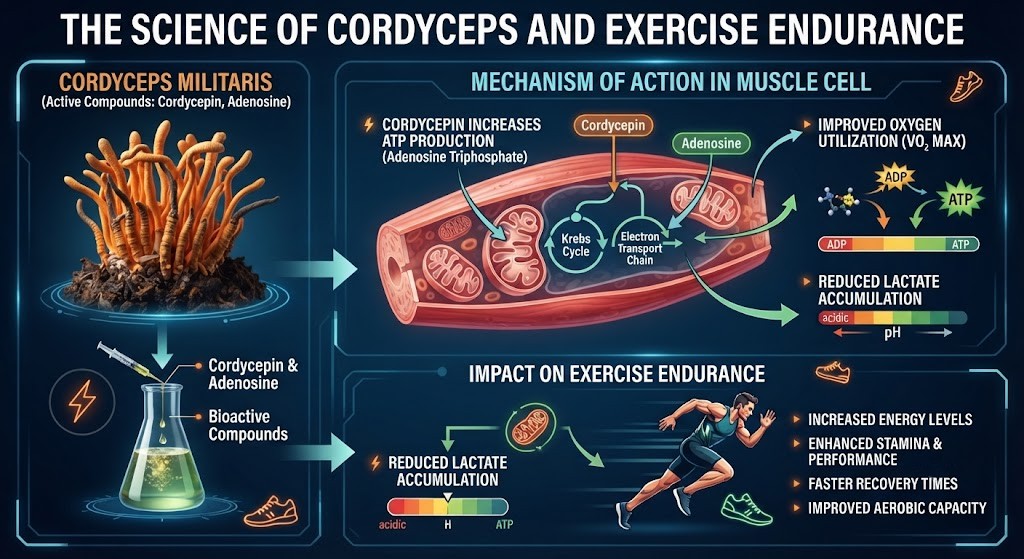
Researchers have investigated cordyceps in relation to several physiological processes, including cellular energy metabolism, oxygen utilization, antioxidant activity, exercise adaptation, and fatigue.
However, it is important to distinguish laboratory findings from demonstrated human outcomes. A biological mechanism that appears promising in laboratory research does not automatically mean that taking a supplement will produce the same measurable effect in people.
For example, a randomized trial involving 20 healthy adults aged 50–75 found that 12 weeks of a Cordyceps sinensis preparation increased metabolic threshold by 10.5% and ventilatory threshold by 8.5%, although VO₂ max did not change.
Source: PubMed, 2010.
Does Cordyceps Actually Increase Energy?
Cordyceps may support physical endurance without producing the immediate stimulation associated with conventional energy products.
The word “energy” can also mean different things. It may refer to mental alertness, reduced perceived fatigue, greater exercise capacity, or the ability to sustain physical work.
These outcomes are not interchangeable.
For example, caffeine may make someone feel more alert relatively quickly, whereas cordyceps is generally investigated in the context of physiological exercise outcomes and endurance.
How Might Cordyceps Support Energy?
Cordyceps may affect biological pathways involved in cellular energy production and exercise adaptation, although many proposed mechanisms remain under investigation.
Compounds such as cordycepin have contributed to scientific interest in cordyceps and its potential biological effects. However, laboratory research should not automatically be interpreted as proof that a supplement will increase energy in humans.
This distinction is particularly important when evaluating supplement marketing. A proposed mechanism can explain why researchers are interested in cordyceps, but controlled human trials provide stronger evidence for determining whether those effects translate into meaningful outcomes.
What Does Research Say About Cordyceps and Exercise Performance?
Human research suggests that some cordyceps preparations may improve selected measures of endurance, but results differ according to the product, population, dose, and study design.
A 2025 systematic review and meta-analysis included 14 randomized controlled trials involving 528 athletes. The review reported significant improvements in endurance performance, ventilatory threshold, and VO₂peak in the Cordyceps sinensis subgroup.
Source: PubMed, 2025.
An earlier randomized study involving 28 participants tested a mushroom blend containing Cordyceps militaris at 4 g per day. Researchers examined outcomes including VO₂ max, time to exhaustion, ventilatory threshold, and cycling performance.
Source: PubMed, 2016.
These findings are encouraging, but they do not demonstrate that every cordyceps supplement will improve energy or endurance.
One reason is that research studies can use different fungal materials, species, formulations, doses, supplementation periods, and participant populations. As a result, it can be difficult to directly compare one study with another or apply the results of one specific preparation to every cordyceps product on the market.
What Are the Potential Benefits of Cordyceps Supplements?
Potential cordyceps supplement benefits include support for exercise endurance, stamina, selected performance measures, and exercise-related fatigue.
However, the evidence is more specific than the broad marketing claim that cordyceps simply “boosts energy.” Current research is particularly relevant to physical performance and endurance rather than providing definitive evidence for an everyday energy increase.
Potential areas of interest include:
- Exercise endurance
- Stamina
- Selected exercise-performance measures
- Metabolic threshold
- Ventilatory threshold
- Exercise-related fatigue
The response may also differ between individuals because supplement effects depend on the specific product, dose, training status, and other factors.
Can Cordyceps Help With Exercise Endurance and Stamina?
Cordyceps may help support endurance by influencing physiological measures associated with sustained exercise, but individual responses can vary.
For example, the 2010 trial involving older adults found improvements in metabolic and ventilatory thresholds but did not find an improvement in VO₂ max.
Source: PubMed, 2010.
People interested in workout performance may also compare cordyceps with other supplements designed around endurance and exercise support, such as PeakO2 supplement benefits, supplements for endurance, or beta alanine supplement.
Cordyceps is better understood as a potential endurance-support supplement than as a guaranteed stimulant.
supplements for workout recovery
What Types of Cordyceps Supplements Are Available?
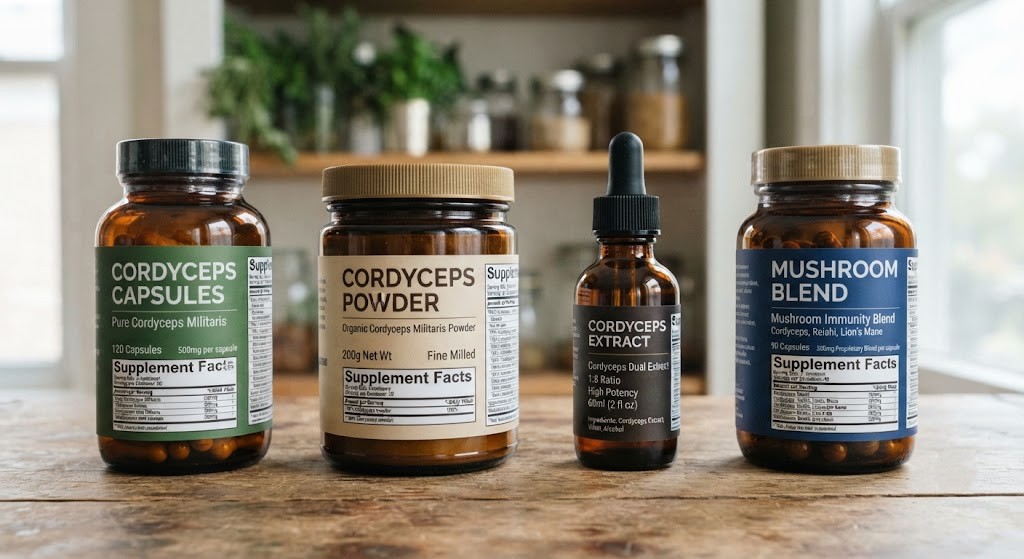
Cordyceps supplements are available as capsules, powders, extracts, and multi-mushroom formulations.
However, the format itself is not necessarily the most important factor. What matters is what the product actually contains, how clearly the ingredients are disclosed, and whether the label provides enough information to evaluate the formulation.
| Product type | What to check | Practical consideration |
|---|---|---|
| Capsules | Species, extract, serving size | Convenient for daily use |
| Powder | Mushroom identity and concentration | Easy to mix into drinks |
| Extract | Extraction method and active compounds | May provide concentrated ingredients |
| Mushroom blend | Full ingredient list | Harder to attribute effects to cordyceps alone |
Moreover, the potential benefits of cordyceps depend on factors such as species, extract composition, dosage, product quality, and the individual taking the supplement.
This means comparing products based only on the word “cordyceps” or the size of the package is unlikely to provide enough information.
How Should You Choose and Use a Cordyceps Supplement?
Choosing a cordyceps supplement involves checking the species, extract details, serving size, ingredient transparency, and available third-party quality testing.
Start by examining the Supplement Facts or equivalent product label. A clear label should make it easier to understand what fungal material is being provided and how much is included in each serving.
Rather than selecting a product based solely on a large “cordyceps” claim on the front of the package, compare the details on the ingredient panel.
How Much Cordyceps Should You Take for Energy?
There is no universally established cordyceps dose that guarantees an energy benefit for everyone.
Clinical studies have used substantially different preparations and amounts. For example, the 12-week older-adult trial used 333 mg of Cs-4 three times daily, while another exercise study used 4 g daily of a mushroom blend.
Source: PubMed, 2010; PubMed, 2016.
These amounts should not be treated as a universal recommendation because the products, formulations, study populations, and research protocols were different.
As such, follow the serving instructions for the specific product rather than copying a dose from a different study or supplement.
When Is the Best Time to Take Cordyceps for Energy?
The best timing for cordyceps depends on the product instructions and the individual’s routine because research has not established one universally superior timing strategy.
Cordyceps is also better approached as a supplement that may support longer-term exercise goals rather than something that necessarily behaves like an immediate pre-workout stimulant.
For many users, consistency with the product’s instructions may be more practical than attempting to take it at a specific minute before training.
What Are the Side Effects of Cordyceps Supplements?
Potential cordyceps side effects can include digestive discomfort or allergic reactions, while product-specific risks may vary according to ingredients and quality.
As with other dietary supplements, individual responses can differ. Anyone who develops concerning symptoms after taking a supplement should stop using the product and seek appropriate medical advice.
Medication interactions are another consideration. Supplement products can contain multiple ingredients, and contamination or inaccurate labeling can also create potential concerns.
NCCIH notes that manufacturers generally do not have to prove the safety and effectiveness of dietary supplements before marketing them.
Source: NCCIH, 2026.
The FDA also states that it does not approve dietary supplements for safety and effectiveness before they reach consumers.
Source: FDA, 2026.
Who Should Avoid or Talk to a Healthcare Professional Before Taking Cordyceps?
People taking medications, managing medical conditions, preparing for surgery, or experiencing persistent unexplained fatigue should discuss cordyceps with a healthcare professional before use.
FDA guidance notes that supplements can interact with medicines and may affect medical conditions or laboratory testing.
Source: FDA, 2026.
Persistent fatigue also deserves attention beyond supplementation. Cordyceps should not replace sleep, adequate nutrition, hydration, or medical evaluation of persistent fatigue.
Is Cordyceps Better for Energy Than Caffeine?
Cordyceps and caffeine serve different purposes, so neither should automatically be considered better for energy.
Caffeine is a well-established stimulant commonly used to increase alertness and exercise performance. Cordyceps, on the other hand, is primarily investigated in relation to physiological endurance and exercise-related outcomes.
Therefore, the better option depends on the goal.
| Cordyceps | Caffeine |
| Primarily investigated for endurance and physical performance | Commonly used for alertness and stimulation |
| Not generally considered an immediate stimulant | Produces a more noticeable stimulating effect |
| Research focuses on physiological exercise outcomes | Widely studied for alertness and exercise performance |
| Product formulations can vary substantially | Dose and caffeine content can be easier to identify |
For example, someone seeking immediate alertness may prefer caffeine, while someone exploring a non-stimulant mushroom supplement may investigate cordyceps.
How Long Does Cordyceps Take to Work?
Cordyceps does not have a clearly established universal onset time for an energy effect.
Clinical studies have investigated different supplementation periods, ranging from acute or short-term protocols to several weeks. Therefore, research should not be interpreted as proving that cordyceps produces an immediate energy effect.
For example, one cordyceps exercise study assessed participants after one and three weeks, while the Cs-4 study evaluated participants after 12 weeks.
Source: PubMed, 2016; PubMed, 2010.
This difference highlights why expectations should remain realistic. A supplement studied over several weeks should not automatically be treated like a product designed to produce an immediate sensation of stimulation.
How Do You Choose a High-Quality Cordyceps Supplement?
A high-quality cordyceps supplement should provide transparent information about its ingredients, species, serving size, manufacturer, and available quality testing.
When comparing products, focus on label transparency rather than simply choosing the supplement with the strongest marketing claims.
Look for:
- Clearly identified species or fungal material
- Specific serving size
- Extract information when applicable
- Complete ingredient disclosure
- Manufacturing and quality information
- Available independent or third-party testing
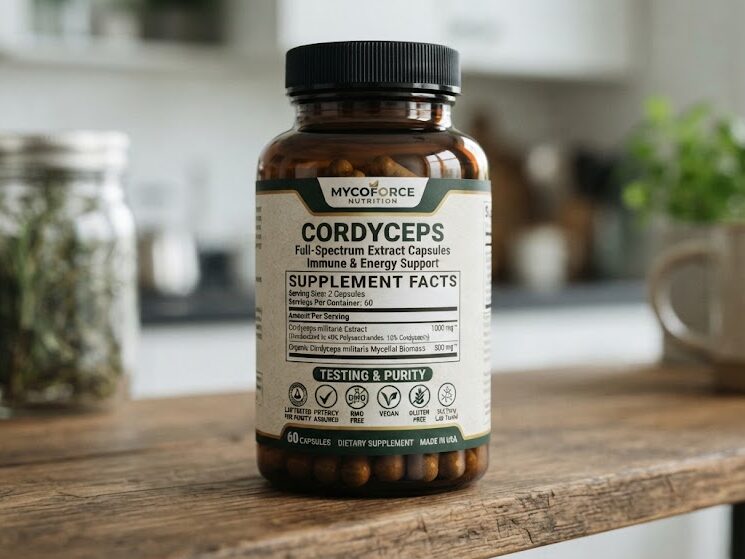
Third-party testing can provide additional information about product quality, although consumers should still evaluate the manufacturer and labeling carefully.
FDA explains that it does not routinely test the composition of dietary supplements before they are sold, reinforcing why transparent manufacturers and quality controls matter.
Source: FDA, 2025.
What’s Next? How Can You Decide Whether Cordyceps Fits Your Routine?
Deciding whether cordyceps fits your routine starts with defining your specific goal rather than assuming every energy problem requires a supplement.
Someone training for endurance may have a different reason for considering cordyceps than someone who simply feels tired during the day. Defining the goal first makes it easier to evaluate whether the supplement is actually helping.
For example:
- A runner could track endurance during steady-state sessions.
- A cyclist could monitor time to exhaustion or training performance.
- A gym-goer could track workout volume and perceived exertion.
- Someone interested in general energy could monitor daily energy and fatigue.
A simple evaluation framework can help.
1. Define Your Goal
Decide whether your primary goal is endurance, stamina, workout support, or general wellness.
2. Evaluate the Evidence
Look for human research rather than relying solely on marketing claims or laboratory findings.
3. Choose a Transparent Product
Compare species, fungal material, extracts, serving sizes, ingredients, and available quality-testing information.
4. Introduce One Supplement at a Time
Using one new supplement at a time makes it easier to determine whether any changes are associated with that product.
5. Track Relevant Outcomes
Record useful measures such as energy, workout performance, endurance, fatigue, and tolerance.
6. Reassess Realistically
If benefits remain unclear or side effects occur, reconsider whether the product is worthwhile.
Conclusion
A Cordyceps Supplement for Energy may be worth considering for people interested in exercise endurance, stamina, and selected aspects of physical performance, but it is not a guaranteed everyday energy booster.
Research is promising in some areas, including selected measures of endurance and exercise performance, but human evidence remains mixed. Differences in species, fungal material, extracts, doses, formulations, and study populations also make it difficult to apply the results of one study to every cordyceps supplement.
The most practical approach is to choose a transparent product, follow its instructions, monitor your response, and maintain the fundamentals that support energy and performance: adequate sleep, nutrition, hydration, and consistent training.
If persistent or unexplained fatigue is affecting daily life, it is more important to investigate the underlying cause than to rely on a supplement to mask the problem.
FAQs
What are the benefits of taking Cordyceps?
Cordyceps may support energy, endurance, stamina, and exercise performance.
Is it safe to take Cordyceps every day?
Cordyceps may be suitable for daily use when taken as directed.
What are the side effects of Cordyceps?
Cordyceps may cause digestive discomfort or allergic reactions in some people.
Does Cordyceps increase energy?
Cordyceps may support physical energy and endurance without acting like a stimulant.
Can Cordyceps improve exercise performance?
Cordyceps may support endurance and selected measures of exercise performance.
Is Cordyceps a stimulant like caffeine?
No, Cordyceps is not considered an immediate stimulant like caffeine.
What is the best dose of Cordyceps for energy?
There is no universally established dose, so follow the product’s serving instructions.
When should you take Cordyceps for energy?
There is no proven best time, so follow the supplement’s directions consistently.
How long does Cordyceps take to work?
There is no established universal timeframe for Cordyceps to produce an energy effect.
How do you choose a quality Cordyceps supplement?
Choose a product with clear species, ingredients, serving size, and quality information.
Can Cordyceps help with stamina?
Cordyceps may support stamina and endurance during physical activity.
Can Cordyceps help with workout endurance?
Cordyceps may support endurance and selected exercise performance measures.
Can Cordyceps replace caffeine?
Cordyceps may support endurance but does not provide the same stimulant effect as caffeine.