
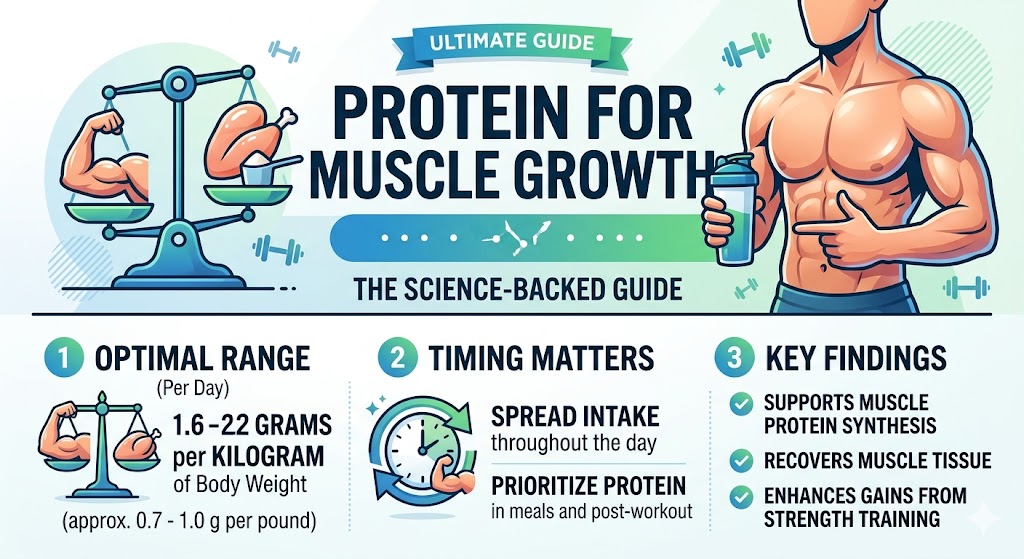
Understanding How Much Protein for Muscle Growth is one of the most important parts of building muscle effectively. Most people already know protein is essential for muscle gain, which is why protein shakes, high-protein diets, and supplements are everywhere in the fitness industry.
However, many gym beginners and even experienced lifters still do not fully understand How Much Protein for Muscle Growth they actually need every day. Some people eat too little protein and struggle to recover from workouts, while others consume extremely high amounts without knowing whether it truly improves muscle growth.
The truth is that protein intake plays a major role in muscle recovery, muscle protein synthesis, strength progression, and body composition. However, protein alone is not enough. Resistance training, sleep, recovery, calorie intake, and workout consistency all work together to maximize muscle-building results.
This complete guide explains exactly How Much Protein for Muscle Growth you need daily, how to calculate your ideal intake, the best protein sources, meal timing strategies, common mistakes, and practical tips to help you build muscle faster naturally.
What Is Protein for Muscle Growth?
Protein for muscle growth refers to the dietary protein your body uses to repair, recover, and build new muscle tissue after exercise.
Protein is made up of amino acids, often called the building blocks of muscle. During resistance training such as weightlifting or calisthenics, your muscle fibers experience small amounts of stress and microscopic damage. Your body repairs those fibers using amino acids obtained from protein-rich foods.
This repair process helps muscles become stronger and larger over time.
Understanding How Much Protein for Muscle Growth matters because muscle protein synthesis depends heavily on adequate amino acid intake. Without enough protein, your body struggles to recover efficiently and maximize muscle growth.
For example, someone training intensely four times weekly but consuming very low protein may experience:
- Slower recovery
- Increased soreness
- Reduced strength progression
- Slower muscle gain
Research published in the Journal of the International Society of Sports Nutrition shows that protein requirements increase significantly when combined with resistance training.
Why Amino Acids Matter for Muscle Growth
Amino acids directly support muscle repair and recovery.
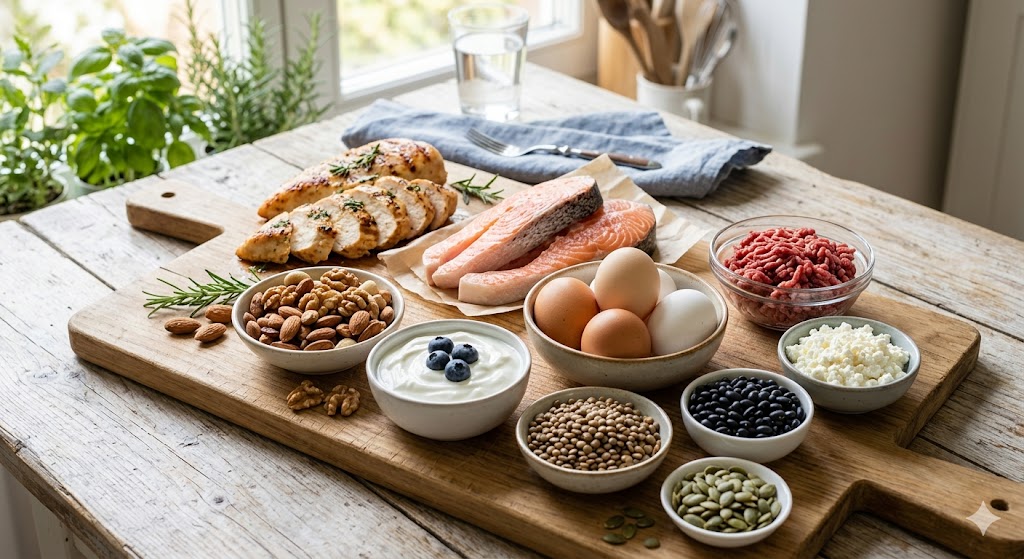
Your body cannot naturally produce all essential amino acids, meaning they must come from dietary protein sources such as:
- Eggs
- Chicken
- Fish
- Dairy
- Soy
- Beans
- Whey protein
One of the most important amino acids for muscle growth is leucine. Leucine helps trigger muscle protein synthesis after workouts.
Foods especially rich in leucine include:
- Whey protein
- Eggs
- Greek yogurt
- Chicken breast
- Fish
If you want to maximize results, understanding How Much Protein for Muscle Growth and consuming high-quality protein sources consistently is extremely important.
Why Protein Intake Matters for Building Muscle
Protein intake matters because resistance training alone cannot maximize muscle growth without sufficient amino acids for recovery and repair.
Strength training creates the stimulus for muscle growth, while protein provides the raw materials needed to rebuild stronger muscle tissue.
Research from the British Journal of Sports Medicine found that combining resistance training with adequate protein intake significantly improves lean muscle mass gains.
Understanding How Much Protein for Muscle Growth becomes especially important during:
- Bulking phases
- Fat loss diets
- Intense training programs
- Muscle recovery periods
What Happens If You Eat Too Little Protein?
Eating too little protein while training can negatively affect muscle growth and workout performance.
Low protein intake may cause:
- Slower recovery
- Increased muscle soreness
- Poor strength progression
- Increased muscle loss during dieting
- Lower workout performance
For example, many beginners train hard in the gym but consume only 50–70 grams of protein daily despite needing much more for proper muscle growth.
This is why learning How Much Protein for Muscle Growth is essential for beginners and advanced lifters alike.
How Much Protein for Muscle Growth Per Day?
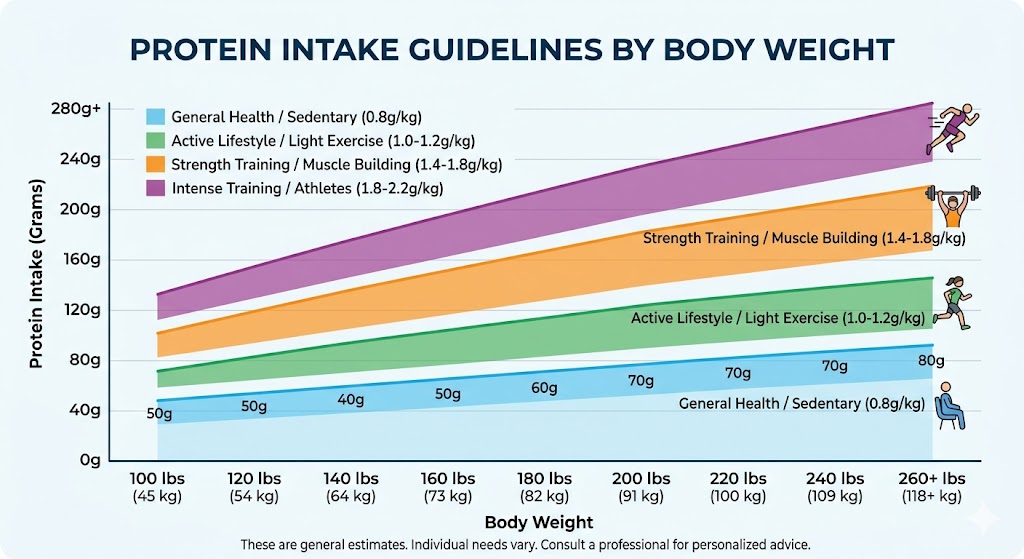
Most people need approximately 1.6–2.2 grams of protein per kilogram of body weight daily for optimal muscle growth.
This recommendation is supported by multiple sports nutrition studies and works effectively for beginners, intermediate lifters, and many advanced athletes.
Protein Intake Recommendations by Goal
| Goal | Protein Intake |
|---|---|
| Sedentary adults | 0.8 g/kg |
| General fitness | 1.2–1.6 g/kg |
| Muscle growth | 1.6–2.2 g/kg |
| Fat loss/cutting | 2.0–2.4 g/kg |
| Advanced bodybuilding | 2.2+ g/kg |
Research reviews suggest muscle-building benefits begin to plateau around 1.6–2.2 g/kg for most people.
Understanding How Much Protein for Muscle Growth helps prevent both under-eating and excessive intake.
How Much Protein for Muscle Growth Based on Body Weight?
Your protein needs depend heavily on body weight, training intensity, and fitness goals.
Protein Intake Chart by Body Weight
| Body Weight | Protein Range |
|---|---|
| 50 kg | 80–110 g |
| 60 kg | 96–132 g |
| 70 kg | 112–154 g |
| 80 kg | 128–176 g |
| 90 kg | 144–198 g |
| 100 kg | 160–220 g |
For example:
- A 60 kg beginner may build muscle effectively with 100–120 grams daily.
- A 90 kg advanced lifter usually requires significantly more.
This is why personalized calculations are more useful than copying influencer diets online.
How to Calculate How Much Protein for Muscle Growth
Calculating How Much Protein for Muscle Growth is simple.
Step-by-Step Formula
- Determine your body weight in kilograms.
- Multiply your weight by 1.6–2.2.
- Choose your target based on your training goals.
Example:
- Body weight = 80 kg
- Muscle growth target = 1.8 g/kg
- Daily protein target = 144 grams
This calculation gives you a personalized protein goal based on your body size and activity level.
Best Protein Sources for Muscle Growth
The best protein sources for muscle growth are foods rich in essential amino acids and leucine.
Best Animal-Based Protein Sources
Animal proteins are complete proteins containing all nine essential amino acids.
Top choices include:
- Chicken breast
- Eggs
- Greek yogurt
- Salmon
- Lean beef
- Cottage cheese
- Whey protein
Whey protein is especially popular because it digests quickly and contains high leucine levels.
Best Plant-Based Protein Sources
Plant-based diets can also support muscle growth effectively when planned properly.
Good options include:
- Lentils
- Chickpeas
- Tofu
- Tempeh
- Soy products
- Quinoa
- Beans
Combining multiple plant proteins improves amino acid balance for better muscle support.
high-protein foods for fat loss
How Much Protein for Muscle Growth After Workout?
Post-workout protein supports muscle recovery and muscle protein synthesis.
Most people benefit from consuming approximately:
- 20–40 grams of protein after training
Combining protein with carbohydrates may also improve glycogen recovery after intense workouts.
Good post-workout protein choices include:
- Whey protein shakes
- Greek yogurt
- Chicken and rice
- Eggs with toast
- Protein smoothies
Although post-workout nutrition helps recovery, total daily intake matters more than exact timing.
Understanding How Much Protein for Muscle Growth throughout the entire day is more important than obsessing over short anabolic windows.
Should You Eat Protein Before Bed?
Protein before bed may improve overnight recovery and muscle protein synthesis.
Casein protein is especially useful because it digests slowly and provides amino acids during sleep.
Good bedtime protein options include:
- Greek yogurt
- Cottage cheese
- Casein protein
- Milk
- Protein pudding
Research suggests pre-sleep protein may improve overnight recovery in active individuals.
Can You Build Muscle Without Protein Supplements?
Yes, you can absolutely build muscle without supplements if your daily protein intake is sufficient from whole foods.
Many successful athletes meet their protein goals through regular meals alone.
However, supplements can help improve convenience when reaching daily protein targets becomes difficult.
Understanding How Much Protein for Muscle Growth helps determine whether supplements are actually necessary for your diet.
Common Protein Mistakes That Slow Muscle Growth
Eating Too Little Protein
Many people train consistently but fail to consume enough daily protein.
Ignoring Calories and Recovery
Protein alone cannot compensate for:
- Poor training
- Inadequate sleep
- Low calorie intake
- Inconsistent workouts
Relying Only on Supplements
Whole foods provide vitamins, minerals, fiber, and healthy fats beyond protein alone.
Consuming Most Protein in One Meal
Spreading protein intake across multiple meals may improve muscle protein synthesis more effectively.
Sample High-Protein Meal Plan for Muscle Growth
| Meal | Protein |
|---|---|
| Eggs + oats breakfast | 30 g |
| Chicken rice lunch | 40 g |
| Greek yogurt snack | 20 g |
| Salmon dinner | 40 g |
| Protein shake | 25 g |
Daily total: approximately 155 grams.
This example demonstrates How Much Protein for Muscle Growth can realistically be achieved using balanced meals throughout the day.
Best Grocery Foods for Muscle Gain
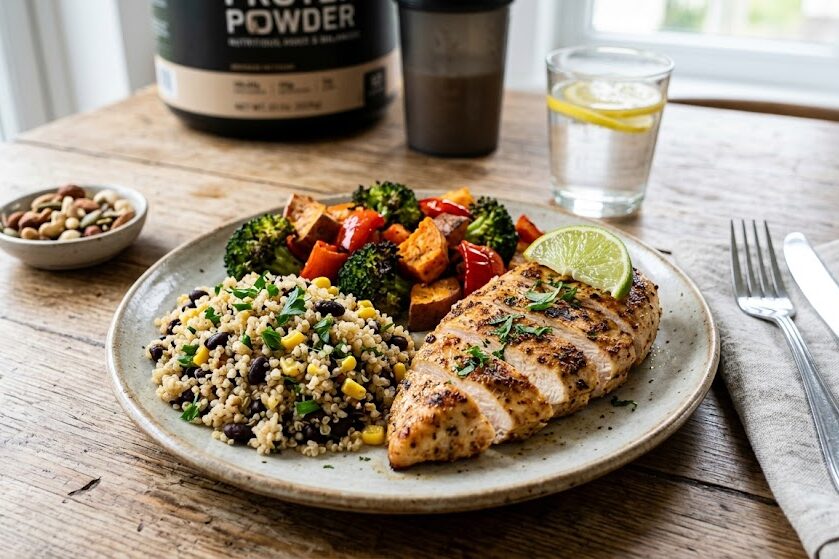
A muscle-building grocery list should include:
- Chicken breast
- Eggs
- Greek yogurt
- Cottage cheese
- Rice
- Oats
- Whey protein
- Salmon
- Tofu
- Lentils
- Bananas
How Long Does Protein Take to Build Muscle?
Protein supports muscle recovery immediately after workouts, but visible muscle growth takes time and consistency.
Most beginners notice:
- Improved recovery within days
- Strength increases within weeks
- Visible muscle changes within 8–12 weeks
Consistent training, progressive overload, sleep, and proper nutrition all influence results.
Understanding How Much Protein for Muscle Growth helps improve long-term muscle-building success.
Conclusion
Understanding How Much Protein for Muscle Growth is essential for maximizing muscle-building results naturally and efficiently.
For most people, consuming approximately 1.6–2.2 grams of protein per kilogram of body weight daily provides an excellent foundation for muscle growth and recovery.
However, protein alone does not build muscle automatically. Resistance training, workout consistency, calorie intake, sleep quality, and recovery all work together to support muscle development.
Whether your goal is lean muscle gain, fat loss, strength improvement, or body recomposition, learning How Much Protein for Muscle Growth helps you make smarter nutrition decisions and improve long-term fitness results.
Start tracking your intake, prioritize high-quality protein sources, train consistently, and focus on steady progress over time.
FAQ’s
How Much Protein for Muscle Growth daily?
Most people need 1.6–2.2 grams of protein per kilogram of body weight daily for optimal muscle growth.
Is 100 grams of protein enough to build muscle?
Yes, 100 grams may be enough for lighter individuals, but larger or more active people often require more.
How Much Protein for Muscle Growth after workouts?
Most people benefit from consuming 20–40 grams of protein after training.
Can too much protein build muscle faster?
No, excessively high protein intake usually provides diminishing muscle-building returns.
Is whey protein necessary for muscle growth?
No, whey protein is convenient but not required if total daily protein intake is sufficient.
What are the best protein foods for muscle gain?
Chicken, eggs, fish, Greek yogurt, whey protein, tofu, and lentils are excellent protein sources.
How many meals should contain protein daily?
Spreading protein across 3–5 meals daily may improve muscle protein synthesis.
Can vegetarians build muscle with high protein intake?
Yes, plant-based protein sources can support muscle growth effectively when combined properly.
Does protein timing matter for muscle growth?
Total daily protein intake matters more than exact timing, although post-workout protein supports recovery.
How long does it take to see muscle growth results?
Most beginners notice strength improvements within weeks and visible muscle changes within 8–12 weeks.
1 thought on “How Much Protein for Muscle Growth? Science-Backed Guide”