
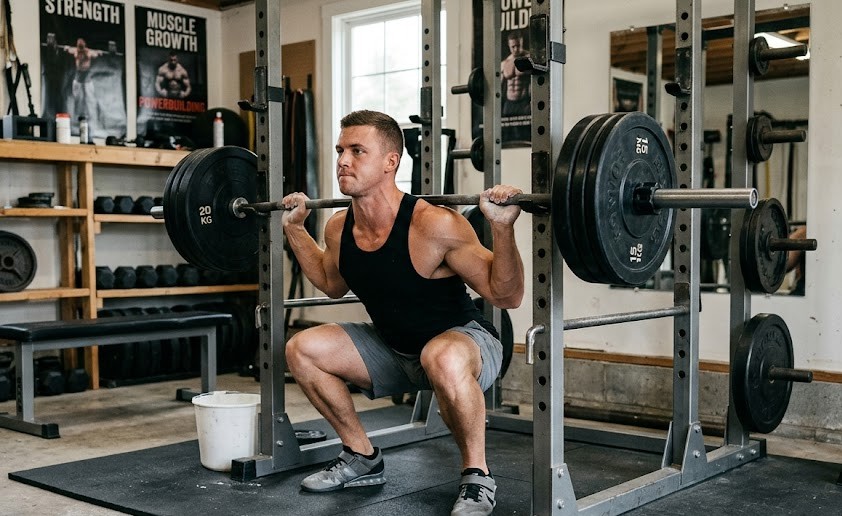
If you want to build muscle while also getting seriously strong, a Powerbuilding Program may be the perfect training style for you. Unlike traditional bodybuilding that focuses mainly on aesthetics or powerlifting that focuses only on maximal strength, a Powerbuilding Program combines both approaches into one effective system.
This hybrid training method has exploded in popularity because it helps lifters develop a muscular physique while increasing strength on major compound lifts like the squat, bench press, and deadlift. Whether you are a beginner or intermediate lifter, following a structured Powerbuilding Program can improve performance, muscle growth, and long-term consistency.
What Is a Powerbuilding Program?
A Powerbuilding Program is a workout system that combines heavy strength training with bodybuilding-style hypertrophy work. The goal is to increase both muscle size and overall strength at the same time.
Most powerbuilding workouts start with heavy compound lifts performed in lower rep ranges to build strength. After that, accessory exercises are added using moderate-to-high reps to stimulate muscle growth.
Common compound lifts include:
- Squats
- Bench presses
- Deadlifts
- Overhead presses
- Barbell rows
For example, a chest-focused session may begin with heavy bench presses for strength before moving into incline dumbbell presses, flyes, and tricep exercises for hypertrophy.
A properly structured Powerbuilding Program allows you to become stronger while also building a more aesthetic physique.
Why Is a Powerbuilding Program So Effective?
The reason a Powerbuilding Program works so well is because it combines two proven training styles into one balanced routine.
Heavy compound lifts improve:
- Strength
- Nervous system efficiency
- Athletic performance
- Force production
Meanwhile, hypertrophy-focused accessory work helps:
- Increase muscle size
- Improve muscular balance
- Fix weak points
- Enhance aesthetics
Research consistently shows that progressive resistance training improves lean muscle mass and overall strength when performed consistently.
Another major advantage of a Powerbuilding Program is motivation. Many lifters get bored doing only low-rep strength work or endless bodybuilding pump workouts. Powerbuilding keeps training more engaging through varied rep ranges and workout structures.
Powerbuilding vs Bodybuilding vs Powerlifting
| Training Style | Primary Goal | Rep Range | Main Focus |
|---|---|---|---|
| Powerbuilding | Strength + Muscle | 3–12 reps | Hybrid training |
| Bodybuilding | Muscle Size | 8–15 reps | Hypertrophy |
| Powerlifting | Max Strength | 1–5 reps | Competition lifts |
Bodybuilding mainly focuses on aesthetics and muscle definition. Powerlifting prioritizes maximum strength in the squat, bench press, and deadlift.
A Powerbuilding Program combines both approaches by using heavy lifts alongside hypertrophy training.
For example:
- A powerlifter may only perform heavy triples on squats.
- A bodybuilder may focus on high-volume leg presses.
- A powerbuilder combines heavy squats with accessory work like Romanian deadlifts and leg extensions.
Best Exercises for a Powerbuilding Program
The best Powerbuilding Program always prioritizes compound movements first.
Best Compound Exercises
These exercises build the most overall strength and muscle:
- Back squat
- Front squat
- Bench press
- Incline bench press
- Deadlift
- Romanian deadlift
- Overhead press
- Pull-ups
- Bent-over rows
Compound exercises train multiple muscle groups simultaneously and allow progressive overload more effectively.
For example, squats train:
- Quads
- Glutes
- Core
- Lower back
Research from strength-training studies shows multi-joint exercises produce greater overall muscular adaptations compared to isolation-only training.
Best Accessory Exercises for Muscle Growth
Accessory work is extremely important in a Powerbuilding Program because it increases training volume without overwhelming recovery.
Popular accessory exercises include:
- Lateral raises
- Leg curls
- Bicep curls
- Tricep pushdowns
- Cable flyes
- Face pulls
- Skull crushers
- Calf raises
These exercises help improve aesthetics and muscular balance while reducing weak points.
For example, adding lateral raises after overhead pressing can improve shoulder width and upper-body symmetry.
Progressive Overload Is the Key to Results
Every successful Powerbuilding Program relies on progressive overload.
Progressive overload means gradually increasing:
- Weight
- Reps
- Sets
- Training volume
This forces your body to adapt through muscle growth and strength increases.
The relationship behind strength production can be represented as:
W=F×d
For example:
- Week 1 bench press: 80 kg × 5 reps
- Week 4 bench press: 85 kg × 5 reps
That small increase compounds significantly over time.
Without progressive overload, muscle and strength gains eventually stall.
Best Powerbuilding Program Split for Beginners
A 4-day upper/lower split is one of the best beginner-friendly structures.
Sample 4-Day Powerbuilding Program
| Day | Focus |
|---|---|
| Monday | Upper Strength |
| Tuesday | Lower Strength |
| Thursday | Upper Hypertrophy |
| Friday | Lower Hypertrophy |
This structure works well because it balances:
- Recovery
- Strength work
- Hypertrophy volume
- Workout frequency
A beginner Powerbuilding Program should focus on mastering technique before increasing intensity aggressively.
Sample Beginner Powerbuilding Workout
Upper Strength Day
- Bench Press — 4×5
- Barbell Row — 4×6
- Overhead Press — 3×6
- Pull-Ups — 3×8
- Tricep Pushdowns — 3×12
Lower Strength Day
- Back Squat — 4×5
- Romanian Deadlift — 3×8
- Walking Lunges — 3×10
- Leg Curl — 3×12
- Calf Raises — 4×15
This beginner Powerbuilding Program provides enough volume for muscle growth without excessive fatigue.
Best Sets and Reps for Powerbuilding
Different rep ranges target different adaptations.
Strength Training Rep Ranges
| Exercise Type | Sets | Reps |
|---|---|---|
| Heavy Compound Lift | 3–5 | 3–6 |
| Secondary Compound | 3–4 | 6–8 |
| Isolation Exercise | 2–4 | 10–15 |
Heavy compound lifts work best in lower rep ranges because they maximize force production and nervous system adaptation.
Accessory exercises usually perform best with moderate-to-high reps for hypertrophy.
Nutrition for a Powerbuilding Program
Nutrition directly affects recovery, performance, and muscle growth.
Protein Intake for Muscle Growth
Most lifters benefit from:
1.6–2.2 kg⋅dayg
Protein supports:
- Muscle repair
- Recovery
- Strength progression
Good protein sources include:
- Chicken
- Eggs
- Greek yogurt
- Salmon
- Whey protein
- Lean beef
Carbohydrates Improve Performance
Carbohydrates fuel intense workouts and heavy compound lifting.
Best pre-workout carb sources:
- Rice
- Oats
- Potatoes
- Bananas
- Whole-grain bread
A proper Powerbuilding Program requires enough calories and nutrients to support recovery and performance.
How Much Protein for Muscle Growth
Recovery Matters More Than Most Lifters Think
Many lifters fail because they ignore recovery.
Sleep, stress management, hydration, and deload weeks all influence long-term progress.
Poor recovery can reduce:
- Strength output
- Muscle growth
- Workout performance
- Motivation
Most lifters benefit from a deload week every 4–8 weeks.
During a deload:
- Reduce training volume
- Lower workout intensity
- Focus on recovery
This helps reduce fatigue while maintaining performance.
Common Powerbuilding Mistakes
Here are the biggest mistakes beginners make in a Powerbuilding Program:
1. Training Too Heavy Every Day
Constant maximal lifting increases fatigue and injury risk.
2. Ignoring Progressive Overload
Without progression, results slow dramatically.
3. Poor Recovery Habits
Lack of sleep and nutrition reduces muscle growth and strength gains.
4. Changing Programs Constantly
Consistency matters more than constantly chasing “perfect” routines.
5. Skipping Accessory Work
Accessory exercises help build balanced muscle development.
How Long Does a Powerbuilding Program Take to Show Results?
Most beginners notice strength improvements within 4–8 weeks.
Visible muscle growth usually becomes more noticeable after 8–12 weeks of consistent training and nutrition.
For example, many beginner lifters can:
- Add 5–15 kg to compound lifts
- Increase muscle size
- Improve overall athleticism
Consistency is the biggest factor in long-term success.
calisthenics workout plan for beginners
FAQs
Is a Powerbuilding Program good for beginners?
Yes. A beginner-friendly Powerbuilding Program can help new lifters build strength and muscle simultaneously while learning proper exercise technique.
Can you build muscle and strength at the same time?
Yes. A properly structured Powerbuilding Program combines hypertrophy and strength training effectively.
How many days per week should I train?
Most beginners do best with 4 training days weekly, while advanced lifters may train 5–6 days.
Is powerbuilding better than bodybuilding?
Neither is universally better. Bodybuilding prioritizes aesthetics, while a Powerbuilding Program focuses on both strength and muscle growth.
Do I need supplements for a Powerbuilding Program?
No. Supplements can help convenience and recovery, but proper nutrition and training matter far more.
How important is protein intake?
Protein intake is extremely important because it supports muscle repair and growth after training.
Conclusion
A Powerbuilding Program is one of the best training methods for building muscle and strength together. By combining heavy compound lifts with hypertrophy-focused accessory work, you can improve your physique, increase performance, and stay motivated long term.
The most important factors are:
- Consistency
- Progressive overload
- Proper recovery
- Structured programming
- Good nutrition
You do not need the most complicated workout routine to succeed. Start with a beginner-friendly Powerbuilding Program, master the basics, and improve gradually week after week.