
Strong legs are the foundation of a healthy, athletic, and functional body. Whether you’re climbing stairs, carrying groceries, running, playing sports, or simply staying active throughout the day, your lower body does most of the work.
Yet many beginners either skip leg training entirely or make common mistakes that slow progress and increase the risk of injury.
The good news is that you don’t need complicated exercises or heavy weights to build strong, capable legs. A well-structured beginner legs workout can help you develop strength, improve balance, boost mobility, burn more calories, and build confidence in your fitness journey.
In this guide, you’ll learn exactly what a beginner legs workout is, which muscles it targets, the best exercises to perform, how to train safely at home or in the gym, and how to progress over time for continued results.
What Is a Beginner Legs Workout?
A beginner legs workout is a structured lower-body training routine designed to build foundational strength, muscular endurance, movement confidence, and coordination.
Unlike advanced training programs that focus on lifting heavy weights, a beginner legs workout emphasizes learning proper movement patterns first. This approach helps improve exercise technique, reduce injury risk, and create a solid strength foundation for future progress.
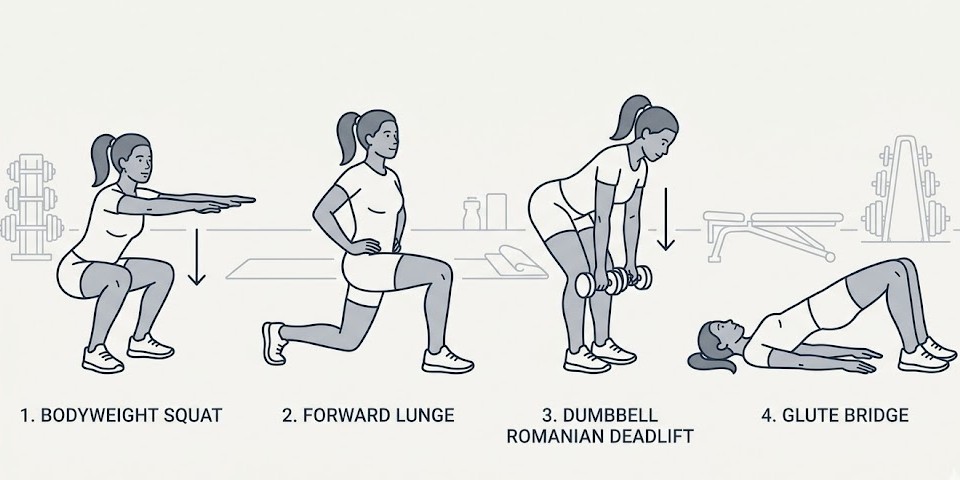
Exercises such as bodyweight squats, glute bridges, lunges, and step-ups teach essential movement mechanics while strengthening major lower-body muscles.
A beginner legs workout is ideal for:
- Fitness beginners
- Gym newcomers
- Home workout enthusiasts
- Weight-loss seekers
- Individuals returning after a long break
- Anyone starting a strength-training program
If you’re looking for a complete fitness foundation, combine this routine with our best bodyweight workout routine
Which Muscles Does a Beginner Legs Workout Target?
Leg training focuses on several major muscle groups that work together to support movement, balance, and overall strength.
| Muscle Group | Primary Function | Key Exercises |
|---|---|---|
| Quadriceps | Knee extension | Squats, Step-Ups |
| Hamstrings | Hip extension and knee flexion | Glute Bridges, Lunges |
| Glutes | Hip power and stability | Squats, Glute Bridges |
| Calves | Ankle movement | Calf Raises |
| Hip Stabilizers | Balance and coordination | Lunges, Step-Ups |
These muscles play a critical role in nearly every lower-body movement, making leg training essential for overall fitness development.
Why Is Leg Training Important for Beginners?
Leg training does far more than build muscle. It improves movement quality, supports everyday activities, and creates a stronger foundation for long-term fitness success.
Stronger Everyday Movement
Daily activities become easier when your lower body is strong.
Tasks such as:
- Walking long distances
- Climbing stairs
- Carrying groceries
- Lifting objects
- Standing for extended periods
all depend heavily on lower-body strength and endurance.
Increased Calorie Burn
The legs contain some of the largest muscle groups in the body. Training these muscles requires significant energy, helping increase calorie expenditure and supporting weight-management goals.
Research shows that resistance training improves muscular strength and functional performance across all age groups.
Source: American College of Sports Medicine, 2024.
Better Balance and Stability
Exercises such as reverse lunges and step-ups challenge stabilizing muscles that help improve balance, coordination, and injury prevention.
Improved stability can also reduce the risk of falls and improve overall movement efficiency.
Improved Athletic Performance
Strong legs generate force and power for athletic activities.
Whether you’re running, cycling, jumping, hiking, or participating in sports, stronger legs can enhance performance and endurance.
Enhanced Functional Fitness
Functional fitness refers to your ability to perform daily activities safely and efficiently.
Consistent leg training improves balance, athletic performance, calorie expenditure, and overall functional fitness.
How Should You Prepare for Your First Leg Workout?
Preparation is a key part of any successful beginner legs workout.
Proper warm-ups increase blood flow, improve mobility, and help prepare muscles and joints for exercise.
Warm-Up Routine
Spend 5–10 minutes preparing your body before training.
A simple beginner warm-up includes:
- March in place – 1 minute
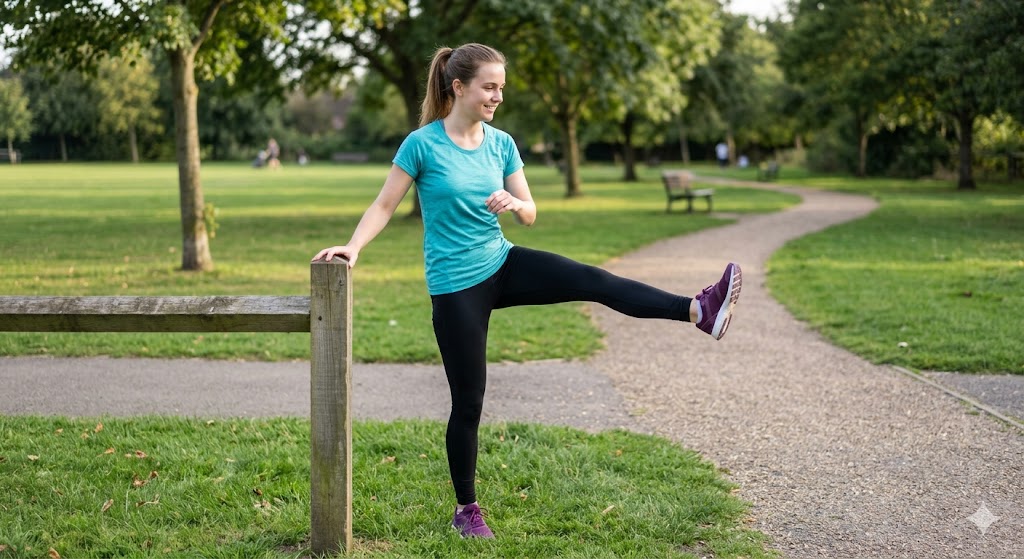
- Leg swings – 10 per side
- Bodyweight squats – 10 reps
- Walking lunges – 10 steps
- Hip circles – 10 per direction
Mobility Exercises
Mobility work improves joint range of motion and movement quality.
Recommended mobility exercises include:
- Hip openers
- Deep squat holds
- Ankle mobility drills
- Dynamic hamstring stretches
Equipment Requirements
Most beginners can start training with minimal equipment.
Helpful tools include:
- Resistance bands
- Dumbbells
- Kettlebells
- Exercise mat
- Adjustable bench
You can explore equipment options in our home workout equipment guide.
Safety Guidelines
Following basic safety principles helps maximize results while minimizing injury risk.
Important rules include:
- Maintain proper form
- Control every repetition
- Avoid rushing movements
- Start with manageable resistance
- Stop if you experience pain
What Are the Best Leg Exercises for Beginners?
The best beginner leg exercises develop strength, stability, balance, and muscular endurance while remaining simple to learn and perform.
Bodyweight Squats
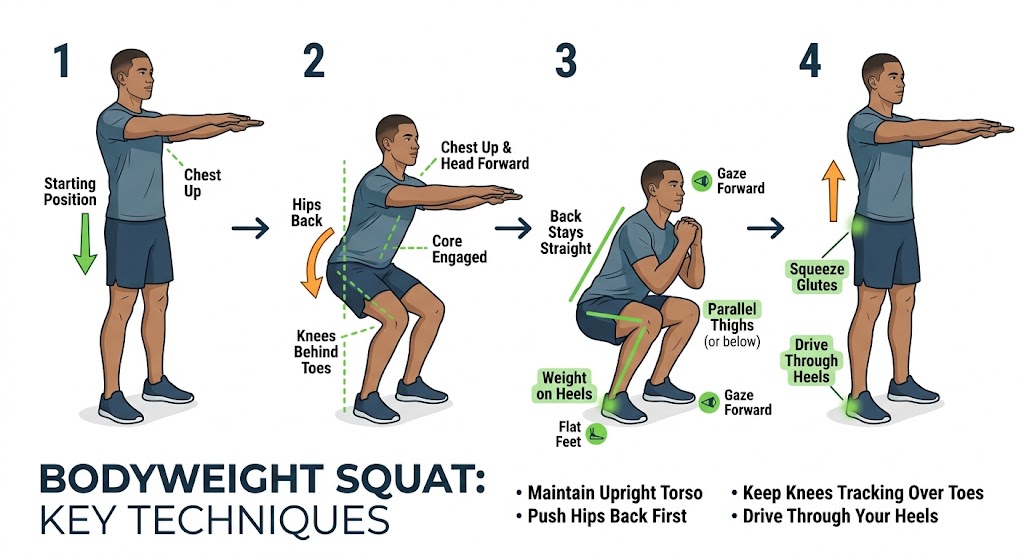
Bodyweight squats are one of the most effective exercises for developing lower-body strength and movement mechanics.
How to Perform a Bodyweight Squat
- Stand with feet shoulder-width apart.
- Keep your chest up.
- Push your hips backward.
- Bend your knees and lower down.
- Return to a standing position.
Glute Bridges
Glute bridges strengthen the glutes, hamstrings, and core.
How to Perform a Glute Bridge
- Lie on your back.
- Bend your knees.
- Drive your hips upward.
- Squeeze your glutes.
- Lower slowly.
Reverse Lunges
Reverse lunges improve unilateral strength, balance, and coordination.
How to Perform Reverse Lunges
- Step backward with one leg.
- Lower both knees.
- Push through the front heel.
- Return to the starting position.
Step-Ups
Step-ups develop functional strength that directly transfers to everyday movement.
Use a stable platform or bench and focus on controlled movement throughout the exercise.
Wall Sits
Wall sits build muscular endurance in the quadriceps and glutes.
Hold a seated position against a wall for 20–60 seconds.
Calf Raises
Calf raises strengthen the calves and improve ankle stability.
For more advanced calf development, check our calf workout exercises.
Goblet Squats (Optional Progression)
Once bodyweight squats become comfortable, goblet squats provide an excellent progression.
Hold a dumbbell or kettlebell close to your chest while performing the squat movement.

How Do You Perform a Beginner Legs Workout at Home?
One of the biggest advantages of a beginner legs workout is that it can be performed almost anywhere with little or no equipment.
Beginner Home Leg Workout Routine
| Exercise | Sets | Reps |
|---|---|---|
| Bodyweight Squats | 3 | 10–12 |
| Glute Bridges | 3 | 12–15 |
| Reverse Lunges | 3 | 8–10 per leg |
| Step-Ups | 3 | 10 per leg |
| Wall Sits | 3 | 30 seconds |
| Calf Raises | 3 | 15–20 |
Rest 60–90 seconds between sets.
Most beginners can complete this workout in approximately 30–40 minutes.
How Long Should a Beginner Leg Workout Last?
A beginner legs workout should generally last between 30 and 60 minutes.
This duration allows sufficient training volume without creating excessive fatigue.
Shorter workouts often improve consistency and recovery while still providing excellent strength-building benefits.
What Is the Best Beginner Gym Leg Workout Routine?
A gym environment offers additional equipment that can help beginners progress safely and effectively.
Beginner Gym Leg Workout
- Goblet Squats – 3 sets of 10
- Leg Press – 3 sets of 10
- Romanian Deadlifts – 3 sets of 10
- Walking Lunges – 3 sets of 10 per leg
- Seated Calf Raises – 3 sets of 15
Rest for 60–90 seconds between sets.
Research indicates resistance training performed at least twice weekly significantly improves muscular strength.
Source: World Health Organization, 2024.
How Many Times Per Week Should Beginners Train Legs?
Recovery is just as important as training itself.
Most beginners can achieve excellent results by training legs two to three times per week.
| Experience Level | Weekly Sessions |
|---|---|
| Beginner | 2–3 |
| Intermediate | 3–4 |
| Advanced | 4–5 |
What Mistakes Should Beginners Avoid on Leg Day?
Avoiding common mistakes can dramatically improve your results.
Poor Squat Form
Incorrect squat mechanics reduce muscle activation and place unnecessary stress on the joints.
Skipping Warm-Ups
Skipping warm-ups can decrease mobility and increase injury risk.
Training Too Frequently
More training isn’t always better. Excessive training can impair recovery and slow progress.
Using Excessive Weight
Master movement quality before increasing resistance.
Lifting too much weight too soon often leads to poor technique and compensation patterns.
Neglecting Recovery
Recovery is where muscle growth and strength adaptation occur.
Prioritize:
- Quality sleep
- Balanced nutrition
- Hydration
- Rest days
For additional recovery guidance, see our muscle recovery tips
How Can Beginners Progress Their Leg Workouts Safely?
Progressive overload is the key to continued improvement.
Progressive overload involves gradually increasing workout difficulty through additional weight, repetitions, sets, or overall training volume.
Add Weight
Increase resistance once exercises feel easy to perform with proper technique.
Increase Repetitions
Add 1–2 repetitions weekly while maintaining form.
Increase Training Volume
Add an extra set when your current workload becomes manageable.
Track Progress
Use a workout journal or fitness app to monitor improvement.
Research shows that self-monitoring significantly improves exercise adherence.
Source: National Institutes of Health, 2024.
Do You Need Weights for a Beginner Legs Workout?
No, weights are not required to start building stronger legs.
Bodyweight exercises such as:
- Squats
- Lunges
- Glute Bridges
- Wall Sits
- Step-Ups
can effectively build foundational strength and muscular endurance.
External resistance becomes useful once bodyweight movements no longer provide enough challenge.
What Should You Eat After a Leg Workout?
Post-workout nutrition helps support recovery and muscle repair.
Good options include:
- Greek yogurt with fruit
- Chicken and rice
- Protein smoothie
- Eggs and whole-grain toast
- Cottage cheese with berries
Research suggests consuming protein after resistance training supports muscle protein synthesis.
Source: International Society of Sports Nutrition, 2024.
Equipment and Tools That Can Improve Leg Training
Certain tools can make progression easier and improve workout variety.
Recommended Equipment
- Resistance bands
- Dumbbells
- Kettlebells
- Adjustable bench
- Foam roller
Useful Fitness Apps
- Strong
- Hevy
- Fitbod
- JEFIT
These tools can help track workouts, monitor progress, and improve consistency.
What’s Next After Completing a Beginner Legs Workout Program?
Once you’ve built a solid foundation, it’s time to progress toward more advanced training.
Transition to Intermediate Training
Intermediate programs typically include:
- Heavier weights
- Increased workout volume
- More exercise variation
- Advanced movement patterns
Create a Balanced Workout Split
A complete fitness routine should train all major muscle groups throughout the week.
Combine Leg and Upper-Body Training
Combining lower-body and upper-body workouts creates a balanced strength-training program.
Set Long-Term Fitness Goals
Clear goals improve motivation and consistency.
Examples include:
- Building muscle
- Losing body fat
- Increasing squat strength
- Improving athletic performance
Conclusion
A beginner legs workout is one of the most effective ways to build foundational strength, improve balance, increase calorie burn, and support long-term fitness success. By focusing on proper exercise technique, consistent training, progressive overload, and adequate recovery, you can safely develop stronger, healthier legs.
Remember that meaningful progress doesn’t happen overnight. Start with simple movements, master the fundamentals, and gradually challenge yourself as your fitness improves. Whether you train at home or in the gym, consistency remains the most important factor for success.
Take the first step today, stay committed to the process, and you’ll build a stronger body from the ground up.
FAQs
What is a beginner legs workout?
A beginner legs workout is a structured lower-body training routine designed to build strength, muscular endurance, balance, and movement confidence through foundational exercises such as squats, lunges, glute bridges, and step-ups.
How many times per week should beginners train legs?
Most beginners achieve excellent results by training their legs two to three times per week while allowing enough recovery time between workouts.
Can I build leg muscle without weights?
Yes. Bodyweight exercises such as squats, lunges, wall sits, glute bridges, and step-ups can effectively build foundational strength and muscle when performed consistently and progressively.
How long should a beginner leg workout last?
Most beginner leg workouts should last between 30 and 60 minutes, depending on exercise selection, workout intensity, and rest periods.
What is the best leg exercise for beginners?
Bodyweight squats are often considered the best beginner leg exercise because they strengthen multiple lower-body muscle groups while teaching proper movement mechanics and balance.
Should beginners do leg workouts at home or in the gym?
Both options are effective. Home workouts provide convenience and accessibility, while gym workouts offer access to additional equipment and progression opportunities. The best choice is the one you can perform consistently.