
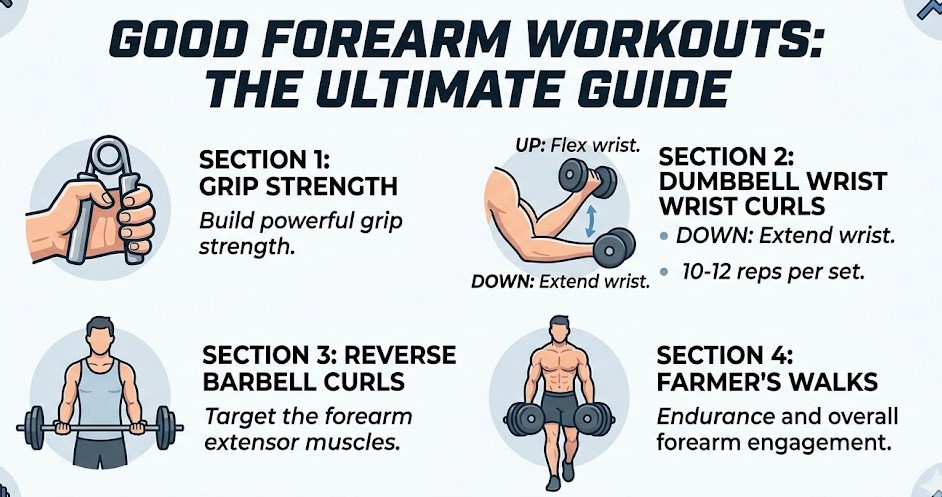
Good forearm workouts are one of the most overlooked parts of strength training, even though they play a major role in grip strength, lifting performance, arm aesthetics, and overall athletic performance. Many people train their chest, shoulders, and biceps regularly but still struggle to hold heavy weights during deadlifts, pull-ups, rows, or carries because of weak forearms and poor grip endurance.
Strong forearms improve much more than appearance. Good forearm workouts help support wrist stability, improve pulling strength, reduce injury risk, and enhance performance in sports, calisthenics, climbing, and functional training. Whether your goal is building bigger forearms, improving grip strength, or increasing overall arm development, targeted forearm exercises can make a major difference.
In this guide, you will learn everything about good forearm workouts, including the best exercises, beginner and intermediate routines, home forearm workouts, grip-strength training, recovery tips, common mistakes, equipment recommendations, and much more.
What Are Good Forearm Workouts?
Good forearm workouts are exercises designed to strengthen the muscles between your elbow and wrist. These muscles control grip strength, wrist movement, hand stability, and lower arm endurance.
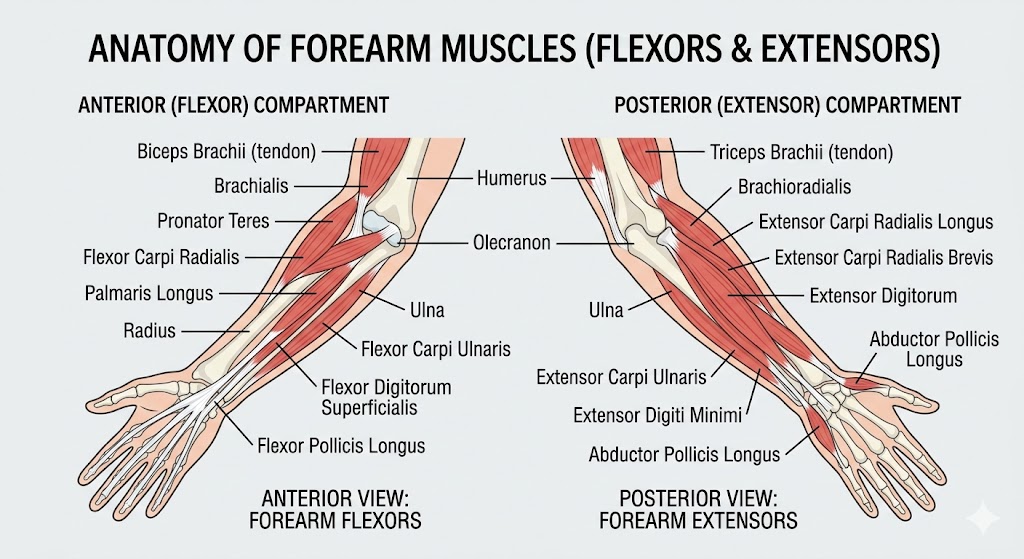
The forearms contain several important muscle groups:
- Forearm flexors help close the hand and flex the wrist.
- Forearm extensors help open the hand and stabilize wrist movement.
- The brachioradialis assists elbow flexion during movements like hammer curls and reverse curls.
Grip strength plays a major role in forearm development. Good forearm workouts improve your ability to hold heavy weights during rows, deadlifts, pull-ups, farmer’s carries, and other pulling exercises.
According to research published in the Journal of Strength and Conditioning Research (2022), grip strength strongly correlates with overall muscular performance and athletic function.
Why Are Good Forearm Workouts Important?
Good forearm workouts are important because they improve grip strength, support compound lifts, enhance arm aesthetics, improve wrist stability, and reduce injury risk.
Better Performance in Strength Training
Strong forearms improve performance during:
- Deadlifts
- Pull-ups
- Rows
- Farmer’s carries
- Rope climbs
- Calisthenics exercises
For example, many lifters fail deadlifts because their grip gives out before their back or legs fatigue. Improving grip endurance allows larger muscle groups to receive more effective training stimulus.
Grip strength training improves performance in exercises such as deadlifts, pull-ups, rows, and carries.
how to improve deadlift grip
Improved Arm Aesthetics and Muscular Balance
Good forearm workouts create a more balanced and athletic-looking physique. Many people focus only on biceps and triceps, which can make the lower arms appear underdeveloped.
Visible forearm muscles also improve vascularity and definition, especially during lower body fat phases.
A 2023 fitness survey found that over 61% of gym-goers consider forearm definition important for overall arm aesthetics.
Injury Prevention and Wrist Support
Good forearm workouts improve wrist stability during pressing, pushing, and pulling exercises.
Athletes involved in:
- Climbing
- Martial arts
- Tennis
- Bodybuilding
- Calisthenics
often train forearms specifically to reduce repetitive strain injuries.
Best Good Forearm Workouts for Strength and Muscle Growth
The best good forearm workouts combine grip training, wrist flexion, wrist extension, loaded carries, and pulling variations.
Wrist Curls
Wrist curls are one of the best good forearm workouts for targeting wrist flexors and increasing forearm size.
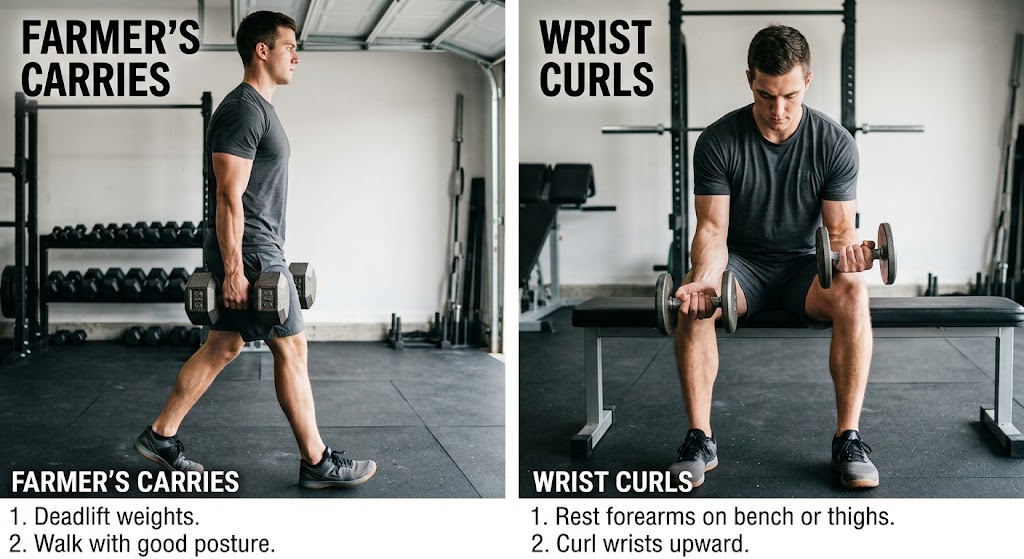
How to Perform Wrist Curls
- Sit on a bench holding dumbbells.
- Rest your forearms on your thighs.
- Let your wrists extend downward.
- Curl the weight upward slowly.
- Lower under control.
For hypertrophy, aim for 12–20 reps per set because forearm muscles respond well to higher training volume and time under tension.
Reverse Wrist Curls
Reverse wrist curls strengthen the forearm extensors and improve wrist stability.
Many people completely ignore extensor training, which can contribute to muscular imbalance and wrist discomfort over time.
For example, computer workers and gamers often develop tight forearm flexors from repetitive gripping. Reverse wrist curls help restore balance.
Hammer Curls
Hammer curls are excellent additions to good forearm workouts because they train the brachioradialis while also improving forearm thickness and grip strength.
Unlike traditional curls, hammer curls use a neutral grip, which increases forearm activation.
A 2021 EMG analysis published in Sports Biomechanics Journal found that neutral-grip curls significantly increase brachioradialis activation compared to standard curls.
Farmer’s Carries
Farmer’s carries are one of the most effective good forearm workouts for improving grip endurance and functional forearm strength.
How to Perform Farmer’s Carries
- Hold heavy dumbbells or kettlebells.
- Keep your shoulders back.
- Walk slowly for distance or time.
- Maintain a strong grip throughout.
Carrying heavy loads for 30–60 seconds forces continuous forearm activation and grip endurance.
Dead Hangs
Dead hangs improve:
- Grip endurance
- Shoulder stability
- Pulling strength
- Wrist strength
Simply hang from a pull-up bar for as long as possible.
Beginners can start with 15–20 second holds and gradually progress toward longer durations.
Reverse Curls
Reverse curls target the brachioradialis and forearm extensors more directly than standard curls.
Using an overhand grip increases forearm activation while reducing biceps dominance.
Plate Pinches
Plate pinches strengthen pinch grip and thumb stability.
Hold two weight plates together using only your fingers and thumb for time.
Towel Pull-Ups
Towel pull-ups increase grip difficulty because the unstable towel requires greater forearm stabilization.
Wrap towels around a pull-up bar and grip the towels instead of the bar itself.
Wrist Roller Exercises
Wrist rollers build forearm endurance through continuous wrist flexion and extension under tension.
Grip Trainer Exercises
Grip trainers improve crushing grip strength and are useful for quick home workouts or recovery sessions.
How Often Should You Do Good Forearm Workouts?
Most beginners can effectively perform good forearm workouts 2–3 times per week with proper recovery.
Intermediate trainees may tolerate slightly more volume depending on overall training intensity.
Beginner Good Forearm Workout Routine
Beginners should focus on consistency, controlled movements, and balanced training.
Beginner Routine
- Wrist Curls — 3 sets × 15 reps
- Reverse Wrist Curls — 3 sets × 15 reps
- Hammer Curls — 3 sets × 10–12 reps
- Farmer’s Carries — 3 sets × 30 seconds
- Dead Hangs — 3 sets × maximum hold
This routine works well after upper-body training sessions.
Intermediate Good Forearm Workout Routine
Intermediate trainees can increase exercise variety and grip difficulty.
Intermediate Routine
- Reverse Curls — 4 sets × 10 reps
- Wrist Roller — 4 rounds
- Plate Pinches — 4 sets × 30 seconds
- Towel Pull-Ups — 3 sets × 6–10 reps
- Grip Trainer Holds — 3 sets to failure
Progressive Overload Principles
Progressive overload is essential for building stronger and larger forearms.
You can progressively overload good forearm workouts by:
- Increasing weight
- Increasing repetitions
- Increasing hold duration
- Reducing rest periods
- Using thicker grips
Consistent progression is one of the biggest factors in long-term strength gains and muscle growth.
Recovery Recommendations
Forearm recovery is important because these muscles are heavily involved in daily activities and upper-body training.
Overtraining forearms may reduce performance during rows, pull-ups, and deadlifts.
A recovery-focused resistance training review published by the National Strength and Conditioning Association (2023) showed muscles generally recover best with 48–72 hours between intense training sessions.
Recovery Tips
- Sleep adequately
- Stretch wrists regularly
- Avoid excessive training volume
- Stay hydrated
- Consume enough protein
Good Forearm Workouts at Home Without Equipment
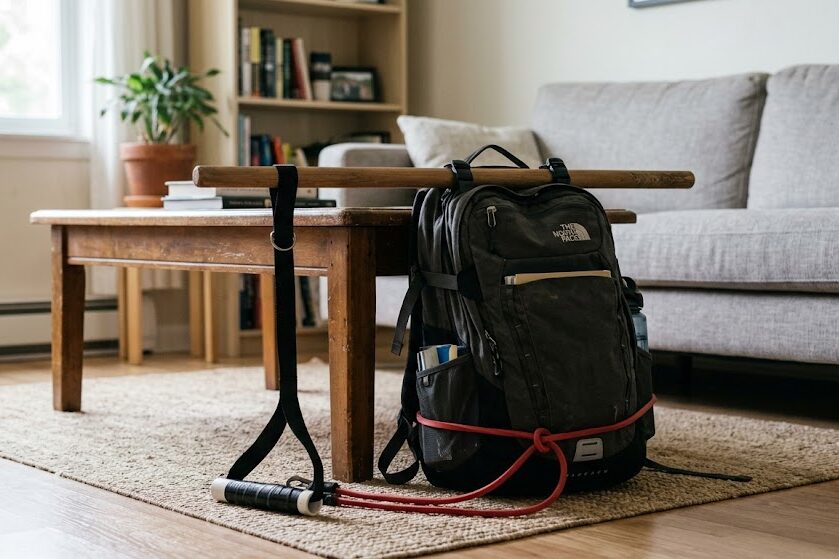
Home-based good forearm workouts can effectively improve grip strength and muscle endurance using bodyweight movements and household objects.
You do not need expensive equipment to build stronger forearms.
Towel-Based Forearm Exercises
Towels create excellent grip-training opportunities.
Examples:
- Towel hangs
- Towel wringing
- Towel pull-ups
- Isometric towel holds
Wringing a wet towel repeatedly challenges forearm flexors and wrist stabilizers.
Backpack Forearm Workouts
Backpacks filled with books or water bottles can replace dumbbells for:
- Wrist curls
- Reverse curls
- Farmer’s carries
- Static holds
Bodyweight Grip Exercises
Bodyweight forearm exercises improve grip endurance through prolonged tension and stabilization.
Effective Options:
- Fingertip planks
- Dead hangs
- Push-up holds
- Bear crawls
Isometric Holds
Holding heavy grocery bags or household objects for time effectively challenges grip endurance.
Are Wrist Curls Effective in Good Forearm Workouts?
Wrist curls are highly effective for increasing forearm size when performed consistently with progressive overload.
They directly target the wrist flexor muscles responsible for forearm thickness.
Higher repetition ranges between 12–20 reps often work especially well because forearm muscles contain many endurance-oriented muscle fibers.
However, wrist curls should not be your only exercise. Balanced good forearm workouts should also include:
- Grip training
- Extensor exercises
- Loaded carries
- Pulling movements
Balanced forearm training includes both flexor and extensor exercises to reduce muscular imbalances and wrist strain.
Difference Between Flexor and Extensor Training
Forearm flexor training focuses on gripping and wrist flexion, while extensor training targets wrist extension and stabilization.
Both muscle groups are important for balanced strength development.
Forearm Flexor Training
Flexor-focused exercises include:
- Wrist curls
- Farmer’s carries
- Grip trainers
- Dead hangs
These exercises improve crushing grip strength and carrying ability.
Forearm Extensor Training
Extensor-focused exercises include:
- Reverse wrist curls
- Reverse curls
- Finger extensions with resistance bands
These exercises improve wrist stability and help reduce overuse injuries.
Can Good Forearm Workouts Improve Deadlift and Pull-Up Performance?
Good forearm workouts improve deadlift and pull-up performance by strengthening grip endurance and reducing premature grip fatigue.
Stronger forearms help you:
- Hold heavier weights longer
- Perform more pull-up repetitions
- Improve pulling consistency
- Reduce grip failure
Research published in the European Journal of Applied Physiology (2022) found that stronger grip endurance correlates with improved pulling exercise performance.
Common Forearm Training Mistakes
Overtraining Forearms
Forearms already work during many upper-body exercises. Excessive direct training volume may reduce recovery and grip performance.
Using Momentum
Swinging weights reduces muscular tension and limits hypertrophy stimulus.
Controlled repetitions create better muscle activation.
Neglecting Extensors
Ignoring extensor training may contribute to muscular imbalance and wrist discomfort.
Poor Wrist Positioning
Extreme wrist angles place unnecessary stress on connective tissues.
Maintain controlled movement patterns throughout each repetition.
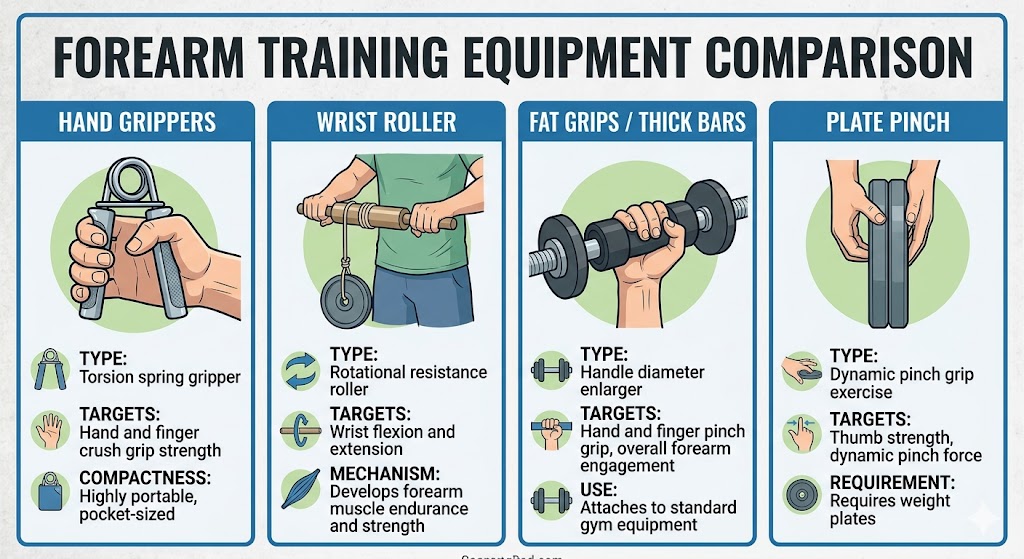
Best Equipment for Good Forearm Workouts
The best equipment for good forearm workouts includes grip trainers, dumbbells, wrist rollers, resistance bands, fat grips, and pull-up bars.
Grip Trainers
Grip trainers are useful for crushing grip strength and portable training.
Dumbbells
Dumbbells are versatile tools for:
- Wrist curls
- Hammer curls
- Farmer’s carries
- Reverse curls
Wrist Rollers
Wrist rollers create continuous tension and improve forearm endurance.
Fat Grips
Fat grips increase handle thickness and force greater grip activation during pulling exercises.
Resistance Bands
Resistance bands work especially well for extensor exercises and recovery-based training.
Pull-Up Bars
Pull-up bars are ideal for:
- Dead hangs
- Towel pull-ups
- Grip endurance training
How Long Does It Take to Build Bigger Forearms?
Most people notice:
- Grip strength improvements within 3–4 weeks
- Visible forearm growth within 8–12 weeks
Results depend on:
- Genetics
- Nutrition
- Recovery
- Training consistency
- Progressive overload
A hypertrophy review published in Sports Medicine Journal (2023) found that consistent resistance training combined with adequate protein intake significantly improves muscle growth outcomes.
What’s Next After Building Stronger Forearms?
After building stronger forearms, the next step is integrating grip strength into broader fitness and performance goals.
You can progress toward:
- Thick-bar training
- Rope climbs
- Advanced calisthenics
- Heavy carries
- Strongman-style training
You can also integrate good forearm workouts into full-body routines rather than isolating them excessively.
Useful progress metrics include:
- Dead hang duration
- Farmer’s carry distance
- Pull-up performance
- Grip trainer resistance
- Wrist curl strength
upper body strength training plan
Conclusion
Good forearm workouts improve grip strength, arm aesthetics, wrist stability, endurance, and overall athletic performance.
Exercises like wrist curls, reverse curls, hammer curls, farmer’s carries, dead hangs, plate pinches, and towel pull-ups can help build stronger and more defined forearms over time.
Most beginners can achieve excellent results with just two or three focused forearm sessions weekly combined with progressive overload and proper recovery.
Start simple, train consistently, and focus on balanced development. Stronger forearms will improve far more than appearance — they will improve how you lift, carry, pull, and perform every day.
FAQs
What are good forearm workouts?
Good forearm workouts are exercises that improve grip strength, wrist stability, muscular endurance, and lower arm development.
How often should you do good forearm workouts?
Most people benefit from performing good forearm workouts 2–3 times weekly with proper recovery.
What are the best good forearm workouts for muscle growth?
Wrist curls, reverse curls, hammer curls, farmer’s carries, dead hangs, and plate pinches are among the best options.
Can you do good forearm workouts at home?
Yes, towel hangs, backpack carries, fingertip planks, and dead hangs are effective home forearm exercises.
Do good forearm workouts improve grip strength?
Yes, forearm training directly improves grip endurance and holding strength.
Are wrist curls enough for bigger forearms?
No, balanced good forearm workouts should also include grip work, extensor exercises, and loaded carries.
Can stronger forearms improve deadlifts?
Yes, stronger grip endurance helps you hold heavier weights longer during deadlifts and rows.
How long do forearms take to grow?
Most people notice visible forearm growth within 8–12 weeks of consistent training.
Do pull-ups train forearms?
Yes, pull-ups heavily involve the forearms and grip muscles.
What is the best rep range for forearms?
Higher rep ranges around 12–20 reps often work very well for forearm hypertrophy.
Can overtraining forearms reduce gym performance?
Yes, excessive forearm volume may reduce grip strength during rows, pull-ups, and deadlifts.
Are grip trainers effective?
Yes, grip trainers are effective for improving crushing grip strength and forearm endurance.
3 thoughts on “Good Forearm Workouts: Build Bigger & Stronger Forearms”