
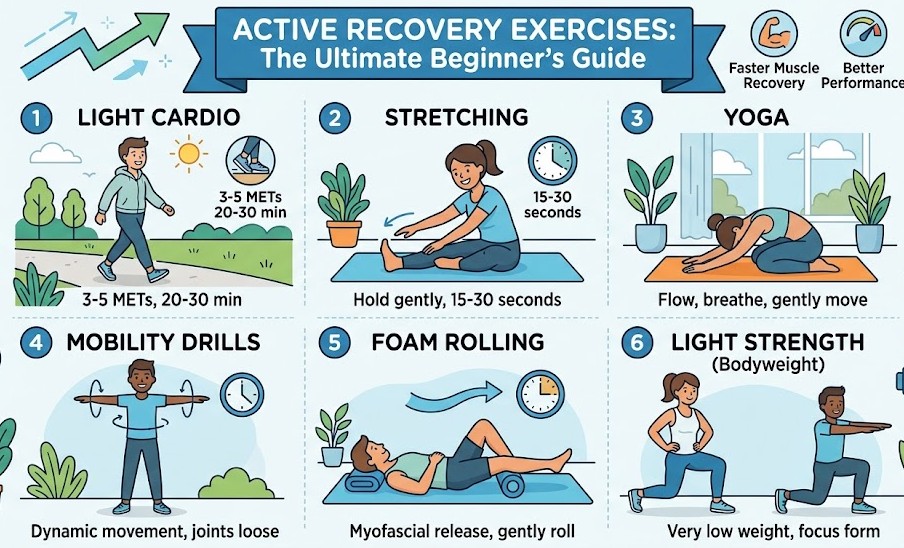
Active Recovery Exercises are one of the most effective ways to recover faster after intense workouts without remaining completely inactive. Many people assume recovery means doing absolutely nothing, but strategic low-intensity movement can often help your body recover more efficiently while reducing stiffness and fatigue.
Whether you lift weights, run, do HIIT workouts, play sports, or follow a general fitness routine, Active Recovery Exercises can improve circulation, reduce soreness, support mobility, and help maintain consistent workout performance over time.
In this guide, you will learn everything about Active Recovery Exercises, including their benefits, best recovery workouts, beginner-friendly recovery methods, recovery after leg day, nutrition tips, common mistakes, recovery tools, and much more.
What Are Active Recovery Exercises?
Active Recovery Exercises are low-intensity movements performed after strenuous workouts to improve blood circulation and support muscle recovery. Unlike complete rest, active recovery keeps the body gently moving without creating additional physical stress.
For example:
- Slow walking after leg day
- Gentle yoga after HIIT workouts
- Easy cycling after running
- Swimming after strength training
are all forms of Active Recovery Exercises.
These activities increase circulation while remaining light enough to avoid additional fatigue.
At the same time, Active Recovery Exercises differ from passive recovery. Passive recovery involves complete physical rest with little or no movement, such as sleeping or taking a full rest day.
While passive recovery is still important after extreme fatigue or injury, Active Recovery Exercises often help reduce stiffness and improve mobility faster.
Difference Between Active Recovery and Passive Recovery
Active Recovery Exercises use light movement, while passive recovery relies on complete physical rest.
Active Recovery
- Low-intensity movement
- Improves circulation
- Helps reduce stiffness
- Supports mobility
- Best for mild soreness
Examples
- Walking
- Yoga
- Cycling
- Swimming
- Stretching
Passive Recovery
- Complete rest
- Minimal movement
- Best for severe fatigue or illness
Examples
- Sleeping
- Full rest day
- Bed rest
Research from the American Council on Exercise states that Active Recovery Exercises may help reduce muscle stiffness and maintain performance between workouts.
How Do Active Recovery Exercises Work?
Active Recovery Exercises work by increasing blood flow and oxygen delivery to recovering muscles.
This process helps:
- Transport nutrients needed for muscle repair
- Remove metabolic waste from exercise
- Improve mobility
- Reduce feelings of tightness
For example, after intense training, muscles often feel stiff because of microscopic muscle damage and inflammation. Gentle movement improves circulation without placing additional stress on already fatigued muscles.
In addition, Active Recovery Exercises may help reduce DOMS (Delayed Onset Muscle Soreness).
Light movement and mobility work often improve soreness more effectively than complete inactivity.
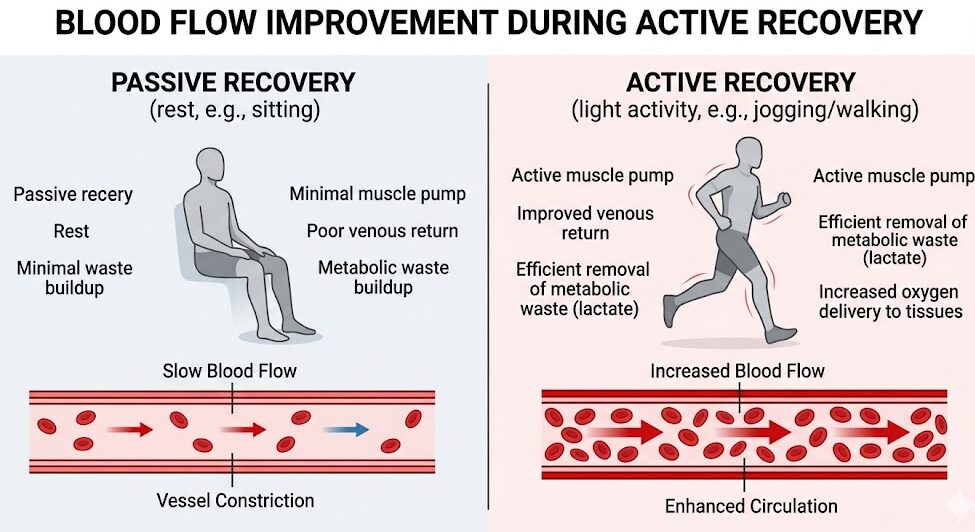
A 2023 review published in the Journal of Strength and Conditioning Research found that recovery-focused movement may improve perceived soreness and workout readiness.
Why Are Active Recovery Exercises Important?
Active Recovery Exercises are important because they help reduce soreness, improve flexibility, support mobility, and reduce accumulated fatigue between workouts.
Recovery is the phase where your body adapts and becomes stronger after training stress.
Improve Blood Circulation
Active Recovery Exercises improve circulation and oxygen delivery to recovering muscles.
Better blood flow may:
- Reduce muscle tightness
- Improve nutrient delivery
- Support recovery
- Reduce fatigue
Reduce Muscle Soreness
Active Recovery Exercises may help reduce DOMS and post-workout stiffness.
For example, a 20-minute recovery walk after leg day may reduce soreness the following day compared to remaining inactive.
Improve Mobility and Flexibility
Yoga, stretching, and mobility drills improve:
- Joint mobility
- Flexibility
- Movement quality
- Posture
Gentle recovery sessions can help restore movement after heavy lifting or long periods of sitting.
Reduce Overtraining Risk
Consistent Active Recovery Exercises may help reduce the risk of:
- Overtraining
- Workout burnout
- Chronic fatigue
- Reduced performance
According to the National Academy of Sports Medicine, insufficient recovery may negatively impact performance, sleep quality, mood, and energy levels.
signs of overtraining syndrome
Best Active Recovery Exercises for Beginners
Walking, yoga, stretching, cycling, swimming, foam rolling, and mobility drills are among the best Active Recovery Exercises for beginners.
These activities are low-impact, beginner-friendly, and easy to customize.
Walking
Walking is one of the simplest and most effective Active Recovery Exercises.
A light walk:
- Improves circulation
- Reduces stiffness
- Supports recovery
- Requires no equipment
For example, a 20–30 minute walk after strength training may improve energy levels and reduce soreness.
Walking should feel relaxed enough to comfortably hold a conversation.
According to the CDC, regular walking supports both physical and mental wellness.
Light Cycling
Light cycling is a low-impact recovery workout that improves circulation and joint mobility.
Many athletes use stationary bikes on recovery days because cycling:
- Reduces joint stress
- Maintains movement
- Supports blood flow
Recovery cycling should remain easy and comfortable.
Swimming
Swimming is one of the best full-body Active Recovery Exercises because water reduces stress on muscles and joints.
Gentle swimming sessions may:
- Relax tight muscles
- Improve circulation
- Reduce impact stress
- Support mobility
Swimming is especially useful after intense lower-body training.
Yoga and Stretching
Yoga and stretching are effective Active Recovery Exercises because they improve flexibility, breathing, relaxation, and mobility.
Gentle yoga flows often include:
- Hip openers
- Hamstring stretches
- Spinal twists
- Shoulder mobility work
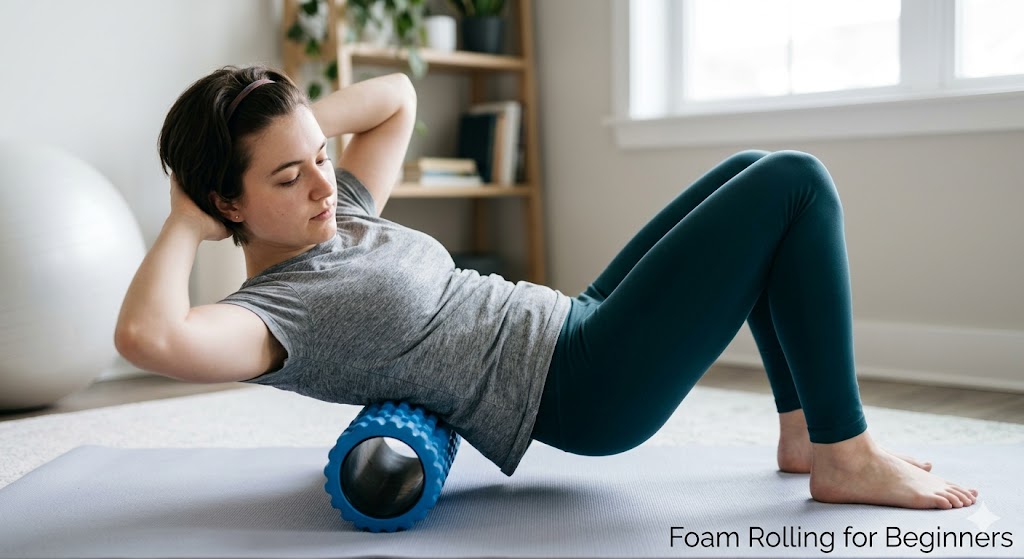
Foam Rolling
Foam rolling is a self-myofascial release technique used to reduce muscle tightness and improve movement quality.
Many athletes use foam rollers after workouts to target sore muscles.
For example:
- Rolling quads after leg day
- Rolling calves after running
- Rolling upper back after lifting
may help improve mobility and comfort.
Mobility Drills
Mobility drills are controlled movements that improve joint function and movement quality.
Examples include:
- Hip rotations
- Shoulder circles
- Ankle mobility drills
- Thoracic spine rotations
Mobility drills are especially useful for people who sit for long periods or perform repetitive workouts.
Best Active Recovery Exercises After Leg Day
The best Active Recovery Exercises after leg day are low-impact movements that improve circulation without heavily loading the lower body.
Best Post-Leg-Day Recovery Activities
- Slow walking
- Light cycling
- Swimming
- Foam rolling
- Yoga flows
- Dynamic stretching
- Mobility drills
For example, many lifters perform 10–15 minutes of easy cycling followed by stretching after heavy squat workouts.
This combination may reduce stiffness while improving circulation.
Sample Active Recovery Workout After Leg Day
An Active Recovery Exercises routine after leg day should remain easy and non-fatiguing.
Example Recovery Workout
- 10-minute slow walk
- 5-minute mobility warm-up
- 10 minutes of light cycling
- Foam rolling for quads and calves
- Gentle hamstring stretches
Active Recovery Exercises should feel easy enough to maintain conversation without significant fatigue.
How Long Should Active Recovery Exercises Last?
Most Active Recovery Exercises should last between 20 and 45 minutes depending on fitness level and training intensity.
Recovery workouts should leave you feeling refreshed rather than exhausted.
Beginners may benefit from:
- 20-minute walks
- Short yoga sessions
- Basic stretching routines
Advanced athletes may perform:
- Longer mobility sessions
- Swimming workouts
- Extended recovery cycling
According to Harvard Health Publishing, low-intensity exercise supports circulation and recovery without overstressing the nervous system.
How Often Should You Do Active Recovery Exercises?
Most people benefit from 1–3 Active Recovery Exercises sessions weekly depending on:
- Workout intensity
- Fitness goals
- Recovery ability
- Lifestyle
For example:
- Someone training six days weekly may need two recovery sessions.
- A beginner training three times weekly may only need one.
Sample Weekly Recovery Schedule
Monday
Strength training
Tuesday
Active Recovery Exercises: Walking + stretching
Wednesday
HIIT workout
Thursday
Yoga and mobility work
Friday
Strength training
Saturday
Light cycling recovery session
Sunday
Full rest day
weekly workout schedule example
Active Recovery Exercises for Different Fitness Goals
Strength Training Recovery
Strength-training recovery should focus on:
- Mobility
- Walking
- Foam rolling
- Stretching
Active Recovery Exercises for Runners
Runners often benefit from:
- Swimming
- Walking
- Easy cycling
These activities reduce impact while maintaining circulation.
HIIT Recovery
HIIT recovery should prioritize nervous system recovery with:
- Gentle yoga
- Deep breathing
- Mobility work
- Easy movement
Sports Recovery
Athletes should include mobility drills and recovery exercises specific to their sport.
For example:
- Basketball players may focus on ankle and hip mobility.
- Tennis players may prioritize shoulders and wrists.
Weight Loss Programs
Active Recovery Exercises support long-term weight loss consistency by encouraging movement without excessive fatigue.
Common Active Recovery Mistakes
Exercising Too Hard
One of the biggest mistakes is turning recovery sessions into intense cardio workouts.
Sprint intervals or heavy lifting are not Active Recovery Exercises because they continue stressing muscles and the nervous system.
Ignoring Pain Signals
Sharp pain during recovery sessions may indicate excessive fatigue or injury.
Pain should never be ignored.
Poor Hydration and Nutrition
Recovery becomes less effective when the body lacks:
- Fluids
- Protein
- Carbohydrates
- Electrolytes
healthy foods for muscle recovery
Neglecting Sleep
Sleep is one of the most important recovery tools for fitness performance.
During sleep, the body repairs tissues and regulates recovery-related hormones.
According to the Sleep Foundation, adults generally need 7–9 hours of sleep for optimal recovery and performance.
Best Foods for Recovery Days
Recovery nutrition should focus on:
- Protein
- Healthy carbohydrates
- Hydration
- Anti-inflammatory foods
Best Recovery Foods
- Eggs
- Greek yogurt
- Berries
- Bananas
- Salmon
- Oats
- Nuts and seeds
- Leafy greens
For example, a balanced recovery meal may include grilled chicken, rice, vegetables, and fruit.
Hydration also supports circulation, recovery, and muscle function.
According to the Mayo Clinic, proper hydration supports overall physical performance and recovery.
Best Recovery Tools and Equipment
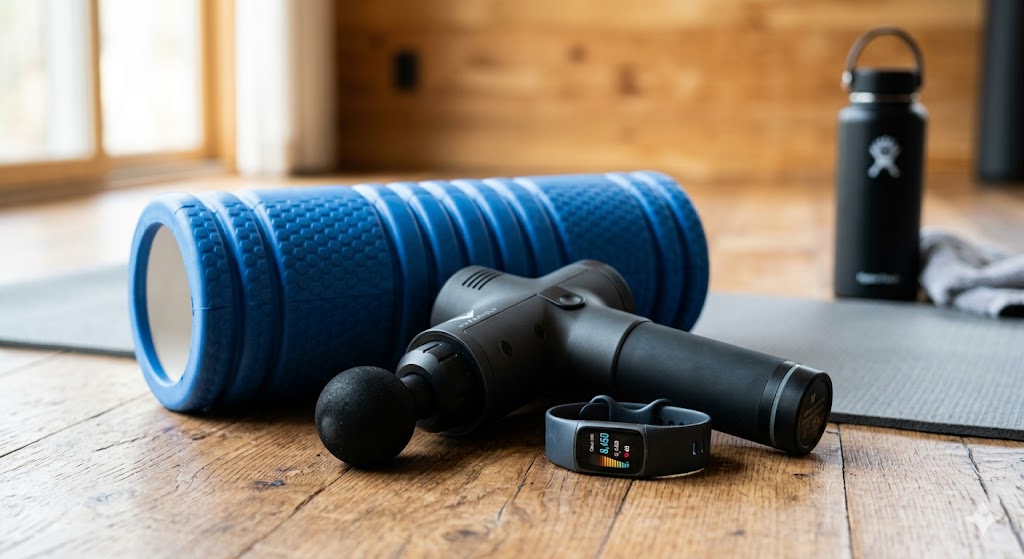
Recovery tools may improve mobility, comfort, and workout consistency.
Helpful Recovery Tools
- Foam roller
- Massage gun
- Yoga mat
- Compression gear
- Fitness tracker
Useful Recovery Apps
- Mobility apps
- Stretching apps
- Sleep trackers
- Heart-rate recovery monitors
Wearable fitness trackers may help monitor resting heart rate and sleep quality to identify recovery needs.
What to Do Next After Starting Active Recovery Exercises
The next step after starting Active Recovery Exercises is tracking how your body responds to different recovery methods.
Recovery is highly individual, so consistency matters.
Helpful Recovery Habits
- Monitor soreness levels
- Track sleep quality
- Stay hydrated
- Prioritize nutrition
- Adjust recovery intensity when needed
For example:
- Runners may prefer cycling recovery sessions.
- Lifters may benefit more from mobility drills and foam rolling.
Conclusion
Active Recovery Exercises help your body recover while keeping you physically and mentally active between workouts.
Walking, stretching, yoga, cycling, swimming, foam rolling, and mobility work can all support circulation, reduce soreness, improve flexibility, and maintain consistent performance when performed at low intensity.
At the same time, recovery is not a sign of weakness. Smart recovery habits often separate long-term fitness progress from burnout and overtraining.
By adding 1–3 Active Recovery Exercises sessions into your weekly routine, you can improve workout consistency, reduce fatigue, support muscle recovery, and maintain better overall performance over time.
FAQs
What are Active Recovery Exercises?
Active Recovery Exercises are low-intensity movements that help improve circulation and support muscle recovery after intense workouts.
Are Active Recovery Exercises better than complete rest?
Active Recovery Exercises may reduce stiffness and soreness faster than complete inactivity after regular workouts.
What are the best Active Recovery Exercises?
Walking, yoga, stretching, cycling, swimming, foam rolling, and mobility drills are among the best options.
How long should Active Recovery Exercises last?
Most recovery workouts should last between 20 and 45 minutes.
Can Active Recovery Exercises reduce soreness?
Yes, Active Recovery Exercises may help reduce DOMS and improve circulation after workouts.
How often should you do Active Recovery Exercises?
Most people benefit from 1–3 recovery sessions weekly depending on workout intensity.
Is walking considered Active Recovery Exercises?
Yes, walking is one of the most effective and beginner-friendly Active Recovery Exercises.
Should Active Recovery Exercises feel difficult?
No, recovery workouts should feel easy enough to comfortably maintain conversation.
Are Active Recovery Exercises good after leg day?
Yes, walking, cycling, stretching, and foam rolling are excellent after intense leg workouts.
Can beginners do Active Recovery Exercises?
Yes, beginners can safely perform low-intensity recovery activities like walking and stretching.
Do Active Recovery Exercises help flexibility?
Yes, yoga, stretching, and mobility drills improve flexibility and movement quality.
Can Active Recovery Exercises prevent overtraining?
Consistent recovery habits may help reduce fatigue accumulation and lower overtraining risk.
4 thoughts on “Active Recovery Exercises: Faster Recovery & Better Performance”