
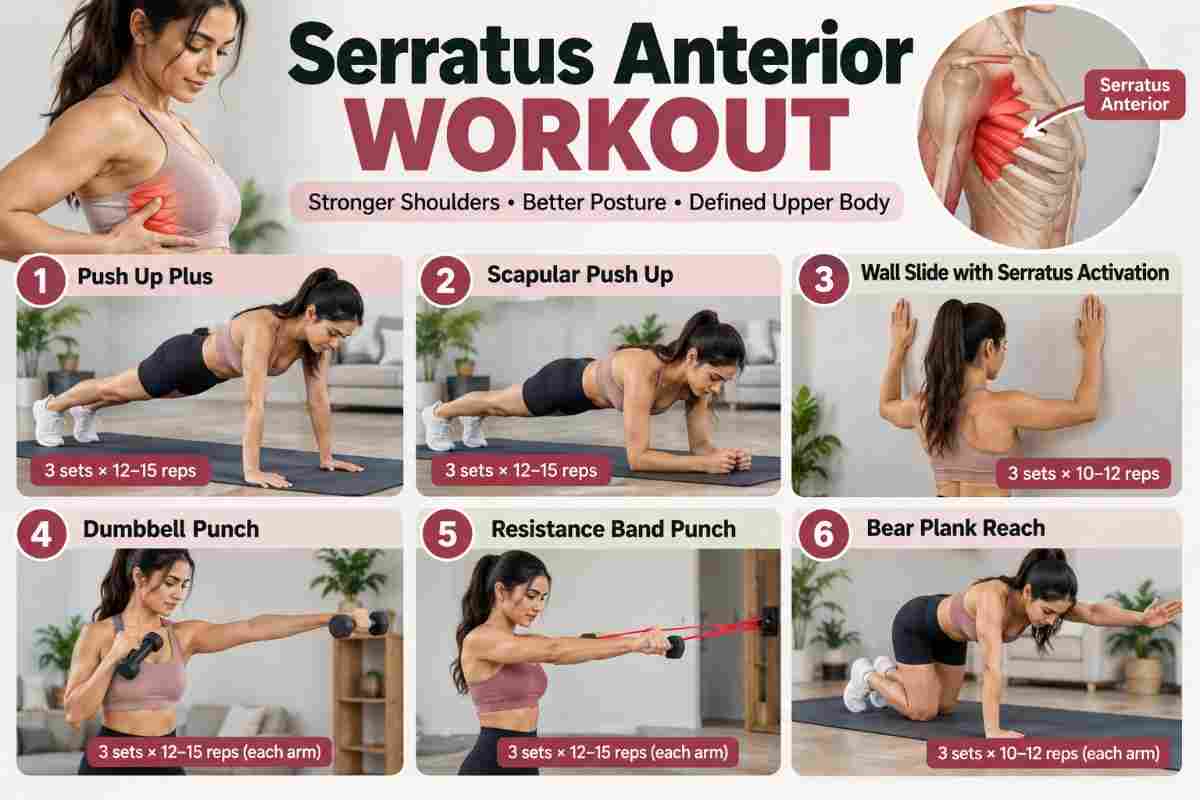
Your chest, shoulders, and back may get plenty of attention during workouts, but one important muscle is often overlooked: the serratus anterior. Located along the sides of your rib cage, this muscle helps control shoulder blade movement during pushing, reaching, and overhead exercises.
A consistent serratus anterior workout can support better shoulder mechanics and balanced upper-body training. In this guide, you’ll learn eight effective exercises, proper techniques, and a simple beginner-friendly routine.
What Is the Serratus Anterior Muscle?
The serratus anterior is a muscle along the sides of the rib cage that helps move and stabilize the shoulder blades. It connects the ribs to the inner border of each shoulder blade and contributes to shoulder blade protraction and upward rotation.
When you push a door, perform a push-up, or raise your arms overhead, this muscle helps your shoulder blades move smoothly around your rib cage.
Why Is the Serratus Anterior Important?
The serratus anterior supports shoulder stability, coordinated arm movement, and pushing mechanics. It works with the rotator cuff, trapezius, and other muscles to help maintain controlled shoulder movement.
For balanced upper-body development, combine serratus anterior exercises with best shoulder workouts for strength and stability and upper back exercises for better posture and strength
What Are the Best Serratus Anterior Exercises?
These eight exercises train shoulder blade movement using bodyweight, dumbbells, resistance bands, or gym equipment.
| Exercise | Equipment | Difficulty |
|---|---|---|
| Wall slides with a reach | Wall | Beginner |
| Scapular push-ups | Bodyweight | Beginner |
| Push-up plus | Bodyweight | Beginner to intermediate |
| Serratus punches | Light dumbbells | Beginner |
| Resistance-band punches | Resistance band | Beginner |
| Foam roller wall slides | Foam roller and wall | Beginner |
| Bear crawls | Bodyweight | Intermediate |
| Cable serratus punches | Cable machine | Intermediate |
1. Wall Slides With a Reach
Wall slides help you practise controlled shoulder blade movement during arm elevation.
How to perform:
- Stand facing a wall with your forearms against it.
- Slide your arms upward while gently pressing into the wall.
- Reach slightly forward without shrugging.
- Return slowly to the starting position.
Sets and reps: 2–3 sets of 10–12 repetitions.
2. Scapular Push-Ups
Scapular push-ups train shoulder blade movement without repeatedly bending your elbows.
How to perform:
- Start in a high plank with your arms straight.
- Allow your shoulder blades to move closer together.
- Push the floor away to spread them apart.
- Keep your body stable and your neck relaxed.
Sets and reps: 2–3 sets of 8–12 repetitions.
3. Push-Up Plus
The push-up plus adds an extra reaching movement at the top of a push-up to encourage shoulder blade protraction.
How to perform:
- Start in a plank or elevated push-up position.
- Perform a push-up if appropriate for your strength level.
- At the top, push the floor away a little farther.
- Keep your elbows straight and avoid rounding your lower back excessively.
Sets and reps: 2–3 sets of 8–12 repetitions.
4. Serratus Punches
Serratus punches use light dumbbells to train controlled shoulder blade movement.
How to perform:
- Lie on your back and hold a light dumbbell above your chest.
- Keep your arm comfortably straight.
- Reach the weight slightly upward by lifting your shoulder blade.
- Lower slowly and repeat.
Sets and reps: 2–3 sets of 12–15 repetitions per side.
5. Resistance-Band Serratus Punches
This exercise adds resistance to a forward-reaching movement.
How to perform:
- Secure a resistance band behind you at chest height.
- Hold it in one hand.
- Extend your arm forward while allowing your shoulder blade to move naturally.
- Return slowly against the band’s tension.
Sets and reps: 2–3 sets of 12–15 repetitions per side.
6. Foam Roller Wall Slides
Foam roller wall slides combine arm elevation with gentle pressure against a wall.
How to perform:
- Place a foam roller between your forearms and a wall.
- Apply gentle pressure.
- Slide your arms upward.
- Keep your ribs controlled and avoid arching your lower back.
Sets and reps: 2 sets of 10–12 repetitions.
7. Bear Crawls
Bear crawls challenge shoulder stability, coordination, and trunk control.
How to perform:
- Start on your hands and toes with your knees hovering above the floor.
- Move forward using opposite hands and feet.
- Keep your trunk stable and your shoulder blades controlled.
Sets: 2–3 rounds of 15–30 seconds.
8. Cable Serratus Punches
Cable punches allow you to increase resistance gradually as your technique improves.
How to perform:
- Stand facing away from a cable machine with the handle behind you.
- Extend one arm forward while allowing your shoulder blade to glide forward.
- Return slowly without twisting your torso.
Sets and reps: 2–3 sets of 10–15 repetitions per side.
Start with light resistance and maintain controlled movement.
How Do You Perform Serratus Anterior Exercises Correctly?
Proper technique helps you focus on shoulder blade control rather than compensating with other muscles.
Follow these tips:
- Keep your neck relaxed and avoid excessive shrugging.
- Maintain a stable trunk without arching your lower back.
- Breathe naturally throughout each repetition.
- Use manageable resistance and controlled movements.
- Stop if an exercise causes sharp or worsening pain.
During a push-up plus, for example, focus on pushing the floor away while keeping your elbows straight.
What Is the Best Serratus Anterior Workout for Beginners?
A beginner workout can combine four exercises using manageable repetitions and resistance.
| Exercise | Sets | Reps |
|---|---|---|
| Wall slides with a reach | 2 | 10–12 |
| Scapular push-ups | 2 | 8–12 |
| Elevated push-up plus | 2 | 8–12 |
| Resistance-band serratus punches | 2 | 12–15 per side |
Warm up with a few minutes of comfortable arm movements. Rest approximately 45–90 seconds between sets as needed.
If you’re new to training, start with two exercises and gradually add more as your technique improves. This is a general fitness routine, not an individualized rehabilitation plan.
Can You Train the Serratus Anterior at Home Without Equipment?
Yes, you can train the serratus anterior at home using wall slides, scapular push-ups, and wall push-up plus variations.
Start with two or three exercises and focus on smooth shoulder blade movement. If you have light dumbbells or resistance bands, add serratus punches as you progress.
Can Dumbbells and Resistance Bands Strengthen the Serratus Anterior?
Yes. Different equipment options allow you to adjust the difficulty as your strength improves.
- Dumbbells: Use light weights for serratus punches.
- Resistance bands: Perform controlled forward punches.
- Cable machines: Add adjustable resistance to standing punches.
- Bodyweight: Practise scapular push-ups and push-up plus variations.
For more ideas, explore resistance band exercises for beginners.
What Are Common Serratus Anterior Workout Mistakes?
Common mistakes include rushing repetitions, shrugging excessively, using too much resistance, and arching the lower back.
To improve your technique:
- Slow down and control each repetition.
- Reduce resistance if you lose control.
- Keep your neck relaxed.
- Maintain a stable trunk.
- Include chest, back, and shoulder exercises for balanced strength.
Increase repetitions or resistance gradually when you can maintain proper form. Learn more about progressive overload for muscle growth.
Do Serratus Anterior Exercises Help With Shoulder Blade Winging?
Serratus anterior exercises may improve shoulder blade control in some situations, but they cannot correct every cause of shoulder blade winging. Winging may result from muscle dysfunction or nerve problems.
If you notice prominent winging, unexplained weakness, or persistent shoulder pain, consult a qualified healthcare professional for assessment.
How Can You Tell if Your Serratus Anterior Is Working?
You may feel muscular effort along the sides of your rib cage during serratus anterior exercises. However, muscle burn alone does not prove that an exercise is effective.
During a push-up plus, focus on moving your shoulder blades forward while keeping your elbows straight and your trunk stable.
How Often Should You Train the Serratus Anterior?
Most recreational exercisers can start with targeted serratus anterior exercises two or three times per week, depending on their overall training load and recovery.
Begin with a manageable number of sets, allow recovery between demanding sessions, and gradually increase the difficulty. Continue training your chest, upper back, rotator cuff, and other shoulder-supporting muscles.
If you have a diagnosed shoulder condition or experience discomfort, seek individualized professional guidance.
How Can You Build a Consistent Serratus Anterior Routine?
Build a consistent routine by starting with simple exercises and progressing gradually.
- Choose two or three beginner-friendly movements.
- Practise controlled repetitions.
- Train consistently and monitor your comfort.
- Increase repetitions or resistance gradually.
- Combine serratus training with balanced upper-body exercises.
Conclusion
A serratus anterior workout can support shoulder blade control and coordinated upper-body movement. Wall slides, scapular push-ups, push-up plus variations, and serratus punches are effective starting options for beginners.
Focus on proper technique, consistent training, and gradual progression rather than heavy resistance. For persistent pain, unexplained weakness, or pronounced shoulder blade winging, seek professional assessment instead of relying on exercise alone.
FAQs
What is the best exercise for the serratus anterior?
The push-up plus is an effective exercise for shoulder blade control.
Can you train the serratus anterior without weights?
Yes, wall slides and scapular push-ups require no equipment.
How often should you train the serratus anterior?
Two or three times per week is a good starting point.
Do push-ups work the serratus anterior?
Yes, especially when performing the push-up plus variation.
Can serratus anterior exercises fix shoulder blade winging?
They may help, but persistent winging needs professional assessment.
How many reps should beginners perform?
Start with 8–15 repetitions per set.
Can I build the serratus anterior at home?
Yes, wall slides and scapular push-ups are effective options.
What equipment is best for serratus anterior training?
Bodyweight, dumbbells, resistance bands, and cables can all be useful.