
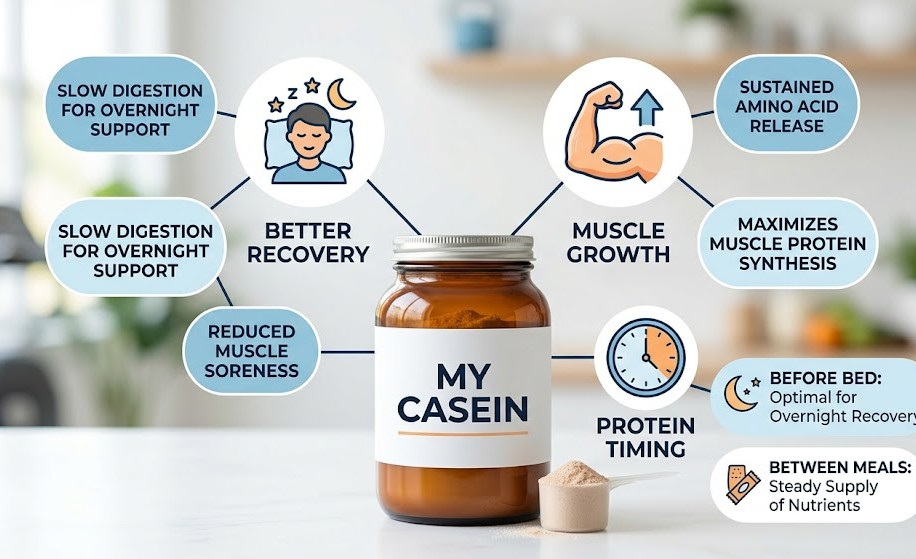
You’ve probably already heard that protein is essential for building muscle and supporting recovery. What many people don’t realize is that the type and timing of protein can significantly influence results. In this guide, you’ll learn exactly what My Casein is, how it works, its benefits, how it compares with whey protein, and how to use it effectively for your fitness goals.
Key Takeaways
- My Casein is a slow-digesting protein supplement designed to provide a steady release of amino acids over several hours.
- Casein protein supports muscle recovery and helps reduce muscle breakdown during long periods without food.
- Slow digestion makes casein particularly useful before sleep and between meals.
- Protein satiety benefits may help support weight-management goals by reducing hunger.
- Whey protein and casein protein serve different purposes and can complement each other in a nutrition plan.
- Effective supplementation depends on proper timing, dosage, and total daily protein intake.
- Product quality and ingredient transparency are important considerations when selecting a casein supplement.
What Is My Casein?
My Casein is a casein protein supplement formulated to provide slow, sustained amino acid delivery for muscle recovery and maintenance.
First, casein protein is a milk-derived protein that naturally makes up roughly 80% of the protein found in cow’s milk. Unlike fast-digesting proteins, casein forms a gel-like structure in the stomach, slowing digestion and extending amino acid release.
Casein protein is a slow-digesting milk-derived protein that releases amino acids gradually over several hours. This characteristic makes it one of the most popular options among athletes, bodybuilders, and fitness enthusiasts seeking prolonged protein support.
Moreover, many My Casein products use micellar casein, which is considered the least processed form of casein. Micellar casein is the least processed form of casein and is known for its slow, sustained digestion profile.
For example, someone who consumes casein before bed may continue receiving amino acids throughout the night while sleeping.
What Makes Casein Different From Other Proteins?
Casein differs from other proteins primarily because of its digestion speed.
While whey protein enters the bloodstream rapidly, casein digests gradually. This difference creates distinct applications within a nutrition plan.
| Feature | Casein Protein | Whey Protein |
|---|---|---|
| Digestion Speed | Slow | Fast |
| Amino Acid Release | Sustained | Rapid |
| Best Timing | Before bed, between meals | Post-workout |
| Satiety | High | Moderate |
| Recovery Support | Extended | Immediate |
According to the International Society of Sports Nutrition, adequate protein intake plays a major role in muscle growth and recovery — Source: ISSN, 2023.
Why My Casein Matters
My Casein matters because it helps maintain amino acid availability during extended periods without food.
First, your body constantly breaks down and rebuilds muscle proteins. During fasting periods, including sleep, muscle protein breakdown can exceed muscle protein synthesis if protein availability is limited.
My Casein supplements are designed to support muscle recovery, reduce muscle breakdown, and provide sustained protein delivery.
Moreover, overnight recovery represents one of the longest fasting periods most people experience daily. Consuming a slow-digesting protein before sleep can help bridge that gap.
Research suggests pre-sleep protein consumption may positively influence overnight recovery and muscle adaptation — Source: Journal of Nutrition, 2023.
Hunger Management Benefits
Casein protein supports satiety because it remains in the digestive system longer than many other protein sources.
For example, individuals pursuing fat-loss goals often use casein between meals to reduce hunger and improve dietary adherence.
healthy weight loss nutrition plan
What Is My Casein and How Does It Work?
My Casein works by slowing gastric emptying and providing a gradual release of amino acids into the bloodstream.
First, after consumption, casein forms a soft gel in the stomach. This slows digestion and extends nutrient absorption.
Digestion Process
Casein digestion is slower because the protein coagulates in the stomach.
For example, whey protein may be largely absorbed within a few hours, while casein can continue releasing amino acids for up to seven hours or more.
Amino Acid Release Mechanism
The amino acid release mechanism supports prolonged muscle protein availability.
Protein timing involves matching protein intake to periods when the body can benefit most from amino acid availability.
For example, bedtime represents a strategic opportunity because the body undergoes recovery processes during sleep.
Recovery Timeline
Recovery support from casein occurs over several hours rather than immediately.
This prolonged amino acid delivery can help maintain a positive protein balance overnight and between meals.
What Are the Main Benefits of My Casein Protein?
The main benefits of My Casein protein include muscle recovery support, reduced muscle breakdown, improved satiety, and convenient protein intake.
Muscle Growth Support
Casein contributes to muscle growth by providing essential amino acids needed for muscle repair and adaptation.
For example, resistance-trained individuals who meet daily protein targets generally experience better muscle maintenance and growth outcomes.
Overnight Recovery
Taking casein protein before bed may help support overnight muscle protein synthesis and recovery.
Research on pre-sleep protein feeding has demonstrated benefits for recovery and training adaptation in physically active individuals — Source: Frontiers in Nutrition, 2024.
Reduced Muscle Breakdown
Casein helps reduce muscle protein breakdown by maintaining amino acid availability.
This extended support becomes particularly useful during overnight fasting periods.
Increased Fullness
Casein promotes fullness because its slow digestion extends satiety signals.
For example, many weight-management plans include casein-based snacks or shakes between meals.
Convenient Protein Intake
Casein provides a simple way to increase daily protein intake.
Consistent daily protein intake remains more important than supplement timing for most fitness goals.
Is My Casein Good for Muscle Growth and Recovery?
My Casein is effective for muscle growth and recovery when used alongside adequate training and nutrition.
First, protein supplies the amino acids required for muscle repair. Without sufficient protein, recovery and adaptation become less efficient.
Moreover, casein’s slow digestion profile makes it uniquely suited for recovery periods when food intake is not possible.
Muscle recovery protein supports adaptation to training stress.
For example, a person training in the evening may consume casein before bed to support overnight recovery.
A high-protein diet combined with resistance training remains one of the most effective strategies for preserving lean mass during weight loss — Source: American College of Sports Medicine, 2024.
How Does My Casein Compare With Whey Protein?
My Casein and whey protein differ primarily in digestion speed, making each protein suitable for different situations.
Digestion Speed
Whey protein digests rapidly, while casein digests slowly.
For example, whey is commonly used immediately after training, whereas casein is often used before sleep.
Best Use Cases
Whey protein is ideal for quick amino acid delivery, while casein is ideal for sustained amino acid delivery.
Timing Recommendations
Protein timing should align with your goals and daily routine.
| Scenario | Recommended Protein |
|---|---|
| Post-Workout | Whey Protein |
| Before Bed | Casein Protein |
| Between Meals | Casein Protein |
| Quick Protein Boost | Whey Protein |
| Overnight Recovery | Casein Protein |
Casein protein differs from whey protein primarily in digestion speed, making each protein suitable for different situations.
When Is the Best Time to Take My Casein?
The best time to take My Casein is typically before bed or during long periods between meals.
Pre-Bed Supplementation
Pre-bed supplementation is the most popular casein timing strategy.
For example, consuming 25–40 grams before sleep may provide sustained amino acid availability throughout the night.
Between Meals
Casein can help maintain protein intake during busy schedules.
For example, professionals who cannot eat every few hours may use a casein shake between meals.
Daily Protein Targets
Meeting total daily protein goals remains the highest priority.
Most active individuals benefit from approximately 1.4–2.2 grams of protein per kilogram of body weight daily — Source: ISSN, 2023.
best pre-workout nutrition tips
Can My Casein Help With Weight Management?
My Casein may support weight-management goals by increasing fullness and helping maintain lean muscle mass.
First, protein has a higher satiety effect than carbohydrates and fats. This can reduce overall calorie intake.
Moreover, preserving muscle mass during calorie deficits helps support metabolic health.
For example, individuals dieting for fat loss often use casein as a bedtime snack replacement to manage hunger.
Protein satiety influences appetite control and dietary adherence.
Research consistently shows higher-protein diets improve satiety compared with lower-protein diets — Source: Obesity Reviews, 2024.
What Ingredients Are Commonly Found in My Casein Products?
My Casein products typically contain micellar casein, flavoring ingredients, sweeteners, and texture-enhancing agents.
Common ingredients include:
- Micellar casein
- Natural or artificial flavors
- Cocoa powder
- Lecithin
- Sweeteners
- Thickening agents
Nutrition Profile
Typical serving values may include:
- Protein: 20–30 grams
- Calories: 100–150
- Carbohydrates: 1–8 grams
- Fat: 0.5–4 grams
Nutrition values vary depending on formulation and flavor.
Are There Any Side Effects of Taking Casein Protein?
Casein protein is generally safe for healthy individuals, but some people may experience digestive discomfort or dairy-related issues.
Dairy Sensitivity
Individuals with dairy allergies should avoid casein products.
For example, casein is a milk protein and may trigger allergic reactions in susceptible individuals.
Lactose Concerns
Some casein products contain small amounts of lactose.
People with lactose intolerance should review product labels carefully.
Digestive Issues
Large servings may cause bloating or digestive discomfort in some users.
Starting with smaller servings can help assess tolerance.
How Much My Casein Should You Take Per Day?
Most people use 20–40 grams of My Casein per serving depending on body size and protein requirements.
First, dosage should align with total daily protein needs rather than supplement recommendations alone.
For example, an active individual consuming 150 grams of protein daily may use a 30-gram casein serving before bed.
Protein intake should complement a balanced diet rather than replace whole foods.
Who Should Use My Casein Protein Supplements?
My Casein supplements are most suitable for active individuals seeking prolonged protein support.
Ideal users include:
- Strength athletes
- Bodybuilders
- Recreational gym-goers
- Weight-loss dieters
- Endurance athletes
- Busy professionals
Moreover, people who struggle to meet daily protein targets through food alone may find casein supplementation helpful.
How Do You Choose the Best Casein Protein Product?
The best casein protein product combines high protein content, transparent labeling, quality testing, and good value.
Look for:
- High protein per serving
- Micellar casein as the primary ingredient
- Third-party testing
- Transparent labels
- Minimal unnecessary fillers
- Positive consumer reviews
Third-Party Testing
Third-party testing improves confidence in supplement quality and label accuracy.
For example, independent verification can confirm protein content and purity.
Practical Applications and Recipes
Practical casein applications make it easier to increase protein intake consistently.
Protein Shake
Mix:
- 1 scoop My Casein
- 300 ml milk or water
- Ice cubes
High-Protein Pudding
Mix:
- 1 scoop casein
- Greek yogurt
- Berries
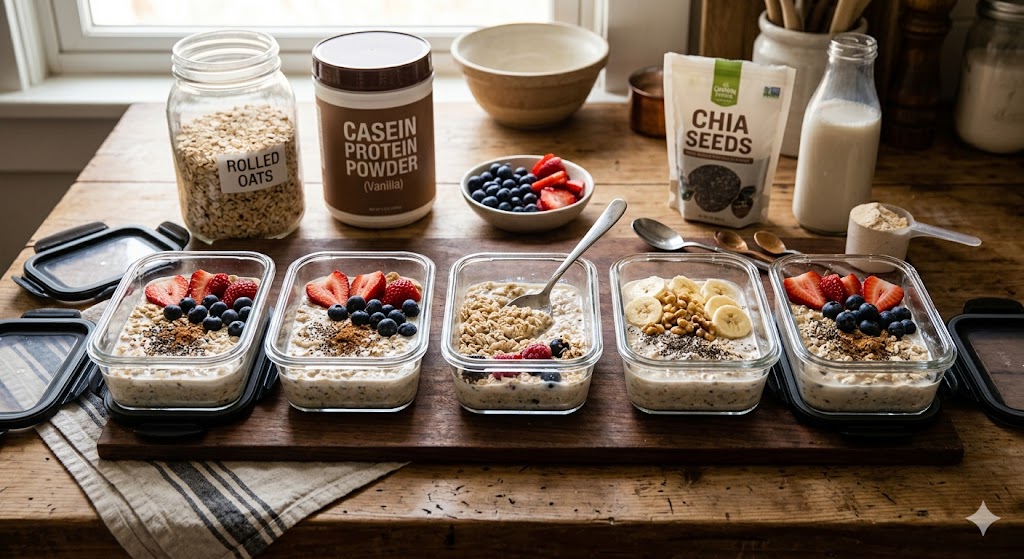
Overnight Protein Oats
Combine:
- Oats
- Casein protein
- Milk
- Chia seeds

What’s Next After Starting My Casein?
The next step after starting My Casein is building a complete protein and recovery strategy.
First, evaluate your daily protein intake and training goals. Then identify whether your current nutrition supports recovery, muscle growth, or weight management objectives.
Moreover, combining adequate protein intake with progressive training delivers the best results.
Consider these next steps:
- Track protein intake
- Monitor recovery markers
- Adjust dosage based on goals
- Improve sleep quality
- Build a balanced supplement stack
Conclusion
My Casein is a slow-digesting protein supplement that supports sustained amino acid delivery, muscle recovery, and satiety.
Throughout this guide, we’ve explored how casein works, its advantages over extended fasting periods, how it compares with whey protein, and the best ways to use it effectively. Whether your goal is muscle growth, recovery, or weight management, casein can be a valuable addition to a well-designed nutrition plan.
Most importantly, remember that consistent daily protein intake remains more important than perfect supplement timing. By combining quality protein, effective training, and healthy lifestyle habits, you can create a sustainable foundation for long-term fitness success.
FAQs
What is casein protein?
Casein protein is a slow-digesting milk protein that provides a steady release of amino acids to support muscle recovery and growth.
What are the benefits of casein protein?
Casein may help support muscle recovery, reduce muscle breakdown, promote fullness, and provide sustained protein delivery over several hours.
Is casein protein good for muscle growth?
Yes, casein provides essential amino acids that support muscle repair and growth, especially when combined with resistance training.
When is the best time to take casein protein?
Many people consume casein before bed because its slow digestion may help support overnight muscle recovery.
How is casein different from whey protein?
Casein digests slowly, while whey protein is absorbed more quickly, making them suitable for different situations and timing strategies.
Can casein protein help with recovery?
Yes, its gradual amino acid release may help support muscle recovery after exercise and during extended periods without food.
Is casein protein good for weight loss?
Casein may help increase feelings of fullness, which can support appetite control as part of a balanced diet.
Can you take casein protein every day?
Yes, many people use casein daily to help meet their protein needs and support fitness goals.
Does casein protein contain lactose?
Some casein products contain small amounts of lactose, though the amount varies by product and manufacturing process.
Can beginners use casein protein?
Yes, casein protein can be a convenient option for beginners looking to increase protein intake and support muscle recovery.