
Most people focus heavily on squats, lunges, leg presses, and other major lower-body exercises. While these movements are excellent for developing overall leg strength, one muscle group is often overlooked—the calves.
Strong calves do much more than improve appearance. They play a critical role in walking, running, jumping, balance, stability, and athletic performance. Whether you’re a beginner looking to strengthen your lower legs, an athlete seeking explosive power, or a lifter aiming for balanced leg development, incorporating effective calf workout exercises into your routine can make a significant difference.
In this comprehensive guide, you’ll learn how calf muscles work, why calf training matters, the best calf workout exercises for muscle growth, beginner-to-advanced workout routines, common training mistakes, and proven strategies to maximize calf development.
What Are Calf Workout Exercises and Which Muscles Do They Target?
Calf workout exercises are movements specifically designed to strengthen and develop the muscles located in the lower leg. Understanding calf anatomy is essential if your goal is to build stronger and more defined calves.
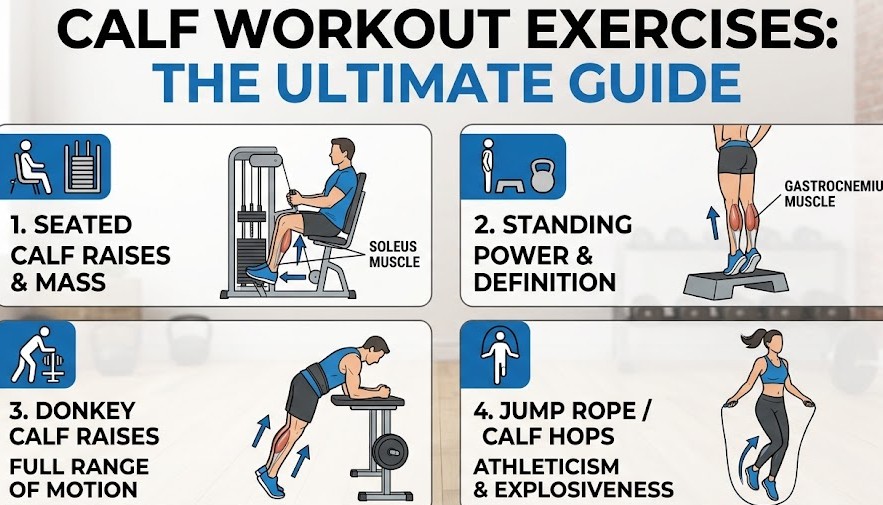
The calf consists primarily of two major muscles:
| Muscle | Location | Primary Function |
|---|---|---|
| Gastrocnemius | Upper calf | Plantar flexion, sprinting, jumping |
| Soleus | Beneath gastrocnemius | Walking, posture, endurance |
Gastrocnemius
The gastrocnemius is the larger and more visible calf muscle. It creates the rounded shape most people associate with well-developed calves.
This muscle is heavily involved in:
- Sprinting
- Jumping
- Accelerating
- Explosive athletic movements
Soleus
The soleus sits underneath the gastrocnemius and plays a major role in:
- Standing
- Walking
- Maintaining posture
- Endurance-based activities
Because the soleus works constantly throughout the day, it often responds well to higher training volumes and repetition ranges.
For example:
- Standing calf raises primarily target the gastrocnemius.
- Seated calf raises place greater emphasis on the soleus.
Calf muscles contribute to nearly every lower-body movement. Whether you’re climbing stairs, running, jumping, or performing heavy squats, your calves help generate force and maintain stability.
Why Are Strong Calf Muscles Important?
Strong calves support more than aesthetics. They are essential for movement efficiency, athletic performance, injury prevention, and lower-body functionality.
Improved Athletic Performance
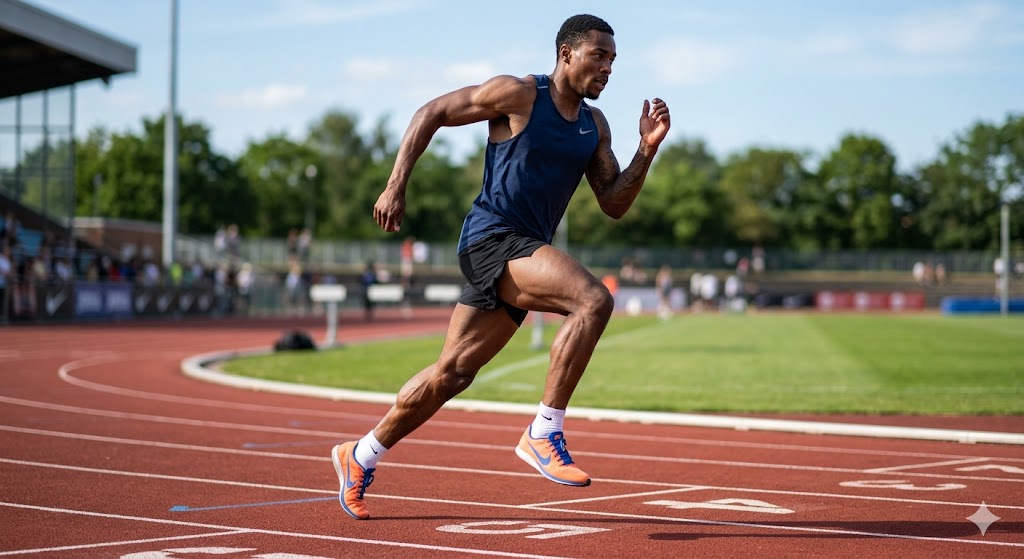
Athletes rely heavily on their calves for explosive movements.
Stronger calves can improve:
- Sprint speed
- Jump height
- Agility
- Acceleration
- Running efficiency
According to the American Council on Exercise, lower-leg muscles play a crucial role in force production and movement mechanics during athletic activities.
Source: ACE, 2024.
Better Balance and Stability
Your calves help stabilize the ankle joint during movement.
Benefits include:
- Improved balance
- Better coordination
- Enhanced movement control
- Greater confidence on uneven terrain
Athletes and older adults alike benefit significantly from improved ankle stability.
Injury Prevention
Strong calf muscles help absorb force and reduce stress on surrounding joints and connective tissues.
Research published by the National Institutes of Health highlights the importance of calf strength for ankle function and lower-extremity injury prevention.
Source: NIH, 2024.
Enhanced Leg Appearance
Well-developed calves create balanced lower-body proportions.
Many people successfully build larger quadriceps and hamstrings but neglect calf development, resulting in an incomplete leg physique.
Best Calf Workout Exercises for Muscle Growth
The most effective calf workout exercises combine resistance, full range of motion, and progressive overload.
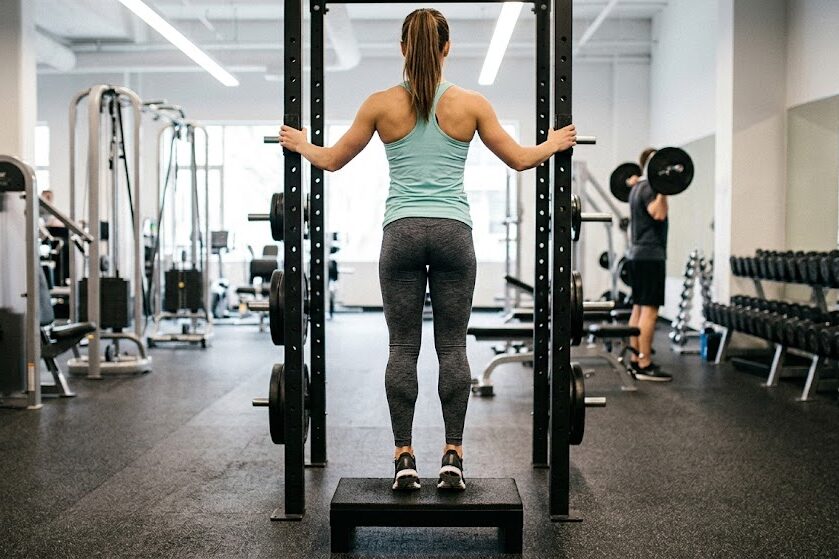
1. Standing Calf Raises
Standing calf raises are one of the most effective exercises for targeting the gastrocnemius.
How to Perform
- Stand on a raised platform.
- Allow your heels to hang off the edge.
- Rise onto your toes as high as possible.
- Pause briefly.
- Slowly lower below platform level.
Recommended Volume
- 3–5 sets
- 8–15 reps
2. Seated Calf Raises
Seated calf raises emphasize the soleus muscle because the knees remain bent.
How to Perform
- Sit with knees bent at 90 degrees.
- Place resistance over your knees.
- Raise your heels as high as possible.
- Squeeze at the top.
- Lower slowly.
Recommended Volume
- 3–5 sets
- 12–20 reps
3. Leg Press Calf Raises
This variation allows heavy loading while maintaining excellent stability.
Benefits include:
- Safe overload
- High muscle activation
- Reduced balance demands
4. Donkey Calf Raises
Donkey calf raises provide one of the deepest stretches available for calf development.
Many bodybuilders consider them among the most effective exercises for calf hypertrophy.
5. Single-Leg Calf Raises
Single-leg training helps correct muscle imbalances while improving coordination and balance.
Benefits include:
- Better unilateral strength
- Improved ankle stability
- Convenient home training option
6. Jump Rope
Jump rope develops muscular endurance while continuously challenging the calves through repeated ankle extension.
7. Farmer’s Walk on Toes
Walking on your toes while carrying weight creates significant calf activation.
This exercise simultaneously improves:
- Endurance
- Strength
- Stability
8. Box Jumps and Plyometric Training
Explosive exercises recruit fast-twitch muscle fibers responsible for speed and power.
Benefits include:
- Increased vertical jump
- Improved sprint performance
- Enhanced athleticism
Standing vs. Seated Calf Raises: Which Is Better?
One of the most common questions regarding calf workout exercises is whether standing or seated calf raises are superior.
The answer is both.
Standing Calf Raises
Primarily target:
- Gastrocnemius
- Explosive strength
- Calf size
Seated Calf Raises
Primarily target:
- Soleus
- Muscular endurance
- Lower-leg thickness
The best calf training programs include both variations to maximize overall development.
Can You Build Bigger Calves with Bodyweight Exercises Alone?
Yes, especially if you’re a beginner.
Bodyweight calf exercises can effectively increase:
- Strength
- Endurance
- Muscle tone
- Coordination
Effective bodyweight exercises include:
- Single-leg calf raises
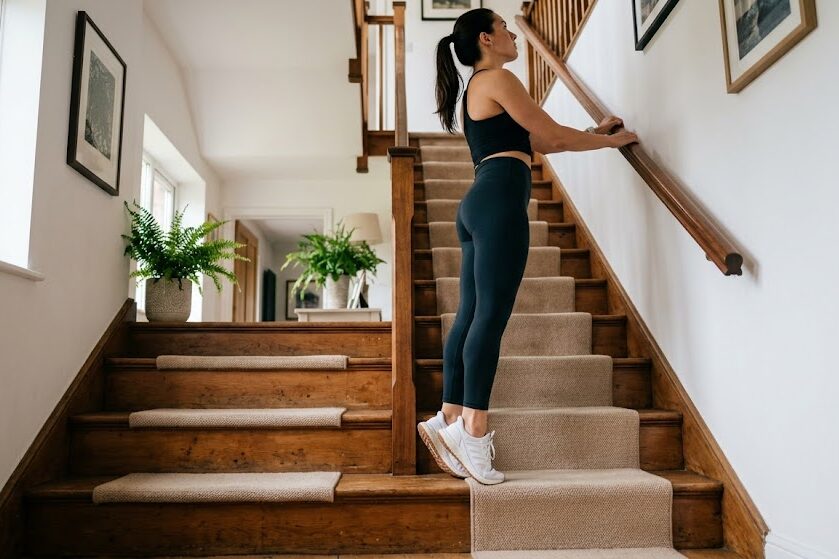
- Stair calf raises
- Jump rope
- Toe walks
- Plyometric jumps
However, advanced trainees usually require additional resistance to continue building muscle.
A simple rule:
If you can perform 30–40 controlled repetitions easily, it’s time to increase resistance.
How Often Should You Train Your Calves?
Unlike many muscle groups, calves often recover quickly because they are used throughout the day.
Recommended Training Frequency
| Goal | Weekly Frequency |
|---|---|
| General Fitness | 2 sessions |
| Muscle Growth | 3–4 sessions |
| Athletic Performance | 2–3 sessions |
| Endurance | 3–5 sessions |
According to the American College of Sports Medicine, training muscle groups multiple times per week often produces superior hypertrophy outcomes compared with once-weekly training.
Source: ACSM, 2024.
Best Beginner Calf Workout Routine
Beginner Routine
Perform twice weekly.
| Exercise | Sets | Reps |
|---|---|---|
| Standing Calf Raises | 3 | 12 |
| Seated Calf Raises | 3 | 15 |
| Single-Leg Calf Raises | 2 | 10 per side |
| Jump Rope | 2 minutes | — |
Intermediate Routine
Perform three times weekly.
| Exercise | Sets | Reps |
|---|---|---|
| Standing Calf Raises | 4 | 12 |
| Seated Calf Raises | 4 | 15 |
| Leg Press Calf Raises | 3 | 15 |
| Farmer’s Walk on Toes | 3 rounds | — |
Advanced Routine
Perform three to four times weekly.
| Exercise | Sets | Reps |
|---|---|---|
| Heavy Standing Calf Raises | 5 | 8 |
| Seated Calf Raises | 5 | 15 |
| Donkey Calf Raises | 4 | 12 |
| Plyometric Jumps | 4 | 10 |
Best Calf Workout Exercises at Home
You don’t need expensive equipment to train your calves effectively.
Top home calf workout exercises include:
- Stair calf raises
- Single-leg calf raises
- Jump rope
- Toe walks
- Box jumps
- Wall-supported calf raises
Stair calf raises are particularly effective because they allow a deeper stretch than flat-ground variations.
Common Calf Training Mistakes
Many people struggle to grow their calves because of poor training habits.
Mistake #1: Partial Repetitions
Failing to use a full range of motion limits muscle activation.
Mistake #2: Bouncing Through Reps
Using momentum reduces muscular tension and decreases effectiveness.
Mistake #3: Training Too Infrequently
Calves often respond well to higher frequency training.
Mistake #4: Excessive Weight
Using too much weight frequently sacrifices proper form.
Mistake #5: Ignoring the Soleus
Many lifters only perform standing calf raises and neglect seated variations.
Mistake #6: No Progressive Overload
Without progression, muscle growth eventually stalls.
How Many Sets and Reps Are Best for Calf Growth?
Most individuals achieve excellent results using 10–20 weekly sets.
Recommended Rep Ranges
| Goal | Reps |
|---|---|
| Strength | 6–10 |
| Hypertrophy | 10–20 |
| Endurance | 20–30 |
According to the National Strength and Conditioning Association, muscle growth can occur across a wide range of repetitions when training intensity remains high.
Source: NSCA, 2024.
Because calves contain a significant percentage of endurance-oriented muscle fibers, moderate-to-high repetition ranges often work particularly well.
Do Calves Require Different Training Than Other Muscle Groups?
In many cases, yes.
Because calves are active during:
- Walking
- Standing
- Climbing stairs
- Everyday movement
They often require:
- Higher weekly volume
- Greater training frequency
- Longer time under tension
- More total repetitions
This is one reason why calves are notoriously difficult for many lifters to grow.
Best Equipment for Calf Training
Gym Equipment
- Standing calf raise machine
- Seated calf raise machine
- Leg press machine
- Smith machine
Home Equipment
- Dumbbells
- Resistance bands
- Weighted backpack
- Step platform
How to Grow Your Calves Faster
Building larger calves requires progressive overload and consistent recovery.
Apply Progressive Overload
Progressive overload means gradually increasing training demands over time.
Methods include:
- Adding weight
- Increasing repetitions
- Increasing training frequency
- Slowing repetition tempo
- Extending range of motion
Prioritize Recovery
Recovery is where muscle growth occurs.
To maximize recovery:
- Sleep 7–9 hours nightly
- Consume sufficient protein
- Stay hydrated
- Allow adequate recovery between sessions
Building a Complete Leg Training Program
While calf workout exercises are important, they should be part of a balanced lower-body routine.
A complete program should include:
- Squats
- Lunges
- Deadlifts
- Step-ups
- Calf raises
- Plyometric exercises
Sample Weekly Schedule
| Day | Focus |
|---|---|
| Monday | Full Leg Day + Calves |
| Wednesday | Calf Focus Session |
| Friday | Leg Strength + Calves |
| Saturday | Optional Athletic Calf Work |
This combination supports balanced muscular development and improved athletic performance.
Conclusion
Calf workout exercises are one of the most effective ways to improve lower-leg strength, athletic performance, balance, stability, and overall leg development. Whether you’re training for muscle growth, sports performance, or general fitness, strengthening both the gastrocnemius and soleus muscles should be a regular part of your routine.
The most successful calf training programs combine standing calf raises, seated calf raises, bodyweight exercises, and progressive overload principles. Equally important are consistency, full range of motion, and adequate recovery.
While calf development can require patience, staying committed to a structured program will lead to stronger, more powerful, and more defined calves over time.
1 thought on “Calf Workout Exercises: Build Stronger, Bigger & More Athletic Calves”