
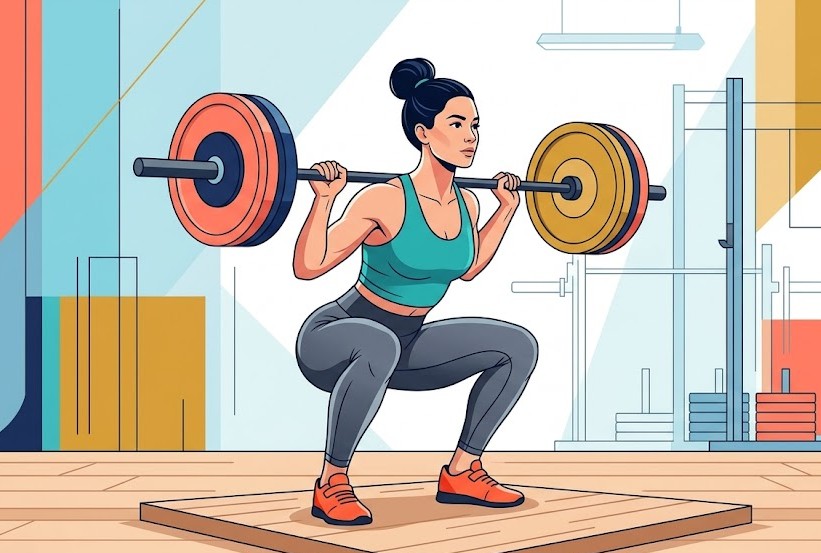
You’ve probably done squats and leg presses, but you might still feel your knees taking a beating or your quads lagging behind your glutes. If that sounds familiar, you’re not alone. Many lifters struggle to effectively target the front of their thighs, often ending up with underdeveloped quads or nagging knee discomfort.
In this comprehensive guide, you’ll learn exactly which exercises hit the vastus medialis (the teardrop muscle), how to fix your form for maximum quad activation, and three quad-building routines designed for any skill level or equipment setup—whether you train in a fully loaded gym or your living room.
What Are the Quadriceps Muscles and What Do They Do?
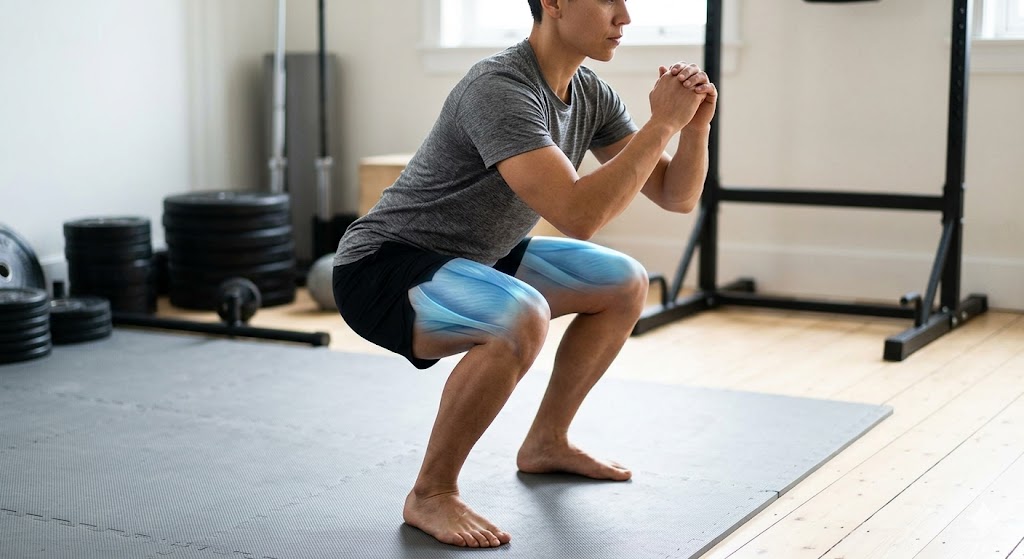
The quadriceps femoris is a group of four muscles located on the front of the thigh: the rectus femoris, vastus lateralis, vastus medialis, and vastus intermedius. Together, they are responsible for knee extension (straightening your knee) and, in the case of the rectus femoris, hip flexion (lifting your thigh toward your torso).
Understanding each muscle’s role helps you choose better quad workouts:
- Rectus femoris – The only quad muscle that crosses both the hip and knee joints, assisting in hip flexion and knee extension.
- Vastus lateralis – The largest quad muscle on the outer thigh, contributing to overall leg mass.
- Vastus medialis – Includes the teardrop-shaped portion near your inner knee (the vastus medialis oblique or VMO), which stabilizes the kneecap.
- Vastus intermedius – Lies beneath the rectus femoris and assists in knee extension.
Every time you stand up from a chair, climb a flight of stairs, or kick a soccer ball, your quads are the primary movers. A 2021 analysis in the Journal of Anatomy noted that the vastus medialis activates first during the terminal phase of knee extension to guide proper patellar tracking.
Why Are Strong Quads Important for Knee Health and Athletic Performance?
Strong quads are essential because they absorb landing forces, control knee alignment, and generate explosive power for running and jumping. When your quads are weak, your knees take more stress during squats, lunges, and daily movements. Over 60% of knee pain cases in lifters are associated with quadriceps weakness or imbalance — Source: British Journal of Sports Medicine, 2021.
Beyond injury prevention, well-developed quads directly improve athletic performance:
- Sprinters rely on rapid quad contraction to extend the knee and drive the leg forward.
- Basketball players need strong quads to decelerate after a jump and change direction quickly.
- Recreational runners benefit from stronger quads that reduce the load on the patellofemoral joint, lowering the risk of runner’s knee.
Balanced quad development—particularly strengthening the vastus medialis—also helps prevent patellar tendinopathy and anterior knee pain. That’s why smart quad workouts focus on hitting all four heads, not just grinding out heavy leg presses.
What Are the 6 Best Quad Exercises for Mass and Strength?
The six most effective quad workouts center on these exercises: barbell squats, front squats, leg presses, Bulgarian split squats, hack squats, and leg extensions. Each movement targets the quads differently, and combining them yields the best results for both mass and strength.
The table below summarizes their key features to help you build a balanced routine.
| Exercise | Primary Quad Focus | Equipment Needed | Difficulty |
|---|---|---|---|
| Barbell Back Squat | Overall quad mass | Barbell, rack | Intermediate |
| Front Squat | Rectus femoris & VMO | Barbell, rack | Advanced |
| Leg Press | Vastus lateralis & medialis | Leg press machine | Beginner |
| Bulgarian Split Squat | Entire quad (unilateral) | Dumbbells, bench | Intermediate |
| Hack Squat | Lower quad sweep | Hack squat machine | Intermediate |
| Leg Extension | VMO isolation | Leg extension machine | Beginner |
How to Perform a Barbell Squat to Maximize Quad Activation
Place the barbell across your upper back (not your neck), feet shoulder-width apart, toes slightly pointed out. Brace your core, then push your knees forward as you descend while keeping your chest tall. Squatting to at least parallel (thighs parallel to the ground) significantly increases quadriceps activation compared to partial squats, according to electromyography (EMG) research — Source: Journal of Strength and Conditioning Research, 2019.
Common mistakes to avoid:
- Knees caving inward (valgus) – This places shear stress on the MCL and kneecap.
- Shifting weight onto your heels excessively – Keep weight distributed across the whole foot.
- Leaning your torso too far forward – That turns a squat into a good morning.
To emphasize quads in your quad workouts, keep your torso more upright and allow your knees to travel slightly past your toes if no pain occurs.
What Is the Difference Between Back Squats and Front Squats for Quads?
Front squats place the barbell across your front deltoids, forcing a more upright torso and greater knee flexion. As a result, front squats activate the rectus femoris and vastus medialis up to 30% more than back squats at the same relative load — Source: European Journal of Sport Science, 2020.
Back squats, on the other hand, allow you to handle heavier loads and engage more glutes and hamstrings. For quad-dominant leg days, lead with front squats or alternate between both within your weekly quad workouts.
Leg Press and Leg Extension Form Cues
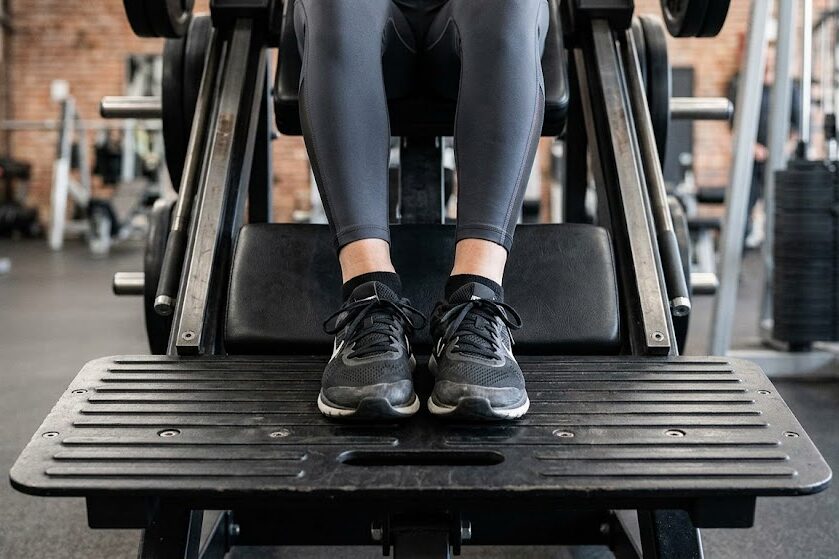
On the leg press, foot placement is everything. Place your feet low and close together (shoulder-width or narrower) on the platform. This shifts stress to the quads rather than your glutes or hamstrings. Avoid locking your knees at the top of each rep to keep tension on the muscle, not the joint.
For leg extensions:
- Sit with your back flush against the pad.
- Adjust the axis of rotation to align with your knees.
- Extend only to near-lockout—don’t hyperextend.
- Perform controlled reps with a 1-second squeeze at the top.
Overloading the leg extension or using momentum can strain the patellar tendon. Use it as a finisher, not your primary quad builder.
How to Structure a Quad-Focused Leg Day (Sets, Reps, and Order)
A well-structured quad workout prioritizes compound exercises like barbell squats and front squats first, then adds isolation movements such as leg extensions to fully fatigue the muscle. Start with a dynamic warm-up: 5 minutes on a bike, leg swings, and bodyweight squats. Then perform 3-4 working sets of 8-12 reps for hypertrophy. Rest 90-120 seconds between compound sets and 60 seconds for isolation.
Sample Quad-Focused Leg Day Order
- Front squat – 4 sets of 6-8 reps (heavy, quad-dominant)
- Leg press – 3 sets of 10-12 reps (feet low and close)
- Bulgarian split squat – 3 sets of 8-10 reps per leg
- Leg extension – 3 sets of 12-15 reps (drop set on final set)
This order ensures you’re fresh for the most technically demanding movements before fatigue compromises your form. Over time, rotate between back squats and front squats every few weeks to keep your quad workouts balanced.
Can You Build Quads Without a Gym? (Home Quad Workouts)
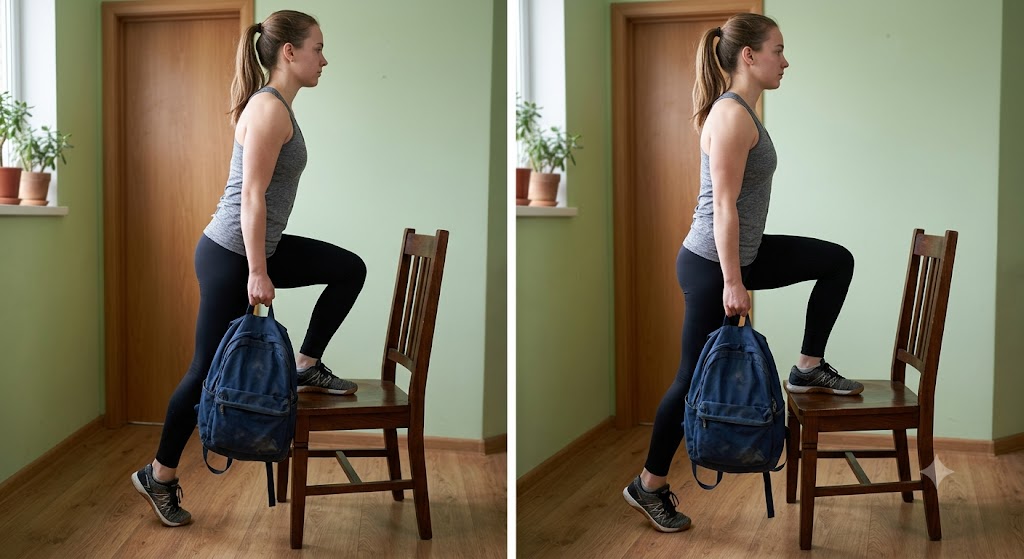
Yes, you can build quad mass without gym equipment by performing high-repetition bodyweight squats, alternating forward lunges, and step-ups on a sturdy chair or box for 3 sets of 15-20 reps. To increase intensity, hold a backpack filled with books or use resistance bands.
Here’s a sample home quad workout:
- Bodyweight squats – 3 sets of 20 reps
- Reverse lunges – 3 sets of 12 reps per leg
- Step-ups (onto a sturdy chair) – 3 sets of 15 reps per leg
- Sit-to-stands – 3 sets of 15 reps
Add a resistance band around your thighs for lateral walks to activate the VMO even further.
What Are the Most Common Quad Training Mistakes and How to Fix Them?
Even experienced lifters make these four mistakes in their quad workouts. Here’s how to identify and fix each one.
Mistake #1: Letting Knees Cave Inward (Valgus)
This places shear stress on the MCL and patellofemoral joint.
Fix: Consciously push your knees outward over your second toe. Strengthen your glute medius with banded walks.
Mistake #2: Squatting Too Shallow
Partial squats (above parallel) dramatically reduce quad activation.
Fix: Use a box or a mirror to verify depth. Aim for at least parallel—thighs parallel to the ground or deeper.
Mistake #3: Using Too Much Back and Hips
Leaning forward turns a squat into a good morning, shifting work away from quads.
Fix: Keep your chest up and brace your core. Front squats naturally correct this posture.
Mistake #4: Over-Reliance on Leg Extensions
Leg extensions are safe with moderate weight and full range, but heavy loads can increase patellofemoral joint stress by up to 300% — Source: Clinical Biomechanics, 2018.
Fix: Use leg extensions as a finisher (light to moderate weight, higher reps), not your main quad builder.
Tools and Equipment for Quad Development
Barbells, squat racks, leg press machines, dumbbells, resistance bands, and optional knee sleeves make up the standard quad-training toolkit. Knee sleeves provide warmth and proprioceptive feedback, which may reduce pain but do not fix poor form. For home training, resistance bands and a pair of adjustable dumbbells offer the most versatility.
What’s Next: Progressive Overload and Recovery
Progressive overload for quad workouts involves gradually increasing weight, reps, or volume each week while maintaining proper form and allowing 48-72 hours of recovery between intense leg sessions. For example, if you squat 135 lbs for 3 sets of 8 this week, aim for 3 sets of 9 or 140 lbs next week.
Also incorporate quad stretches like the kneeling lunge stretch and seated quad stretch to maintain flexibility. Tight quads can pull the pelvis forward, causing lower back pain.
Simple Progressive Overload Plan
- Week 1: 3×8 @ 135 lbs (squat)
- Week 2: 3×9 @ 135 lbs
- Week 3: 3×8 @ 140 lbs
- Week 4: 3×10 @ 135 lbs (deload or add volume)
how to stretch your quads correctly
Conclusion
Stronger quads mean better squats, healthier knees, and more explosive athletic performance. Focus on compound movements like front squats and leg presses, avoid shallow depth and knee valgus, and progressively add weight or reps each week. Whether you train at home with bodyweight lunges or in a gym with a hack squat machine, consistency is key. Listen to your knees—if you feel sharp pain, dial back the load and check your form. Now go build those quads.
FAQs
How often should I do quad workouts per week?
Train quads 1–2 times weekly with at least 48 hours of recovery between sessions.
Can I build quads with just bodyweight exercises?
Yes. Squats, lunges, and step-ups can build quads when performed with high reps and progressive overload.
What’s the best rep range for quad growth?
Use 8–12 reps for compound lifts and 12–15 reps for isolation exercises.
Why do my knees hurt during quad workouts?
Poor form, excessive weight, or muscle imbalances are common causes. Focus on proper technique and manageable loads.
Are leg extensions bad for your knees?
No. When performed with controlled reps and moderate weight, they are generally safe and effective.
Which quad exercise is best for the teardrop muscle (VMO)?
Front squats, Bulgarian split squats, and leg extensions are excellent for targeting the VMO.
1 thought on “Quad Workouts: Build Mass, Strength & Healthy Knees Guide”