
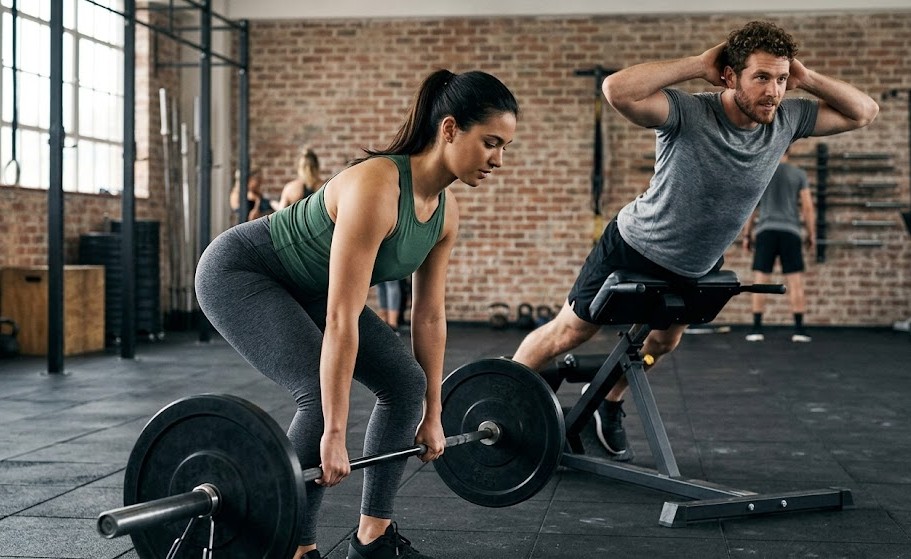
Most people understand the importance of having a strong lower back, yet many rely on random exercises without knowing which movements actually produce results. The reality is that the difference between a resilient, pain-resistant back and ongoing discomfort often comes down to choosing the right exercises and performing them correctly.
Whether your goal is to improve posture, enhance athletic performance, reduce injury risk, or simply move better in everyday life, following the best lower back workout can help you build a stronger and more stable posterior chain.
In this comprehensive guide, you’ll learn which muscles lower back workouts target, why lower back strength matters, the most effective exercises for all experience levels, how often to train, and how to create a complete lower back workout routine for long-term progress.
What Is a Lower Back Workout and Which Muscles Does It Target?
A lower back workout is a structured training routine designed to strengthen the muscles responsible for supporting, stabilizing, and protecting the lumbar spine.
Many people assume lower back training focuses solely on the spine itself. In reality, effective lower back development involves an entire network of muscles that work together to support posture, movement, and spinal stability.
These muscles include:
- Erector spinae
- Multifidus
- Quadratus lumborum
- Glutes
- Hamstrings
- Core stabilizers
Unlike stretching routines that primarily improve flexibility and range of motion, strengthening exercises increase force production, muscular endurance, and resilience.
For example:
- A deadlift strengthens the posterior chain and develops spinal support.
- A seated forward fold improves flexibility but does not significantly increase lower back strength.
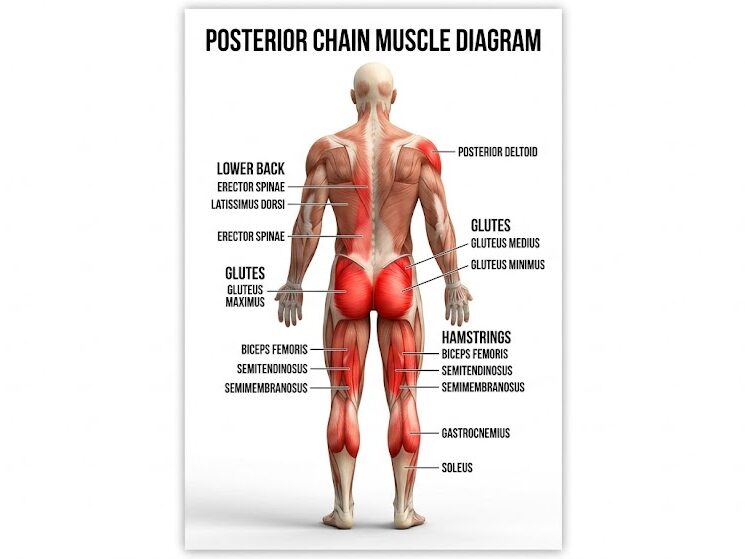
Primary Muscles Involved in Lower Back Training
| Muscle Group | Primary Function | Example Exercises |
|---|---|---|
| Erector Spinae | Spinal extension and posture | Deadlifts, back extensions |
| Multifidus | Spinal stability | Bird dogs, planks |
| Quadratus Lumborum | Lateral spinal support | Side planks, carries |
| Glutes | Hip extension | Glute bridges, RDLs |
| Hamstrings | Posterior chain movement | Romanian deadlifts |
| Core Stabilizers | Spinal protection | Bird dogs, planks |
Research suggests that low back pain affects approximately 619 million people globally — Source: World Health Organization, 2023.
Because the lower back functions as a central support system for the body, strengthening these muscles can help reduce mechanical stress placed on the lumbar spine while improving overall movement efficiency.
For more foundational strength development, see our best core strengthening exercises.
Why Is Lower Back Strength Important for Overall Fitness?
Lower back strength plays a vital role in overall health, athletic performance, and injury prevention.
Everyday movements such as bending, lifting groceries, carrying children, climbing stairs, and sitting at a desk depend on a stable and well-conditioned lower back.
When these muscles are weak, the spine often compensates, leading to poor movement patterns and increased stress on surrounding structures.
Key Benefits of Lower Back Training
Consistent lower back workouts can provide:
- Improved posture
- Enhanced spinal stability
- Reduced injury risk
- Better lifting performance
- Improved balance and coordination
- Greater athletic power output
Strong lower back muscles also improve force transfer between the upper and lower body. This becomes particularly important during activities such as sprinting, jumping, rowing, and resistance training.
Research from the National Institute of Neurological Disorders and Stroke highlights that low back pain remains one of the leading causes of disability worldwide — Source: NINDS, 2024.
Additionally, better posture often contributes to improved breathing mechanics, movement quality, and overall physical confidence.
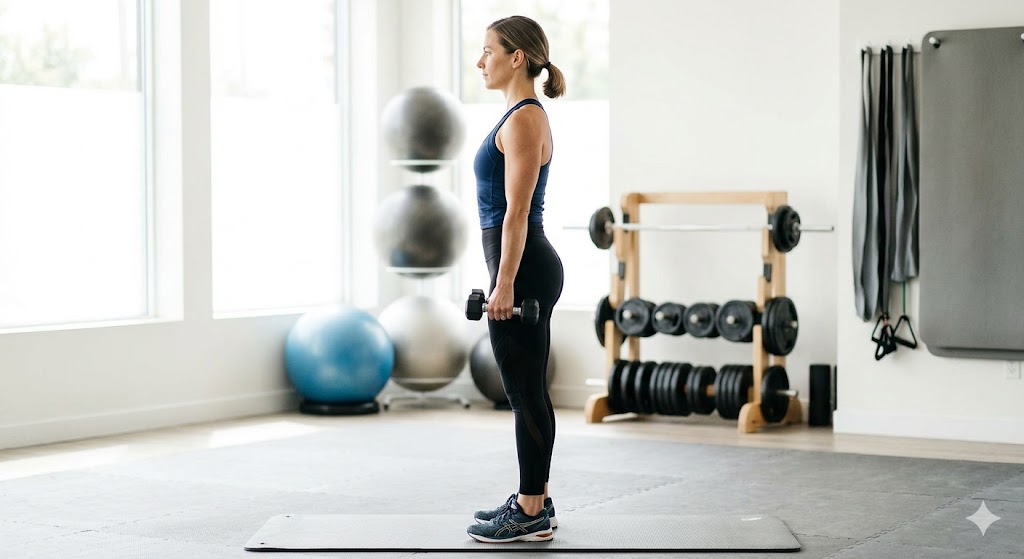
What Makes a Lower Back Exercise Effective?
Not all lower back exercises deliver equal results.
The most effective exercises strengthen the spine while promoting safe and efficient movement patterns.
Several key principles separate highly effective lower back exercises from less productive ones.
Stability Before Load
Before lifting heavy weights, the body must learn how to stabilize the spine.
Exercises such as bird dogs teach the lower back to resist unwanted movement and create a strong foundation for future strength training.
Progressive Resistance
Muscles adapt only when training demands gradually increase over time.
Progressive overload can be achieved by:
- Increasing weight
- Adding repetitions
- Performing additional sets
- Extending time under tension
- Improving exercise difficulty
For example, increasing Romanian deadlift weight by 5–10% over several weeks can stimulate continued strength gains.
Proper Muscle Activation
Activating the core and glutes before lifting improves exercise performance and spinal stability.
A properly braced torso helps distribute force efficiently and reduces unnecessary strain on the lumbar spine.
Prioritizing Safety
Maintaining a neutral spine throughout each exercise remains one of the most important factors in successful lower back training.
For more guidance, review injury prevention workout strategies.
The best lower back workout focuses on movement quality first and loading second.
What Are the Best Lower Back Exercises for Building Strength?
The best lower back workout combines exercises that improve spinal stability, strengthen the posterior chain, and develop hip extension power.
1. Deadlifts
Deadlifts are widely considered one of the most effective exercises for overall lower back development.
They simultaneously train:
- Erector spinae
- Glutes
- Hamstrings
- Core muscles
By teaching force production while maintaining spinal stability, deadlifts create significant strength gains throughout the entire posterior chain.
For detailed instruction, see complete deadlift technique.
2. Romanian Deadlifts
Romanian deadlifts emphasize the hamstrings and lower back through a controlled hip hinge movement.
Benefits include:
- Increased posterior chain strength
- Improved eccentric control
- Enhanced muscular endurance
- Better hip hinge mechanics
For more details, review our Romanian deadlift form checklist.
3. Back Extension
Back extensions directly target the spinal extensors and improve lower back endurance.
They are particularly useful because they can be easily progressed with:
- Weight plates
- Resistance bands
- Dumbbells
4. Bird Dogs
Bird dogs are among the safest and most effective lower back stability exercises available.
They teach the spine to remain stable while the arms and legs move independently, improving coordination and core control.
5. Superman Holds
Superman holds strengthen spinal extensor muscles using bodyweight resistance.
Holding the position for 20–30 seconds develops muscular endurance and spinal support without requiring equipment.
6. Good Mornings
Good mornings strengthen the lower back through loaded hip hinging.
Because technique is critical, beginners should start with minimal resistance and focus on mastering movement patterns.
7. Reverse Hypers
Reverse hypers target both the lower back and glutes while minimizing spinal compression.
Many strength athletes use them to improve resilience, recovery, and posterior chain development.
8. Glute Bridges
Glute bridges strengthen the glutes while supporting lower back function and pelvic stability.
For complementary exercises, explore glute strengthening exercises.
Which Lower Back Exercises Are Safe for Beginners?
Beginners should prioritize exercises that emphasize stability, control, and proper movement mechanics.
The goal is to build foundational strength before introducing heavier resistance.
Best Beginner Lower Back Exercises
- Bird Dogs
- Glute Bridges
- Superman Holds
- Modified Back Extensions
- Bodyweight Good Mornings
These exercises teach essential movement patterns while minimizing stress on the spine.
For example, bird dogs help develop anti-rotation stability, a skill that directly improves performance during more advanced lifts.
According to the American College of Sports Medicine, resistance training beginners respond effectively to moderate training volumes — Source: ACSM, 2023.
For broader programming guidance, review our beginner strength training plan.
How Often Should You Train Your Lower Back?
For most individuals, training the lower back two to three times per week provides enough stimulus for strength gains while allowing sufficient recovery.
Weekly Frequency Guidelines
| Experience Level | Sessions Per Week |
|---|---|
| Beginner | 2 |
| Intermediate | 2–3 |
| Advanced | 3 |
Beginners may start with simple stability exercises twice weekly.
More experienced trainees often accumulate additional lower back work through exercises such as:
- Squats
- Deadlifts
- Rows
- Accessory posterior chain movements
Research indicates that most resistance-trained individuals benefit from training muscle groups at least twice weekly — Source: Journal of Strength and Conditioning Research, 2023.
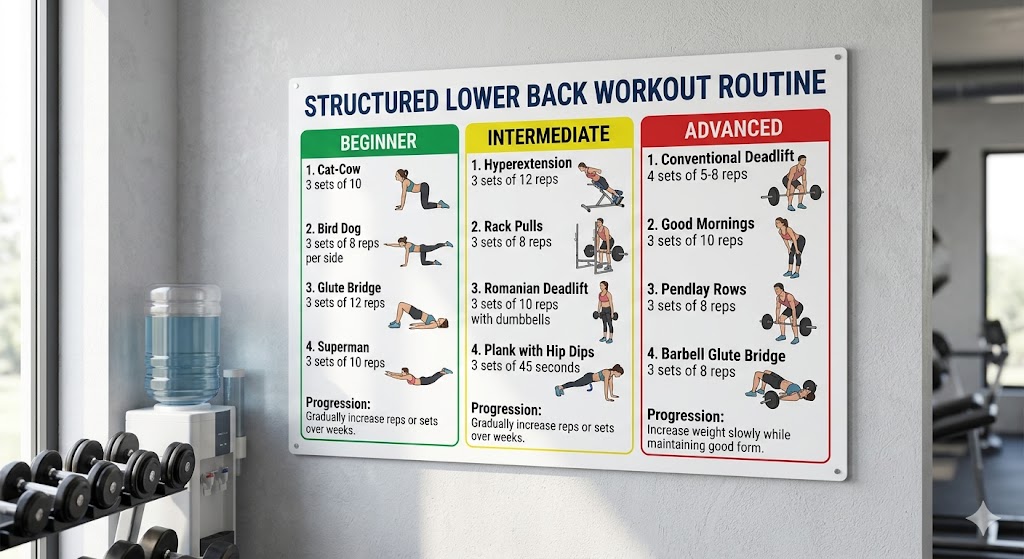
What Is the Best Lower Back Workout Routine for Muscle Growth?
The best lower back workout routine combines compound lifts with targeted stability exercises.
Beginner Lower Back Workout
- Bird Dogs: 3 × 10 per side
- Glute Bridges: 3 × 15
- Superman Holds: 3 × 20 seconds
- Back Extensions: 2 × 12
Intermediate Lower Back Workout
- Romanian Deadlifts: 4 × 8
- Back Extensions: 3 × 12
- Bird Dogs: 3 × 12
- Glute Bridges: 3 × 15
Advanced Lower Back Workout
- Conventional Deadlifts: 5 × 5
- Romanian Deadlifts: 4 × 8
- Reverse Hypers: 4 × 12
- Good Mornings: 3 × 10
- Bird Dogs: 3 × 15
To continue progressing, gradually increase training volume, repetitions, or weight every 2–4 weeks.
Are Deadlifts the Best Exercise for Lower Back Development?
Deadlifts are among the most effective exercises for building lower back strength because they challenge the entire posterior chain under significant load.
Benefits include:
- Full-body strength development
- Improved spinal stability
- Enhanced force production
- Greater athletic performance
However, deadlifts should not be viewed as the only solution.
Exercises such as:
- Bird dogs
- Back extensions
- Reverse hypers
- Glute bridges
provide valuable benefits with lower technical demands.
The most effective strategy is to combine deadlifts with targeted accessory work rather than relying on a single exercise.
Can Lower Back Workouts Help Prevent Back Pain?
Lower back workouts can help reduce the risk of back pain by improving muscular support, movement efficiency, and tissue resilience.
Stronger supporting muscles help protect the spine during:
- Lifting
- Bending
- Twisting
- Carrying loads
For example, stronger erector spinae muscles can reduce excessive stress placed on passive spinal structures.
Exercise also improves tissue tolerance and physical capacity over time.
According to the World Health Organization, regular physical activity remains one of the most effective strategies for maintaining musculoskeletal health — Source: WHO, 2024.
However, exercise should not be considered a guaranteed treatment for chronic pain conditions. Individuals experiencing persistent symptoms should seek evaluation from qualified healthcare professionals.
Common Mistakes to Avoid During Lower Back Training
Even the best lower back workout can become ineffective if common mistakes are ignored.
Excessive Spinal Flexion
Allowing the lower back to round under heavy loads increases stress on spinal tissues and can compromise technique.
Poor Deadlift Setup
Improper positioning before a lift often leads to reduced performance and increased injury risk.
Overtraining
Performing excessive lower back volume without adequate recovery can hinder progress.
For example, heavy deadlifting multiple times per week may exceed recovery capacity for many individuals.
Ignoring Core Development
A weak core often limits spinal stability and overall strength potential.
Skipping Warm-Ups
Warm-ups prepare muscles, joints, and connective tissues for exercise while improving movement quality.
Before training, consider our mobility exercises for back health.
What Equipment Do You Need for an Effective Lower Back Workout?
Lower back training can be performed using bodyweight exercises, home gym equipment, or commercial gym tools.
Equipment Options
| Equipment | Best Use |
|---|---|
| Bodyweight | Beginner stability training |
| Resistance Bands | Progressive home workouts |
| Dumbbells | Romanian deadlifts |
| Barbells | Deadlifts and good mornings |
| Roman Chair | Back extensions |
| Stability Ball | Core and lower back work |
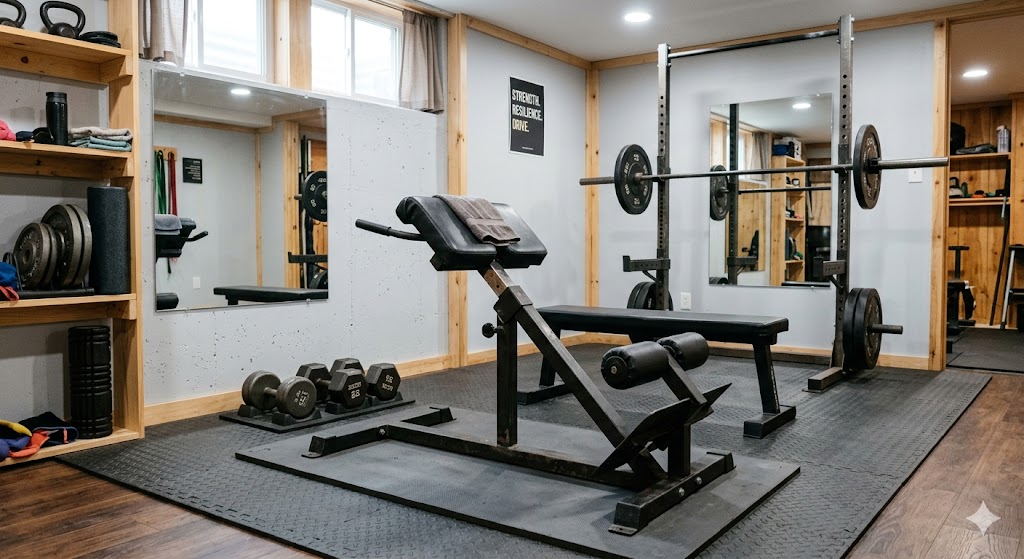
A Roman chair remains one of the most effective tools for directly strengthening the lower back.
For additional recommendations, see home gym workout equipment guide.
How Can You Strengthen Your Lower Back at Home Without Equipment?
You do not need a gym membership to perform an effective lower back workout.
Several bodyweight exercises can significantly improve spinal stability, muscular endurance, and movement quality.
Best Bodyweight Lower Back Exercises
- Bird Dogs
- Superman Holds
- Glute Bridges
- Wall Hinges
- Side Planks
These exercises require little space and no equipment, making them ideal for home training.
Consistency is more important than complexity. Performing these exercises two to three times weekly can produce meaningful improvements over time.
How Do Lower Back Exercises Improve Posture and Athletic Performance?
Lower back exercises improve posture and athletic performance by strengthening the muscles responsible for spinal support and force transfer.
Better Posture
Stronger spinal stabilizers help maintain proper alignment throughout the day, reducing the tendency to slouch or compensate with poor movement patterns.
Improved Athletic Performance
Athletes rely heavily on the posterior chain for:
- Sprinting
- Jumping
- Lifting
- Throwing
- Rotational sports movements
A stronger lower back improves energy transfer between the upper and lower body, allowing more efficient movement and greater power output.
Enhanced Strength Development
Because many compound exercises depend on spinal stability, stronger lower back muscles often lead to improved performance in:
- Squats
- Deadlifts
- Olympic lifts
- Rows
Tools and Practical Applications for Lower Back Training
Tracking progress is an essential part of long-term success.
Recommended Training Tools
- Workout tracking apps
- Resistance bands
- Adjustable dumbbells
- Roman chair
- Stability ball
Recording training variables such as weight, repetitions, and sets helps identify plateaus and maintain progressive overload.
Simple options like spreadsheets or fitness journals can be just as effective as advanced fitness apps.
Building a Complete Posterior Chain Program
The most effective lower back workout is part of a complete posterior chain training strategy.
The posterior chain includes:
- Lower back
- Glutes
- Hamstrings
- Core muscles
Training these muscle groups together creates balanced strength and reduces injury risk.
Sample Weekly Schedule
Monday: Lower Back + Hamstrings
Wednesday: Core + Mobility
Friday: Deadlift-Focused Posterior Chain
Tracking exercise quality, strength progression, and recovery can help ensure consistent long-term improvement.
[Insert illustration: Posterior chain training flowchart showing lower back → glutes → hamstrings → core integration | Alt text: “Build complete posterior chain workout program”]
Conclusion
The best lower back workout combines proven strength-building exercises, stability drills, and progressive overload to create a stronger, healthier, and more resilient posterior chain.
Movements such as deadlifts, Romanian deadlifts, back extensions, bird dogs, glute bridges, and reverse hypers each serve a unique purpose in developing spinal support, improving posture, and enhancing athletic performance. When combined into a structured program, these exercises help improve movement quality, reduce injury risk, and increase overall strength.
Most importantly, focus on proper technique, consistent training, and gradual progression. By strengthening your lower back alongside your glutes, hamstrings, and core, you can build long-term resilience, move more efficiently, and support your body in both everyday activities and athletic pursuits.
FAQs
What is the best lower back workout for beginners?
Bird dogs, glute bridges, superman holds, and back extensions are excellent beginner-friendly options.
How often should I do lower back workouts?
Train your lower back 2–3 times per week for optimal results.
Are deadlifts safe for lower back training?
Yes, when performed with proper form and appropriate weight.
Can lower back exercises help improve posture?
Yes, stronger lower back muscles support better spinal alignment and posture.
Can I strengthen my lower back without equipment?
Yes, bodyweight exercises like bird dogs and glute bridges are highly effective.
Do lower back workouts help prevent injuries?
Yes, they improve stability, strength, and movement mechanics, reducing injury risk.