
You’ve probably stretched before a workout, taken a short walk to loosen up, or tried a flexibility routine to relieve stiffness. Yet many people still struggle with tight hips, sore shoulders, poor posture, and restricted movement because they’re missing one essential piece of the fitness puzzle: mobility training.
Unlike traditional stretching, mobility workouts focus on improving how your joints move while building strength, stability, and control throughout that range of motion. Whether you’re an athlete, office worker, gym-goer, or complete beginner, mobility training can help you move better, feel better, and perform better.
In this guide, you’ll learn what a mobility workout is, its benefits, the best exercises for beginners, and how to build a simple routine that improves movement quality and overall fitness.
What Is a Mobility Workout?
A mobility workout is a structured exercise routine designed to improve joint range of motion, movement control, stability, and overall movement quality. Unlike static stretching, mobility training involves actively moving joints through their full range of motion while maintaining strength and control.
Regular mobility workouts can help:
- Improve flexibility and movement quality
- Reduce stiffness and discomfort
- Enhance posture
- Support injury prevention
- Improve exercise performance
- Increase joint health and longevity
Mobility vs Flexibility: What’s the Difference?
Many people use the terms mobility and flexibility interchangeably, but they are not the same.
Flexibility
Flexibility refers to the ability of muscles to lengthen.
For example, touching your toes demonstrates hamstring flexibility.
Mobility
Mobility refers to the ability of a joint to move actively through its full range of motion while maintaining strength and control.
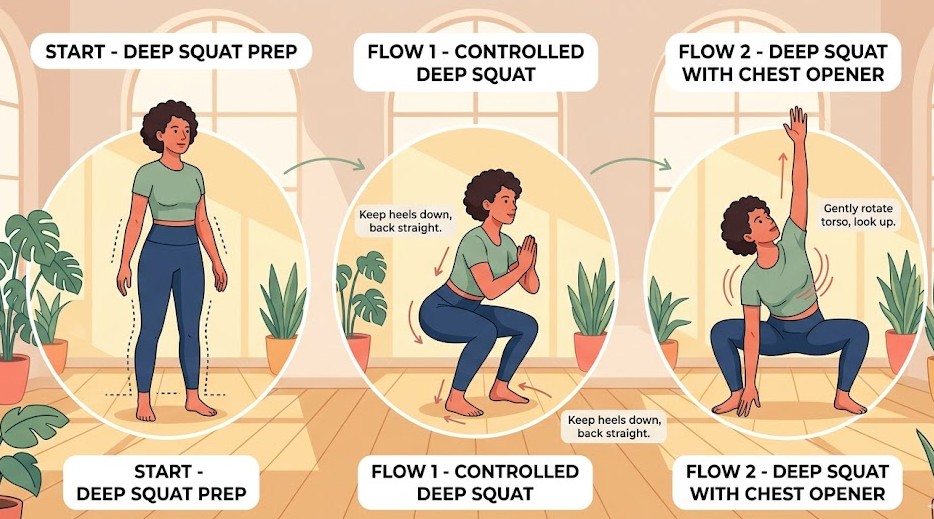
For example, performing a deep squat with good posture requires ankle mobility, hip mobility, balance, and muscular control.
| Mobility | Flexibility |
|---|---|
| Focuses on joints and movement | Focuses on muscle length |
| Requires strength and stability | Primarily passive |
| Improves functional movement | Improves tissue extensibility |
| Active and dynamic | Often static |
Why Is Mobility Important?
Mobility plays a critical role in how your body moves during workouts and everyday activities.
Poor mobility can contribute to:
- Joint stiffness
- Reduced athletic performance
- Poor posture
- Movement compensations
- Increased injury risk
Better mobility helps your body move more efficiently and comfortably.
Joint Health
Healthy joints require regular movement.
Mobility exercises help maintain joint function by encouraging movement through a full range of motion.
For example, restricted ankle mobility may affect walking, squatting, running, and jumping mechanics.
Injury Prevention
Mobility training can help reduce movement compensations that place excessive stress on muscles and joints.
Research published in sports medicine literature has linked movement limitations to increased injury risk in athletic populations.
Source: British Journal of Sports Medicine, 2024
Improved Athletic Performance
Athletes often notice performance improvements after addressing mobility limitations.
Benefits may include:
- Better squat depth
- More efficient running mechanics
- Improved overhead movement
- Enhanced power production
For athletes, mobility work pairs well with a CrossFit workout program
Better Posture
Modern lifestyles often involve prolonged sitting, which can contribute to:
- Tight hip flexors
- Rounded shoulders
- Limited spinal mobility
Mobility training helps restore movement to these commonly restricted areas.
Major Benefits of Mobility Workouts
Mobility training offers benefits that extend beyond flexibility.
Reduced Stiffness
Regular movement helps maintain joint function and reduce feelings of tightness.
Many people notice significant improvements after just a few weeks of consistent mobility work.
Better Exercise Technique
Improved mobility often leads to better movement mechanics during exercises such as:
- Squats
- Deadlifts
- Lunges
- Overhead presses
Faster Recovery
Mobility sessions can support recovery by promoting circulation and restoring normal movement patterns.
Improved Balance and Coordination
Mobility exercises increase body awareness and control, helping improve overall movement efficiency.
Enhanced Long-Term Movement Quality
Consistent mobility training supports healthy movement as you age.
According to the National Institute on Aging, regular movement-based exercise helps maintain joint function and physical independence.
Source: National Institute on Aging, 2024
Which Areas Should You Focus on Most?
Certain joints benefit more from mobility training because they play major roles in movement quality.
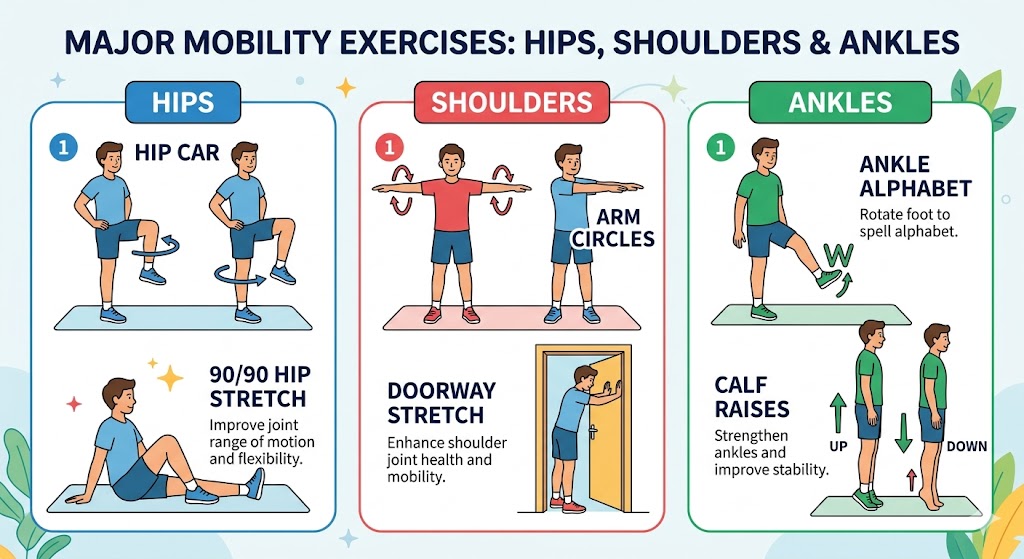
Hip Mobility
The hips are involved in nearly every lower-body movement.
Common exercises include:
- World’s Greatest Stretch
- Hip CARs
- 90/90 Hip Switches
- Deep Squat Holds
Shoulder Mobility
Shoulder mobility is essential for overhead movements and upper-body training.
Recommended exercises:
- Arm Circles
- Wall Slides
- Band Pull-Aparts
- Shoulder CARs
Thoracic Spine Mobility
The thoracic spine supports posture and rotational movement.
Helpful drills include:
- Open Books
- Thread the Needle
- Cat-Cow Stretch
Ankle Mobility
Limited ankle mobility often affects:
- Walking
- Running
- Squatting
- Jumping
Effective exercises include:
- Knee-to-Wall Stretch
- Ankle Rocks
- Calf Mobility Pulses
Hamstring Mobility
Hamstring mobility improves movement quality throughout the posterior chain.
Recommended drills:
- Leg Swings
- Dynamic Toe Touches
- Active Straight Leg Raises
Best Mobility Exercises for Beginners
Beginners should focus on simple exercises that improve movement quality without requiring advanced skills.
Beginner Full-Body Mobility Routine
Perform:
- Cat-Cow – 10 reps
- World’s Greatest Stretch – 5 reps per side
- Hip Circles – 10 reps each direction
- Arm Circles – 20 seconds
- Deep Squat Hold – 30 seconds
- Ankle Rocks – 10 reps per side
- Thoracic Rotations – 10 reps per side
These movements target the body’s most commonly restricted areas.
For those new to fitness, pair mobility work with a home workout routine for beginners
10-Minute Full-Body Mobility Workout
A short daily mobility routine can produce impressive long-term improvements.
Warm-Up (2 Minutes)
- March in place – 60 seconds
- Arm swings – 30 seconds
- Hip swings – 30 seconds
Mobility Circuit
| Exercise | Reps/Time |
|---|---|
| Cat-Cow | 10 reps |
| World’s Greatest Stretch | 5 reps per side |
| Deep Squat Hold | 30 seconds |
| Thoracic Rotation | 10 reps per side |
| Ankle Rocks | 10 reps per side |
| Shoulder CARs | 5 reps per side |
| 90/90 Hip Switches | 10 reps |
Repeat the circuit one or two times depending on your fitness level.

Should You Do Mobility Work Before or After Workouts?
The answer depends on your goals.
Pre-Workout Mobility
Dynamic mobility exercises are excellent before workouts because they:
- Increase blood flow
- Improve movement readiness
- Prepare joints for exercise
Examples include:
- Hip circles
- Arm swings
- Ankle mobility drills
Post-Workout Mobility
Mobility training after exercise may help:
- Reduce stiffness
- Improve recovery
- Restore movement quality
Gentle mobility drills are often most effective after intense training sessions.
Common Mobility Training Mistakes
Avoiding these mistakes can improve results significantly.
Rushing Through Movements
Mobility exercises should be slow and controlled.
Treating Mobility Like Stretching
Mobility requires active control, not just passive stretching.
Being Inconsistent
Ten minutes daily is often more effective than one long session each week.
Ignoring Pain
Mobility work should create mild discomfort at most, not sharp pain.
Modify exercises if pain occurs.
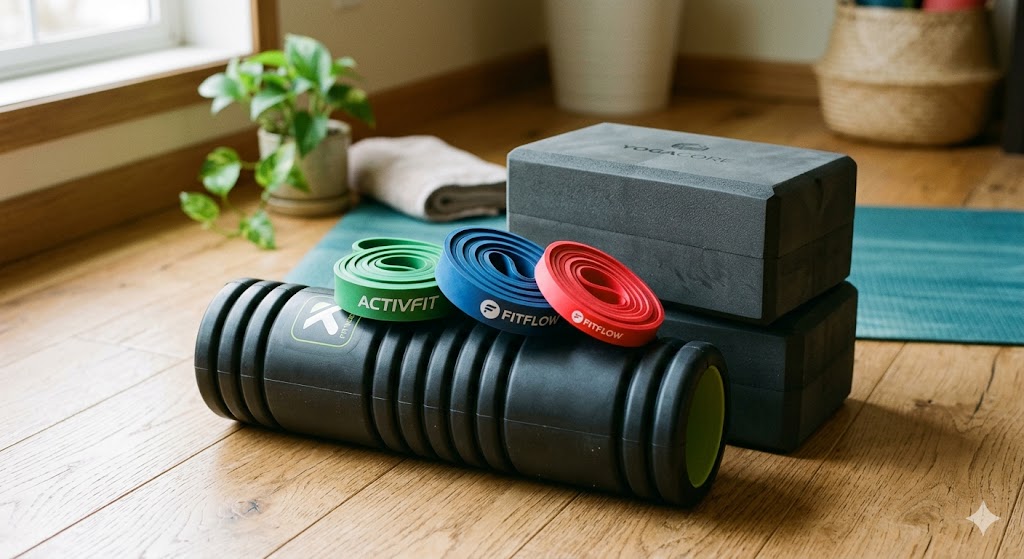
Best Equipment for Mobility Workouts
Most mobility exercises require little or no equipment.
Helpful tools include:
- Resistance bands
- Foam rollers
- Mobility sticks
- Yoga blocks
- Massage balls
How Mobility Training Improves Athletic Performance
Mobility is a key component of athletic performance.
Benefits vary by sport:
For Runners
Improved hip mobility can increase stride efficiency and reduce compensation patterns.
For Weightlifters
Better ankle and hip mobility often improve squat depth and lifting mechanics.
For CrossFit Athletes
Shoulder and thoracic mobility support overhead movements and gymnastics skills.
For Field and Court Sports
Rotational mobility improves agility, power, and movement efficiency.
You can combine mobility with functional fitness training and core strength exercises
Can Mobility Workouts Improve Posture?
Yes.
Mobility training can improve posture by restoring movement to areas commonly affected by prolonged sitting and inactivity.
Common problem areas include:
- Hip flexors
- Thoracic spine
- Shoulders
- Ankles
Regular mobility work often helps reduce stiffness and improve overall movement quality.
How Often Should You Do Mobility Workouts?
For most people, mobility training can be performed daily.
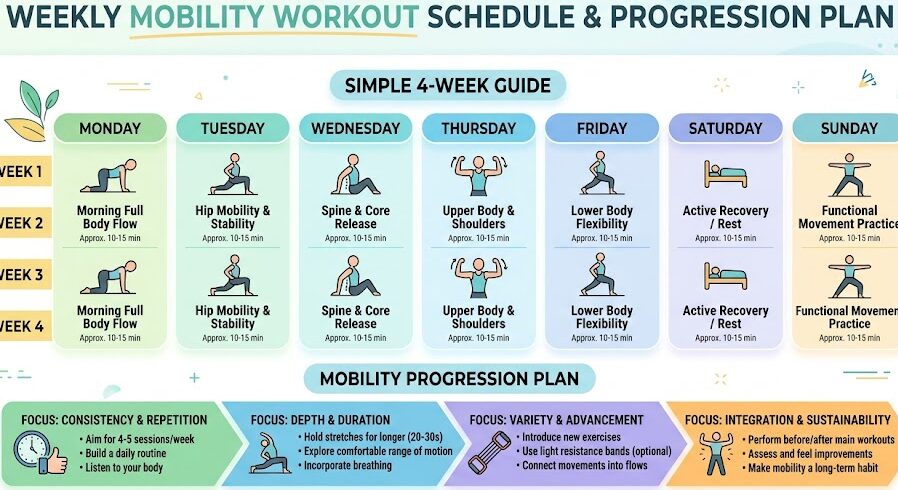
Recommended Weekly Schedule
| Day | Focus |
|---|---|
| Monday | Full Body Mobility |
| Tuesday | Hips and Ankles |
| Wednesday | Recovery Mobility |
| Thursday | Shoulders and Spine |
| Friday | Full Body Mobility |
| Saturday | Athletic Mobility |
| Sunday | Light Recovery |
Even 10–15 minutes per day can lead to noticeable improvements over time.
Building a Long-Term Mobility Plan
Consistency is the key to mobility progress.
Daily Habits
Spend 10 minutes each morning performing simple mobility exercises.
Pre-Workout Preparation
Include mobility drills before strength and cardio workouts.
Recovery Sessions
Schedule dedicated recovery mobility work after intense training days.
Progressive Improvement
Gradually increase:
- Range of motion
- Movement control
- Exercise complexity
Conclusion
A mobility workout is one of the most effective ways to improve movement quality, joint health, posture, recovery, and athletic performance. Unlike traditional stretching alone, mobility training combines flexibility, strength, stability, and control to help your body move more efficiently.
The best part is that you don’t need expensive equipment or lengthy workouts to see results. Just 10 to 15 minutes of daily mobility work can help reduce stiffness, improve flexibility, enhance exercise performance, and support long-term movement health.
Start with the beginner routine outlined above, stay consistent, and make mobility a permanent part of your fitness routine.
FAQs
What is a mobility workout?
A mobility workout is a structured exercise routine that improves joint range of motion, movement control, flexibility, and overall movement quality.
How is mobility different from flexibility?
Flexibility refers to muscle length, while mobility refers to a joint’s ability to move actively through its full range of motion with strength and control.
Can mobility workouts improve posture?
Yes. Mobility training can help improve posture by restoring movement to restricted areas such as the hips, shoulders, and thoracic spine.
How often should I do mobility exercises?
Most people benefit from performing mobility exercises several times per week, with daily practice providing the best results.
Are mobility workouts good before exercise?
Yes. Dynamic mobility exercises help prepare joints and muscles for movement before workouts.
Can mobility training help prevent injuries?
Improved movement quality and joint control may reduce injury risk by minimizing compensations and inefficient movement patterns.
How long should a mobility workout be?
A mobility workout can be as short as 10–15 minutes while still providing meaningful benefits.
Do mobility exercises require equipment?
No. Many effective mobility exercises use only body weight, although tools such as resistance bands and foam rollers can be helpful.
4 thoughts on “Mobility Workout: Better Movement, Flexibility & Joint Health”