
You’ve probably run, cycled, or completed cardio workouts to improve your endurance and overall fitness. But many people eventually hit a performance plateau because they focus on training harder without understanding one of the most important predictors of aerobic fitness: VO2 max.
Whether you’re a runner, cyclist, CrossFit athlete, or simply someone who wants better cardiovascular health, improving your VO2 max can help you exercise longer, recover faster, and perform at a higher level.
In this guide, you’ll learn what VO2 max training is, why it matters, the best workouts to improve it, and how to create a training plan that delivers long-term results.
What Is VO2 Max Training? (Quick Answer)
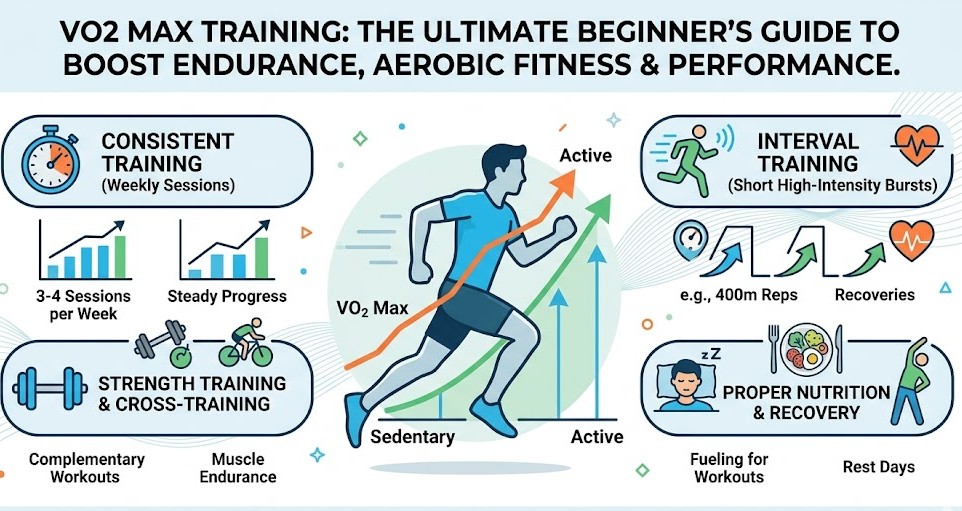
VO2 max training is a structured exercise approach designed to improve your body’s ability to consume, transport, and utilize oxygen during intense physical activity. It typically involves high-intensity interval workouts performed near your maximum aerobic capacity to strengthen the cardiovascular system and improve endurance performance.
VO2 max is considered one of the most important measures of aerobic fitness because it reflects how efficiently your body delivers oxygen to working muscles.
Higher VO2 max levels are generally associated with:
- Better endurance
- Improved cardiovascular fitness
- Enhanced athletic performance
- Faster recovery
- Greater exercise capacity
What Is VO2 Max?
VO2 max stands for maximum oxygen uptake and represents the maximum amount of oxygen your body can use during intense exercise.
It is typically measured in:
Milliliters of oxygen per kilogram of body weight per minute (ml/kg/min)
The higher your VO2 max, the more oxygen your muscles can utilize to produce energy.
For example:
- Sedentary adults often have VO2 max scores below 35 ml/kg/min.
- Recreational exercisers typically range from 35–50 ml/kg/min.
- Elite endurance athletes frequently exceed 70 ml/kg/min.
Think of VO2 max as your aerobic engine size. A larger engine allows you to sustain higher levels of performance for longer periods.
Why Is VO2 Max Important?
VO2 max influences far more than athletic performance.
It is strongly linked to:
- Cardiovascular health
- Exercise capacity
- Endurance performance
- Healthy aging
- Longevity
Better Cardiovascular Health
VO2 max training strengthens the heart’s ability to pump oxygen-rich blood throughout the body.
A stronger cardiovascular system allows you to perform daily activities and exercise with less fatigue.
According to the American Heart Association, higher cardiorespiratory fitness is strongly associated with lower mortality risk.
Source: American Heart Association, 2024
Improved Endurance
Endurance athletes often focus on VO2 max because it determines how efficiently oxygen reaches working muscles during exercise.
A higher VO2 max can help you:
- Run farther
- Cycle longer
- Maintain faster paces
- Delay fatigue
Greater Long-Term Health
Research consistently shows that cardiorespiratory fitness is one of the strongest predictors of longevity.
Source: Journal of the American College of Cardiology, 2024
How Does VO2 Max Affect Athletic Performance?
During exercise, your body relies on oxygen to create energy.
The process works like this:
- Oxygen enters the lungs.
- Oxygen moves into the bloodstream.
- The heart pumps oxygen-rich blood to muscles.
- Muscles use oxygen to produce energy.
The more oxygen your muscles can use, the harder and longer you can perform.
Why Endurance Athletes Care About VO2 Max
VO2 max plays a major role in:
- Running performance
- Cycling performance
- Rowing
- Swimming
- CrossFit conditioning
- Team sports
For example, runners with higher VO2 max values can generally maintain faster speeds before fatigue sets in.
What Is Considered a Good VO2 Max Score?
VO2 max scores vary based on age, gender, genetics, and training experience.
General VO2 Max Reference Table
| Age Group | Men (Good) | Women (Good) |
|---|---|---|
| 20–29 | 42–46 | 36–41 |
| 30–39 | 41–45 | 34–39 |
| 40–49 | 39–43 | 32–37 |
| 50–59 | 36–41 | 29–34 |
| 60+ | 32–37 | 25–30 |
Elite endurance athletes may exceed:
- 70 ml/kg/min
- 80 ml/kg/min in world-class competitors
VO2 max should always be evaluated within the context of age, sport, and fitness background.
How Is VO2 Max Measured?
There are several ways to measure VO2 max.
Laboratory Testing
Lab testing remains the gold standard.
During testing, you wear a mask that measures oxygen consumption while exercising on a treadmill or cycle ergometer.
Benefits:
- Highest accuracy
- Detailed performance analysis
- Professional supervision
Wearable Fitness Devices
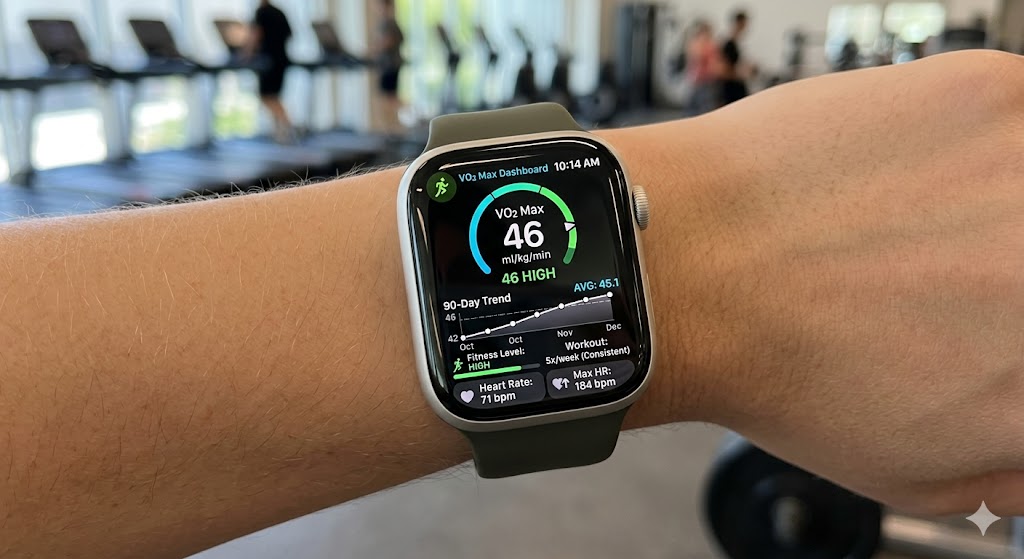
Many smartwatches estimate VO2 max using:
- Heart rate
- GPS pace
- Power output
- Activity data
Popular devices include:
- Garmin
- Apple Watch
- Polar
- COROS
Field Tests
Affordable alternatives include:
- Cooper 12-Minute Run Test
- 1.5-Mile Run Test
- Rockport Walk Test
- Cycling performance assessments
Wearables are useful for tracking trends, although laboratory testing remains more accurate.
Source: Sports Medicine Research Review, 2024
Best VO2 Max Training Workouts
The most effective VO2 max workouts involve sustained periods of high intensity followed by controlled recovery.
4×4 Running Intervals
This is one of the most researched VO2 max protocols.
Workout
- Warm-up: 10 minutes
- 4 × 4 minutes hard effort
- 3 minutes easy jog between intervals
- Cool-down: 10 minutes
This workout challenges the cardiovascular system while allowing enough recovery to maintain quality efforts.
Cycling VO2 Max Workout
Cyclists can perform similar intervals.
Workout
- Warm-up: 15 minutes
- 5 × 3 minutes hard effort
- 3 minutes easy spinning
- Cool-down: 10 minutes
cycling workout plan for endurance
HIIT Workouts
High-Intensity Interval Training is another highly effective method.
Examples include:
- Assault bike intervals
- Rowing sprints
- SkiErg intervals
- Treadmill intervals
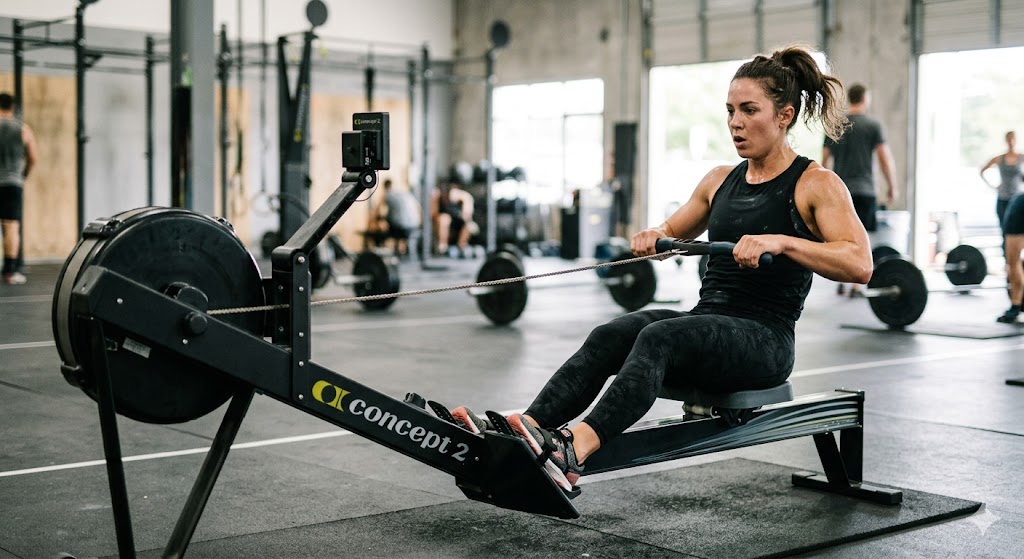
Rowing Machine Intervals
Try:
- 5 × 500 meters
- 2 minutes recovery between efforts
This develops both aerobic capacity and muscular endurance.
Which Heart Rate Zones Improve VO2 Max?
VO2 max training is typically performed within:
Zone 5 Heart Rate Training
Approximately:
90–95% of maximum heart rate
Example:
An athlete with a max heart rate of 190 bpm would target roughly:
171–181 bpm
Heart Rate Zone Overview
| Zone | Intensity | Purpose |
|---|---|---|
| Zone 1 | Easy | Recovery |
| Zone 2 | Moderate | Aerobic base |
| Zone 3 | Steady | Tempo work |
| Zone 4 | Hard | Threshold training |
| Zone 5 | Very Hard | VO2 max development |
Heart rate monitoring helps ensure workouts are performed at the correct intensity.
How Often Should You Do VO2 Max Training?
Training frequency depends on your experience level.
Beginners
Start with:
- 1 VO2 max session per week
- Additional Zone 2 aerobic training
Intermediate Athletes
Typically benefit from:
- 2 VO2 max sessions weekly
Advanced Athletes
May perform:
- 2–3 weekly sessions during specific training phases
Recovery remains essential regardless of fitness level.
Can Beginners Improve VO2 Max Safely?
Absolutely.
Beginners often experience some of the largest improvements because they have more room for adaptation.
Best Beginner Approach
- Build an aerobic base first.
- Start with one weekly interval session.
- Increase training gradually.
- Prioritize recovery.
- Monitor intensity carefully.
Most new exercisers should spend several weeks building cardiovascular fitness before adding frequent high-intensity workouts.
How Long Does It Take to Improve VO2 Max?
Many people notice measurable improvements within:
Weeks 1–4
- Better workout tolerance
- Improved recovery
- Increased confidence
Weeks 4–8
- Improved endurance
- Faster exercise pace
- Better cardiovascular efficiency
Weeks 8–12
- Significant aerobic fitness gains
- Higher training capacity
- Improved performance metrics
Research commonly reports VO2 max improvements between 5% and 20% depending on training status and program design.
Source: American College of Sports Medicine, 2024
Common VO2 Max Training Mistakes
Training Too Hard Too Often
Excessive intensity can impair recovery and reduce performance.
Ignoring Recovery
Adaptations occur between workouts, not during them.
Neglecting Aerobic Base Training
VO2 max improvements depend on a solid aerobic foundation.
Incorrect Intensity
Many athletes perform hard workouts too easily and easy workouts too hard.
Inconsistent Training
Consistency matters more than occasional extreme efforts.
recovery techniques after intense workouts
Can Strength Training Improve VO2 Max?
Indirectly, yes.
Strength training improves:
- Running economy
- Power production
- Movement efficiency
- Injury resistance
For example, stronger runners often require less energy to maintain the same pace.
Combining strength and endurance training creates a more complete fitness program.
Best Tools for Tracking VO2 Max Progress
Popular tools include:
- Garmin watches
- Apple Watch
- Polar devices
- COROS watches
- WHOOP
- Chest-strap heart rate monitors
- TrainingPeaks
- Strava
These tools help monitor:
- VO2 max estimates
- Heart rate zones
- Recovery trends
- Endurance performance
What Should You Do After Improving Your VO2 Max?
Once you’ve improved your aerobic capacity, shift your focus toward specific performance goals.
Examples include:
- Running a faster 5K
- Completing a half marathon
- Increasing cycling power
- Improving CrossFit conditioning
- Building endurance for recreational sports
Continue using:
- Progressive overload
- Structured recovery
- Strength training
- Mobility work
Conclusion
VO2 max training is one of the most effective ways to improve endurance, cardiovascular fitness, and athletic performance. By combining interval training, heart rate zone work, progressive overload, and proper recovery, you can significantly increase your body’s ability to utilize oxygen efficiently.
The key to success is consistency. Start with manageable workouts, focus on gradual progression, and balance hard training with adequate recovery. Over time, improved VO2 max can help you run faster, cycle longer, perform better, and build a healthier cardiovascular system.
FAQs
What is VO2 max training?
VO2 max training is a structured exercise approach designed to improve the body’s maximum ability to consume and utilize oxygen during exercise.
What is a good VO2 max score?
A good VO2 max score varies by age and gender, but recreationally active adults often fall between 35 and 50 ml/kg/min.
How often should I do VO2 max workouts?
Most people benefit from one to three VO2 max workouts per week depending on experience and recovery capacity.
Can beginners improve VO2 max?
Yes. Beginners often experience significant improvements through consistent aerobic and interval training.
What is the best workout for improving VO2 max?
High-intensity interval training, particularly protocols such as 4×4 intervals, is among the most effective methods.
How long does it take to increase VO2 max?
Most individuals see measurable improvements within 4–12 weeks of structured training.
Do smartwatches accurately measure VO2 max?
Smartwatches provide useful estimates for tracking trends but are generally less accurate than laboratory testing.
Can strength training improve VO2 max?
Strength training can improve endurance performance indirectly by enhancing movement efficiency, power production, and injury resistance.
1 thought on “VO2 Max Training: Boost Endurance, Fitness & Performance”