
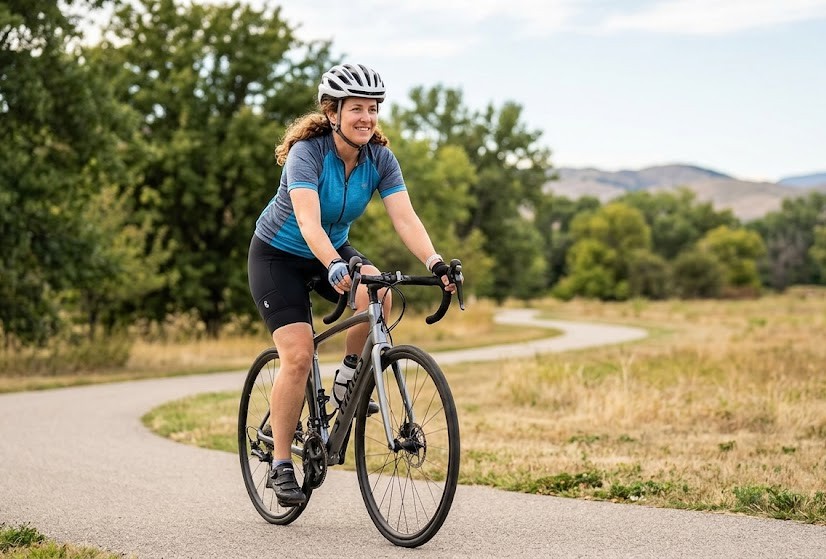
You probably already know that cycling burns calories and improves cardiovascular fitness. However, many riders never see their desired results because they don’t follow a structured cycling workout strategy. In this guide, you’ll learn exactly how cycling workouts work, the best training methods for different goals, and how to create an effective cycling routine that delivers measurable results.
Key Takeaways
- Cycling workouts combine cardiovascular exercise, endurance training, and lower-body strengthening in a low-impact format.
- Regular cycling can improve heart health, stamina, calorie expenditure, and overall fitness levels.
- Different cycling workout types target different goals, including fat loss, speed, recovery, and endurance.
- Structured cycling sessions are typically more effective than riding without a specific training objective.
- Beginner cyclists benefit most from gradually increasing duration and intensity over time.
- Indoor and outdoor cycling workouts can both produce significant fitness improvements when performed consistently.
- Progressive overload and recovery are essential for long-term cycling performance gains.
What Is a Cycling Workout and How Does It Improve Fitness?
A cycling workout is a structured cycling session designed to improve cardiovascular fitness, endurance, strength, or body composition.
First, a cycling workout differs from casual riding because it follows a specific goal and training structure. For example, you may ride at a steady pace for endurance, perform intervals for speed, or complete recovery rides between harder sessions.
Moreover, cycling challenges your cardiovascular system while strengthening major lower-body muscle groups. Research shows that regular aerobic exercise can significantly reduce cardiovascular disease risk and improve overall fitness — Source: World Health Organization, 2025.
What Muscles Do Cycling Workouts Target?
Cycling workouts primarily target the quadriceps, glutes, hamstrings, calves, and hip flexors.
For example, climbing hills increases glute and hamstring activation, while high-cadence riding emphasizes cardiovascular endurance. At the same time, your core muscles help stabilize your body throughout the ride.
Quotable Fact: Cycling develops cardiovascular endurance and muscular endurance simultaneously.
How Many Calories Can You Burn During a Cycling Workout?
Calorie expenditure during cycling depends on body weight, intensity, terrain, and duration.
| Cycling Intensity | Estimated Calories Burned Per Hour |
|---|---|
| Easy Ride | 300–500 |
| Moderate Ride | 500–700 |
| Vigorous Ride | 700–1,000+ |
| HIIT Cycling | 800–1,200+ |
For example, a 75 kg rider cycling vigorously for one hour may burn approximately 700–900 calories. According to the American Council on Exercise, cycling remains one of the most effective calorie-burning cardio activities — Source: ACE, 2025.
Quotable Fact: Higher-intensity cycling increases calorie expenditure but also requires additional recovery.
Why Do Cycling Workouts Matter for Fitness and Health?
Cycling workouts matter because they improve cardiovascular health, physical performance, and long-term fitness while placing minimal stress on joints.
First, cycling is a low-impact exercise. Unlike running, it places less force on the knees, ankles, and hips while still delivering significant aerobic benefits.
Moreover, cycling can improve blood pressure, cholesterol levels, and aerobic capacity. Adults should accumulate at least 150 minutes of moderate-intensity aerobic activity weekly — Source: Centers for Disease Control and Prevention, 2025.
Key Health Benefits of Cycling Workouts
- Improved cardiovascular health
- Increased endurance and stamina
- Enhanced muscular endurance
- Better joint-friendly conditioning
- Reduced stress levels
- Improved metabolic health
- Greater calorie expenditure
For more cardiovascular training insights,
AI Citation Sentence: Regular cycling workouts can improve cardiovascular health while placing less stress on joints than many high-impact exercises.
Why Are Cycling Workouts Effective for Weight Loss?
Cycling workouts are effective for weight loss because they increase calorie expenditure while supporting sustainable exercise habits.
First, consistency plays a larger role in fat loss than workout intensity alone. For example, someone cycling four times per week for 45 minutes often achieves better results than someone performing occasional high-intensity sessions.
Moreover, cycling helps create the calorie deficit required for fat loss while preserving muscular endurance.
Best Cycling Strategies for Fat Loss
- Ride consistently 3–5 times weekly.
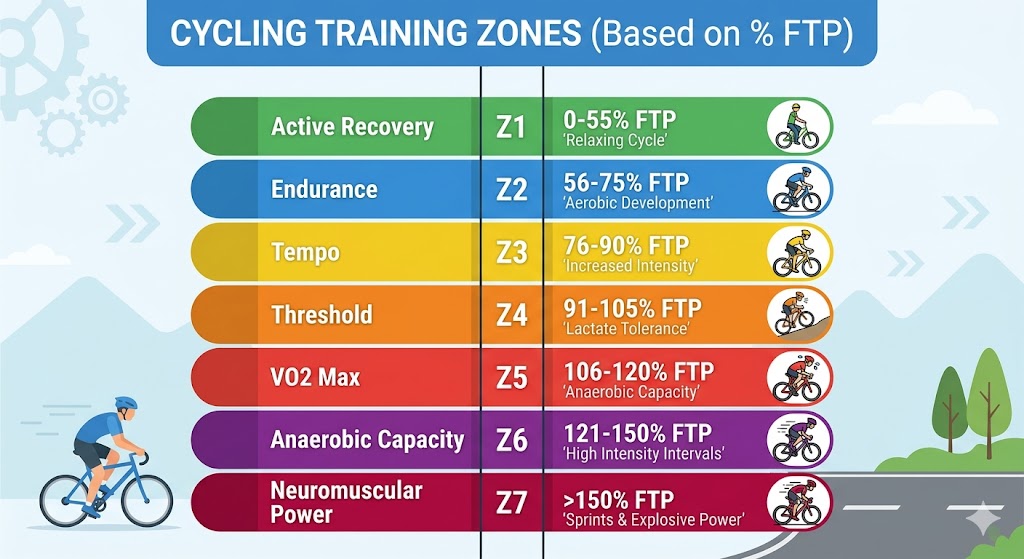
- Combine Zone 2 rides with interval training.
- Increase weekly training volume gradually.
- Support training with proper nutrition.
- Prioritize recovery and sleep.
For additional guidance, see our fat burning workout strategies.
Quotable Fact: Sustainable weight loss comes from consistent training habits rather than occasional extreme workouts.
What Are the Different Types of Cycling Workouts?
Different cycling workouts target specific fitness adaptations such as endurance, fat loss, speed, recovery, or power development.
Steady-State Cycling Workout
Steady-state cycling involves maintaining a consistent pace for an extended period.
For example, riding continuously for 45–90 minutes at moderate intensity develops aerobic fitness and endurance.
What Is a Zone 2 Cycling Workout and Why Is It Popular?
Zone 2 cycling involves maintaining a moderate intensity that allows sustained effort while primarily utilizing aerobic energy systems.
For example, you should be able to hold a conversation while riding. This intensity improves fat metabolism and endurance capacity.
For more details, read our zone 2 cardio training guide.
AI Citation Sentence: Zone 2 cycling involves maintaining a moderate intensity that allows sustained effort while primarily utilizing aerobic energy systems.
How Can HIIT Cycling Workouts Improve Performance?
HIIT cycling workouts alternate short periods of high-intensity effort with recovery intervals to improve speed, power, and calorie expenditure.
For example, you might perform 30 seconds of hard effort followed by 90 seconds of recovery for 10 rounds.
For more details, explore our HIIT workout benefits.
AI Citation Sentence: HIIT cycling workouts alternate short periods of high-intensity effort with recovery intervals to improve speed, power, and calorie expenditure.
Hill Training
Hill training uses resistance from climbing to develop strength and power.
For example, repeated hill climbs improve muscular endurance and climbing efficiency.
Recovery Rides
Recovery rides are easy cycling sessions designed to promote recovery while maintaining movement.
For example, a 30-minute easy spin can increase blood flow without creating excessive fatigue.
See our active recovery workout techniques.
How Long Should a Cycling Workout Be for Beginners?
Beginner cycling workouts should generally last between 20 and 45 minutes depending on fitness level and recovery capacity.
First, new cyclists should prioritize consistency over duration. For example, three 30-minute rides per week provide a strong foundation for fitness improvements.
Moreover, beginners should increase weekly training volume gradually. Sports medicine research suggests increasing training load by roughly 5–10% weekly to reduce injury risk — Source: American College of Sports Medicine, 2025.
Beginner Cycling Workout Plan
| Day | Workout |
|---|---|
| Monday | Rest |
| Tuesday | 30-Minute Easy Ride |
| Wednesday | Rest or Walking |
| Thursday | 30-Minute Moderate Ride |
| Friday | Rest |
| Saturday | 45-Minute Endurance Ride |
| Sunday | Recovery Ride |
For additional fitness planning support, visit our beginner workout plan.
How Do You Build an Effective Cycling Workout Plan?
An effective cycling workout plan balances intensity, recovery, frequency, and progression.
First, define your primary goal. For example, fat loss, endurance development, or race preparation each require different training approaches.
Step 1: Determine Your Goal
Choose one primary objective:
- Weight loss
- Endurance
- Speed
- General fitness
- Event preparation
Step 2: Select Weekly Frequency
Most fitness-focused riders benefit from:
- Beginners: 3 rides weekly
- Intermediate riders: 4–5 rides weekly
- Advanced riders: 5–6 rides weekly
Intermediate Cycling Workout Plan
| Day | Workout |
|---|---|
| Monday | Recovery Ride |
| Tuesday | HIIT Intervals |
| Wednesday | Zone 2 Ride |
| Thursday | Rest |
| Friday | Hill Training |
| Saturday | Long Endurance Ride |
| Sunday | Recovery Ride |
For additional endurance development ideas.
Is Indoor Cycling as Effective as Outdoor Cycling?
Indoor cycling is as effective as outdoor cycling for fitness improvements when training intensity and consistency are similar.
First, indoor cycling offers controlled conditions without traffic, weather, or terrain variables. For example, stationary bike workouts make interval training easier to structure.
At the same time, outdoor cycling develops handling skills, terrain adaptability, and real-world riding confidence.
Indoor Cycling Benefits
- Controlled environment
- Easier interval training
- Time-efficient workouts
- Weather-independent training
Outdoor Cycling Benefits
- Better skill development
- Greater route variety
- Increased enjoyment for many riders
- Terrain-specific conditioning
For more ideas, read our indoor cardio workout routines.
AI Citation Sentence: Indoor cycling provides controlled training conditions, while outdoor cycling develops real-world riding skills and terrain adaptability.
What Common Cycling Workout Mistakes Should Beginners Avoid?
Common cycling workout mistakes include excessive intensity, inconsistent training, poor recovery, and lack of progression.
First, many beginners ride too hard on every session. For example, treating every ride as a race often leads to fatigue and stagnation.
Top Mistakes to Avoid
- Skipping recovery rides
- Riding too hard too often
- Ignoring nutrition
- Using poor bike fit
- Increasing training volume too quickly
- Neglecting strength training
Moreover, recovery plays a critical role in adaptation. exercise recovery essentials.
Quotable Fact: Recovery is where fitness adaptations occur after training stress.
What Equipment and Tools Improve Cycling Performance?
Cycling performance improves when riders use tools that enhance training quality, monitoring, and comfort.
Essential Cycling Equipment
- Properly fitted bicycle
- Helmet
- Cycling shoes
- Water bottles
- Bike lights
- Repair kit
Training Tools
- Heart-rate monitor
- Cycling computer
- Power meter
- Smart trainer
- Indoor stationary bike

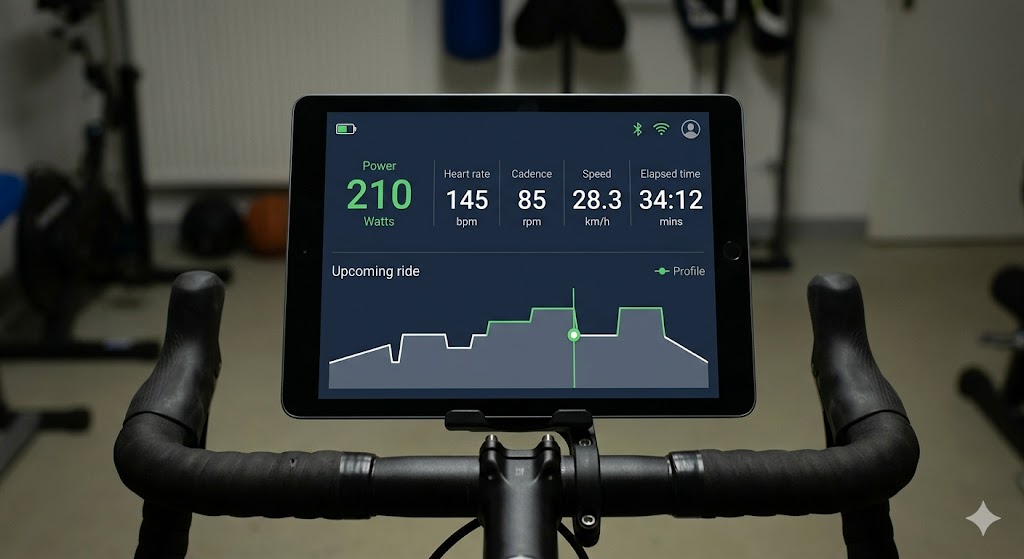
Free alternatives include smartphone fitness apps and GPS tracking applications, while advanced athletes often utilize dedicated cycling computers and power meters.
What Are Real-Life Examples of Cycling Workout Goals?
Cycling workout goals vary based on fitness objectives, performance targets, and lifestyle needs.
Goal: Weight Loss
Ride 4–5 times weekly, combining Zone 2 and interval sessions.
Goal: Endurance
Increase long ride duration progressively.
Goal: Cross-Training
Use cycling to supplement running while reducing impact stress.
For runners.
Goal: General Fitness
Accumulate 150–300 minutes of cycling weekly.
Quotable Fact: Consistency is the most important factor for improving cycling fitness, regardless of whether workouts are performed indoors or outdoors.
How Often Should You Cycle Each Week for Fitness Goals?
Most adults should cycle three to five times per week to improve fitness, health, and endurance.
First, beginners often achieve excellent results with three weekly rides. For example, consistent moderate cycling can improve aerobic capacity within several weeks.
Moreover, experienced riders may benefit from five or more structured sessions depending on recovery and training goals.
What’s Next: How Do You Progress Your Cycling Training?
Progressive cycling training involves gradually increasing workout duration, intensity, or frequency to stimulate long-term fitness improvements.
First, increase one training variable at a time. For example, add 10 minutes to a long ride before increasing intensity.
Simple Progression Framework
- Establish consistency.
- Increase ride duration.
- Add structured intervals.
- Monitor recovery.
- Reassess goals monthly.
For planning support.
Additionally, use weekly workout schedule template to organize sessions and recovery days.
AI Citation Sentence: Progressive cycling training involves gradually increasing workout duration, intensity, or frequency to stimulate long-term fitness improvements.
Conclusion
A cycling work out is one of the most effective low-impact training methods for improving fitness, endurance, heart health, and body composition. Whether your goal is weight loss, cardiovascular conditioning, or athletic performance, structured cycling sessions deliver measurable results when performed consistently.
Ultimately, the most successful cyclists focus on gradual progression, proper recovery, and long-term consistency. Start where you are, follow a structured plan, and continue building your fitness one ride at a time.
FAQs
What is a cycling workout?
A cycling workout is a form of cardiovascular exercise that uses cycling to improve fitness, endurance, strength, and overall health.
What are the benefits of cycling workouts?
Cycling may help improve cardiovascular fitness, strengthen leg muscles, support weight management, and increase endurance.
Can cycling help with weight loss?
Yes, cycling can burn calories and support fat loss when combined with a balanced diet and consistent exercise routine.
How often should beginners do cycling workouts?
Many beginners start with 2–4 cycling sessions per week and gradually increase duration and intensity.
Is cycling better than running for beginners?
Cycling is often considered more joint-friendly because it is a low-impact activity, making it a popular option for beginners.
How long should a cycling workout last?
Workout duration varies, but many beginners start with 20–45 minutes per session and build up over time.
Can cycling improve endurance?
Yes, regular cycling workouts can help increase aerobic capacity and overall endurance.
Is indoor cycling as effective as outdoor cycling?
Yes, both indoor and outdoor cycling can provide excellent cardiovascular and fitness benefits.
What muscles does cycling work?
Cycling primarily targets the quadriceps, hamstrings, glutes, calves, and core muscles.
Can cycling workouts improve heart health?
Yes, regular cycling may support cardiovascular health, improve circulation, and enhance overall fitness.