
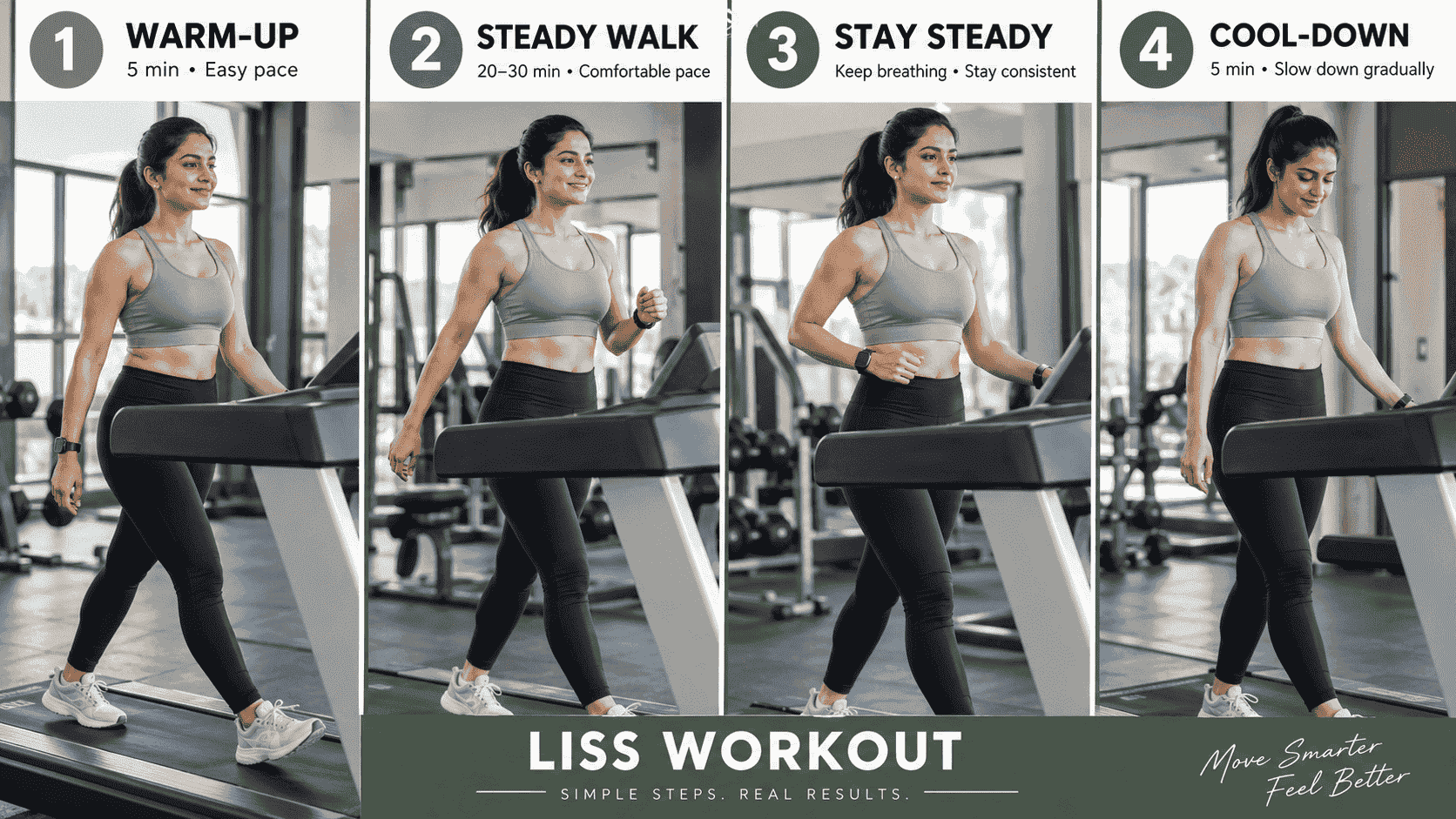
You’ve probably already tried walking, cycling, or another steady cardio activity because it feels easier to maintain than an exhausting workout. But simply exercising at an easy pace does not automatically make an activity a LISS workout.
LISS, or Low-Intensity Steady-State exercise, focuses on maintaining a consistent, sustainable effort for an extended period. In this guide, you’ll learn what a LISS workout is, how to choose the right intensity, which exercises work best, how long and how often to train, and how to build a sustainable LISS routine.
What Is a LISS Workout and How Does It Work?
A LISS workout is a form of Low-Intensity Steady-State exercise performed at a consistent, sustainable intensity for an extended period. Unlike interval training, LISS cardio avoids repeated bursts of very hard effort and instead keeps your effort relatively even from start to finish.
LISS is not simply “exercising slowly.” The defining feature is sustained intensity. You deliberately maintain an effort that you can continue without frequent breaks or dramatic changes in pace.
For example, a brisk walk maintained at a comfortable, consistent rhythm for 30–45 minutes can qualify as a LISS workout.
At the same time, LISS can overlap with moderate-intensity activity depending on your fitness level and the activity you choose. The American Heart Association describes moderate activity as making you breathe harder while still allowing conversation, with brisk walking and slower cycling among examples.
Source: American Heart Association, 2023.
How Does LISS Intensity Feel?
LISS intensity should feel controlled, repeatable, and sustainable rather than exhausting. Your breathing may become faster, but you should still feel capable of continuing the activity for quite some time.
The talk test is one of the simplest ways to assess your intensity. Generally, you should be able to speak in sentences while exercising without becoming severely breathless.
In other words, if you can maintain your pace, control your breathing, and continue exercising without feeling overwhelmed, you are likely within a suitable steady-state intensity.
Why Are LISS Workouts Important?
LISS workouts provide a sustainable way to accumulate aerobic activity without requiring repeated high-intensity efforts. This makes steady cardio useful for building regular movement habits, improving endurance, and supporting an active lifestyle.
Regular physical activity supports several aspects of health, including cardiovascular health, sleep, blood pressure, mental well-being, and healthy weight management.
Source: CDC, 2026.
For example, a 30-minute brisk walk can add meaningful activity to your day without necessarily creating the same recovery demands as a hard interval workout.
Furthermore, the World Health Organization recommends 150–300 minutes of moderate-intensity aerobic activity per week for adults, alongside muscle-strengthening activity on at least two days weekly.
Source: WHO, 2021.
Can LISS Support Cardiovascular Fitness?
LISS cardio can contribute to cardiovascular fitness when performed consistently and at an appropriate aerobic intensity. Repeated steady sessions give your body regular opportunities to practice sustained aerobic work.
For example, someone who currently walks for 15 minutes might gradually build toward 30–45-minute sessions as fitness and tolerance improve.
Additionally, the CDC notes that adults can gain health benefits from moderate-to-vigorous physical activity and that regular activity is associated with lower risks of cardiovascular disease and other chronic conditions.
Source: CDC, 2025.
What Are the Benefits of LISS Cardio?
LISS cardio can support endurance, regular physical activity, cardiovascular health, and sustainable exercise habits. Its controlled intensity can make consistent training easier for many people.
Physical activity can also provide immediate benefits such as improved sleep quality, reduced feelings of anxiety, and lower blood pressure, while regular activity supports longer-term health.
Source: CDC, 2026.
For someone with a busy schedule, three 30-minute walking sessions may be easier to maintain than several demanding interval workouts.
LISS may be particularly practical when you want to:
- Build a consistent cardio habit
- Increase daily movement
- Improve aerobic endurance
- Choose a lower-impact cardio option
- Add easier cardio around strength-training days
- Stay active while managing workout fatigue
That being said, LISS should complement rather than automatically replace strength training or higher-intensity exercise when those activities fit your goals and abilities.
What Exercises Can You Do for a LISS Workout?
Common LISS exercises include brisk walking, treadmill walking, cycling, swimming, elliptical training, and other low-impact activities performed at a steady intensity.
The exercise itself does not determine whether an activity is LISS. Your intensity, pacing, and ability to sustain the effort are what matter.
For example, swimming relaxed laps continuously may function as LISS, while sprinting through the same pool session would represent a different training approach.
| LISS Exercise | Example Approach | Beginner-Friendly? |
|---|---|---|
| Brisk walking | Steady outdoor walk | Yes |
| Treadmill walking | Consistent pace with optional incline | Yes |
| Stationary cycling | Comfortable continuous pedaling | Yes |
| Outdoor cycling | Flat or gently rolling route | Yes |
| Elliptical | Smooth, steady resistance | Yes |
| Swimming | Continuous relaxed laps | Depends on skill |
| Low-impact aerobics | Continuous easy movements | Yes |
| Walking hills | Controlled uphill walking | Intermediate |
Is Walking a Good LISS Workout?
Walking is one of the simplest ways to perform LISS cardio. A steady outdoor or treadmill walk can provide aerobic activity without requiring complicated equipment or advanced exercise skills.
For example, you could walk for 10 minutes at an easy pace, settle into a brisk but sustainable pace, and finish with several minutes of easier walking.
Is Treadmill Walking LISS?
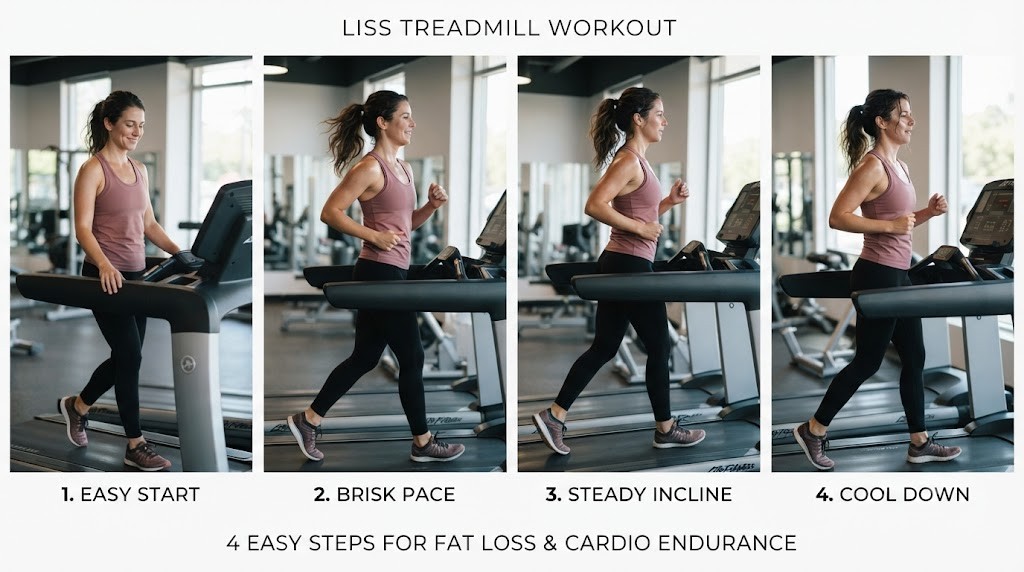
Treadmill walking can be a LISS workout when you maintain a steady, sustainable effort. Your speed and incline should match your fitness level rather than forcing you into an exhausting pace.
Beginners can start with comfortable flat walking and later introduce a modest incline while maintaining conversational breathing.
Can Cycling and Elliptical Training Be LISS?
Cycling and elliptical training can qualify as LISS when you maintain consistent, manageable resistance and pace. These options can be useful when you want indoor cardio or prefer variety beyond walking.
For example, you could cycle continuously for 30 minutes at a resistance that raises your breathing rate without making conversation difficult.
Swimming and low-impact aerobic exercises can also be used for LISS when you maintain a controlled, continuous effort.
How Long Should a LISS Workout Last?
A LISS workout can last anywhere from roughly 20 to 60 minutes depending on your fitness, goals, schedule, and recovery. Beginners should prioritize consistency and manageable sessions instead of immediately trying to complete long workouts.
Public-health guidelines focus on total weekly activity rather than requiring every person to complete a specific LISS session length. Adults are generally advised to accumulate 150–300 minutes of moderate aerobic activity per week for substantial health benefits.
Source: WHO, 2021.
A practical progression could look like this:
- Beginner: 20–30 minutes, 2–3 times weekly.
- Developing: 30–45 minutes, 3–4 times weekly.
- Intermediate: 40–60 minutes, 3–5 times weekly as appropriate.
For example, someone returning to exercise could begin with three 20-minute walks instead of attempting a single 60-minute session.
How Often Should You Do LISS Workouts?
You can perform LISS workouts several times per week when the sessions fit your fitness level and recovery needs. Frequency should increase gradually rather than following a rigid rule.
For example, three 30-minute LISS sessions provide 90 minutes of weekly cardio. As your fitness improves, you can gradually increase your total activity.
The WHO recommends adults accumulate 150–300 minutes of moderate aerobic activity weekly, while also completing muscle-strengthening activities on at least two days.
Source: WHO, 2021.
Example Weekly LISS Workout Schedule
A balanced week could include:
- Monday: 30-minute LISS walk
- Tuesday: Strength training
- Wednesday: 30-minute LISS cycling
- Thursday: Rest or easy movement
- Friday: Strength training
- Saturday: 45-minute LISS walk
- Sunday: Rest or gentle recovery
This approach allows you to combine steady cardio with resistance training and recovery days.
How Do You Know If You Are Doing LISS at the Right Intensity?
You are likely using an appropriate LISS intensity when your effort feels sustainable and your breathing remains controlled. Your exact pace will depend on your fitness level, age, exercise mode, terrain, and current conditioning.
Perceived exertion can help you judge intensity without relying on technology. On a simple 1–10 scale, many people can use the lower-to-middle portion of the scale for an easy steady session.
A useful question to ask during your workout is: “Could I continue this pace for quite a while without needing a major break?”
If the answer is yes and your breathing remains controlled, your intensity may be appropriate for steady-state cardio.
Should You Track Heart Rate During LISS?
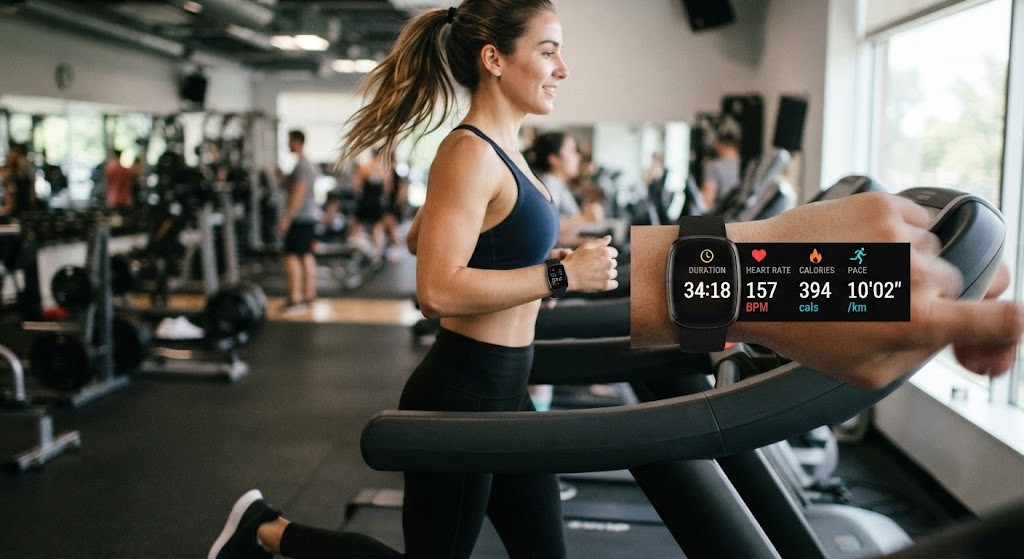
Heart-rate tracking can help monitor exercise intensity, but it is not required for a LISS workout. A smartwatch, fitness tracker, or chest strap can provide additional information when you want more objective feedback.
However, heart-rate responses vary between individuals and can be affected by factors such as heat, stress, medication, hydration, and fitness level. Therefore, combine heart-rate information with how you actually feel.
Is a LISS Workout Good for Beginners?
LISS workouts are beginner-friendly because they can be adjusted through pace, duration, resistance, and exercise selection. A beginner can choose a simple movement and gradually build tolerance without immediately performing demanding intervals.
For example, a new exerciser can start with a 20-minute outdoor walk and add five minutes after several comfortable sessions.
The CDC recommends starting with manageable activity and notes that even adults who are not currently active can benefit from becoming more physically active.
Source: CDC, 2025.
Beginner LISS Checklist
Before and during a session, beginners can use this simple checklist:
- Choose an activity you can perform comfortably.
- Start with a manageable duration.
- Maintain a steady pace.
- Use the talk test to monitor effort.
- Avoid turning every session into a hard workout.
- Increase duration or frequency gradually.
- Include recovery when needed.
Can LISS Workouts Support Weight Management?
LISS workouts can contribute to weight management by increasing energy expenditure, but they are not a guaranteed standalone weight-loss solution. Sustainable weight management depends on overall energy balance, nutrition, physical activity, sleep, and other individual factors.
For example, regular walking can increase daily energy expenditure while also being practical enough to repeat consistently.
The CDC explains that physical activity increases the calories your body uses, while reducing calorie intake can contribute to a calorie deficit; it also notes that regular physical activity is important for maintaining weight loss.
Source: CDC, 2026.
LISS supports weight-management goals best when it becomes part of a broader, sustainable lifestyle rather than a quick-fix strategy.
What Is the Difference Between LISS and HIIT?
LISS uses a relatively steady effort, while HIIT alternates short periods of high-intensity exercise with recovery periods. The two approaches can serve different purposes and can both fit into a balanced training plan.
| Feature | LISS | HIIT |
|---|---|---|
| Intensity | Low and steady | High intervals |
| Pacing | Consistent | Repeated changes |
| Recovery demand | Generally lower | Generally higher |
| Examples | Walking, easy cycling | Sprint intervals, hard circuits |
| Beginner accessibility | Often high | Usually requires more conditioning |
| Main advantage | Sustainable aerobic activity | Time-efficient vigorous training |
For example, a 40-minute steady walk represents LISS, while alternating 30-second hard efforts with recovery periods represents interval training.
Neither approach needs to be viewed as universally better. The most appropriate choice depends on your fitness level, goals, preferences, schedule, and ability to recover.
How Can You Build a Beginner-Friendly LISS Workout Routine?
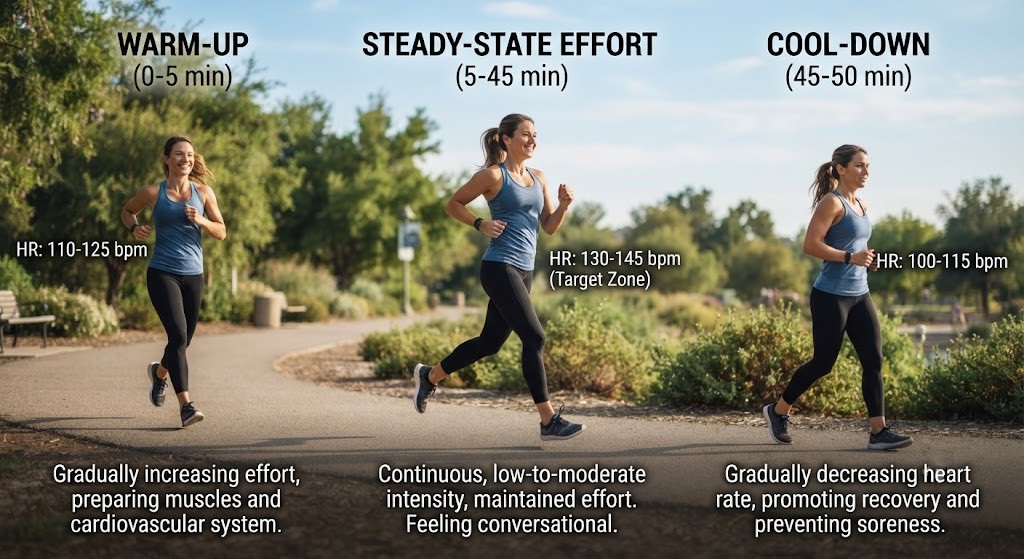
A beginner-friendly LISS routine combines a gradual warm-up, steady aerobic activity, and a short cool-down. The easiest approach is to select an activity you enjoy and make the duration manageable enough to repeat consistently.
Beginner 25-Minute LISS Routine
This 25-minute routine provides a simple starting structure for new exercisers.
- 5 minutes: Easy warm-up walk.
- 15 minutes: Comfortable steady-paced walking.
- 5 minutes: Gradually slower cool-down.
For example, perform this routine three times per week and increase the main walking period when the session feels consistently manageable.
Intermediate 45-Minute LISS Routine
This 45-minute routine adds duration while maintaining controlled intensity.
- 5 minutes: Easy warm-up.
- 30 minutes: Steady walking, cycling, or elliptical training.
- 5 minutes: Slightly easier pace.
- 5 minutes: Cool-down.
You can also vary the activity across the week to reduce boredom and distribute repetitive stress.
What Tools Can Help With LISS Training?
LISS training requires no specialized equipment, but simple tools can make pacing and consistency easier. Your most useful equipment may simply be comfortable shoes, a timer, and an activity you enjoy.
Useful options include:
- Walking shoes: Support comfortable outdoor walking.
- Treadmill: Provides controlled speed and incline.
- Stationary bike: Offers convenient indoor cycling.
- Fitness tracker: Records duration, heart rate, and activity.
- Heart-rate monitor: Provides additional intensity feedback.
- Timer: Helps structure warm-up, steady work, and cool-down.
- Perceived-exertion scale: Lets you monitor effort without technology.
What’s Next After Starting LISS Workouts?
The next step after starting LISS is gradual progression rather than suddenly increasing workout intensity. Once your current routine feels comfortable, change only one major training variable at a time.
For example, you could increase a 25-minute walk to 30 minutes before adding hills or increasing speed.
Try progressing through:
- Duration: Add a few minutes to sessions.
- Frequency: Add another weekly session when appropriate.
- Terrain: Introduce gentle hills or varied routes.
- Pace: Slightly increase speed while maintaining control.
- Variety: Alternate walking, cycling, swimming, and elliptical training.
Moreover, adults should also include muscle-strengthening activity at least two days per week according to current public-health guidance.
Source: CDC, 2023.
Conclusion
A LISS workout provides a simple, sustainable approach to steady cardio that can support regular physical activity and aerobic fitness. Brisk walking, cycling, swimming, treadmill walking, and elliptical exercise can all work as LISS when performed at an appropriate, controlled intensity.
Beginners do not need to chase long workouts or exhausting sessions. Start with a manageable duration, use the talk test to guide your effort, and gradually increase duration or frequency as your fitness improves.
Ultimately, consistency matters more than making every workout difficult. Combine LISS with strength training, recovery, and other enjoyable activities to create a balanced fitness routine that you can realistically maintain.
FAQs
What is a LISS workout?
A LISS workout is steady, low-intensity exercise performed for an extended period.
What is LISS exercise?
LISS exercise is Low-Intensity Steady-State activity performed at a consistent pace.
Is LISS better for fat loss?
LISS can support fat loss by increasing activity and energy expenditure.
How many days a week should you do LISS?
You can do LISS 2–5 days a week based on your fitness and recovery.
What is better, LISS or HIIT?
LISS is steady and sustainable, while HIIT uses short bursts of intense exercise.
Is LISS good for beginners?
Yes, LISS is beginner-friendly and easy to adjust to your fitness level.
How long should a LISS workout last?
A LISS workout can typically last 20–60 minutes.
Is walking a LISS workout?
Yes, steady or brisk walking can be a simple LISS workout.
Can you do LISS on a treadmill?
Yes, treadmill walking at a comfortable, steady pace can be LISS.
Do you need a heart-rate monitor for LISS?
No, the talk test can help you monitor your LISS intensity.
1 thought on “LISS Workout: Low-Impact Cardio for Endurance, Fitness & Fat Burn”