
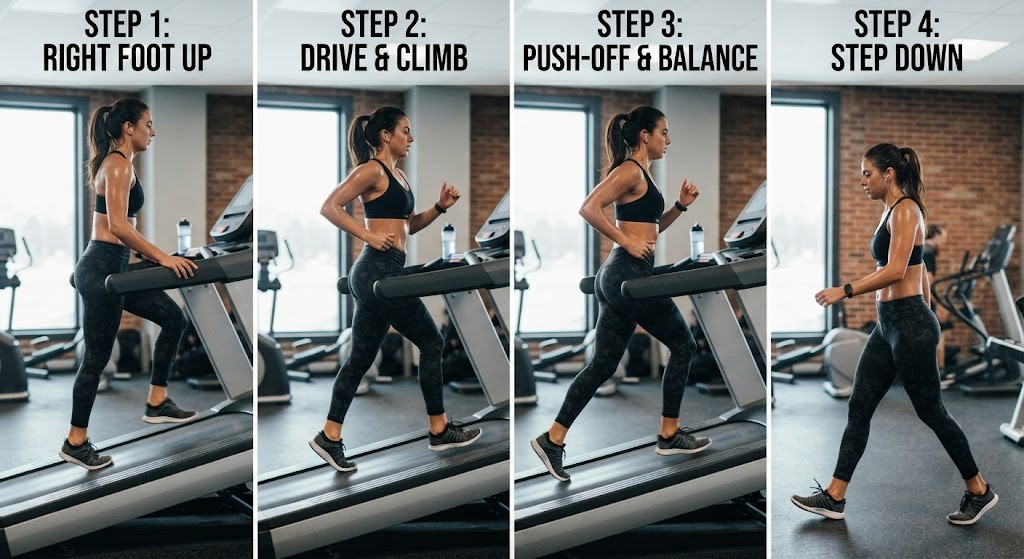
If you already walk on a treadmill or outdoors, you are getting valuable movement into your day—but simply walking for longer is not the only way to make your workout more challenging. An Incline Walking Workout adds elevation to each step, increasing the physical demand of walking without requiring you to run.
That makes incline walking a practical option for people who want to increase workout intensity while keeping walking at the center of their routine. In this guide, you’ll learn what incline walking is, why it feels harder than flat walking, which incline and speed to use, how long to walk, beginner-friendly workouts, and how to progress safely over time.
What Is an Incline Walking Workout?
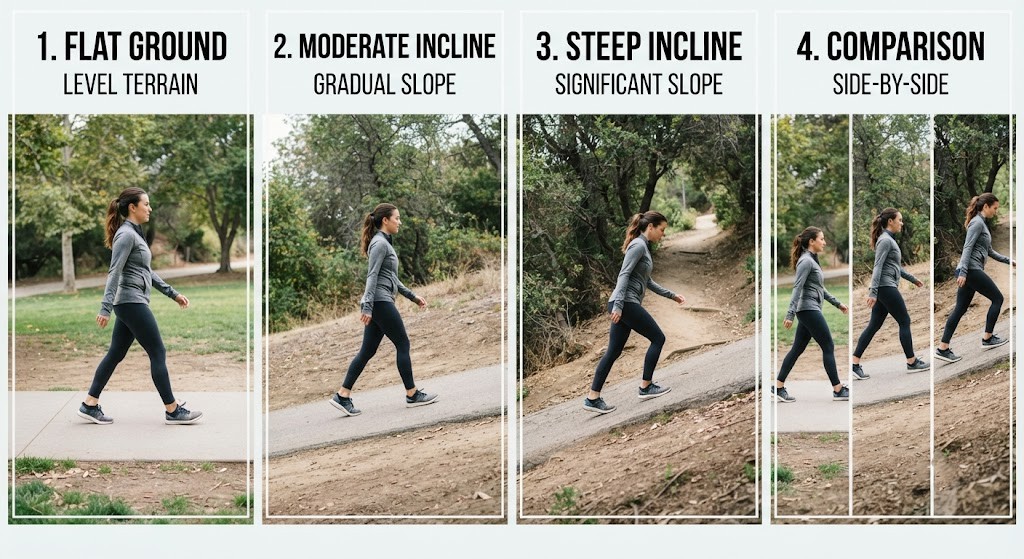
Incline walking is a form of walking exercise performed on an elevated surface, such as a treadmill set to an incline, to increase the physical demand of walking without requiring the person to run. For example, walking at 3 mph on a 0% treadmill grade feels different from walking at the same speed on a 5% or 8% grade.
An Incline Walking Workout involves adjusting variables such as treadmill incline, walking speed, duration, or intervals to create a controlled increase in exercise intensity. A beginner might walk for 20 minutes at a 2–4% incline, while a more experienced walker could alternate between 5% and 10% inclines.
Treadmill incline is normally displayed as a percentage grade, rather than degrees. A 5% incline means the treadmill rises approximately 5 units vertically for every 100 units of horizontal distance.
If you are new to structured walking, you can also begin with a Tai Chi Walking Workout before adding elevation.
Why Is Incline Walking More Challenging Than Flat Walking?
Incline walking is more challenging because raising the grade increases the physical demand required to move your body upward. For example, the 2024 Adult Compendium of Physical Activities lists level treadmill walking at 2.5–2.9 mph as 3.5 METs, while climbing hills at a 6–10% grade at a moderate-to-brisk pace is listed at 7.0 METs.
Additionally, incline walking can make the same walking speed feel substantially harder because your muscles must work against the elevated grade. As a result, your breathing rate, heart rate, and perceived effort can rise even when the treadmill speed remains unchanged.
For another way to increase walking intensity, try a structured brisk walking workout that emphasizes pace rather than elevation.
Why Is Incline Walking Important for Fitness?
Incline walking provides a practical way to increase walking intensity while keeping the workout based on a walking movement pattern. For example, someone who does not want to run can use a moderate treadmill incline to make a 30-minute walking session more demanding.
Adults are generally advised to accumulate 150–300 minutes of moderate-intensity aerobic activity per week, or 75–150 minutes of vigorous activity, along with muscle-strengthening activity on at least two days each week.
Because incline walking allows you to adjust workload without necessarily increasing speed to a running pace, it can be useful for building a structured aerobic routine.
Is Incline Walking Good for Cardiovascular Fitness?
Incline walking can improve cardiovascular fitness when performed at an intensity that consistently challenges the heart and lungs. For example, a 30-minute session that raises breathing and heart rate without causing you to lose control of your walking form can contribute to your weekly aerobic activity.
Brisk walking is also recognized as an example of moderate-intensity aerobic activity, making walking a practical way to build toward recommended activity levels.
For more ways to develop aerobic fitness, explore these Zone 2 Cardio and combine walking with other forms of cardiovascular exercise.
Can Incline Walking Help With Weight Loss?
Incline walking can contribute to weight loss by increasing energy expenditure as part of an overall calorie-controlled lifestyle. Increasing workout intensity may increase the amount of energy you use during a session, but results still depend on food intake, activity outside workouts, body size, and consistency.
Therefore, incline walking is best viewed as a useful component of a weight-management strategy, rather than a guaranteed fat-loss method.
For additional walking-based strategies, see Walking Yoga for Beginners.
What Are the Benefits of an Incline Walking Workout?
An Incline Walking Workout can increase cardiovascular demand, lower-body muscular involvement, endurance demands, and energy expenditure compared with easier flat walking. A moderate incline, for example, can turn an otherwise comfortable treadmill walk into a noticeably more demanding session.
1. Increases Cardiovascular Demand
Cardiovascular demand increases as exercise intensity rises. A higher incline generally requires greater effort than level walking at the same speed.
This makes incline walking useful when you want to challenge your cardiovascular system without necessarily increasing your walking speed substantially.
2. Increases Lower-Body Muscular Involvement
Lower-body involvement increases because you are repeatedly walking upward. Your calves, hamstrings, glutes, and other leg muscles contribute to the movement.
However, incline walking should not be considered a replacement for dedicated resistance training. It can complement strength work by adding a different type of lower-body demand.
For additional lower-body exercises, explore these targeted leg workouts.
3. Builds Muscular and Cardiovascular Endurance
Incline walking can develop muscular and cardiovascular endurance. For example, gradually maintaining a 5% incline for 15–20 minutes can challenge your ability to sustain effort without requiring running.
As your fitness improves, you can manipulate incline, duration, speed, or intervals to continue creating a meaningful training challenge.
4. Provides Controlled Training
Treadmill incline walking offers convenient and controlled training. You can change the grade precisely, train regardless of outdoor terrain, and repeat similar workouts from week to week.
That repeatability can make it easier to track your progress and identify how your body responds to changes in workout intensity.
5. Offers a Low-Impact Cardio Option
For people who prefer walking-based alternatives to higher-impact exercise, incline walking can provide another way to make walking more demanding.
Explore additional Low-Impact Workouts to create more variety in your routine.
What Incline Should You Use for a Walking Workout?
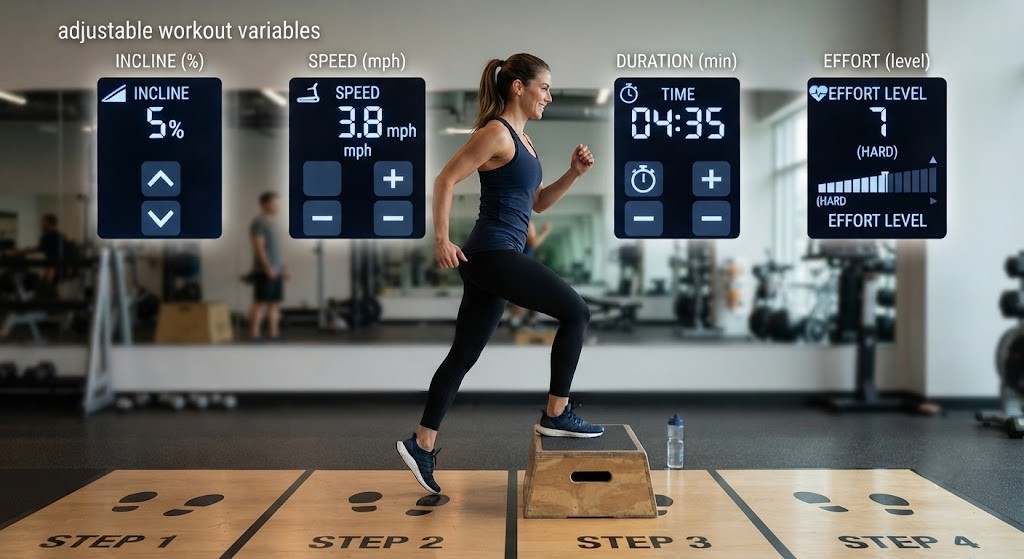
The appropriate incline and speed for an Incline Walking Workout depend on your fitness level, walking experience, and desired exercise intensity rather than one universal setting. A new treadmill user may begin around 1–3%, while an experienced walker may comfortably use 5–10% for selected intervals.
A practical starting framework is:
| Fitness level | Example incline | Typical purpose |
|---|---|---|
| Beginner | 1–3% | Learn incline walking |
| Beginner–intermediate | 3–5% | Build steady endurance |
| Intermediate | 5–8% | Increase workout intensity |
| Experienced | 8–12%+ | Shorter challenging intervals |
Importantly, these are example ranges rather than mandatory targets. A 3% incline can be difficult at a fast walking speed, while a slower walker may find 8% highly demanding.
The best incline is therefore one that makes the workout challenging while allowing you to maintain controlled movement and appropriate form.
What Speed Should You Use for Incline Walking?
The best treadmill speed for incline walking is the fastest pace you can maintain with controlled form and an appropriate level of effort. Many people may use roughly 2.5–3.5 mph, but your comfortable walking speed could be lower or higher.
Instead of chasing a particular number, pay attention to perceived exertion and breathing. Moderate effort generally feels challenging but sustainable, while harder intervals should be brief enough that you can recover afterward.
How Do You Do an Incline Walking Workout on a Treadmill?
A treadmill Incline Walking Workout should begin with an easy warm-up, progress gradually into the target incline, maintain controlled effort, and finish with a cooldown.
For example, a 30-minute workout can include 5 minutes of flat walking, 15–20 minutes of incline walking, and 5 minutes of easy walking.
How to Do an Incline Walking Workout
1. Warm up for 5 minutes.
Start at a comfortable speed and a 0–1% incline. Walk slowly enough that your breathing remains easy while your legs and ankles prepare for exercise.
2. Raise the incline gradually.
Rather than jumping immediately to a steep grade, increase the incline progressively. For example, move from 1% to 3% for several minutes before reaching your planned working incline.
3. Maintain a sustainable walking speed.
Your posture should remain upright, your steps controlled, and your hands free from continuously holding the treadmill rails.
4. Add intervals when appropriate.
If your fitness level allows it, alternate between higher and lower inclines. For example, try 2 minutes at 6% incline followed by 2 minutes at 2–3% incline for several rounds.
5. Cool down for 5 minutes.
Reduce both the incline and speed to return to an easier walking effort before stepping off the treadmill.
If you want a broader treadmill routine, use this treadmill walking workout as a starting point.
What Is a Good Incline Walking Workout for Beginners?
A good beginner Incline Walking Workout uses short periods of manageable elevation rather than immediately relying on steep inclines. A 20-minute session, for example, can introduce elevation without requiring a long period of high effort.
20-Minute Beginner Incline Walking Workout
1. Walk for 5 minutes at 0–1% incline.
Keep the speed comfortable and use this period to establish your natural stride.
2. Walk for 5 minutes at 2–3% incline.
Reduce your speed if the incline makes your breathing too difficult.
3. Alternate between 3% and 1% for 5 minutes.
Spend approximately 1 minute at each incline before returning to the easier grade.
4. Cool down for 5 minutes at 0–1%.
Adjust the entire session according to your current fitness level and how the workout feels.
30-Minute Intermediate Incline Walking Workout
A 30-minute intermediate incline treadmill workout can combine steady walking with controlled hill intervals. For example:
- 5 minutes: 0–2% incline, easy pace.
- 5 minutes: 3–4% incline, moderate pace.
- 10 minutes: Alternate 2 minutes at 6% with 2 minutes at 3%.
- 5 minutes: 5–7% incline at a sustainable effort.
- 5 minutes: 0–1% incline cooldown.
This structure creates repeated changes in workload without requiring continuous high-intensity walking.
45-Minute Incline Walking Workout
A 45-minute Incline Walking Workout works well for experienced walkers who can comfortably sustain longer sessions. For example:
| Time | Incline | Effort |
|---|---|---|
| 0–5 min | 0–1% | Easy |
| 5–10 min | 2–3% | Moderate |
| 10–20 min | 4–5% | Moderate |
| 20–30 min | 6–8% | Challenging |
| 30–40 min | 3–5% | Moderate |
| 40–45 min | 0–1% | Easy |
That being said, longer does not automatically mean better. A shorter session that fits your schedule and allows consistent training can be more useful than an exhausting workout you cannot repeat.
How Long Should an Incline Walking Workout Last?
An Incline Walking Workout can last 20–45 minutes depending on fitness, intensity, and training goals. Beginners may start with 20 minutes, while experienced walkers may comfortably complete 30–45 minutes.
A simple framework is:
- 20 minutes: Beginner introduction.
- 30 minutes: General fitness and cardio.
- 45 minutes: Longer endurance-focused session.
If you are increasing the incline at the same time, keep the duration shorter until your body adapts. The goal is repeatable training, not maximum fatigue.
How Can You Make an Incline Walking Workout Harder Over Time?
A progressive incline walking program increases training difficulty gradually by adjusting variables such as walking duration, incline, speed, or interval length while allowing adequate recovery.
For example, you might first increase a 20-minute workout to 25 minutes before increasing its steepest incline.
5 Ways to Progress Your Incline Walking Workout
- Increase duration by 5 minutes.
- Increase incline by 1–2 percentage points.
- Increase walking speed slightly.
- Extend harder intervals by 30–60 seconds.
- Shorten recovery periods modestly.
Moreover, avoid increasing speed, incline, and duration simultaneously. Changing several variables at once makes it harder to determine what caused excessive fatigue.
For recovery guidance, explore workout recovery and allow easier days between demanding sessions when needed.
What Tools and Practical Examples Can Help With Incline Walking?
Treadmill controls, heart-rate displays, perceived-exertion scales, and workout calculators can help you monitor and adjust Incline Walking Workout intensity.
For example, a treadmill displaying 3.0 mph and 5% incline gives you two objective variables that you can record and repeat during future workouts.
Which Treadmill Features Matter?
Incline percentage shows the elevation of the treadmill surface. For example, 5% means the belt is raised to a 5% grade.
Speed displays show how quickly the belt is moving. For example, 3.0 mph provides a repeatable speed that you can compare between workouts.
Heart-rate monitoring provides another way to observe exercise intensity. However, heart rate varies by individual and should be interpreted alongside effort, breathing, and fitness level.
Workout presets can simplify interval training. For example, a preset may alternate between low and high incline periods without requiring you to adjust the controls repeatedly.

Which Incline Walking Workout Should You Choose?
The best Incline Walking Workout depends on your immediate goal and current fitness level.
| Goal | Suggested format | Example |
|---|---|---|
| Beginner fitness | Steady incline | 20 min at 1–3% |
| Cardio endurance | Moderate steady walk | 30 min at 3–5% |
| Hill conditioning | Progressive incline | 30 min with 2–7% changes |
| Higher-intensity training | Incline intervals | 30 min alternating 3–8% |
| Longer endurance | Extended steady session | 45 min at moderate effort |
Incline Walking Workout Form and Technique
Increasing the treadmill grade is only useful if you can maintain controlled walking mechanics. As the incline rises, avoid allowing the treadmill to pull you forward or encouraging excessive leaning.
Keep your:
- Head and chest: Naturally upright.
- Shoulders: Relaxed rather than shrugged.
- Arms: Moving naturally at your sides.
- Steps: Controlled and comfortable.
- Hands: Off the rails whenever you can safely maintain balance without them.
- Pace: Appropriate for the incline and your fitness level.
If you find yourself gripping the rails, leaning heavily forward, or struggling to maintain a controlled stride, reduce the incline or speed.
The objective is not to select the steepest setting possible. It is to create a challenging but manageable walking session that you can perform consistently.
How Often Should You Do an Incline Walking Workout?
A sustainable incline walking routine can start with two or three sessions per week and increase gradually according to recovery and fitness.
Not every session needs to be challenging. You can alternate easier steady walking sessions with workouts that include higher inclines or intervals.
A simple weekly structure could include:
- Session 1: Moderate steady incline walking.
- Session 2: Easier flat or low-incline walking.
- Session 3: Optional incline intervals.
This approach gives you room to increase training gradually without making every walking session a high-effort workout.
What’s Next? Build an Incline Walking Routine You Can Maintain
A sustainable Incline Walking Workout routine should focus on gradual progression rather than extreme treadmill settings.
Start with this four-week framework:
- Week 1: 2 sessions of 20 minutes at 1–3% incline.
- Week 2: 2–3 sessions of 20–25 minutes at 2–4%.
- Week 3: 3 sessions of 25–30 minutes with short incline intervals.
- Week 4: 3 sessions of 30 minutes, gradually reaching 4–6% during selected portions.
Furthermore, you do not need every minute of your weekly activity to come from incline walking. Combine walking with strength training and other activities to create a balanced routine.
If you enjoy structured goals, try fitness challenges to make your walking progression more engaging without relying on extreme incline settings.
Safety Tips for Incline Walking
Incline walking should feel challenging, but it should not force you to sacrifice control or technique.
Keep these practical points in mind:
- Start with a warm-up before increasing the incline.
- Increase one major workout variable at a time.
- Lower the speed if a steeper incline makes your walking form unstable.
- Avoid continuously holding treadmill rails to compensate for an overly steep grade.
- Allow recovery between demanding incline sessions.
- Choose a lower incline when you are fatigued rather than forcing a planned target.
- Stop the workout if you experience unusual or concerning symptoms.
If you are new to exercise, have a medical condition, or have concerns about whether higher-intensity exercise is appropriate for you, consider discussing your exercise plan with a qualified healthcare professional.
Conclusion: Make Incline Walking a Sustainable Part of Your Fitness Routine
An Incline Walking Workout turns ordinary walking into a more demanding cardio session by adding elevation while allowing you to control speed, duration, and intensity. A beginner can start with a manageable 2–3% incline, while a more experienced walker can use higher grades for controlled intervals.
The most effective incline workout is not necessarily the steepest one. Start at a manageable intensity, maintain good walking form, build consistency, and increase one training variable at a time.
Incline walking is especially useful because it is flexible. You can use it for cardiovascular conditioning, endurance, general fitness, or as part of a broader Brisk Walking Workout routine.
FAQs
What is an incline walking workout?
An incline walking workout is walking on an elevated treadmill or surface to increase exercise intensity without running.
What is a good incline for beginner incline walking?
Beginners can start with a 1–3% incline and gradually increase it as their fitness improves.
What speed should I use for an incline walking workout?
Use a comfortable walking speed that feels challenging while allowing you to maintain good form.
Is incline walking harder than walking on a flat treadmill?
Yes. Incline walking requires more effort than walking at the same speed on a flat surface.
How long should an incline walking workout last?
Beginners can start with 20 minutes and gradually increase to 30–45 minutes.
Can incline walking help with weight loss?
Yes. Incline walking can increase energy expenditure and support weight loss as part of a calorie-controlled lifestyle.
Does incline walking build your legs?
Yes. Incline walking engages the calves, hamstrings, glutes, and other lower-body muscles.
Does the 12/3/30 really work?
Yes. The 12/3/30 workout can provide a challenging cardio session, but it is not a guaranteed weight-loss method.
How long should I incline walk per day?
Start with about 20 minutes and gradually increase the duration as your fitness improves.
Is 30 minutes incline walking enough?
Yes. Thirty minutes can be an effective incline walking workout when performed at an appropriate intensity.
Is walking at an incline good for weight loss?
Yes. Incline walking can increase energy expenditure and support weight loss when combined with a balanced diet and consistent activity.
1 thought on “Incline walking workout: Boost Cardio, Strength & Calorie Burn”