
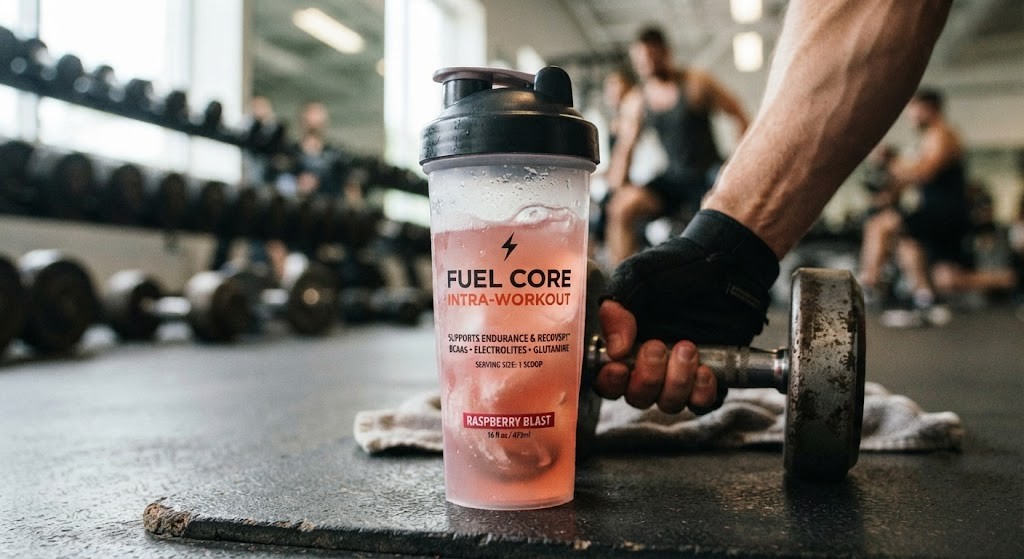
Ever wondered whether that colorful powder in your gym bag actually does anything, or if you’re just drinking flavored water with a marketing budget? You’re not alone. Walk into any supplement store and you’ll find dozens of intra workout supplements promising better hydration, more energy, and faster recovery — but not all of them are necessary for every workout.
The truth is, intra workout supplements can genuinely help in the right situations, but they’re not a one-size-fits-all solution. In this guide, you’ll learn exactly what intra workout supplements contain, why they’re used, who actually benefits from them, and how to build a personalized intra-workout strategy based on real training demands rather than marketing hype.
What Are Intra Workout Supplements?
Intra workout supplements are products consumed during exercise to support hydration, fueling, electrolyte replacement, or overall training performance. Unlike pre-workout or post-workout formulas, these are designed to be sipped throughout your session — not before or after it.
For example, an intra-workout drink might combine water, sodium, and carbohydrates for someone completing a 90-minute endurance session, giving their body a steady supply of what it’s losing through sweat and effort.
It’s worth noting that intra-workout nutrition isn’t the same as simply drinking water. Some formulas add carbohydrates, electrolytes, or amino acids alongside fluids to serve a specific purpose. That said, water can still be the right choice when your workout is short and your regular diet already supports your training needs.
Why Are Intra Workout Supplements Used During Exercise?
Intra-workout nutrition becomes most relevant when a workout is long, intense, or places significant demands on your fluid, electrolyte, or carbohydrate reserves. A 90-minute session in hot weather, for instance, creates very different physiological demands than a 35-minute resistance workout in an air-conditioned gym.
Hydration and Electrolyte Loss
Hydration helps replace the fluid lost through sweating, while electrolytes help replace the minerals your body loses along with that fluid. The American College of Sports Medicine notes that individual sweat rates and electrolyte losses vary considerably, making personalized fluid strategies useful. ACSM recommends avoiding excessive dehydration during exercise, with more targeted fluid and electrolyte strategies becoming relevant as training demands increase. — Source: American College of Sports Medicine, 2007.
Carbohydrates as a Fuel Source
Carbohydrate becomes particularly useful during prolonged exercise because it provides an available fuel source when your body’s stored energy starts to run low. Expert guidance commonly recommends approximately 30–60 g of carbohydrate per hour during extended, demanding exercise. — Source: International Society of Sports Nutrition, 2017.
What Ingredients Are Found in Intra Workout Supplements?
Intra-workout ingredients are compounds added to a drink to address specific training needs — fluid replacement, carbohydrate delivery, electrolyte replacement, and amino acid intake are the main categories you’ll encounter. The best formula depends entirely on the demands of your workout, not on how many ingredients are printed on the label.
Are Electrolytes Important During Workouts?
Electrolytes are minerals such as sodium and potassium that help regulate fluid balance and support normal physiological function during exercise. Sodium, in particular, becomes especially relevant when you sweat heavily during prolonged training or exercise in hot conditions.
Sodium is usually more important for exercise hydration than simply choosing a product with a long list of minerals. ACSM recommends sodium-containing fluids for certain exercise sessions lasting longer than one hour, particularly when substantial fluid replacement is required. — Source: American College of Sports Medicine, 2007.
Do You Need Carbohydrates During Exercise?
Carbohydrates during exercise provide an additional fuel source when training lasts long enough to challenge your available energy stores. Endurance athletes, for example, often use a carbohydrate-electrolyte drink during a long cycling or running session to combine fueling and hydration in one product.
Sports nutrition guidance commonly places carbohydrate intake around 30–60 g per hour for prolonged, intense exercise, although individual needs vary based on body size, intensity, and training history. — Source: International Society of Sports Nutrition, 2017.
Are BCAAs or EAAs Useful as Intra Workout Supplements?
BCAAs are branched-chain amino acids, while EAAs are essential amino acids that include the BCAAs plus other essential amino acids the body can’t produce on its own. An EAA product, therefore, supplies a broader amino acid profile than a BCAA-only formula.
That said, amino acids shouldn’t automatically be considered essential for every intra-workout drink. ISSN emphasizes adequate total daily protein intake as a primary priority, while approximately 10 g of EAAs can stimulate muscle protein synthesis in appropriate contexts. — Source: International Society of Sports Nutrition, 2017.
Do Intra Workout Supplements Actually Work?
Intra workout supplements can work when their ingredients address a genuine training need, but they’re not universally necessary or guaranteed to improve every workout. Adding carbohydrates and electrolytes to a long endurance session, for example, has a much clearer purpose than taking a multi-ingredient drink during a short lifting workout.
Evidence tends to be strongest when the supplement solves a specific nutritional problem rather than serving as a general “just in case” addition. AIS guidance describes sports drinks as products designed to deliver fluid and carbohydrate together, with commonly used formulations containing approximately 4–8% carbohydrate. — Source: Australian Institute of Sport, 2024.
When Should You Take an Intra-Workout Supplement?
You should take an intra-workout supplement during training when the session creates meaningful hydration, electrolyte, or fueling demands. Sipping a carbohydrate-electrolyte drink throughout a two-hour endurance workout, for example, is far more effective than saving the entire drink for the final five minutes.
Start drinking early enough to spread fluid and nutrients across the session rather than consuming a large amount all at once. For exercise lasting less than an hour, plain water can often be sufficient, while longer sessions may justify carbohydrate and electrolyte strategies. — Source: American College of Sports Medicine, 2007.
Do You Need Intra Workout Supplements for Every Workout?
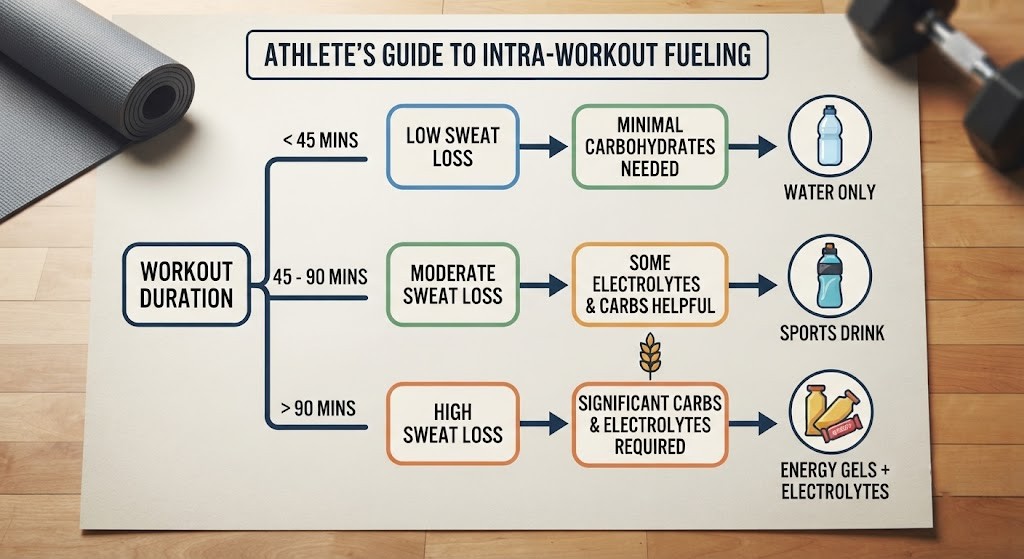
No — you don’t need intra workout supplements for every workout, because nutritional requirements shift with duration, intensity, environment, and your existing diet. A 45-minute moderate gym workout, for instance, may require nothing more than water, while a long, sweaty training session may justify targeted hydration or fueling.
Using a supplement simply because it’s marketed as an “intra workout” product can add unnecessary calories, stimulants, or ingredients you don’t actually need. The most useful strategy is always to match the product to your actual training demands, not the other way around.
Are Intra Workout Supplements Good for Long Workouts?
Yes — intra workout supplements can be particularly useful during long workouts, since prolonged exercise increases fluid, electrolyte, and carbohydrate demands. A 90-minute endurance workout, for example, may benefit meaningfully from carbohydrates and electrolytes when a shorter gym session would not.
ISSN identifies extended high-intensity exercise lasting more than 60 minutes as a situation where carbohydrate availability and fluid regulation become increasingly relevant. A commonly cited target is about 30–60 g of carbohydrate per hour during prolonged exercise. — Source: International Society of Sports Nutrition, 2017.
How Do You Choose the Right Intra Workout Supplement?
Choosing an intra workout supplement involves evaluating workout duration, exercise intensity, sweat loss, hydration needs, dietary intake, ingredient amounts, and personal tolerance. Someone training for 40 minutes in a cool gym, for example, may prioritize simplicity, while an endurance athlete may prioritize carbohydrates and sodium above all else.
What Should You Look for on an Intra-Workout Label?
A useful intra-workout label should clearly identify the amount of each meaningful ingredient per serving. A transparent label tells you exactly how many grams of carbohydrate and how much sodium you’re actually getting, rather than hiding quantities behind a vague “proprietary blend.”
Check these factors before you buy:
- Workout duration: Longer sessions may justify more targeted nutrition.
- Carbohydrate amount: Match intake to your training and fueling requirements.
- Sodium and electrolytes: Consider sweat loss and environmental conditions.
- Ingredient transparency: Prefer clearly disclosed quantities over proprietary blends.
- Digestive tolerance: Avoid formulas that repeatedly cause stomach discomfort.
- Stimulants: Check caffeine content if you already use coffee or pre-workout products.
- Calories: Consider whether the drink fits your overall nutrition plan.
Who Should Consider Using Intra Workout Supplements?
Intra workout supplements are most worth considering for people whose training creates substantial hydration or fueling demands. Endurance athletes, high-volume trainees, and people exercising in hot environments tend to have the clearest reasons to use them.
Potential users include:
- Endurance athletes training for extended periods
- People performing long or high-volume resistance sessions
- Athletes completing multiple training sessions in a single day
- People who sweat heavily during exercise
- Trainees exercising for extended periods in hot conditions
On the other hand, beginners completing short, moderate workouts may gain little from a complex intra-workout formula. Water and normal meals can often cover their needs without adding another supplement to the mix.
Intra-Workout vs. Pre-Workout vs. Post-Workout Supplements
Intra workout supplements are designed for needs that occur during exercise, while pre-workouts are generally taken beforehand and post-workout products focus on recovery nutrition afterward. Caffeine, for example, may be used before exercise for stimulation, while carbohydrates and electrolytes are more relevant during prolonged exercise itself.
| Product | Main Purpose | Typical Timing | Best Use Case |
|---|---|---|---|
| Water | Hydration | During | Short or moderate workouts |
| Pre-workout | Preparation/stimulation | Before | Training focus or energy |
| Intra-workout | Hydration/fueling | During | Long or demanding sessions |
| Post-workout | Recovery nutrition | After | Protein, carbohydrate, and fluid replacement |
Post-workout nutrition isn’t interchangeable with intra workout nutrition, either — recovery begins after training, while hydration and fueling needs occur during the session itself.
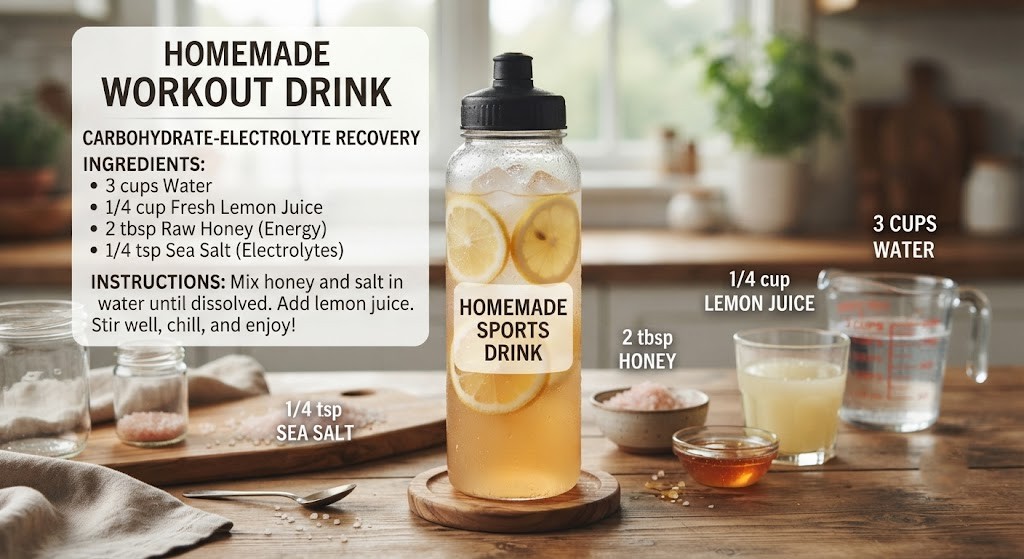
Can You Make an Intra Workout Drink at Home?
Yes — you can make a simple intra workout drink at home by combining fluids with carbohydrates and electrolytes according to your training needs. A homemade drink can use water, an appropriate carbohydrate source, and sodium, rather than relying on a multi-ingredient commercial powder with added extras.
Keep the formula simple and test it during normal training rather than introducing an unfamiliar recipe before an important event or race day. Homemade options can be especially useful because they let you control carbohydrate quantity, flavor, and ingredients precisely.
Are Intra Workout Supplements Safe to Use?
Intra workout supplements aren’t automatically risk-free — safety depends on ingredients, dosage, product quality, personal tolerance, and your existing dietary intake. A drink containing caffeine, for example, can contribute to your total daily stimulant intake if you also drink coffee or use pre-workout products.
Athletes subject to anti-doping rules should take product quality especially seriously. USADA recommends third-party certification as a way to reduce supplement-related risk, while emphasizing that certification does not make a product completely risk-free. — Source: U.S. Anti-Doping Agency, 2024.
Before choosing a product, check for:
- Clearly disclosed ingredient quantities
- Sensible serving sizes
- Allergens and dietary restrictions
- Duplicate stimulants across products
- Digestive tolerance
- Reputable manufacturing and third-party certification where appropriate
What Should You Drink During a Workout Instead of an Intra Workout Supplement?
Water can be sufficient during many shorter workouts, while carbohydrate-electrolyte drinks become useful when training is prolonged or demanding. Water may work perfectly well during a 45-minute strength workout, whereas a long endurance session may call for additional carbohydrate and sodium.
Your choice should reflect sweat rate, exercise duration, intensity, climate, and nutritional status — not supplement marketing. ACSM specifically notes substantial individual variability in sweating and recommends individualized fluid replacement strategies. — Source: American College of Sports Medicine, 2007.
How Can You Build Your Intra Workout Strategy?
A simple intra workout strategy starts with identifying the actual demands of your workout before choosing a product. A 30-minute workout may need only water, while a two-hour endurance session may require planned carbohydrate and electrolyte intake from start to finish.
Follow this process:
- Assess duration: Identify how long your typical sessions last.
- Assess intensity: Determine whether the workout is easy, moderate, or demanding.
- Assess sweat loss: Consider climate, clothing, and your individual sweating pattern.
- Identify fueling needs: Decide whether carbohydrates are useful for the session.
- Choose the simplest option: Start with water or a focused electrolyte/carbohydrate formula.
- Test tolerance: Monitor stomach comfort, thirst, energy, and training quality.
- Adjust gradually: Change the strategy as your training volume or environment changes.
Conclusion
Intra workout supplements are useful tools when they solve a specific hydration, electrolyte, or fueling requirement during exercise. Water remains sufficient for many shorter workouts, while longer or more demanding sessions may create a genuine need for targeted hydration or fueling.
Ultimately, the best intra workout supplement isn’t necessarily the one with the longest ingredient list. By matching carbohydrates, electrolytes, fluids, and other ingredients to your actual training demands, you can build a simpler, smarter, and more practical workout nutrition strategy — one that supports your performance instead of just your shopping cart.
make question bold
FAQs
What is an intra-workout supplement?
A supplement taken during exercise to support hydration, energy, electrolytes, or performance.
Which supplement is best for intra-workout?
The best option depends on your workout, hydration needs, and training goals.
Are intra-workout supplements worth it?
They can be useful for long, intense, or high-sweat workouts.
What should I drink intra-workout?
Water is usually enough for short workouts, while longer sessions may need electrolytes or carbohydrates.
What are intra workout supplements?
Supplements consumed during exercise to support hydration, fueling, and performance.
Do I need intra workout supplements for every workout?
No, many short and moderate workouts only require water.
Are electrolytes important during a workout?
They can help replace minerals lost through sweat during exercise.
How many carbohydrates should you take during a workout?
Approximately 30–60 g per hour is commonly recommended for prolonged exercise.
Can you use water instead of an intra workout supplement?
Yes, water can be sufficient for many shorter workouts.
Are BCAAs good intra workout supplements?
BCAAs can provide amino acids during exercise but are not necessary for everyone.
Are EAAs better than BCAAs during workouts?
EAAs provide a broader range of essential amino acids than BCAAs.
When should you drink an intra workout supplement?
Drink it during your workout when additional hydration or fueling is needed.
Can I make an intra workout drink at home?
Yes, you can make one using water, carbohydrates, and electrolytes.
Are intra workout supplements safe?
They can be safe when used appropriately and according to product directions.
Are intra workout supplements good for long workouts?
Yes, they can support hydration, electrolytes, and fueling during prolonged exercise.
What is the difference between pre-workout and intra workout supplements?
Pre-workouts are taken before exercise, while intra-workouts are consumed during exercise.
What should I look for in an intra workout supplement?
Look for transparent ingredients, suitable electrolytes or carbohydrates, and good tolerance.
2 thoughts on “Intra Workout Supplements: Benefits, Ingredients & How to Use Them”