
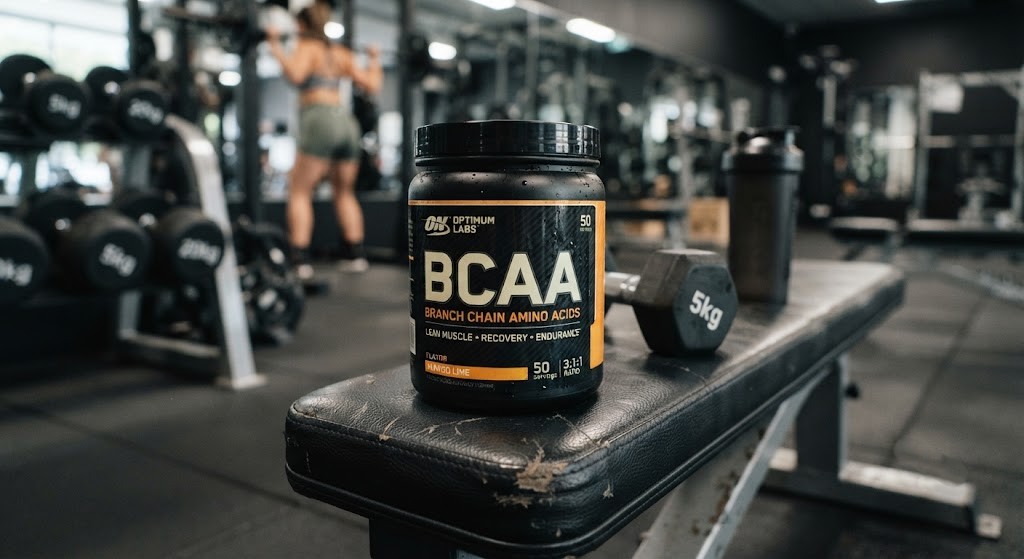
You may have seen gym-goers sipping a brightly colored BCAA drink throughout their workouts and wondered whether a BCAA supplement during workout actually makes a difference. BCAAs are popular in sports nutrition, but their usefulness depends on your diet, protein intake, workout demands, and when you train.
A BCAA supplement provides three essential amino acids—leucine, isoleucine, and valine. These amino acids are involved in protein metabolism and muscle-related processes, but BCAAs are not a complete protein source. That distinction matters when deciding whether they belong in your intra-workout routine.
In this guide, you’ll learn what BCAAs do during exercise, their potential benefits for recovery, when to take them, how much to use, how they compare with EAAs and protein, and how to choose a quality product.
What Are BCAAs and What Do They Do During a Workout?
BCAA supplements contain three branched-chain amino acids (BCAAs): leucine, isoleucine, and valine. They are classified as essential amino acids because the body cannot produce them in sufficient amounts, so they must come from food or supplements.
A typical BCAA supplement may use a 2:1:1 ratio, meaning it contains twice as much leucine as isoleucine and valine. For example, a 2:1:1 formula distributes its BCAAs in the following proportion:
- Leucine: 2 parts
- Isoleucine: 1 part
- Valine: 1 part
Leucine is particularly important because it helps signal pathways involved in muscle protein synthesis. Isoleucine and valine also participate in amino-acid metabolism and contribute to the overall BCAA profile.
This makes BCAAs relevant to resistance training, endurance exercise, and recovery nutrition.
What Does “During a Workout” Mean?
When people talk about taking BCAAs “during a workout,” they generally mean consuming them before or throughout the training session, commonly by mixing the powder with water and sipping it during exercise.
That makes BCAAs an intra-workout supplement, rather than a replacement for a complete meal or protein source.
However, the fact that BCAAs can be consumed during exercise does not automatically mean that everyone needs them. Their practical value depends heavily on your total protein and amino-acid intake.
Why Does Taking BCAAs During a Workout Matter?
Taking a BCAA supplement during workout can provide amino acids while you exercise. However, whether this provides a meaningful advantage depends on factors such as your total daily protein intake, diet, training demands, and access to complete protein.
For example, someone training between meals may find a BCAA drink easier to consume than a full meal or protein shake. The supplement can therefore be convenient when eating protein around training is difficult.
At the same time, BCAAs should not be viewed as a mandatory muscle-building supplement.
BCAAs contain only three of the nine essential amino acids, meaning they do not provide the complete amino-acid profile required to build new muscle proteins.
Research also shows mixed results depending on the outcome being measured. A 2025 systematic review included 22 studies involving 511 participants and found moderate support for reducing muscle soreness, but inconsistent evidence for improving strength and endurance — Source: Julea et al., 2025.
This distinction is important: a supplement may influence certain recovery markers without necessarily producing a noticeable improvement in workout performance or muscle growth.
What Are the Benefits of Taking BCAAs During Exercise?
The potential benefits of BCAAs are primarily associated with muscle-related processes and recovery. However, evidence for improved athletic performance or muscle growth is less consistent.
A 2024 overview of 11 systematic reviews found evidence that BCAAs may reduce creatine kinase and muscle soreness, but there was no clear improvement in muscle-performance recovery — Source: Salem et al., 2024.
Let’s look at the potential benefits in more detail.
Can BCAAs Help Build Muscle During Workouts?
BCAAs can support muscle-related signaling, but BCAAs alone are not a complete muscle-building protein source.
Leucine is the BCAA most closely associated with stimulating muscle protein synthesis. However, muscle protein synthesis requires the availability of all essential amino acids, not just leucine, isoleucine, and valine.
Therefore, BCAAs should be considered alongside your overall protein intake rather than as a substitute for complete protein.
High-quality protein sources include:
- Dairy
- Eggs
- Meat
- Soy
- Protein supplements
If you already consume sufficient high-quality protein, adding isolated BCAAs may offer limited additional value for muscle growth.
Can BCAAs Help With Muscle Recovery After Exercise?
BCAAs may help reduce delayed-onset muscle soreness (DOMS) and some markers associated with exercise-induced muscle damage. However, the practical effect can vary depending on the type of exercise, dosage, training status, and supplementation protocol.
A 2024 meta-analysis of 18 studies found reductions in creatine kinase at selected time points and reductions in soreness from 24 to 96 hours after exercise — Source: Fares et al., 2024.
Similarly, an earlier meta-analysis found that BCAAs reduced DOMS following exercise. Researchers also noted substantial differences between studies in dosage, training status, and supplementation protocols — Source: Fedewa et al., 2021.
In other words, BCAAs may have a role in recovery, but they should not be viewed as a guaranteed way to eliminate soreness or accelerate performance recovery.
When Should You Take BCAAs Before, During, or After a Workout?
There is no single universally necessary time to consume BCAAs.
Overall daily protein intake generally matters more than taking BCAAs at one precise moment. You can consume them before training, sip them during exercise, or use them around your workout based on convenience.
The best timing therefore depends on your nutrition routine.
BCAA Before or During Workout
Taking BCAAs before or during exercise can be practical when you want a light amino-acid drink and do not have convenient access to a complete protein source.
For example, someone training early in the morning after a long gap between meals may prefer an intra-workout BCAA drink rather than eating a full meal immediately before exercising.
However, BCAAs should not automatically replace food. If you can comfortably consume a balanced meal containing sufficient protein, that option may provide a more complete nutritional profile.
BCAA After Workout
Post-workout BCAAs are not necessarily superior to complete protein.
A protein-rich meal or protein shake provides BCAAs together with the other essential amino acids required for muscle protein synthesis. Therefore, if your goal is to support overall protein intake and muscle growth, complete protein generally offers a broader nutritional benefit.
How Much BCAA Should You Take During a Workout?
There is no universally established BCAA dosage requirement for every athlete. The appropriate amount depends on factors such as the specific product, diet, body size, and training context.
Many commercial BCAA products provide several grams of combined BCAAs per serving, but serving sizes vary considerably between products.
Rather than choosing a product solely based on the total powder weight, examine how much leucine, isoleucine, and valine it actually provides.
What Should You Check on a BCAA Label?
| Factor | What to Check | Why It Matters |
|---|---|---|
| Leucine | Amount per serving | Supports muscle-protein signaling |
| Isoleucine | Amount per serving | Provides another essential BCAA |
| Valine | Amount per serving | Completes the three-BCAA profile |
| Ratio | Often 2:1:1 | Helps compare formulations |
| Serving size | Grams per serving | Prevents misleading comparisons |
| Testing | Independent certification | Adds quality assurance |
The familiar 2:1:1 BCAA ratio means that leucine is present at twice the amount of isoleucine and valine. However, the ratio itself should not be treated as a universal prescription.
Most importantly, evaluate BCAA supplementation alongside your daily protein intake rather than treating a supplement label as a one-size-fits-all recommendation.
How Do You Mix and Drink BCAAs During a Workout?
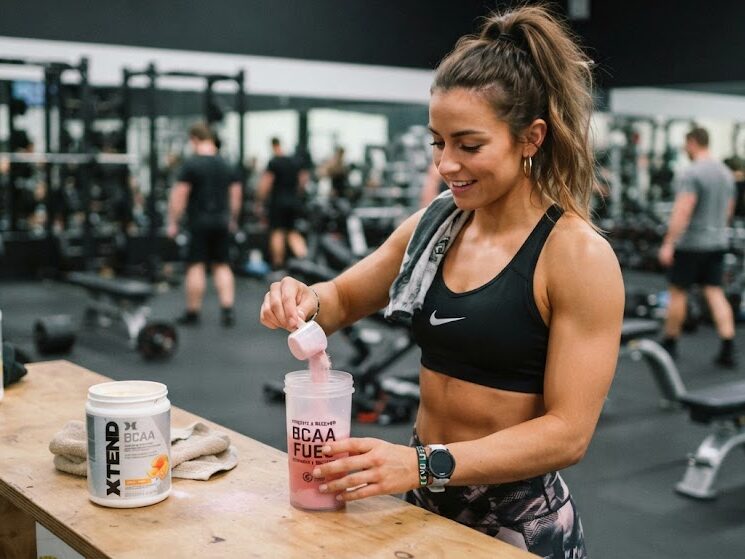
BCAA supplements are typically mixed with water and consumed before or during training according to the product label.
A simple approach is to:
- Add the recommended serving to a shaker or bottle.
- Add water according to the product’s directions.
- Shake until mixed.
- Sip it before or throughout your workout.
The exact amount of water can depend on personal taste and the product’s instructions.
Do BCAAs Replace Water or Electrolytes?
No. BCAAs are amino acids, not a complete hydration strategy.
Hydration should remain a separate priority. During longer or sweat-heavy sessions, appropriate fluids and electrolytes may be necessary depending on training conditions.
Electrolyte Powder for hydration
Are BCAAs Useful for Fasted Workouts?
BCAAs can be convenient during fasted workouts, but training without food does not automatically create a special requirement for BCAAs.
For example, someone exercising early in the morning after an overnight fast may choose BCAAs because consuming a complete meal before training feels impractical.
However, fasted training changes the nutrition context rather than creating a mandatory BCAA requirement.
BCAAs may be most useful as a convenience option when a complete protein source is impractical before or during training, rather than as a necessary component of every fasted workout.
Who Should Consider Taking BCAAs During Exercise?
BCAAs may be worth considering when convenience, training duration, or meal timing makes complete protein difficult to consume.
Potentially practical situations include:
- Training when a protein-containing meal is inconvenient.
- Exercising for long periods between meals.
- Preferring a light drink instead of a shake.
- Having difficulty consuming adequate protein through food.
- Wanting a convenient amino-acid supplement.
For these situations, a BCAA drink may fit more easily into a workout routine.
Conversely, someone already consuming enough high-quality protein may have less reason to add isolated BCAAs.
For most people who consistently consume adequate high-quality protein, precise BCAA timing is less important than meeting overall daily protein needs.
BCAAs vs EAAs: Which Is Better for Intra-Workout Use?
The main difference between BCAAs and EAAs is the number of essential amino acids they provide.
BCAAs provide three essential amino acids:
- Leucine
- Isoleucine
- Valine
EAAs provide all nine essential amino acids.
Therefore, EAA supplements offer a more complete amino-acid profile than isolated BCAAs when someone specifically wants an amino-acid supplement rather than complete dietary protein.
BCAA vs EAA at a Glance
| Feature | BCAAs | EAAs |
|---|---|---|
| Amino acids provided | 3 essential amino acids | All 9 essential amino acids |
| Includes leucine | Yes | Yes |
| Includes isoleucine | Yes | Yes |
| Includes valine | Yes | Yes |
| Complete essential amino-acid profile | No | Yes |
| Common use | Intra-workout convenience | More complete amino-acid supplementation |
If your goal is specifically to obtain essential amino acids rather than simply the three BCAAs, EAAs provide broader coverage.
BCAAs vs Protein: Which Should You Choose During Training?
Protein is generally the more complete nutritional option because high-quality protein supplies BCAAs along with the other essential amino acids.
For example, whey protein provides a broader amino-acid profile than a BCAA-only powder.
Therefore, the choice depends on your objective:
| Goal or Situation | More Practical Option |
|---|---|
| Meeting overall protein needs | Complete protein |
| Supporting muscle growth | Complete protein |
| Wanting all essential amino acids | Complete protein or EAAs |
| Wanting a light amino-acid drink | BCAAs |
| Protein-rich meal already consumed | BCAAs may add limited value |
| Convenient intra-workout supplementation | BCAAs may be practical |
Choose protein when your priority is meeting overall protein needs and supporting muscle growth, while BCAAs may be convenient when you specifically want a light intra-workout drink.
Are BCAAs Necessary If You Already Eat Enough Protein?
BCAAs are generally not necessary when your diet already provides adequate high-quality protein.
For example, adding a BCAA drink to an already protein-rich diet may provide convenience, but it does not automatically produce additional muscle growth.
Your overall dietary pattern should therefore come first, with BCAA supplementation filling a specific practical role when needed.
What BCAA Ratio Is Best for a Workout?
A 2:1:1 BCAA ratio is a common formulation that provides leucine, isoleucine, and valine in a two-to-one-to-one proportion.
For example, a serving containing 5 grams of BCAAs at 2:1:1 would provide approximately:
- 2.5 grams leucine
- 1.25 grams isoleucine
- 1.25 grams valine
Still, the ratio alone does not determine supplement quality or effectiveness.
When comparing products, look beyond the ratio and examine:
- Actual grams of each amino acid
- Serving size
- Ingredient list
- Product testing
- Intended use
- Your overall nutrition plan
A product with a different ratio is not automatically better or worse simply because the numbers look different.
How to Choose a BCAA Supplement for Intra-Workout Use
Choosing a BCAA supplement should involve more than selecting a flavor or comparing tub sizes.
A quality product should clearly disclose its amino-acid quantities, serving size, ingredients, and relevant quality testing.
For athletes, independent testing can be especially important. For example, NSF Certified for Sport® includes testing for banned substances and verification of product contents. — Source: NSF International, 2026.
BCAA Supplement Buying Checklist
Look for:
- Transparent amino-acid quantities rather than proprietary blends.
- Clearly stated leucine, isoleucine, and valine amounts.
- Reasonable flavoring and sweetener ingredients.
- Independent third-party testing, especially for competitive athletes.
- A serving size that matches your intended use.
- No unnecessary stimulant ingredients if you only want amino acids.
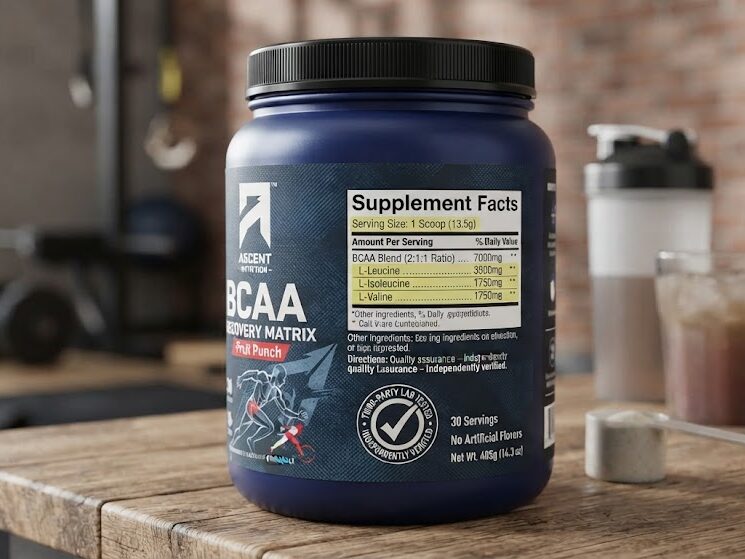
Transparency makes it easier to compare products and determine whether a supplement actually fits your needs.
What’s Next: How Do You Build a Smarter Intra-Workout Nutrition Routine?
A smarter intra-workout nutrition strategy starts with your overall diet rather than your supplement shelf.
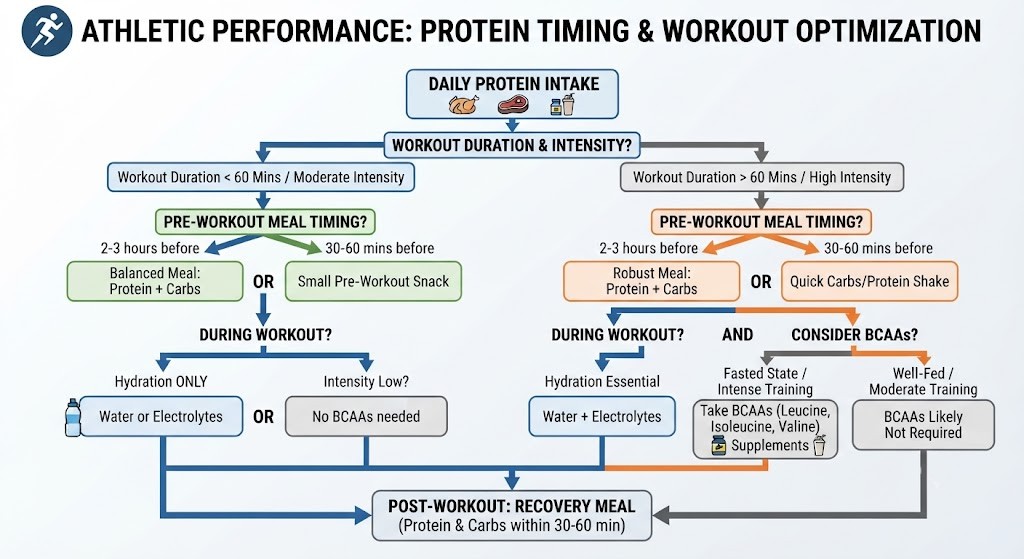
Before adding a BCAA supplement during workout, consider whether you are already meeting your protein requirements and whether your training routine creates a genuine need for additional nutrition during exercise.
Follow these steps:
- Establish your daily protein intake and prioritize complete protein foods.
- Assess your workout duration and intensity to identify actual nutrition needs.
- Check your pre-workout meal timing before adding intra-workout amino acids.
- Prioritize hydration and electrolytes when training conditions require them.
- Use BCAAs only when they provide practical value or convenience.
- Review your recovery habits, including sleep, calories, and training structure.
This approach keeps supplementation in perspective. A BCAA product can be useful, but it should complement the fundamentals rather than replace them.
Conclusion: Should You Use BCAAs During a Workout?
A BCAA supplement during workout can be a convenient option, particularly when meal timing, training duration, or access to complete protein makes regular nutrition difficult. However, BCAAs are not essential for everyone, and they should not be treated as a replacement for a balanced diet or complete protein.
Their potential value is highest when they solve a practical nutrition problem that food or complete protein cannot conveniently solve. Research suggests BCAAs may help reduce some measures of soreness and muscle damage, but evidence for improved performance and muscle growth remains inconsistent.
Ultimately, prioritize adequate protein, sufficient calories, hydration, sleep, and progressive training before adding BCAAs. If your diet already provides enough high-quality protein, precise BCAA timing may matter far less than consistently meeting your overall nutritional needs.
Used strategically rather than automatically, BCAAs can be a simple and convenient addition to an intra-workout routine—but they are best viewed as an optional tool, not a foundation of sports nutrition.
FAQs
What are BCAAs during a workout?
BCAAs are leucine, isoleucine, and valine, three essential amino acids used around exercise.
Is it better to take BCAA during or after a workout?
BCAAs can be taken during or after a workout based on your nutrition needs.
Should I take BCAA before or after workouts?
BCAAs can be taken before, during, or after workouts based on convenience.
Is BCAA for bulking or cutting?
BCAAs can be used for both bulking and cutting as part of a balanced diet.
Is it okay to drink BCAA daily?
BCAAs can be consumed daily according to the product directions.
Are BCAAs good to take during a workout?
BCAAs can provide a convenient source of amino acids during exercise.
Can BCAAs help build muscle?
BCAAs may support muscle protein synthesis but are not a complete protein source.
Can I take BCAAs after a workout?
BCAAs can be taken after exercise as part of a recovery routine.
Are BCAAs necessary if I eat enough protein?
BCAAs are generally not necessary when you already consume enough high-quality protein.
Are BCAAs useful for fasted workouts?
BCAAs can be convenient during fasted workouts but are not essential.
Are BCAAs better than EAAs?
EAAs provide all nine essential amino acids, while BCAAs provide only three.
What is the best BCAA ratio for workouts?
A 2:1:1 ratio is a common formulation for BCAA supplements.
Do BCAAs help with muscle soreness?
BCAAs may help reduce some exercise-related muscle soreness.
Do BCAAs improve workout performance?
BCAAs have inconsistent evidence for improving strength and endurance.
Do BCAAs replace protein?
BCAAs do not replace complete protein because they provide only three essential amino acids.
2 thoughts on “BCAA Supplement During Workout: Benefits, Uses & Timing Guide”