
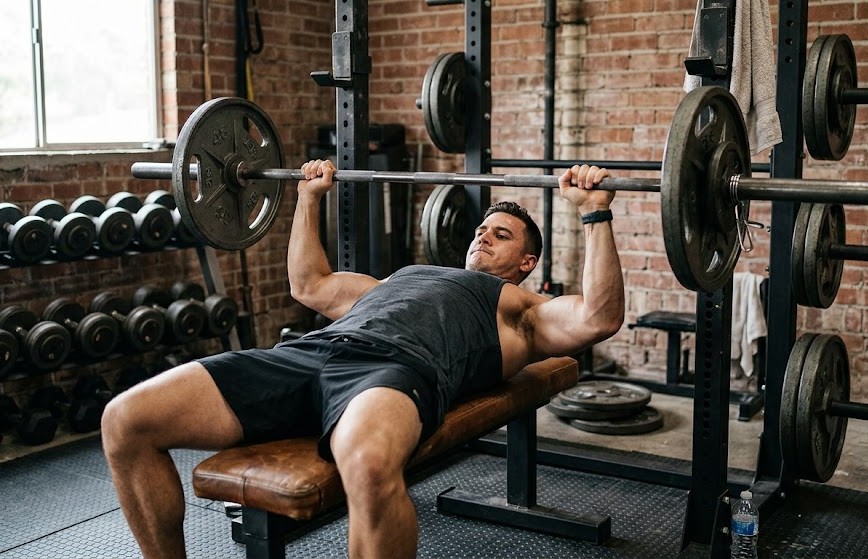
Most gym-goers perform chest workout exercises regularly, yet many never achieve the size, strength, or definition they want. The issue is rarely a lack of effort. More often, it comes down to choosing the wrong exercises, using poor technique, following an ineffective workout structure, or neglecting progressive overload.
Whether your goal is building a broader chest, increasing bench press strength, improving athletic performance, or creating a balanced physique, the right training approach can make a significant difference.
In this comprehensive guide, you’ll learn the best chest workout exercises, how the chest muscles work, which movements produce the greatest results, common mistakes to avoid, and how to create an effective chest training program for long-term growth.
What Are Chest Workout Exercises and How Do They Work?
Chest workout exercises are resistance-training movements designed to strengthen and develop the pectoral muscles while improving upper-body strength, muscular endurance, and overall physique development.
These exercises work by creating mechanical tension within muscle fibers. When muscles are exposed to sufficient resistance, microscopic damage occurs, triggering muscle protein synthesis. Over time, this process helps muscles become larger and stronger.
For example, when performing a barbell bench press, the chest muscles must generate force to move the weight. As the body adapts to this challenge, strength and muscle mass gradually increase.
Chest workout exercises generally fall into two primary categories:
Compound Chest Exercises
Compound exercises involve multiple joints and muscle groups working together.
Examples include:
- Bench Press
- Incline Bench Press
- Push-Ups
- Dips
Benefits include:
- Greater strength gains
- Higher calorie expenditure
- Increased muscle recruitment
- Better athletic performance
Isolation Chest Exercises
Isolation exercises focus primarily on the chest muscles.
Examples include:
- Cable Flyes
- Pec Deck
- Dumbbell Flyes
- Cable Crossovers
Benefits include:
- Improved muscle activation
- Better chest definition
- Enhanced mind-muscle connection
- Ability to target specific chest regions
Chest training also stimulates supporting muscle groups such as the shoulders and triceps, making it highly effective for overall upper-body development.
Research shows resistance training can significantly increase muscle mass and strength across all age groups when performed consistently — Source: American College of Sports Medicine, 2024.
Why Are Chest Workout Exercises Important for Muscle Growth?
Chest workout exercises provide much more than aesthetic benefits. They contribute significantly to overall strength, athletic performance, and functional movement.
Increased Upper-Body Strength
The chest muscles play a major role in pushing movements.
Everyday activities such as:
- Pushing doors
- Lifting objects
- Moving furniture
- Carrying heavy items
all rely heavily on chest strength.
Better Athletic Performance
Athletes in sports such as football, wrestling, boxing, basketball, and rugby frequently utilize explosive pressing movements.
A stronger chest often translates to improved power production and performance.
Improved Physique Development
A well-developed chest creates a balanced upper body and complements shoulder, arm, and back development.
Enhanced Training Performance
Compound chest exercises recruit multiple muscle groups simultaneously, allowing you to build strength and muscle efficiently.
For example, athletes who improve their bench press often notice gains in overall upper-body power.
strength training fundamentals
According to industry reports, bench press remains one of the top five most performed gym exercises worldwide — Source: International Health, Racquet & Sportsclub Association (IHRSA), 2024.
Which Muscles Are Trained During Chest Workouts?
Chest workouts primarily target the pectoralis major and pectoralis minor while also engaging the shoulders and triceps.
Understanding chest anatomy helps you select exercises that target different regions more effectively.
Upper Chest (Clavicular Head)
The upper chest contributes to shoulder flexion and upward pressing movements.
Exercises that effectively target this area include:
- Incline Bench Press
- Incline Dumbbell Press
- Incline Machine Press
Middle Chest (Sternal Head)
The middle chest generates the majority of pressing strength.
Exercises that emphasize this region include:
- Flat Bench Press
- Push-Ups
- Dumbbell Bench Press
Lower Chest
The lower chest assists with downward pressing movements and contributes to overall chest fullness.
Effective exercises include:
- Chest Dips
- Decline Bench Press
- Decline Dumbbell Press
| Chest Region | Primary Function | Best Exercises |
|---|---|---|
| Upper Chest | Shoulder flexion and upper chest development | Incline Bench Press, Incline Dumbbell Press |
| Middle Chest | Overall chest size and strength | Flat Bench Press, Push-Ups |
| Lower Chest | Lower chest emphasis | Dips, Decline Bench Press |

What Are the Best Chest Workout Exercises for Building Muscle?
The best chest workout exercises combine heavy compound lifts with targeted isolation movements.
Barbell Bench Press
The barbell bench press remains the gold standard for chest development.
Benefits include:
- Maximum strength gains
- Excellent progressive overload potential
- High muscle activation
- Easy performance tracking
Incline Bench Press
The incline bench press primarily emphasizes the upper chest while also engaging the shoulders and triceps.
Benefits include:
- Better upper chest development
- Improved chest symmetry
- Increased pressing strength
incline bench chest press technique
Weighted Dips
Weighted dips are highly effective for targeting the lower chest while also strengthening the triceps.
Benefits include:
- Lower chest emphasis
- Functional strength development
- Greater muscle recruitment
Cable Flyes
Cable flyes provide constant tension throughout the movement.
Benefits include:
- Enhanced chest contraction
- Improved muscle definition
- Greater range of motion
Studies show multi-joint resistance exercises produce greater overall muscle activation than isolation-only training programs — Source: Journal of Strength and Conditioning Research, 2024.

What Are the Best Dumbbell Chest Workout Exercises?
Dumbbell chest workout exercises are excellent for correcting muscular imbalances, increasing range of motion, and enhancing muscle activation.
Dumbbell Bench Press
Unlike barbells, dumbbells require each side of the body to work independently.
Benefits include:
- Improved stability
- Better muscle balance
- Greater movement freedom
Incline Dumbbell Press
This variation effectively targets the upper chest while providing a larger range of motion.
Dumbbell Flyes
Dumbbell flyes create a deep chest stretch and emphasize chest contraction.
Benefits include:
- Increased muscle control
- Enhanced hypertrophy potential
- Better chest isolation
Dumbbell Pullover
The dumbbell pullover trains both the chest and upper back.
Benefits include:
- Serratus activation
- Chest expansion
- Additional upper-body development
best dumbbell exercises for muscle growth
Which Bodyweight Chest Exercises Build Chest Strength at Home?
Not everyone has access to a gym. Fortunately, bodyweight chest workout exercises can still build impressive strength and muscle.
Standard Push-Ups
Push-ups remain one of the most effective bodyweight exercises available.
Benefits include:
- No equipment required
- Scalable difficulty
- Full upper-body activation
Decline Push-Ups
Elevating the feet shifts more tension toward the upper chest.
Wide-Grip Push-Ups
A wider hand position increases chest involvement during the exercise.
Chest Dips
Chest-focused dips are among the most effective lower chest bodyweight movements.
For example, performing three sets of decline push-ups close to failure can create substantial muscle stimulation even without weights.

How Often Should You Train Your Chest Each Week?
Training frequency plays a major role in muscle growth.
For Beginners
Most beginners can make excellent progress by training their chest once per week.
For Intermediate Lifters
Training chest twice per week often produces superior results.
Example:
- Monday: Heavy Strength Session
- Thursday: Hypertrophy Session
For Advanced Lifters
Advanced lifters often benefit from increased training volume and more specialized programming.
Research suggests training a muscle group at least twice weekly may provide superior hypertrophy compared to once-weekly training — Source: Sports Medicine, 2024.
How Many Sets and Reps Are Best for Chest Growth?
Most lifters achieve optimal chest growth by performing 10–20 total weekly sets.
Strength-Focused Training
- 3–6 repetitions
- Heavy loads
- Longer rest periods
Muscle Growth Training
- 6–12 repetitions
- Moderate loads
- Controlled tempo
Muscular Endurance Training
- 12–20 repetitions
- Lighter loads
- Shorter rest periods
Volume remains one of the strongest predictors of muscle growth when recovery and nutrition are sufficient.
Which Chest Training Mistakes Limit Muscle Growth?
Many lifters unknowingly sabotage their progress.
Common mistakes include:
- Using excessive weight
- Poor exercise technique
- Neglecting upper chest training
- Limited range of motion
- Inconsistent progression
- Insufficient recovery
- Training ego instead of muscle
For example, bouncing the bar off your chest during bench presses reduces muscle tension and increases injury risk.
Perfect technique consistently outperforms sloppy lifting over the long term.
Chest Workout Exercises for Beginners vs Advanced Lifters
The best chest workout exercises vary based on training experience and recovery capacity.
Beginner Chest Workout
| Exercise | Sets x Reps |
|---|---|
| Bench Press | 3 × 8 |
| Incline Dumbbell Press | 3 × 10 |
| Push-Ups | 3 × Failure |
| Cable Flyes | 2 × 12 |
Advanced Chest Workout
| Exercise | Sets x Reps |
|---|---|
| Bench Press | 5 × 5 |
| Incline Bench Press | 4 × 8 |
| Weighted Dips | 4 × 10 |
| Cable Flyes | 4 × 15 |
| Pec Deck | 3 × 15 |
Advanced lifters generally require greater training volume and intensity to continue progressing.
Are Machines or Free Weights Better for Chest Development?
Both machines and free weights offer unique benefits.
| Factor | Free Weights | Machines |
|---|---|---|
| Muscle Activation | High | Moderate |
| Stability Demand | High | Low |
| Strength Development | Excellent | Good |
| Beginner Friendly | Moderate | High |
| Progressive Overload | Excellent | Good |
Advantages of Free Weights
- Greater muscle activation
- Better stabilization
- Superior strength development
Advantages of Machines
- Increased safety
- Easier technique learning
- Reduced stabilization demands
Many effective chest-building programs combine both methods.
Tools, Equipment, and Training Accessories for Chest Training
The right equipment can improve safety, training quality, and progression tracking.
Recommended equipment includes:
- Adjustable bench
- Barbell and weight plates
- Dumbbells
- Resistance bands
- Cable machine
- Weightlifting belt
- Wrist wraps
- Workout tracking app
Recommended Training Apps
- Google Sheets
- Strong App
- Hevy App
These tools help track volume, progression, and recovery.
Sample Chest Workout Plans (Home and Gym)
Following a structured program makes progression easier.
Home Chest Workout
| Exercise | Sets x Reps |
|---|---|
| Push-Ups | 4 × 15 |
| Decline Push-Ups | 3 × 12 |
| Wide Push-Ups | 3 × 15 |
| Chest Dips | 3 × 10 |
Gym Chest Workout
| Exercise | Sets x Reps |
|---|---|
| Barbell Bench Press | 4 × 6 |
| Incline Dumbbell Press | 4 × 8 |
| Weighted Dips | 3 × 10 |
| Cable Flyes | 3 × 12 |
| Pec Deck | 3 × 15 |
How Long Does It Take to Build a Bigger Chest?
Building a bigger chest requires patience and consistency.
First 4–6 Weeks
Most beginners notice significant strength gains.
After 8–12 Weeks
Visible muscle growth often becomes noticeable.
After 6–12 Months
Substantial chest development typically occurs when training, nutrition, and recovery remain consistent.
Genetics, workout quality, sleep, and diet all influence the rate of progress.
best recovery methods for muscle growth
What’s Next: Applying Progressive Overload for Continuous Growth
Progressive overload is the foundation of long-term muscle growth.
It involves gradually increasing training demands over time.
Methods include:
- Adding more weight
- Performing more repetitions
- Increasing total sets
- Improving exercise technique
- Training more frequently
For example, adding five pounds to your bench press every few weeks can lead to substantial long-term strength gains.
Small improvements accumulated consistently create remarkable results over months and years.
Conclusion: Building a Stronger and Bigger Chest
Chest workout exercises remain some of the most effective movements for developing upper-body strength, increasing muscle mass, and improving athletic performance. By combining compound lifts, isolation exercises, proper technique, structured programming, and progressive overload, you can maximize chest growth regardless of your current experience level.
Remember that consistency is the ultimate growth driver. The most effective chest workout program is not necessarily the most complicated—it’s the one you can follow consistently while gradually improving your performance over time.
Focus on mastering technique, increasing training volume intelligently, recovering properly, and maintaining a nutrition plan that supports muscle growth. Over time, these habits will produce a stronger, larger, and more defined chest.
Stay consistent, train with purpose, and your chest will continue growing stronger, bigger, and more impressive year after year.
FAQs
What are the best chest workout exercises for building muscle?
Bench presses, incline presses, dips, push-ups, and cable flyes are among the most effective exercises for chest growth.
How often should I train my chest for maximum growth?
Most people get the best results by training chest 1–2 times per week.
Are push-ups enough to build a bigger chest?
Yes, especially for beginners, but adding resistance can improve results.
Should I train upper chest separately?
Yes, incline exercises help develop the upper chest and create a balanced look.
What is the ideal rep range for chest growth?
Generally, 6–12 reps per set works best for muscle growth.
Are dumbbells better than barbells for chest training?
Neither is better overall. Dumbbells improve range of motion, while barbells allow heavier lifting.
Can beginners perform chest workouts every day?
No. Allow at least 48 hours of recovery between intense chest sessions.
How long does it take to see chest growth?
Strength gains may appear within weeks, while visible growth often takes 8–12 weeks.
Do chest flyes build muscle effectively?
Yes, they help isolate the chest and improve muscle development.
What is the most important factor for chest development?
Consistency with training, nutrition, recovery, and progressive overload.