
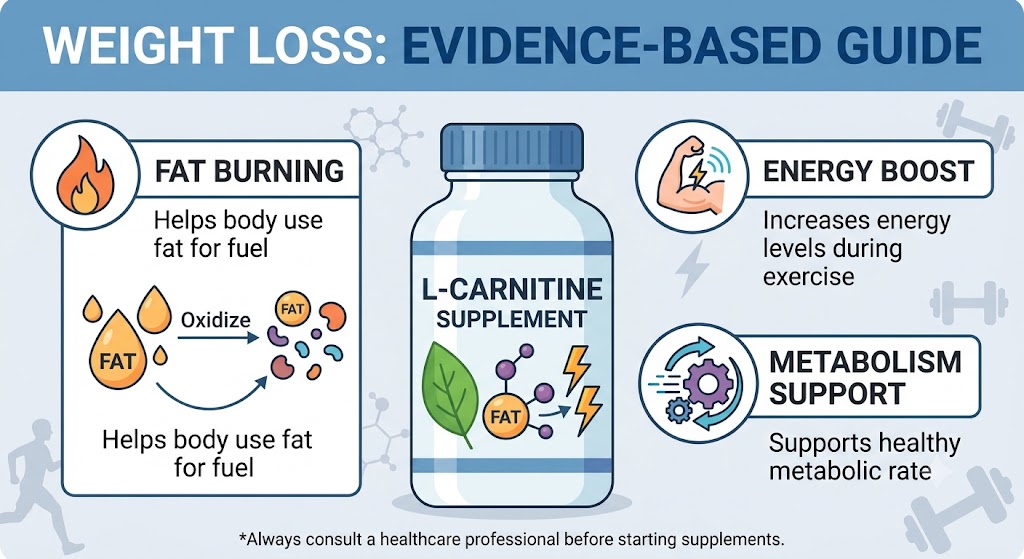
L carnitine supplement for weight loss is one of the most popular weight loss supplements on the market, often promoted as a fat burner that helps the body convert stored fat into usable energy. While the marketing claims can sound impressive, many people misunderstand what L-carnitine actually does and what results they can realistically expect.
The truth is that L-carnitine is not a magic weight loss solution. Instead, it plays a critical role in energy production by helping transport fatty acids into cells where they can be used as fuel. When combined with proper nutrition, regular exercise, and healthy lifestyle habits, L-carnitine may provide modest support for fat loss, workout performance, and recovery.
In this guide, you’ll learn what L-carnitine is, how it works, the scientific evidence behind it, recommended dosages, potential side effects, and how to use it effectively as part of a sustainable weight-loss plan.
What Is L-Carnitine? (Quick Answer)
L-carnitine is a naturally occurring compound made from the amino acids lysine and methionine. Its primary role is to transport long-chain fatty acids into the mitochondria, where they can be converted into energy.
Your body produces L-carnitine naturally, and you also obtain it through foods such as:
- Red meat
- Fish
- Poultry
- Dairy products
Because of its role in fat metabolism and energy production, L-carnitine has become a popular supplement among individuals looking to improve body composition, workout performance, and overall metabolic health.
How Does L-Carnitine Work for Weight Loss?
L-carnitine’s primary function is helping the body use fat as an energy source.
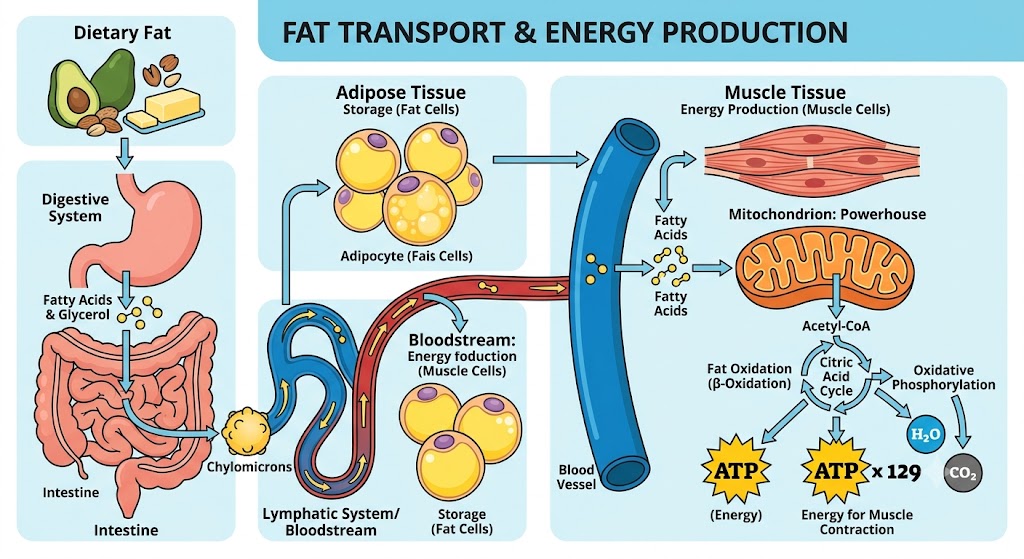
When your body breaks down stored fat, fatty acids must be transported into the mitochondria before they can be burned for fuel. L-carnitine acts as the transporter that makes this process possible.
Without sufficient L-carnitine, fatty acids cannot efficiently reach the mitochondria where energy production occurs.
The Fat-Burning Process
The process works like this:
- Fat is released from storage cells.
- Fatty acids enter the bloodstream.
- L-carnitine transports fatty acids into mitochondria.
- Mitochondria convert fat into usable energy.
This is why L-carnitine is often associated with fat metabolism.
However, it’s important to understand that L-carnitine does not automatically cause weight loss. It simply supports a biological pathway involved in energy production.
According to the National Institutes of Health, approximately 95% of the body’s L-carnitine stores are found in skeletal and cardiac muscle tissue.
Source: National Institutes of Health, 2024
Why Is L-Carnitine Important for Fat Metabolism?
Fat metabolism depends on the body’s ability to move stored fatty acids into cells where they can be used as fuel.
This process becomes particularly important during:
- Exercise
- Calorie deficits
- Extended physical activity
- Weight-loss programs
When fat is successfully converted into energy, it may support:
- Improved endurance
- Better exercise performance
- Increased energy production
- Enhanced workout recovery
L-carnitine doesn’t directly “burn fat.” Instead, it helps your body utilize fat more efficiently when conditions are favorable.
For example, someone following a structured exercise program may experience greater benefits than someone relying solely on supplementation without physical activity.
Does L-Carnitine Actually Help You Lose Weight?
Research suggests that L-carnitine may contribute to modest weight loss when combined with a calorie-controlled diet and regular exercise.
However, expectations should remain realistic.
L-carnitine is not a miracle fat burner and cannot overcome poor eating habits or a chronic calorie surplus.
What Research Says
A meta-analysis published in Obesity Reviews reported modest reductions in body weight among participants supplementing with L-carnitine.
Source: Obesity Reviews, 2023
Some studies have found benefits such as:
- Modest weight loss
- Improved body composition
- Increased fat oxidation
- Better exercise performance
That said, results vary significantly depending on:
- Age
- Activity level
- Diet quality
- Baseline L-carnitine status
- Overall metabolic health
Realistic Expectations
Think of L-carnitine as a supportive tool rather than a primary weight-loss strategy.
Nutrition, exercise, sleep, and consistency remain the biggest drivers of long-term fat loss.
Scientific Evidence Behind L-Carnitine
Several studies have examined the relationship between L-carnitine supplementation and weight management.
Potential Benefits Found in Research
Researchers have reported potential improvements in:
- Fat oxidation
- Exercise recovery
- Endurance performance
- Muscle soreness reduction
- Body weight management
A systematic review found average weight reductions of approximately 1.3 kilograms among supplemented participants.
Source: Obesity Reviews, 2023
Research Limitations
Although the findings are encouraging, not all studies show identical results.
Differences often occur because research involves:
- Different populations
- Various dosages
- Different forms of L-carnitine
- Varying exercise protocols
This makes direct comparisons difficult.
The overall evidence suggests modest benefits rather than dramatic transformations.
Which Type of L-Carnitine Is Best?
Several forms of L-carnitine are available, each designed for different purposes.
| Type | Primary Benefit | Best For |
|---|---|---|
| L-Carnitine | General fat metabolism support | Weight loss |
| Acetyl-L-Carnitine (ALCAR) | Brain and energy support | Cognitive performance |
| L-Carnitine L-Tartrate | Recovery support | Athletes |
| Propionyl-L-Carnitine | Circulation support | Cardiovascular health |
L-Carnitine
This is the most common form used for weight-loss support and fat metabolism.
Acetyl-L-Carnitine (ALCAR)
ALCAR crosses the blood-brain barrier more efficiently and is often used to support:
- Focus
- Mental clarity
- Cognitive function
L-Carnitine L-Tartrate
Popular among athletes and gym-goers because of its potential recovery benefits.
Some studies suggest it may help reduce post-workout muscle soreness.
Recommended L-Carnitine Dosage
Most studies use doses ranging between 500 mg and 3,000 mg per day.
General Dosage Guidelines
- 500–1,000 mg: Beginners
- 1,000–2,000 mg: General weight-loss support
- 2,000–3,000 mg: Athletic performance and recovery
For example, someone exercising regularly may choose 2,000 mg daily divided into two servings.
Consistency is generally more important than taking occasional high doses.
When Should You Take L-Carnitine?
The best timing depends on your goals and workout schedule.
Before Exercise
Many people take L-carnitine 30–60 minutes before training.
Potential benefits include:
- Improved energy production
- Enhanced endurance
- Better workout performance
With Carbohydrates
Some evidence suggests taking L-carnitine with carbohydrates may improve muscle uptake.
For example, taking it alongside a balanced pre-workout meal may support absorption.
Can You Take L-Carnitine Without Exercising?
Yes, but results are often more noticeable when supplementation is combined with physical activity.
Exercise increases energy demand, creating more opportunities for the body to utilize stored fat as fuel.
Without regular activity, the benefits of L-carnitine may be less pronounced.
Additional Benefits of L-Carnitine
Weight loss is not the only reason people use L-carnitine.
Exercise Recovery
Some research suggests L-carnitine may help reduce:
- Muscle soreness
- Exercise-induced muscle damage
- Recovery time
Endurance Support
Athletes often use L-carnitine to support energy production during prolonged exercise sessions.
Cognitive Health
Acetyl-L-Carnitine has been studied for potential benefits related to:
- Memory
- Focus
- Mental performance
Healthy Aging
Maintaining healthy mitochondrial function becomes increasingly important with age.
Research suggests age-related declines in mitochondrial efficiency can reduce cellular energy production.
Source: National Institute on Aging, 2024
Potential Side Effects of L-Carnitine
L-carnitine is generally considered safe for most healthy adults.
When side effects occur, they are usually mild.
Common side effects include:
- Nausea
- Stomach discomfort
- Diarrhea
- Abdominal cramps
- Fishy body odor
These symptoms are more likely when taking excessive doses.
Is L-Carnitine Safe for Long-Term Use?
Current research suggests L-carnitine appears safe for long-term use when taken within recommended dosage ranges.
However, individuals with medical conditions or those taking prescription medications should consult a healthcare professional before beginning supplementation.
Who Should Avoid L-Carnitine?
Certain individuals should seek medical advice before using L-carnitine.
This includes:
- Individuals with kidney disease
- People with seizure disorders
- Individuals taking thyroid medications
- Those using blood-thinning medications
- Anyone managing chronic health conditions
Supplement-drug interactions should always be evaluated by a healthcare provider.
How to Choose a High-Quality L-Carnitine Supplement
Not all supplements are created equal.
When shopping for L-carnitine, prioritize products that offer:
- Third-party testing
- Transparent labeling
- GMP-certified manufacturing
- Clear dosage information
- Minimal fillers and additives
Available Forms
L-carnitine supplements are available as:
- Capsules
- Tablets
- Powders
- Liquid formulas
Choose the format that best fits your routine and preferences.
Can L-Carnitine Help Reduce Belly Fat?
No supplement can specifically target belly fat.
Spot reduction remains largely a myth.
However, L-carnitine may support overall fat loss when combined with:
- A calorie deficit
- Resistance training
- Cardiovascular exercise
- Consistent healthy habits
Research consistently shows that overall fat loss—not targeted supplementation—is the primary driver of reduced waist circumference.
Source: American College of Sports Medicine, 2024
How Long Does It Take to See Results?
Most individuals who respond to L-carnitine notice changes after several weeks of consistent use.
Weeks 1–4
Possible improvements:
- Workout energy
- Exercise endurance
- Recovery
Weeks 8–12
Potential changes:
- Improved body composition
- Better fat-loss progress
- Enhanced training performance
Results are typically gradual rather than dramatic.
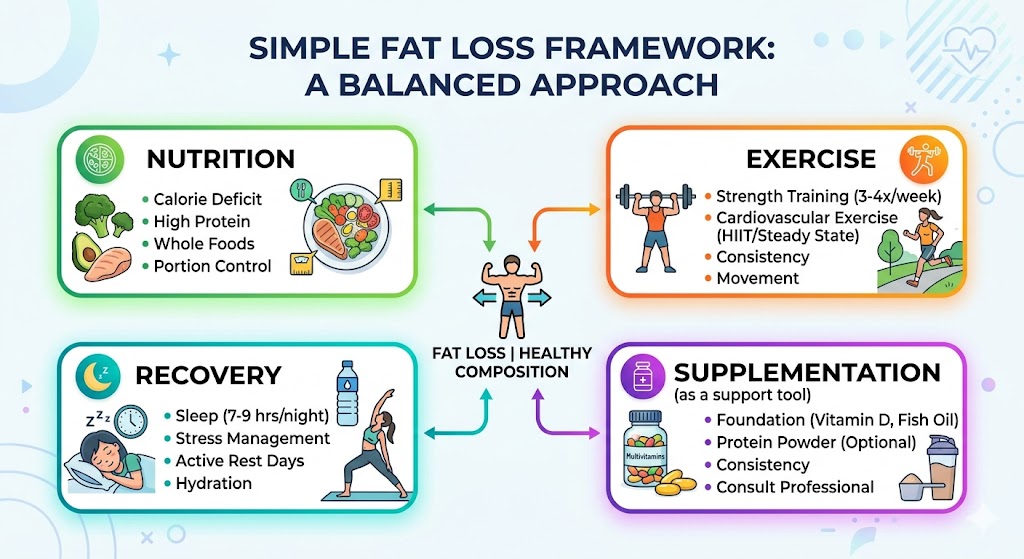
How to Use L-Carnitine for Best Results
The most effective approach is combining supplementation with healthy lifestyle habits.
Step 1: Optimize Nutrition
Maintain a moderate calorie deficit and prioritize protein-rich meals.
Step 2: Exercise Consistently
Combine:
- Resistance training
- Cardio workouts
- Daily movement
Step 3: Supplement Consistently
Use an evidence-based dosage and track your results.
Step 4: Prioritize Recovery
Focus on:
- Sleep quality
- Stress management
- Hydration

Creating a Sustainable Fat-Loss Strategy
Successful fat loss comes from long-term habits, not short-term supplement cycles.
Focus on:
- Consistent nutrition
- Regular exercise
- Quality sleep
- Stress management
- Progress tracking
Evaluate results every four to eight weeks and make adjustments as needed.
Small improvements maintained over time create the most meaningful results.
Conclusion
L-carnitine supplement for weight loss may provide modest support for fat metabolism, exercise performance, and body composition goals when combined with healthy lifestyle habits. While it is not a magic fat burner, research suggests it can play a helpful role in a comprehensive weight-loss strategy.
The most important factors for long-term success remain proper nutrition, regular exercise, quality sleep, and consistency. If you choose to use L-carnitine, focus on high-quality products, realistic expectations, and evidence-based dosages.
Used correctly, L-carnitine can be a valuable addition to a sustainable and science-backed approach to fat loss and metabolic health.
FAQs
Does L-carnitine help with weight loss?
Research suggests L-carnitine may support modest weight loss when combined with diet and exercise.
What is the best L-carnitine dosage for fat loss?
Most studies use between 500 mg and 3,000 mg daily depending on goals and supplement form.
Should I take L-carnitine before workouts?
Many users take it 30–60 minutes before exercise to support energy production and fat metabolism.
Can L-carnitine reduce belly fat?
L-carnitine may support overall fat loss, but it cannot specifically target belly fat.
How long does L-carnitine take to work?
Most people notice potential benefits after several weeks, with body composition changes typically requiring 8–12 weeks.
Which form of L-carnitine is best?
Standard L-carnitine is commonly used for weight loss, while Acetyl-L-Carnitine is often preferred for cognitive support.
Is L-carnitine safe?
L-carnitine is generally considered safe for healthy adults when taken within recommended dosage ranges.
Can I take L-carnitine every day?
Yes, most research protocols use daily supplementation for several weeks or months.