
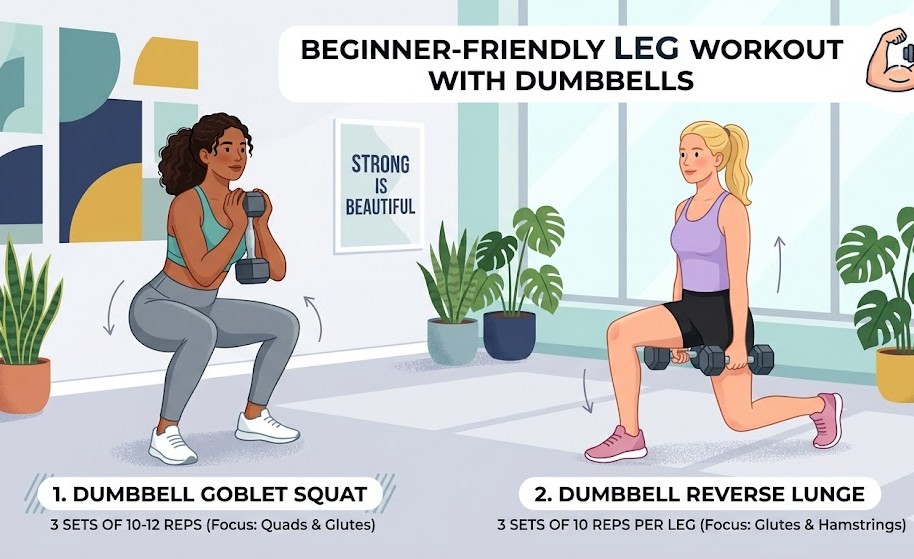
You’ve probably already heard that squats and lunges are essential for building strong legs. What many people don’t realize is that a pair of dumbbells can provide enough resistance to develop serious lower-body strength, muscle growth, and athletic performance without relying on machines or barbells. In this guide, you’ll learn the best dumbbells leg workout exercises, complete workout plans, progression strategies, and the most common mistakes to avoid.
Key Takeaways
- Dumbbells leg workouts are lower-body strength-training routines that target the quadriceps, hamstrings, glutes, calves, and stabilizing muscles.
- Compound exercises such as squats, lunges, and Romanian deadlifts provide the greatest muscle-building and strength benefits.
- Progressive overload is essential for building stronger and more muscular legs over time.
- Beginner-friendly dumbbell exercises can be performed effectively at home with minimal equipment.
- Unilateral exercises improve balance, coordination, and muscular symmetry by training one leg at a time.
- Consistent leg training supports strength gains, athletic performance, and calorie expenditure.
- Structured workout plans with proper sets, reps, and recovery produce the best long-term results.
What Is a Dumbbells Leg Workout and How Does It Work?
A dumbbells leg workout is a lower-body strength-training routine that uses dumbbells to develop the quadriceps, hamstrings, glutes, calves, and stabilizing muscles.
First, dumbbells create resistance that forces your muscles to work harder during movements such as squats, lunges, deadlifts, and step-ups. Unlike many machines, dumbbells require your body to stabilize the weight throughout the movement, which increases muscle activation and coordination.
Moreover, dumbbell training differs from machine training because it allows greater freedom of movement. For example, a dumbbell squat requires more balance and core engagement than a seated leg press machine.
At the same time, dumbbells differ from barbells because they allow each leg to work independently. This can help identify and correct muscular imbalances.
A dumbbells leg workout is a lower-body strength-training routine that uses dumbbells to develop the quadriceps, hamstrings, glutes, calves, and stabilizing muscles.
For readers new to resistance training. before starting a structured leg program.
Statistic: Approximately 80% of adults do not meet recommended muscle-strengthening activity guidelines — Source: Centers for Disease Control and Prevention (CDC), 2024.
Why Are Dumbbell Leg Workouts Effective for Building Muscle?
Dumbbell leg workouts are effective because they combine resistance, stability demands, and progressive overload to stimulate muscle growth and strength development.
Muscle Growth Benefits
First, muscle growth occurs when muscles experience sufficient tension and recover properly. Dumbbells provide scalable resistance that can challenge beginners and experienced lifters alike.
For example, increasing from 10-pound dumbbells to 20-pound dumbbells significantly increases training stimulus for squats and lunges.
Strength Development
Second, dumbbell training improves lower-body strength by forcing muscles to generate force against external resistance.
Consistent lower-body resistance training contributes to muscle growth, strength gains, and improved athletic performance.
Improved Balance and Coordination
Moreover, unilateral exercises challenge stabilizing muscles that are often overlooked during machine training.
Unilateral leg exercises help improve balance, coordination, and muscular symmetry by training each leg independently.
Fat-Burning Potential
Additionally, compound lower-body exercises elevate heart rate and increase calorie expenditure.
Compound dumbbell exercises train multiple muscle groups simultaneously, making them highly effective for strength development and calorie expenditure.
For individuals focused on body composition, review our fat loss workout strategies.
Statistic: Resistance training can increase resting metabolic rate through muscle preservation and development — Source: American College of Sports Medicine, 2024.
Which Leg Muscles Do Dumbbell Exercises Target?
Dumbbell leg exercises target all major lower-body muscle groups while also engaging stabilizers throughout the hips and core.
| Muscle Group | Primary Function | Best Dumbbell Exercises |
|---|---|---|
| Quadriceps | Knee extension | Goblet Squats, Step-Ups |
| Hamstrings | Hip extension | Romanian Deadlifts |
| Glutes | Hip extension and power | Split Squats, Glute Bridges |
| Calves | Ankle movement | Calf Raises |
| Hip Stabilizers | Balance and control | Lunges, Split Squats |
Quadriceps
First, the quadriceps are located at the front of the thighs and are heavily involved in squatting movements.
For example, goblet squats and step-ups emphasize quad development while improving functional strength.
Hamstrings
Second, the hamstrings run along the back of the thighs and assist with hip extension.
For additional training ideas.
Glutes
Moreover, the glutes are among the strongest muscles in the body and contribute significantly to athletic performance.
For more focused glute development.
Calves and Stabilizers
Additionally, calves contribute to walking, running, and jumping, while hip stabilizers improve movement quality and injury prevention.
Statistic: Stronger lower-body muscles are associated with improved mobility and functional performance across adulthood — Source: National Institute on Aging, 2024.
What Are the Best Dumbbell Leg Exercises for Beginners?
The best dumbbell leg exercises for beginners are movements that train multiple muscles while teaching proper movement mechanics.
Goblet Squat
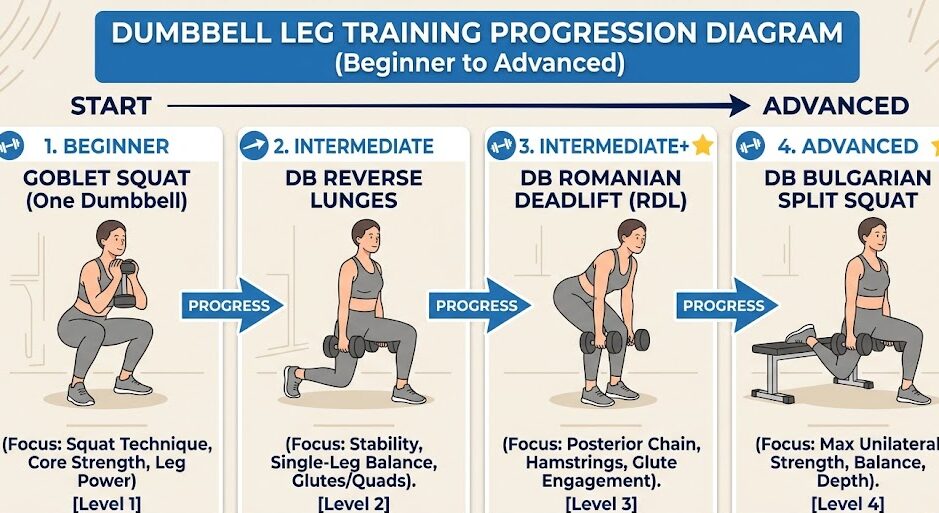
Goblet squats are one of the most effective beginner-friendly dumbbell exercises for developing lower-body strength and movement mechanics.
For example, holding a dumbbell at chest level encourages an upright torso and proper squat depth.
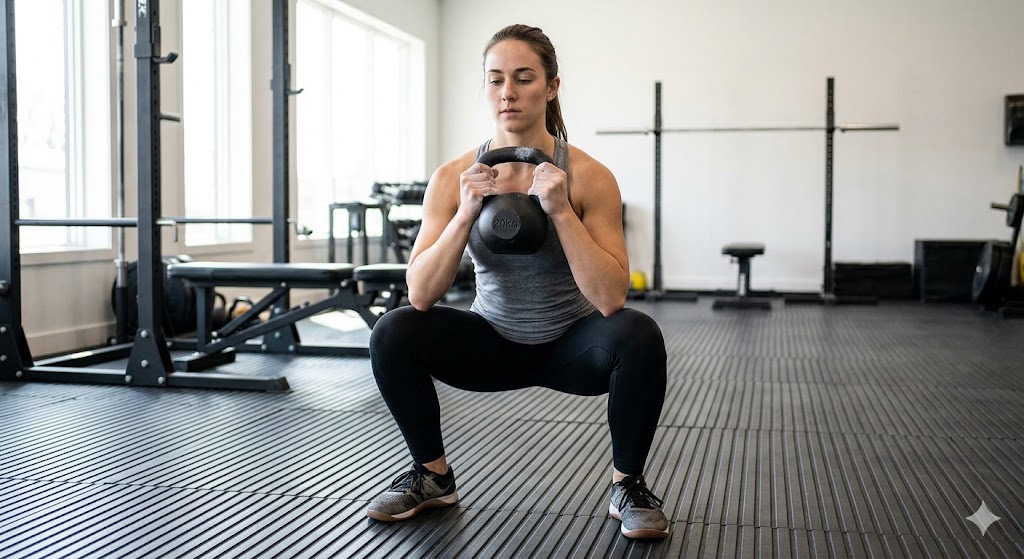
For technique improvements.
Dumbbell Romanian Deadlift
Romanian deadlifts strengthen the hamstrings, glutes, and lower back.
For example, pushing the hips backward while maintaining a neutral spine creates significant tension in the posterior chain.
Dumbbell Walking Lunges
Walking lunges build strength, balance, coordination, and muscular endurance simultaneously.
For example, each step challenges the stabilizing muscles around the hips and knees.
Bulgarian Split Squat
Bulgarian split squats are advanced unilateral exercises that create high muscle activation using relatively light weights.
Step-Ups
Step-ups improve single-leg strength while mimicking everyday movement patterns.
Sumo Squat
Sumo squats emphasize the inner thighs and glutes through a wider stance.
Dumbbell Calf Raises
Calf raises strengthen the lower legs and support athletic movement.
Dumbbell Glute Bridge
Glute bridges improve hip strength and glute activation while reducing lower-back compensation.
How Do You Build a Complete Dumbbell Leg Workout Routine?
A complete dumbbell leg workout routine combines compound movements, unilateral exercises, accessory work, and progressive overload.
A well-structured dumbbell leg workout combines compound movements, isolation exercises, and progressive overload to maximize results.
Exercise Selection
First, prioritize compound exercises before isolation work.
A balanced routine may include:
- Goblet Squat
- Romanian Deadlift
- Walking Lunges
- Bulgarian Split Squat
- Calf Raises
Sets and Reps
Second, adjust repetitions according to your goal.
| Goal | Sets | Reps |
|---|---|---|
| Strength | 4-5 | 4-8 |
| Muscle Growth | 3-4 | 8-12 |
| Endurance | 2-4 | 15-20 |
| Fat Loss | 3-5 | 10-15 |
Rest Periods
Moreover, rest periods influence workout intensity.
- Strength: 2-3 minutes
- Hypertrophy: 60-90 seconds
- Endurance: 30-60 seconds
Progressive Overload Principles
Progressive overload involves gradually increasing workout difficulty through heavier weights, additional repetitions, or increased training volume.
For a deeper explanation.
Can You Build Bigger Legs Using Only Dumbbells?
Yes, you can build bigger legs using only dumbbells if you apply progressive overload consistently.
First, muscle growth depends on training stimulus rather than equipment type. Dumbbells can create significant tension when exercises are performed through a full range of motion.
For example, Bulgarian split squats performed with heavy dumbbells can challenge the legs as much as many traditional barbell exercises.
Moreover, increasing time under tension, slowing repetitions, and adding volume can extend muscle-building potential even when heavier dumbbells are unavailable.
Progressive overload involves gradually increasing workout difficulty through heavier weights, additional repetitions, or increased training volume.
What Is the Best Dumbbell Leg Workout for Home Training?
The best home leg workout with dumbbells combines efficiency, simplicity, and full lower-body muscle activation.
Beginner Dumbbell Leg Workout
Perform 2-3 times weekly:
- Goblet Squat – 3 × 12
- Romanian Deadlift – 3 × 10
- Walking Lunges – 2 × 12 each leg
- Glute Bridge – 3 × 15
- Calf Raises – 3 × 20
Intermediate Dumbbell Leg Workout
Perform 2 times weekly:
- Goblet Squat – 4 × 10
- Bulgarian Split Squat – 3 × 10
- Romanian Deadlift – 4 × 8
- Step-Ups – 3 × 12
- Calf Raises – 4 × 20
Muscle-Building Workout
- Goblet Squat – 4 × 8
- Bulgarian Split Squat – 4 × 10
- Romanian Deadlift – 4 × 8
- Sumo Squat – 3 × 12
- Calf Raises – 4 × 15
Fat-Loss Workout
Complete as a circuit:
- Goblet Squat
- Walking Lunges
- Step-Ups
- Glute Bridges
- Calf Raises
Rest 60 seconds between rounds.
For balanced weekly programming, explore our full body dumbbell workout routine.
How Often Should You Train Legs With Dumbbells Each Week?
Training legs with dumbbells 2-3 times per week is optimal for most people.
First, beginners often benefit from two weekly sessions because recovery demands remain manageable.
Second, intermediate trainees can increase volume and frequency if recovery remains adequate.
For example, a Monday-Thursday schedule provides sufficient recovery while allowing consistent progress.
For broader planning,
Statistic: Research consistently shows muscle groups trained twice weekly often experience superior growth compared with once-weekly training — Source: Journal of Sports Sciences, 2024.
Tools, Equipment, and Practical Applications
The best tools for dumbbell leg workouts increase exercise variety, convenience, and progression opportunities.
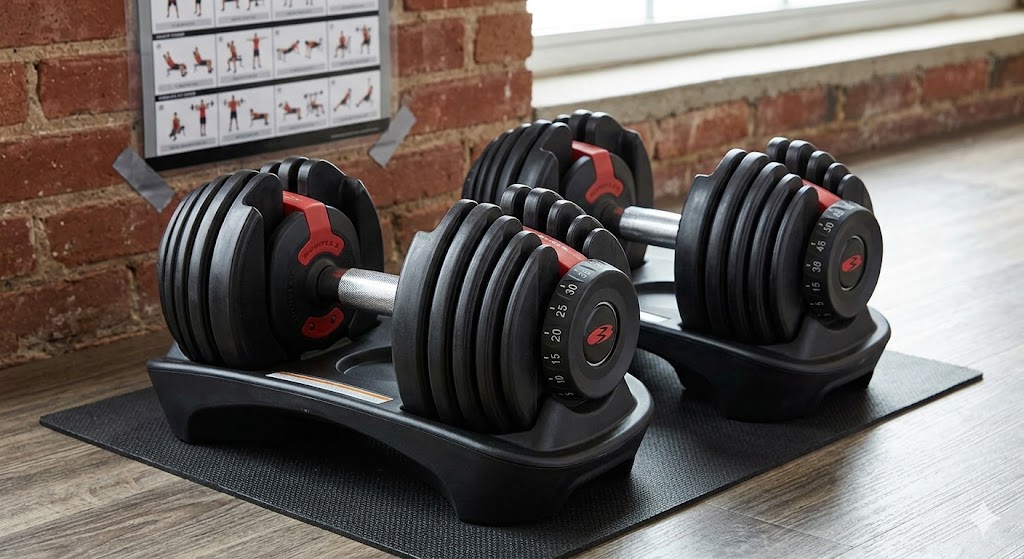
Adjustable Dumbbells
Adjustable dumbbells allow weight increases without purchasing multiple sets.
Workout Bench
A bench enables Bulgarian split squats, step-ups, and glute bridges.
Resistance Bands
Resistance bands complement dumbbell training by adding accommodating resistance.
Tracking Apps
Workout tracking apps help monitor progression and training consistency.
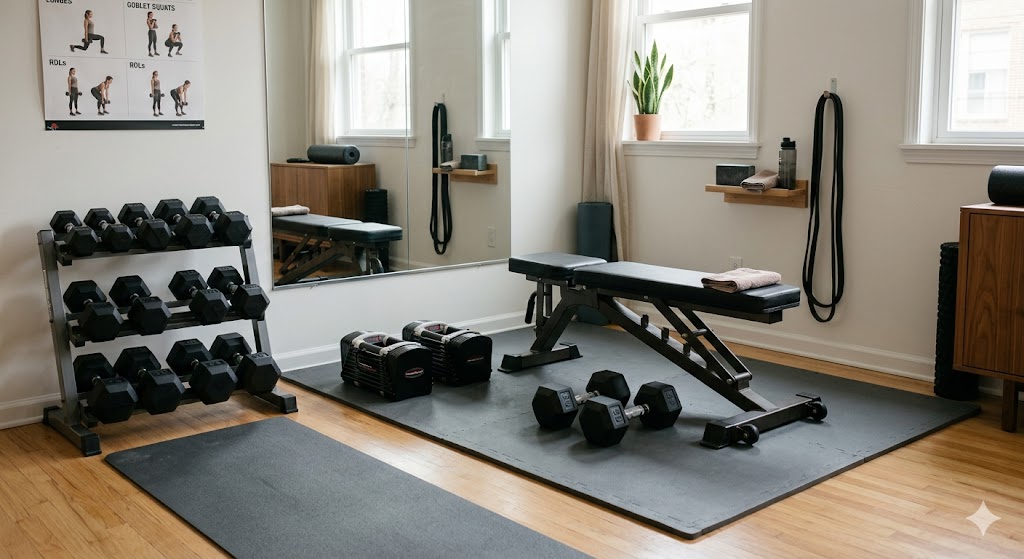
Home Gym Setup Recommendations
A basic home gym may include:
- Adjustable dumbbells
- Flat bench
- Resistance bands
- Exercise mat
For equipment recommendations,
What Common Mistakes Limit Results From Dumbbell Leg Workouts?
Common dumbbell leg workout mistakes reduce training effectiveness and increase injury risk.
Poor Squat Depth
First, shallow squats reduce muscle activation and limit strength development.
For example, squatting to parallel or lower typically recruits more muscle fibers than partial repetitions.
Using Excessive Weight
Second, selecting weights that compromise form often decreases training quality.
Neglecting Warm-Ups
Moreover, proper warm-ups improve movement quality and reduce injury risk.
For preparation routines, review our lower body mobility exercises.
Skipping Unilateral Exercises
Additionally, avoiding single-leg exercises can create muscular imbalances over time.
Inconsistent Progression
Finally, repeating identical workouts indefinitely often leads to plateaus.
For recovery support, review our muscle recovery and soreness tips.
How Do You Progress a Dumbbell Leg Workout Over Time?
Progressing a dumbbell leg workout requires gradually increasing training demands while maintaining proper technique.
First, increase weight whenever you can complete all prescribed repetitions with excellent form.
Second, add repetitions before adding weight if heavier dumbbells are unavailable.
Third, increase total training volume through additional sets.
Fourth, combine dumbbells with resistance bands to create new training stimuli.
Finally, transition toward more advanced movement patterns as strength improves.
For future progression.
What’s Next: Progressing Your Lower-Body Training?
Progressing your lower-body training means continuously challenging your muscles with greater demands.
First, focus on mastering exercise technique before chasing heavier weights.
Second, increase resistance gradually while tracking performance.
Third, prioritize recovery, nutrition, and sleep to support adaptation.
For example, athletes who consistently train, recover, and progressively overload their workouts typically experience the greatest long-term improvements in strength and muscle development.
Conclusion
A dumbbells leg workout is one of the most effective ways to build stronger, more muscular, and more athletic legs using minimal equipment. By combining compound movements such as goblet squats, Romanian deadlifts, lunges, and split squats with progressive overload, you can develop impressive lower-body strength whether you train at home or in the gym.
Most importantly, consistency drives results. Start with a beginner-friendly routine, focus on proper form, track your progress, and gradually increase training demands over time. Stronger legs are built one workout at a time.
FAQs
What is a dumbbells leg workout?
A dumbbells leg workout is a lower-body training routine that uses dumbbells to build strength, muscle, balance, and athletic performance in the legs and glutes.
What are the benefits of a dumbbells leg workout?
Dumbbell leg exercises may help increase lower-body strength, improve muscle growth, enhance balance, and support overall fitness.
Are dumbbells enough to build bigger legs?
Yes, progressive overload with dumbbells can effectively build leg muscle and strength, especially when combined with proper nutrition and consistency.
What are the best dumbbell exercises for legs?
Popular exercises include goblet squats, lunges, Romanian deadlifts, Bulgarian split squats, step-ups, and calf raises.
How often should you do a dumbbells leg workout?
Most people train legs 1–3 times per week depending on their goals, recovery, and overall training program.
Can beginners do dumbbell leg workouts?
Yes, dumbbell leg workouts are beginner-friendly because the weight can be adjusted to match individual fitness levels.
Do dumbbell leg workouts help with athletic performance?
Yes, stronger leg muscles can improve power, balance, speed, and overall athletic ability.
How many sets and reps should you do for leg growth?
Many muscle-building programs use 3–5 sets of 8–12 reps, though the ideal range depends on experience and goals.
Can you do a full leg workout with only dumbbells?
Yes, dumbbells can effectively target the quadriceps, hamstrings, glutes, calves, and supporting muscles.
Should you combine dumbbell leg workouts with cardio?
Yes, combining strength training with activities like Cycling Work Out or Zone 2 Cardio can support overall fitness and recovery.