
You’ve probably seen glutamine listed in recovery supplements, protein powders, or bodybuilding stacks. But many people still don’t fully understand what glutamine actually does or whether it’s worth taking.
The truth is that glutamine benefits go far beyond muscle recovery alone.
Glutamine plays a major role in immune function, gut health, hydration, and exercise recovery. During intense training, illness, stress, or calorie restriction, your body may use glutamine faster than it can produce it naturally.
That’s why athletes, endurance runners, and people focused on recovery often use glutamine supplements as part of their nutrition routine.
At the same time, supplements are not magic. Recovery habits like sleep, hydration, protein intake, and smart training still matter most.
What Is Glutamine?
Glutamine is a conditionally essential amino acid that supports recovery, immune health, and gut function.
Amino acids are the building blocks of protein. Your body can usually produce enough glutamine on its own, but physical stress and intense exercise may temporarily lower glutamine levels.
This is one reason glutamine benefits are often discussed in sports nutrition and recovery science.
Glutamine is also the most abundant amino acid stored in muscle tissue. It helps support:
- Nitrogen transport
- Cellular hydration
- Muscle recovery
- Immune defense
Many people also confuse glutamine with glutamate. Although they are chemically related, they perform different functions in the body.
Why Glutamine Levels Matter During Stress
Heavy workouts, illness, surgery, poor recovery, and overtraining can increase glutamine demand.
For example, endurance athletes sometimes experience temporary reductions in glutamine levels after prolonged exercise.
According to a review published in Nutrients (2023), prolonged endurance training may significantly reduce circulating glutamine concentrations.
Lower glutamine availability may contribute to:
- Slower recovery
- Increased fatigue
- Higher stress levels
- Reduced immune resilience
This is why glutamine benefits may become more noticeable during physically demanding periods.
Natural Food Sources of Glutamine
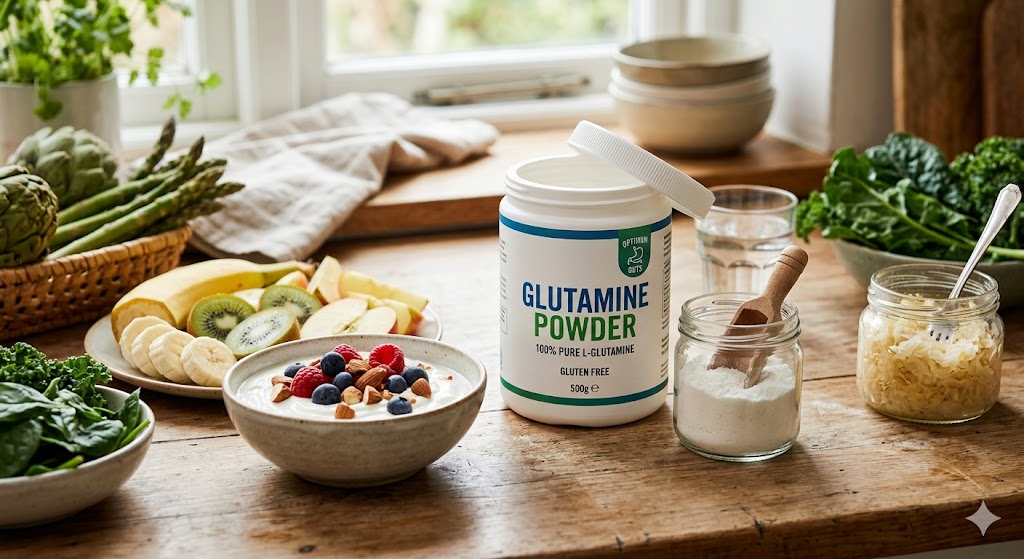
Many high-protein foods naturally contain glutamine.
Good dietary sources include:
- Beef
- Chicken
- Fish
- Eggs
- Greek yogurt
- Milk
- Tofu
- Lentils
- Beans
- Spinach
Animal-based foods usually contain higher glutamine concentrations, but plant-based eaters can still support intake through legumes and soy products.
According to USDA FoodData Central (2025), protein-rich foods remain some of the best dietary sources of glutamine-related amino acids.
| Food | Protein Content | Glutamine Potential |
|---|---|---|
| Beef | High | Excellent |
| Chicken | High | Excellent |
| Greek Yogurt | High | Excellent |
| Eggs | Moderate | Very Good |
| Tofu | Moderate | Good |
| Lentils | Moderate | Good |
| Beans | Moderate | Good |
| Spinach | Low | Moderate |
high-protein foods for recovery
How Much Protein for Muscle Growth
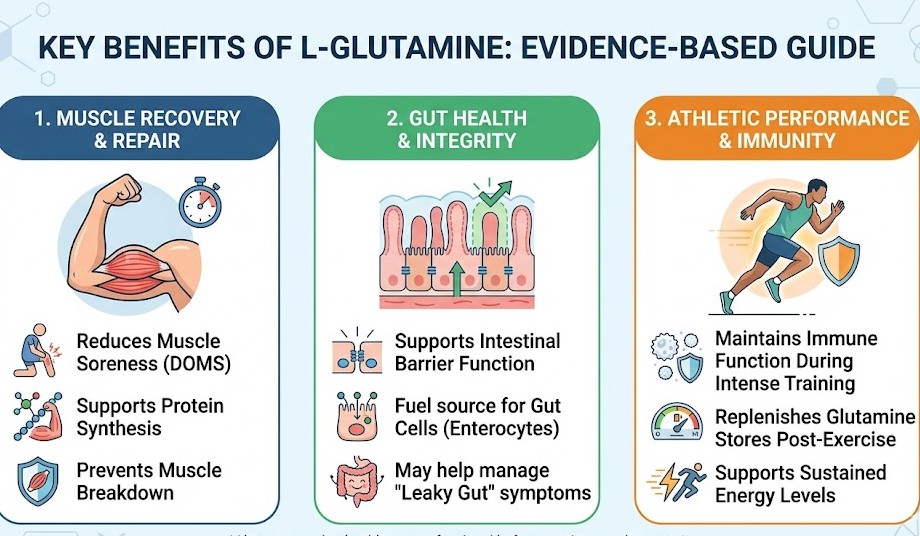
Main Glutamine Benefits
One reason glutamine remains popular is because it supports several recovery-related functions at once.
Some of the most researched glutamine benefits include:
- Muscle recovery support
- Gut health support
- Immune function
- Hydration support
- Exercise recovery
- Nitrogen balance
However, the effects vary depending on training intensity, nutrition, and overall recovery habits.
Glutamine Benefits for Muscle Recovery
One of the most common glutamine benefits is workout recovery support.
Intense exercise increases muscle protein breakdown and recovery demands. Glutamine may help support tissue repair and reduce exercise-related soreness during demanding training periods.
For example, athletes training multiple days weekly often prioritize recovery nutrition to reduce fatigue and improve performance consistency.
According to the Journal of the International Society of Sports Nutrition (2023), glutamine supplementation may support recovery during high-stress training phases.
Still, glutamine is not a miracle muscle-building supplement.
Training quality, total calories, sleep, and protein intake remain far more important for muscle growth.
Glutamine Benefits for Gut Health
Gut health support is one of the strongest evidence-backed glutamine benefits.
The intestinal lining constantly renews itself, and gut cells use glutamine as a major fuel source.
This may help:
- Support intestinal barrier integrity
- Improve nutrient absorption
- Reduce digestive stress
- Support gut recovery during intense exercise
Endurance athletes sometimes experience digestive discomfort due to stress placed on the digestive system during prolonged training.
According to Nutrients (2024), glutamine plays an important role in maintaining intestinal health and immune regulation.
Can Glutamine Support Immune Function?
Immune cells rely heavily on glutamine during stress responses.
This is another reason glutamine benefits are often discussed for athletes and physically stressed individuals.
Periods of:
- Intense training
- Sleep deprivation
- Illness
- Overtraining
- Calorie restriction
may increase immune stress.
Research published in Sports Medicine (2022) found that prolonged endurance exercise may temporarily suppress immune function after workouts.
While glutamine is not an immune cure-all, it may help support recovery balance during stressful periods.
Does Glutamine Help Build Muscle?
This is where many supplement advertisements become misleading.
Glutamine alone does not dramatically increase muscle mass or strength in most healthy individuals.
Research generally shows moderate recovery benefits rather than major anabolic effects.
According to a Nutrients meta-analysis (2023), glutamine alone has limited evidence for significantly increasing muscle size or strength in resistance-trained individuals.
This means beginners usually benefit more from:
- Better nutrition
- Progressive overload
- Sleep optimization
- Consistent training
before relying heavily on supplements.
Who May Benefit Most From Glutamine?
Glutamine benefits appear most useful during periods of higher physical stress.
People who may benefit include:
- Endurance athletes
- Bodybuilders during cutting phases
- High-volume trainees
- Athletes recovering from illness
- People experiencing digestive stress
However, not everyone needs glutamine supplementation.
Someone already eating enough protein and recovering well may notice minimal differences.
Best Time to Take Glutamine
The best time to take glutamine depends on recovery goals and training schedule.
Many people take glutamine:
- After workouts
- Between meals
- Before bed
Post-Workout Glutamine
Post-workout glutamine is commonly used to support recovery after intense exercise.
Many athletes combine glutamine with:
- Protein shakes
- Recovery carbohydrates
- Hydration drinks
Glutamine Before Bed
Some people take glutamine before sleep to support overnight recovery processes.
Recovery and tissue repair continue during sleep, which is why nighttime nutrition matters.
Recommended Glutamine Dosage
Most research-supported glutamine dosages range from 5 to 10 grams daily.
| Goal | Suggested Daily Intake |
|---|---|
| General Recovery | 5 grams |
| Intense Training Support | 5–10 grams |
| Endurance Training | 10 grams split doses |
According to the International Society of Sports Nutrition (ISSN, 2023), moderate glutamine supplementation appears safe for healthy adults when used appropriately.
Beginners should start with smaller servings to assess tolerance.
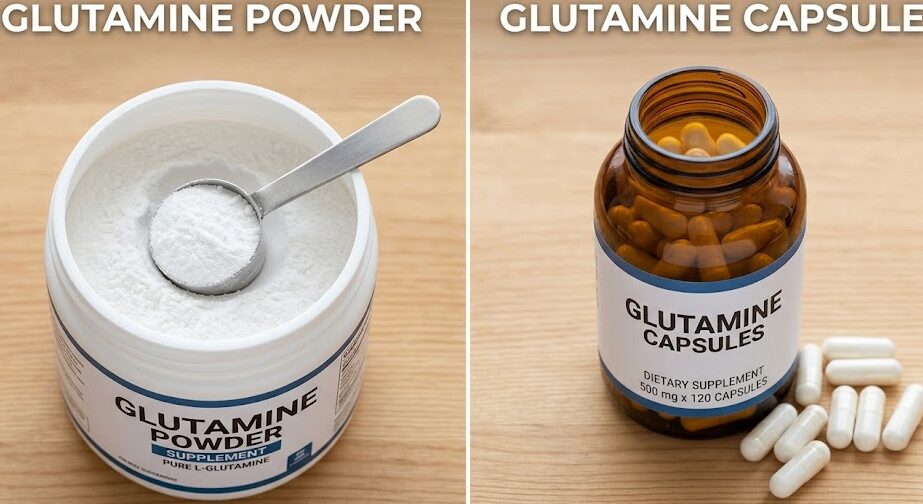
Glutamine Powder vs Capsules
Both forms provide similar glutamine benefits, but powders are usually more practical for higher doses.
| Feature | Glutamine Powder | Glutamine Capsules |
|---|---|---|
| Cost Efficiency | Better | Moderate |
| Convenience | Requires mixing | Easy to carry |
| Best For | Larger doses | Travel use |
| Serving Flexibility | High | Lower |
Are There Any Side Effects?
Glutamine is generally considered safe when used in recommended amounts.
Possible side effects may include:
- Mild bloating
- Stomach discomfort
- Nausea
- Headaches in sensitive individuals
People with liver disease, kidney conditions, or medical disorders should consult healthcare professionals before supplementation.
Can You Combine Glutamine With Protein or Creatine?
Yes, glutamine can usually be combined safely with:
- Protein powder
- Creatine
- Recovery supplements
Each supplement supports different recovery mechanisms.
For example:
- Protein supports muscle protein synthesis
- Creatine supports strength and power
- Glutamine supports recovery and gut health
science-backed creatine benefits
Tips for Better Recovery Beyond Supplements
Even though glutamine benefits are promising, supplements should never replace basic recovery habits.
Focus on:
- Adequate protein intake
- Hydration
- Sleep quality
- Balanced training
- Stress management
Most people will see bigger results from improving recovery fundamentals before adding advanced supplements.
best recovery habits for athletes
Conclusion
Glutamine is a versatile amino acid that supports recovery, gut health, immune function, and overall exercise recovery during stressful periods. While it is not a miracle muscle-building supplement, research suggests glutamine benefits may help athletes and active individuals recover more effectively when training demands are high.
The key is having realistic expectations.
Strong nutrition, proper sleep, hydration, and consistent training still matter far more than supplements alone. However, if you train intensely, struggle with recovery, or want additional digestive support, glutamine may be a useful addition to a balanced recovery routine.
FAQs
Q: What are the main glutamine benefits?
Glutamine benefits include recovery support, gut health support, immune function, hydration support, and exercise recovery.
Q: Does glutamine help build muscle?
Glutamine may support recovery, but it does not dramatically increase muscle growth on its own.
Q: Is glutamine good for gut health?
Yes, gut health support is one of the most researched glutamine benefits because gut cells use glutamine as a fuel source.
Q: What foods naturally contain glutamine?
Foods like beef, chicken, eggs, yogurt, tofu, lentils, and beans naturally contain glutamine.
Q: When should I take glutamine?
Most people take glutamine after workouts, between meals, or before bed depending on recovery goals.
Q: How much glutamine should I take daily?
Most research-supported dosages range between 5 and 10 grams daily.
Q: Can glutamine improve recovery after workouts?
Glutamine may help support muscle recovery and reduce soreness during intense training phases.
Q: Is glutamine safe?
Glutamine is generally considered safe for healthy individuals when used in recommended amounts.
Q: Can I combine glutamine with creatine?
Yes, glutamine is commonly combined with creatine and protein powder in recovery supplement routines.
Q: Who benefits most from glutamine supplements?
Endurance athletes, high-volume trainees, and people under physical stress may benefit the most from glutamine supplementation.