
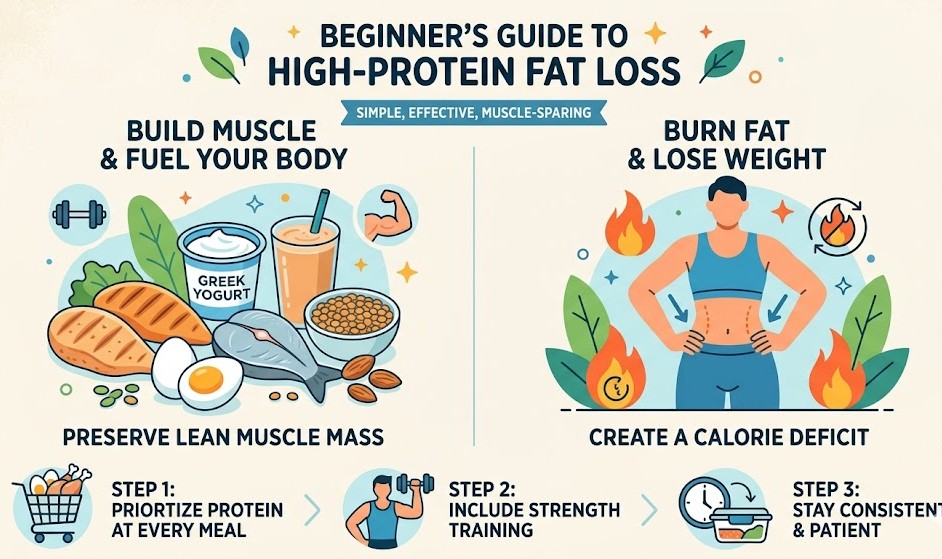
You’ve probably heard that eating more protein can help with weight loss. Social media, fitness influencers, and diet trends constantly promote high-protein meals for fat loss.
But many people still struggle to understand how a high protein fat loss diet actually works.
Some eat too little protein. Others rely heavily on shakes while ignoring calories, exercise, and food quality. That’s why many high-protein diets fail to produce lasting results.
The truth is that a high protein fat loss diet works best when it supports muscle retention, appetite control, and sustainable calorie management.
When combined with strength training and consistent habits, higher protein intake can improve body composition while helping you feel fuller throughout the day.
What Is a High Protein Fat Loss Diet?
A high protein fat loss diet is a nutrition strategy that increases protein intake to support fat loss while preserving lean muscle mass.
This matters because losing weight and losing fat are not the same thing.
Crash diets often reduce:
- Water weight
- Muscle mass
- Energy levels
instead of primarily targeting body fat.
Protein helps prevent excessive muscle loss during calorie restriction. According to the American Journal of Clinical Nutrition (2020), higher protein intake may improve satiety and support better body composition during fat loss phases.
Why Protein Is Important for Fat Loss
One reason a high protein fat loss diet works so well is because protein affects hunger, metabolism, and muscle retention simultaneously.
Protein can help:
- Reduce cravings
- Improve fullness
- Support recovery
- Preserve lean muscle
- Increase calorie burn during digestion
This makes dieting easier and more sustainable compared to extremely restrictive eating plans.
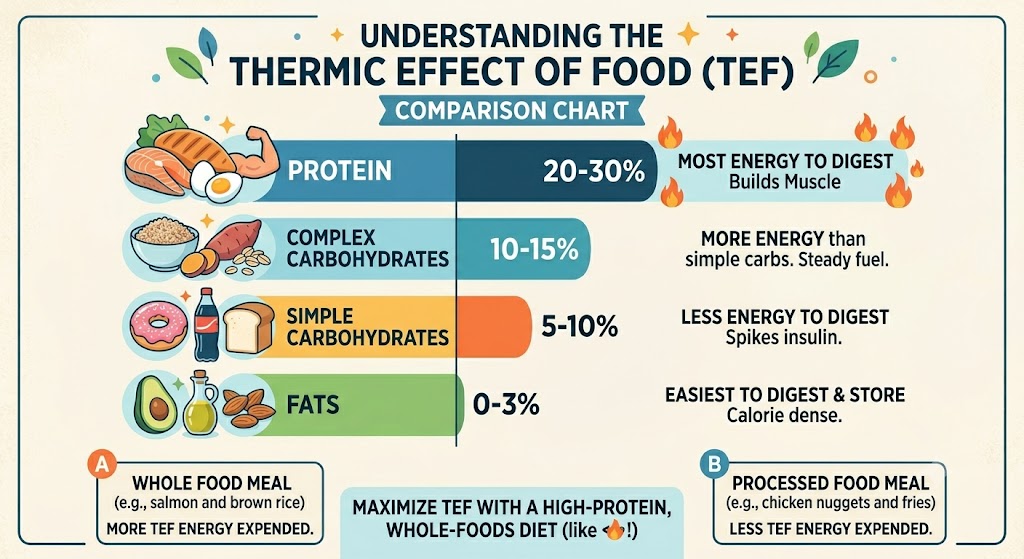
The Thermic Effect of Protein
Protein requires more energy to digest compared to carbohydrates and fats.
This process is called the thermic effect of food (TEF).
| Macronutrient | Average Thermic Effect |
|---|---|
| Protein | 20–30% |
| Carbohydrates | 5–10% |
| Fats | 0–3% |
That means your body burns more calories processing protein-rich foods.
For example, grilled chicken breast and Greek yogurt generally require more digestive energy than highly processed snack foods with similar calorie counts.
Can a High Protein Diet Preserve Muscle During Fat Loss?
Yes, one major benefit of a high protein fat loss diet is muscle preservation.
When calories are reduced, your body can break down muscle tissue for energy if protein intake is too low.
This becomes even more important during:
- Aggressive dieting
- Intense workouts
- Weight-loss phases
- High cardio routines
Research published in the Journal of the International Society of Sports Nutrition (2022) found that resistance training combined with adequate protein improves body recomposition outcomes.
This is why strength training and protein intake work best together.
How Much Protein Do You Need for Fat Loss?
Most active people aiming for fat loss benefit from consuming around 1.6–2.2 grams of protein per kilogram of body weight daily.
Protein needs vary depending on:
- Activity level
- Training intensity
- Body composition goals
- Calorie deficit size
| Activity Level | Recommended Protein Intake |
|---|---|
| Sedentary Adults | 0.8–1.2 g/kg |
| Lightly Active | 1.2–1.6 g/kg |
| Strength Training | 1.6–2.2 g/kg |
| Aggressive Fat Loss | 2.0–2.4 g/kg |
For example, a 75 kg person trying to lose fat may target around 120–165 grams daily.
According to the International Society of Sports Nutrition (2022), higher protein intake supports muscle retention during calorie restriction.
Best Protein Timing Strategy
Protein timing matters more than many people realize.
Instead of eating most protein at dinner, spreading protein intake across meals often works better for:
- Appetite control
- Recovery
- Muscle protein synthesis
- Energy balance
A simple structure may include:
- High-protein breakfast
- Protein-focused lunch
- Balanced dinner
- Protein snack
- Optional post-workout protein
For meal ideas, check our high protein breakfast ideas.
Best High Protein Foods for Fat Loss
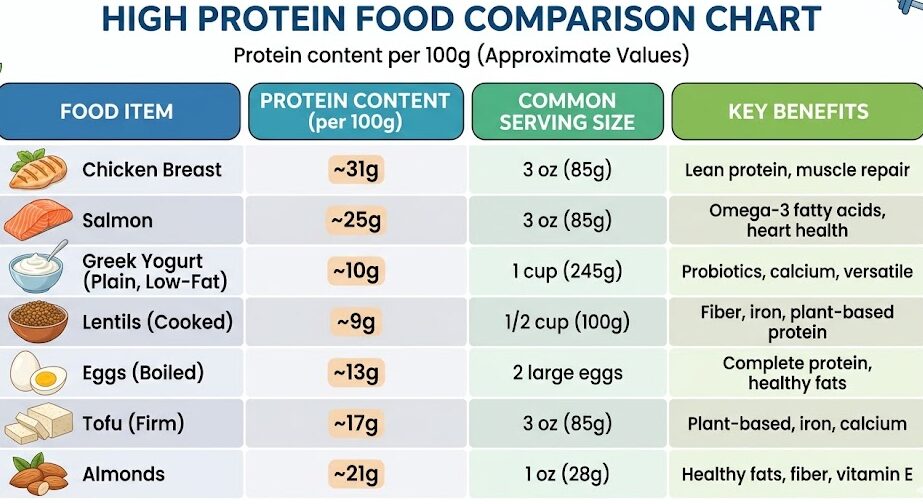
The best foods for a high protein fat loss diet are nutrient-dense, filling, and relatively low in calories.
Lean Meats and Poultry
Excellent choices include:
- Chicken breast
- Turkey breast
- Lean beef
- Pork tenderloin
These foods provide large amounts of protein without excessive calories.
Eggs and Dairy
Protein-rich dairy products can improve fullness and support recovery.
Good options include:
- Eggs
- Greek yogurt
- Cottage cheese
- Low-fat cheese
- Skim milk
According to Frontiers in Nutrition (2023), dairy protein may support appetite regulation and muscle recovery.
Fish and Seafood
Fish provides both protein and healthy fats.
Best options include:
- Salmon
- Tuna
- Shrimp
- Sardines
- Cod
Plant-Based Protein Sources
Vegetarian and vegan diets can also support fat loss effectively.
Good plant-based proteins include:
- Lentils
- Chickpeas
- Tofu
- Tempeh
- Quinoa
- Edamame
How to Build a High Protein Fat Loss Meal Plan
A successful high protein fat loss diet should be balanced, sustainable, and realistic.
Instead of extreme restrictions, focus on:
- Moderate calorie deficit
- High protein intake
- Fiber-rich foods
- Whole-food meals
- Consistent eating habits
According to Obesity Reviews (2021), sustainable fat loss typically occurs at around 0.5–1% of body weight weekly.
Protein-First Eating Strategy
One simple strategy is building meals around protein first.
Instead of starting with rice or bread, begin meals with:
- Chicken
- Eggs
- Fish
- Greek yogurt
- Tofu
Then add vegetables, carbohydrates, and healthy fats.
This approach often improves fullness naturally.
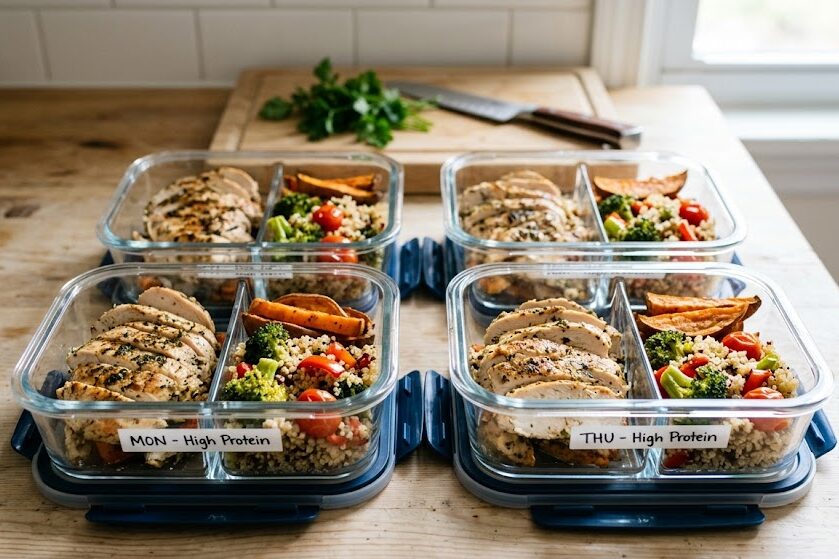
Sample Beginner High Protein Fat Loss Meal Plan
Breakfast
- Greek yogurt with berries
- 2 boiled eggs
Lunch
- Grilled chicken breast
- Brown rice
- Mixed vegetables
Snack
- Protein shake
- Apple
Dinner
- Salmon or tofu
- Sweet potato
- Salad
Evening Snack
- Cottage cheese
- Roasted chickpeas
Common Mistakes on a High Protein Fat Loss Diet
Many people fail because they focus only on protein while ignoring other important factors.
Eating Too Many Calories
Protein still contains calories.
Overeating:
- Nuts
- Protein bars
- Peanut butter
- Oils
- “Healthy snacks”
can slow fat loss progress.
Ignoring Fiber and Vegetables
Protein matters, but fiber is also essential for:
- Digestion
- Satiety
- Energy balance
- Gut health
According to the Dietary Guidelines for Americans (2025), adults should aim for roughly 25–38 grams of fiber daily.
Relying Too Much on Supplements
Protein shakes are convenient, but whole foods should remain the foundation of your diet.
Inconsistent Protein Intake
Skipping protein during the day and overeating late at night often increases cravings and poor appetite control.
Consistency matters more than perfection.
Is a High Protein Fat Loss Diet Safe?
For healthy individuals, high-protein diets are generally considered safe when combined with:
- Adequate hydration
- Fiber-rich foods
- Balanced nutrition
- Proper calorie intake
Research published in the Journal of Nutrition and Metabolism (2020) found no evidence that higher protein diets harm kidney function in healthy people.
Do You Need to Cut Carbs Completely?
No, you do not need to eliminate carbohydrates to lose fat.
In fact, smart carbohydrate choices often improve:
- Workout performance
- Energy levels
- Recovery
- Diet sustainability
Good carbohydrate options include:
- Oats
- Potatoes
- Rice
- Fruit
- Legumes
- Whole grains
Extreme restriction is usually harder to maintain long term.
Best Workouts to Combine With a High Protein Diet
Exercise helps maximize the benefits of a high protein fat loss diet.
Strength Training
Strength training supports muscle retention during calorie deficits.
Best exercises include:
- Squats
- Push-ups
- Rows
- Lunges
- Deadlifts
- Shoulder presses
Walking and Cardio
Walking is underrated for fat loss because it increases calorie burn without excessive fatigue.
Daily movement adds up over time.
HIIT Workouts
HIIT workouts improve calorie burn and cardiovascular fitness efficiently.
However, excessive HIIT without recovery may increase hunger and fatigue.
Can Vegetarians Follow a High Protein Fat Loss Diet?
Yes, vegetarians and vegans can successfully follow a high protein fat loss diet.
Important protein sources include:
- Greek yogurt
- Cottage cheese
- Lentils
- Tofu
- Tempeh
- Edamame
- Vegan protein powders
According to Nutrients (2023), plant-based high-protein diets can effectively support body composition when protein intake is sufficient.
Tips for Long-Term Fat Loss Success
Sustainable fat loss comes from habits, not extreme dieting.
Focus on:
- Consistent meal timing
- Strength training
- Sleep quality
- Hydration
- Weekly meal prep
- Realistic calorie deficits
Track progress using:
- Waist measurements
- Progress photos
- Gym performance
- Energy levels
- Clothing fit
Long-term consistency always beats short-term perfection.
glutamine benefits for recovery
Conclusion
A high protein fat loss diet is one of the most effective ways to lose body fat while preserving lean muscle mass. By increasing protein intake, maintaining a moderate calorie deficit, and combining nutrition with strength training, you can improve body composition without relying on extreme restrictions.
The key is sustainability.
You do not need to eliminate carbs, survive on protein shakes, or follow crash diets to see results. Small, consistent habits repeated over time create far better long-term progress.
Start simple, focus on protein-rich whole foods, and build a routine you can maintain long term.
FAQs
Q: What is a high protein fat loss diet?
A high protein fat loss diet increases protein intake to support fat loss while helping preserve lean muscle mass.
Q: How much protein should I eat for fat loss?
Most active people benefit from consuming around 1.6–2.2 grams of protein per kilogram of body weight daily.
Q: Can a high protein diet help reduce cravings?
Yes, protein improves satiety and may help reduce hunger and cravings during calorie restriction.
Q: Do I need to cut carbs completely to lose fat?
No, fat loss mainly depends on maintaining a calorie deficit rather than eliminating carbohydrates completely.
Q: What are the best high protein foods for fat loss?
Chicken breast, eggs, Greek yogurt, fish, tofu, lentils, and cottage cheese are excellent protein-rich options.
Q: Is whey protein necessary for fat loss?
No, whey protein is optional. It mainly helps people conveniently reach daily protein goals.
Q: Can vegetarians follow a high protein fat loss diet?
Yes, vegetarians can use foods like tofu, lentils, Greek yogurt, tempeh, and protein powders to meet protein needs.
Q: Does protein help preserve muscle during weight loss?
Yes, adequate protein combined with strength training helps reduce muscle loss during calorie deficits.
Q: Are high protein diets safe long term?
Research suggests high-protein diets are generally safe for healthy individuals when balanced properly.
Q: What workouts work best with a high protein fat loss diet?
Strength training, walking, cardio, and HIIT workouts all work well alongside high-protein nutrition plans.
8 thoughts on “High Protein Fat Loss Diet: Burn Fat Without Losing Muscle”