
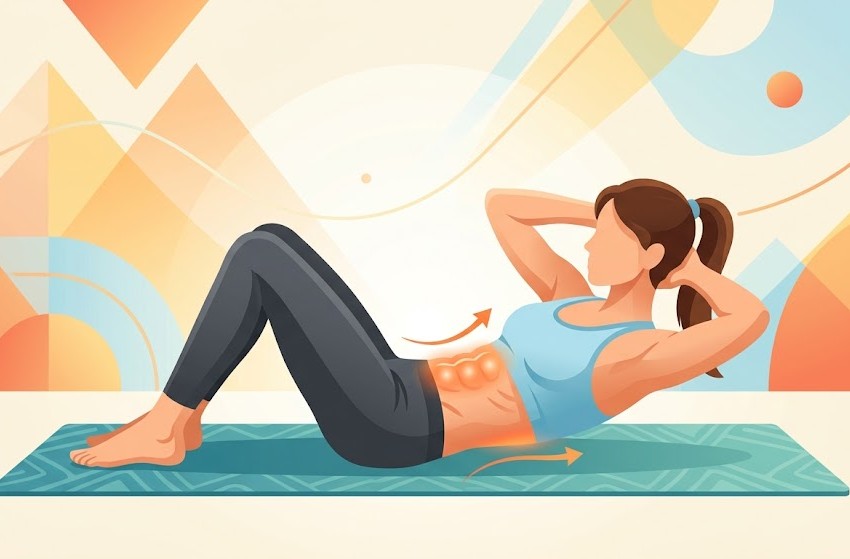
You probably already know that crunches and planks are popular abdominal workout exercises. But many people still struggle to build visible abs or a strong core because they follow random workouts without understanding how effective core training actually works.
The truth is that stronger abs are not built from doing endless crunches every day.
A smart abdominal workout routine focuses on:
- Core stability
- Progressive overload
- Recovery
- Proper form
- Consistency
In this guide, you’ll learn the best abdominal workout exercises, how to structure an effective routine, and the biggest mistakes preventing faster results.
What Are Abdominal Workout Exercises?
Abdominal workout exercises are movements designed to strengthen the muscles of the core, including:
- Rectus abdominis
- Obliques
- Transverse abdominis
- Lower core stabilizers
These muscles support posture, spinal stability, movement efficiency, and athletic performance.
Your core is involved in almost every movement you perform daily.
For example, core muscles help stabilize your body during:
- Walking
- Running
- Lifting
- Squatting
- Sports
- Carrying objects
Many beginners think “abs” and “core” mean the same thing, but they are slightly different.
Abs mainly refer to the visible front abdominal muscles, while the core includes deeper stabilizing muscles around the hips, pelvis, and spine.
According to the Journal of Physical Therapy Science (2023), stronger core muscles can improve posture and reduce lower back discomfort.
Which Muscles Do Abdominal Workout Exercises Target?
Different abdominal workout exercises target different areas of the core.
| Muscle Group | Main Function | Example Exercises |
|---|---|---|
| Rectus Abdominis | Spine flexion | Crunches, leg raises |
| Obliques | Rotation and side bending | Russian twists, bicycle crunches |
| Transverse Abdominis | Deep core stabilization | Planks, dead bugs |
| Lower Core Muscles | Pelvic control | Flutter kicks, reverse crunches |
Training all these muscle groups creates better overall core strength and balance.
Why Core Strength Matters
Core strength improves:
- Balance
- Posture
- Athletic performance
- Movement efficiency
- Injury prevention
Weak core muscles often contribute to:
- Lower back discomfort
- Poor posture
- Reduced athletic performance
- Movement instability
For example, office workers who sit for long hours commonly develop tight hips and weak abdominal muscles.
Stronger abdominal muscles help support better spinal alignment during daily activities.
Research published in Sports Medicine (2024) found stronger core stability improved movement efficiency and balance in athletes.
Can Abdominal Workout Exercises Burn Belly Fat?
Abdominal workout exercises strengthen the muscles underneath your stomach, but they do not directly burn belly fat alone.
Spot reduction is mostly a myth.
This means:
- Crunches alone will not flatten your stomach
- Visible abs require overall fat loss
- Nutrition matters heavily
The best approach combines:
- Abdominal workout exercises
- Cardio
- Strength training
- Protein-focused nutrition
- Consistent sleep
According to the American Council on Exercise (2024), fat loss occurs throughout the body rather than from one isolated area.
cardio exercises for weight loss
Best Abdominal Workout Exercises for Beginners
The best beginner abdominal workout exercises build strength safely while teaching proper core control.
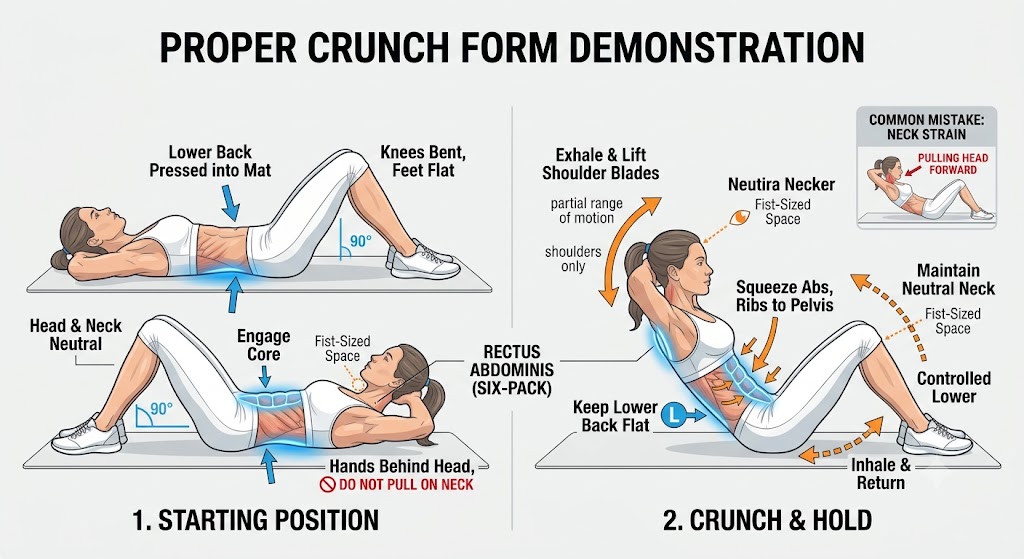
Crunches
Crunches primarily target the rectus abdominis.
How to Perform Crunches
- Lie on your back
- Bend your knees
- Place hands lightly behind your head
- Lift shoulders slowly
- Contract your abs
- Lower with control
Beginners should avoid pulling on the neck during crunches.
Plank
Planks strengthen multiple core muscles simultaneously.
f(t)=Core Stability Over Time
Unlike repetitive crunches, planks improve deep core stability while reducing excessive spinal movement.
Benefits of Planks
- Improves posture
- Strengthens deep core muscles
- Enhances stability
- Reduces lower back stress
How to Perform a Plank
- Start in push-up position
- Keep elbows below shoulders
- Tighten your core
- Keep body straight
- Hold 20–60 seconds
Dead Bug
Dead bug exercises improve deep core stability and coordination.
This movement teaches you how to brace your core while moving your arms and legs independently.
Dead bugs are commonly used in rehabilitation and beginner fitness programs because they are low-impact and spine-friendly.
Leg Raises
Leg raises target the lower abdominal region and hip flexors.
Beginners should:
- Move slowly
- Avoid swinging
- Keep the lower back stable
Bent-knee variations make the exercise easier.
Bicycle Crunches
Bicycle crunches train both:
- Rectus abdominis
- Obliques
Research from ACE Fitness (2024) found bicycle crunches among the most effective abdominal workout exercises tested.
Mountain Climbers
Mountain climbers combine:
- Cardio
- Core activation
- Coordination
Increasing speed raises heart rate and calorie burn significantly.
Russian Twists
Russian twists strengthen rotational core muscles known as the obliques.
Controlled movement works better than rushing repetitions.
Flutter Kicks
Flutter kicks challenge lower core endurance through sustained tension.
Keeping the lower back flat helps reduce spinal strain.
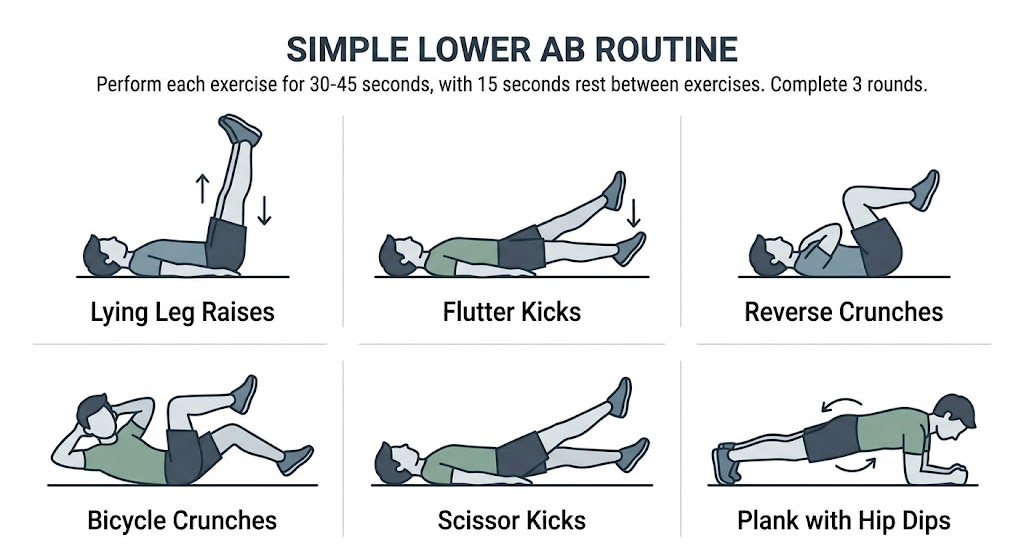
Best Lower Abdominal Workout Exercises
Lower abdominal workout exercises emphasize pelvic control and lower core stabilization.
The most effective lower ab exercises include:
- Reverse crunches
- Flutter kicks
- Leg raises
- Hanging knee raises
- Mountain climbers
- V-ups
Beginner Lower Abs Workout
| Exercise | Sets | Reps |
|---|---|---|
| Reverse Crunches | 3 | 12 |
| Flutter Kicks | 3 | 20 seconds |
| Leg Raises | 3 | 10 |
| Mountain Climbers | 3 | 30 seconds |
Best Advanced Abdominal Workout Exercises
Advanced abdominal workout exercises increase resistance and stabilization demands.
Hanging Leg Raises
Hanging leg raises improve:
- Lower core strength
- Grip strength
- Shoulder stability
Ab Wheel Rollouts
Ab wheel rollouts challenge the entire core through anti-extension strength.
y=e−x+Core Resistance Progression
Dragon Flags
Dragon flags require advanced body control and core strength.
Weighted Cable Crunches
Weighted cable crunches allow progressive overload for abdominal hypertrophy.
V-Ups
V-ups combine upper and lower abdominal movement simultaneously.
How Often Should You Train Abs?
Most people should train abdominal workout exercises:
- 2–4 times weekly
Muscles still require recovery to grow stronger.
| Experience Level | Weekly Sessions |
|---|---|
| Beginner | 2–3 |
| Intermediate | 3–4 |
| Advanced | 4–5 |
According to the National Strength and Conditioning Association (2024), recovery is essential for muscular adaptation.
What Is Progressive Overload for Abs?
Progressive overload means gradually increasing workout difficulty over time.
You can progress abdominal workout exercises by:
- Adding weight
- Increasing repetitions
- Increasing hold duration
- Reducing rest time
- Advancing exercise difficulty
For example:
- Basic plank → weighted plank
- Knee raises → hanging leg raises
Beginner Abdominal Workout Routine
| Exercise | Sets | Reps/Time |
|---|---|---|
| Crunches | 3 | 15 |
| Plank | 3 | 30 sec |
| Dead Bugs | 3 | 10 each side |
| Bicycle Crunches | 3 | 12 |
| Mountain Climbers | 3 | 30 sec |
Intermediate Abdominal Workout Routine
| Exercise | Sets | Reps |
|---|---|---|
| Hanging Leg Raises | 3 | 10 |
| Russian Twists | 3 | 20 |
| V-Ups | 3 | 12 |
| Plank Variations | 3 | 45 sec |
| Cable Crunches | 3 | 15 |
Recovery Tips for Faster Core Progress
Recovery matters because abdominal muscles still need time to repair and strengthen.
Good recovery habits include:
- Sleeping 7–9 hours
- Eating enough protein
- Staying hydrated
- Managing stress
- Avoiding overtraining
According to Sleep Foundation (2025), quality sleep supports muscle recovery and hormone balance.
high-protein diet for muscle recovery
Common Mistakes That Slow Ab Progress
Training Abs Every Day
Daily ab training often reduces recovery quality.
Consistency and recovery matter more than excessive volume.
Using Momentum
Swinging during exercises reduces abdominal activation.
Slow controlled movement works better.
Ignoring Nutrition
Visible abs require overall fat loss.
Poor nutrition can hide abdominal definition even with strong core muscles.
Poor Lower Back Positioning
Excessive spinal arching may increase lower back strain.
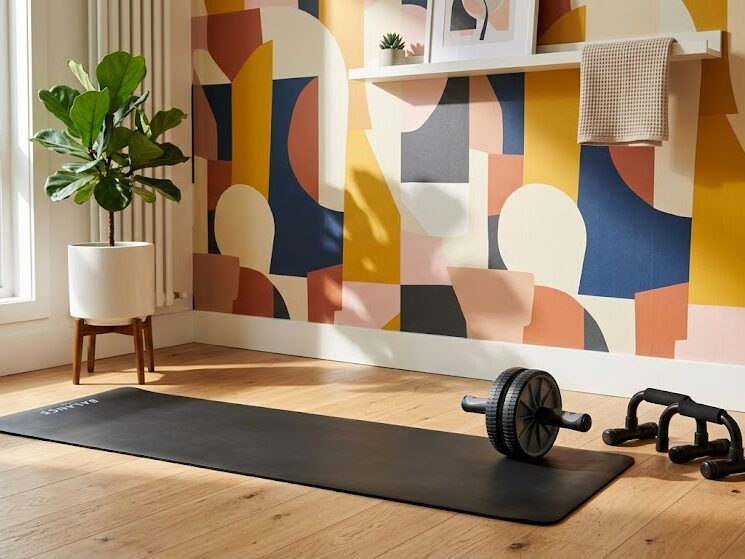
Best Home Ab Workout Without Equipment
This quick home abdominal workout exercises routine requires no equipment.
15-Minute Home Core Workout
- Plank — 30 seconds
- Bicycle Crunches — 15 reps
- Flutter Kicks — 20 seconds
- Mountain Climbers — 30 seconds
- Dead Bugs — 10 reps each side
- Russian Twists — 15 reps
Repeat for 3 rounds.
bodyweight workout plan for beginners
Are Planks Better Than Crunches?
Planks are generally better for:
- Core stability
- Posture
- Deep abdominal activation
Crunches are better for:
- Isolating rectus abdominis
- Targeted abdominal hypertrophy
The best abdominal workout exercises routine usually combines both.
Best Equipment for Abdominal Workout Exercises
Useful equipment includes:
- Resistance bands
- Ab rollers
- Stability balls
- Adjustable benches
- Medicine balls
These tools help increase workout variety and resistance.
Best Apps for Tracking Ab Workouts
Popular fitness apps include:
- Strong
- MyFitnessPal
- Nike Training Club
- Fitbod
- Google Fit
Tracking progress helps improve workout consistency.
How Long Does It Take to See Results?
Most beginners notice:
- Better posture
- Improved stability
- Stronger core
within 4–6 weeks.
Visible abdominal definition may take several months depending on:
- Body fat levels
- Nutrition
- Cardio
- Consistency
According to Harvard Health Publishing (2024), visible body composition changes require long-term consistency.
What Should You Do Next?
After building a basic abdominal workout exercises routine:
- Increase workout difficulty gradually
- Add full-body strength training
- Improve mobility
- Track progress consistently
Combining core training with full-body workouts usually improves results faster.
Conclusion
Abdominal workout exercises help strengthen the core, improve posture, enhance athletic performance, and support long-term fitness goals.
The best results come from combining:
- Smart exercise selection
- Progressive overload
- Recovery
- Nutrition
- Cardio
- Consistency
Most importantly, you do not need complicated workouts to build a stronger core. Simple abdominal workout exercises like planks, crunches, dead bugs, and mountain climbers can produce excellent results when performed consistently over time.
FAQs
Q: What are the best abdominal workout exercises for beginners?
Planks, crunches, dead bugs, bicycle crunches, and mountain climbers are excellent beginner-friendly abdominal workout exercises.
Q: Can abdominal workout exercises burn belly fat?
Abdominal workout exercises strengthen the core, but overall fat loss requires nutrition, cardio, and calorie control.
Q: How often should I train abs?
Most people should train abs 2–4 times weekly depending on fitness level and recovery.
Q: Are planks better than crunches?
Planks are better for total core stability, while crunches isolate the front abdominal muscles more directly.
Q: How long does it take to get visible abs?
Visible abs may take several months depending on body fat percentage, nutrition, and consistency.
Q: What are the best lower abdominal workout exercises?
Reverse crunches, flutter kicks, leg raises, and mountain climbers are effective lower ab exercises.
Q: Can I do abdominal workout exercises at home?
Yes, many effective abdominal workout exercises require no equipment and can be performed at home.
Q: Should beginners train abs every day?
No, abdominal muscles still need recovery. Most beginners benefit from 2–3 sessions weekly.
Q: What is progressive overload in ab training?
Progressive overload means gradually increasing resistance, repetitions, or workout difficulty over time.
Q: Do crunches alone build a strong core?
Crunches help train the rectus abdominis, but full core strength requires additional stabilization exercises like planks and dead bugs.
3 thoughts on “Abdominal Workout Exercises: Build a Stronger Core & Visible Abs”