

Most marathon runners focus heavily on logging miles, tempo runs, and long-distance workouts. What many overlook is that stronger muscles can make every mile more efficient while reducing injury risk. In this guide, you’ll learn exactly how marathon strength training works, which exercises matter most, and how to integrate strength sessions into your marathon plan for better performance.
Key Takeaways
- Marathon strength training combines targeted resistance exercises with running-specific movements to improve endurance performance.
- Running economy improves when runners develop stronger muscles that require less energy to maintain pace.
- Lower-body, core, and single-leg exercises form the foundation of an effective marathon strength training program.
- Two to three weekly strength sessions are sufficient for most marathon runners when properly integrated with running workouts.
- Injury prevention is one of the most significant benefits of strength training during marathon preparation.
- Progressive overload and recovery help runners build strength without compromising mileage goals.
- Consistent strength training can improve race-day efficiency, fatigue resistance, and overall marathon performance.
What Is Marathon Strength Training and Why Is It Important?
Marathon strength training is the practice of using resistance exercises to improve running performance, endurance, and injury resilience during marathon preparation.
First, marathon strength training differs from traditional bodybuilding because the goal is not maximizing muscle size. Instead, the objective is improving running efficiency, muscular endurance, stability, and resilience.
For example, a marathon runner may prioritize single-leg squats, lunges, and core exercises rather than high-volume isolation exercises designed primarily for hypertrophy.
Moreover, strength training for marathon runners involves lower-body, core, and stability exercises designed to complement endurance training rather than replace it. This approach helps runners maintain proper form throughout long races while reducing fatigue-related performance declines.
If you’re following a complete marathon training plan, strength training should be considered a foundational component rather than an optional add-on.
Quotable Insight: Marathon strength training enhances endurance by improving the body’s ability to produce force efficiently over long distances.
Why Does Marathon Strength Training Matter?
Marathon strength training matters because it improves running performance, reduces injury risk, and helps runners maintain efficiency throughout long-distance races.
First, research consistently shows that runners experience overuse injuries at significant rates during training cycles. Approximately 37–56% of recreational runners experience a running-related injury annually — Source: British Journal of Sports Medicine, 2024.
Injury Prevention
Second, injury prevention involves strengthening the muscles, tendons, and connective tissues that absorb repetitive running stress.
For example, stronger glutes and hamstrings reduce excessive strain on the knees and lower legs during thousands of foot strikes.
If you’re interested in additional running injury prevention strategies, strength training should be one of your primary interventions.
Improved Running Economy
Third, running economy improves when runners use less energy to maintain a given pace, and strength training is one of the most effective ways to enhance it.
For example, if two runners maintain the same pace, the runner with better running economy expends less energy and finishes with more reserves.
Enhanced Endurance and Fatigue Resistance
Moreover, stronger muscles resist fatigue more effectively. During the final 10 kilometers of a marathon, muscular fatigue often becomes a greater limiting factor than cardiovascular fitness.
Quotable Insight: Stronger runners waste less energy with every stride.
Better Race-Day Performance
Finally, improved force production allows runners to maintain pace more effectively during hills, accelerations, and late-race fatigue.
Research reviews have shown endurance athletes can improve running economy by 2–8% through structured resistance training — Source: Sports Medicine, 2024.
How Does Strength Training Improve Marathon Performance?
Strength training improves marathon performance by enhancing running economy, muscular endurance, neuromuscular efficiency, and fatigue resistance.
Running Economy Improvements
First, running economy refers to the oxygen cost of maintaining a specific pace.
For example, two athletes running at 5:00/km may consume different amounts of oxygen. The athlete requiring less oxygen possesses better running economy.
Studies suggest strength training can significantly improve economy without increasing body weight when programmed appropriately — Source: Journal of Strength and Conditioning Research, 2024.
Muscular Endurance Adaptations
Second, muscular endurance enables muscles to repeatedly contract for extended periods without significant fatigue.
For example, marathon runners may perform over 30,000 steps during a race. Stronger muscles tolerate this workload more effectively.
If your goal is to improve running economy, resistance training should complement your mileage.
Neuromuscular Adaptations
Third, neuromuscular adaptations improve communication between the brain and muscles.
For example, better motor unit recruitment allows runners to generate force more efficiently, resulting in smoother, more economical movement patterns.
Quotable Insight: Efficient movement conserves energy that can be used later in the race.
Which Muscles Should Marathon Runners Focus on Strengthening?
Marathon runners should prioritize strengthening the glutes, quadriceps, hamstrings, calves, core, and stabilizing muscles.
| Muscle Group | Primary Benefit | Marathon Impact |
|---|---|---|
| Glutes | Hip stability | Improved stride efficiency |
| Quadriceps | Force production | Better hill running |
| Hamstrings | Propulsion | Reduced injury risk |
| Calves | Energy return | Improved running economy |
| Core | Posture maintenance | Reduced late-race fatigue |
| Hip Stabilizers | Balance | Better single-leg control |
Lower Body Strength
First, lower-body strength creates the foundation for effective marathon performance.
For example, stronger glutes help maintain hip alignment during long runs.
Core Stability
Second, core strength improves posture and force transfer.
For example, runners with stronger cores often maintain upright running mechanics longer during races.
Single-Leg Stability
Third, running is fundamentally a single-leg activity.
For example, each stride requires balance, force production, and stabilization on one leg at a time.
What Are the Best Strength Exercises for Marathon Training?
The best strength exercises for marathon training develop lower-body strength, core stability, and single-leg control.
Essential Lower-Body Exercises
If you’re looking for a lower body strength workout, prioritize:
- Squats
- Deadlifts
- Lunges
- Step-ups
- Bulgarian Split Squats
- Calf Raises
Essential Core Exercises
If you’re searching for the best core exercises for runners, focus on:
- Front Planks
- Side Planks
- Dead Bugs
- Bird Dogs
- Pallof Presses
Glute and Stability Exercises
Additionally, include:
- Glute Bridges
- Single-Leg Romanian Deadlifts
- Lateral Band Walks
- Single-Leg Balance Drills
Plyometric Exercises
Moreover, plyometrics improve force production and running economy.
Examples include:
- Box Jumps
- Jump Squats
- Bounding Drills
- Skipping Variations

Quotable Insight: Single-leg exercises closely mimic the demands of running.
How Often Should Marathon Runners Do Strength Training?
Most marathon runners benefit from two to three strength training sessions per week alongside their running schedule.
First, beginners typically achieve excellent results with two weekly sessions.
For example:
- Monday: Strength Training
- Wednesday: Strength Training
- Weekend: Long Run
Second, advanced runners may benefit from three sessions during lower-volume training phases.
Recommended Sets and Repetitions
| Goal | Sets | Reps |
|---|---|---|
| Strength | 3-5 | 4-8 |
| Muscular Endurance | 2-4 | 10-15 |
| Stability | 2-3 | 8-12 |
| Plyometrics | 2-4 | 5-10 |
Moreover, progressive overload involves gradually increasing training demands so the body continues adapting without excessive fatigue.
If you’re interested in progressive overload principles, increase resistance or difficulty gradually every 2–3 weeks.
Should Marathon Runners Lift Heavy Weights or Light Weights?
Marathon runners should use a combination of moderate and heavy resistance training depending on training phase and goals.
First, heavy lifting improves maximal strength and neuromuscular efficiency.
For example, performing squats at 80–90% of one-repetition maximum can increase force production without significantly increasing body weight.
Second, lighter loads with higher repetitions improve muscular endurance.
For example, endurance-focused circuits may be useful closer to race season.
Research indicates heavy resistance training can improve running economy without impairing endurance performance when properly programmed — Source: Sports Performance Research Institute, 2024.
How Do You Combine Strength Workouts With Marathon Training?
Combining strength workouts with marathon training requires balancing workload, recovery, and running priorities.
Off-Season Training
First, off-season periods allow greater emphasis on strength development.
For example, runners can perform three weekly strength sessions while maintaining lower running mileage.
In-Season Training
Second, during marathon preparation, running becomes the primary focus.
Most runners perform:
- 2 weekly strength sessions
- 1 long run
- 1 speed workout
- 1 tempo run
If you’re incorporating zone 2 cardio training, place strength sessions after easier running days whenever possible.
Sample Weekly Schedule
| Day | Activity |
|---|---|
| Monday | Strength Training |
| Tuesday | Easy Run |
| Wednesday | Tempo Run |
| Thursday | Strength Training |
| Friday | Recovery Run |
| Saturday | Long Run |
| Sunday | Recovery |
If you follow a weekly endurance training schedule, ensure at least one recovery-focused day weekly.
Avoiding Interference Effects
Moreover, avoid performing intense leg strength workouts immediately before long runs.
For example, heavy squats on Friday may negatively affect a Saturday long run.
If you’re interested in cross training for runners, cycling and swimming can supplement recovery without excessive impact.
What Strength Training Mistakes Should Marathon Runners Avoid?
Marathon runners should avoid excessive volume, poor exercise selection, inadequate recovery, and aggressive progression.
Excessive Lifting Volume
First, too much strength work can interfere with running recovery.
For example, six weekly lifting sessions are usually unnecessary for endurance athletes.
Poor Exercise Selection
Second, bodybuilding-style isolation routines often provide limited running-specific benefits.
For example, prioritizing leg extensions over squats and lunges may reduce transfer to running performance.
Neglecting Recovery
Third, recovery is where adaptation occurs.
For example, inadequate sleep can reduce strength gains and increase injury risk.
Adults who consistently sleep fewer than seven hours experience increased injury risk — Source: National Sleep Foundation, 2024.
If you need recovery tips for runners, focus on sleep, nutrition, hydration, and mobility.
Ignoring Mobility
Additionally, mobility limitations can compromise movement quality and increase injury potential.
Starting Too Aggressively
Finally, new runners should begin conservatively.
For example, two short weekly sessions often outperform ambitious programs that cannot be sustained.
What Tools and Equipment Help With Marathon Strength Training?
Marathon strength training can be performed effectively using basic equipment and modern training technology.
Essential Equipment
Recommended options include:
- Dumbbells
- Resistance Bands
- Kettlebells
- Barbells
- Adjustable Benches
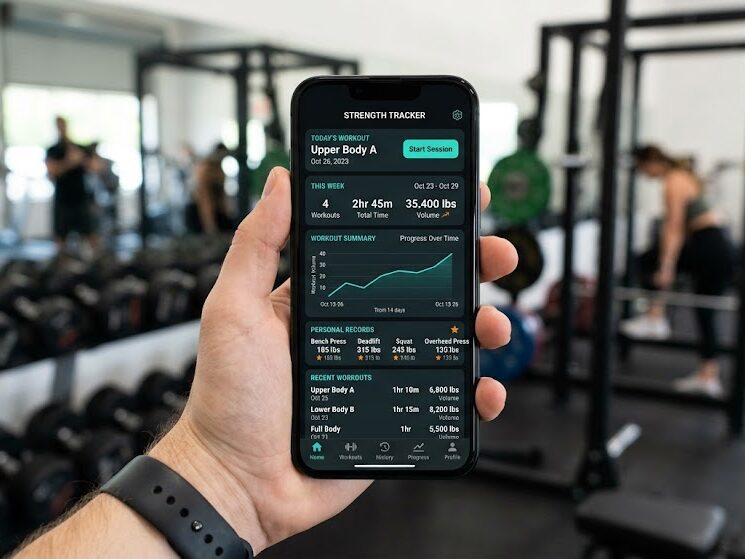
Useful Technology
Helpful tools include:
- Running Watches
- Heart Rate Monitors
- Training Apps
- Workout Tracking Platforms
Popular options include the Strava and TrainingPeaks for monitoring workload and progress.
Free Alternatives
Additionally, spreadsheet templates and training journals can be highly effective for tracking consistency and progressive overload.
What’s Next: Building Your Marathon Strength Foundation
Building your marathon strength foundation requires consistent implementation rather than perfect programming.
Beginner Four-Week Action Plan
Week 1
- 2 strength sessions
- Focus on technique
- Bodyweight exercises only
Week 2
- Add light resistance
- Track workouts
- Monitor soreness
Week 3
- Increase load modestly
- Add single-leg exercises
Week 4
- Evaluate progress
- Adjust volume if needed
- Establish long-term routine
Track These Metrics
Monitor:
- Running pace
- Perceived effort
- Strength progress
- Recovery quality
- Injury frequency
If you’re developing a comprehensive endurance strategy, combine strength work with a marathon nutrition strategy.
When Should You Stop Heavy Strength Training Before a Marathon?
Tapering strength training before race day helps reduce fatigue while preserving the fitness gains developed during marathon preparation.
Most runners should reduce heavy lifting approximately 10–14 days before race day.
If you’re planning your race day marathon preparation, shift toward lighter maintenance sessions during the taper period.
Quotable Insight: Tapering reduces fatigue while maintaining strength adaptations.
Conclusion
Marathon strength training is one of the most effective ways to improve endurance performance, running economy, and injury resilience.
Throughout this guide, we’ve explored how strength training enhances running efficiency, supports muscular endurance, improves stability, and helps runners maintain form deep into a marathon.
Most importantly, consistency matters more than complexity. By performing two to three weekly strength sessions, applying progressive overload, and prioritizing recovery, you can build a stronger body that supports every mile of your marathon journey.
Start small, stay consistent, and trust the process. The strength you build today can become the performance advantage that carries you across your next finish line stronger than ever.
FAQs
What is marathon strength training?
Marathon strength training is a structured resistance-training program designed to improve running performance, build muscular endurance, and reduce injury risk for marathon runners.
Why is strength training important for marathon runners?
Strength training can improve running economy, power, stability, posture, and overall resilience during long-distance races.
How often should marathon runners do strength training?
Most runners benefit from 2–3 strength-training sessions per week alongside their running schedule.
What are the best strength exercises for marathon runners?
Common exercises include squats, lunges, deadlifts, step-ups, calf raises, planks, and glute-focused movements.
Can strength training make you a faster marathon runner?
Yes, improved strength and running economy may help runners maintain pace more efficiently and improve race performance.
Should beginners include strength training in marathon preparation?
Yes, beginners can benefit from strength training to build a solid foundation and reduce the risk of common running injuries.
Can strength training help prevent running injuries?
Yes, stronger muscles, tendons, and joints may help reduce the risk of overuse injuries associated with marathon training.
When should marathon runners do strength workouts?
Many runners schedule strength sessions on easy-run days or after shorter runs to balance recovery and training demands.
Do marathon runners need heavy weights?
Not necessarily. Both bodyweight exercises and moderate resistance training can be effective depending on experience and goals.
Can strength training improve marathon endurance?
Yes, stronger muscles may help delay fatigue, improve running efficiency, and support endurance during long races.