
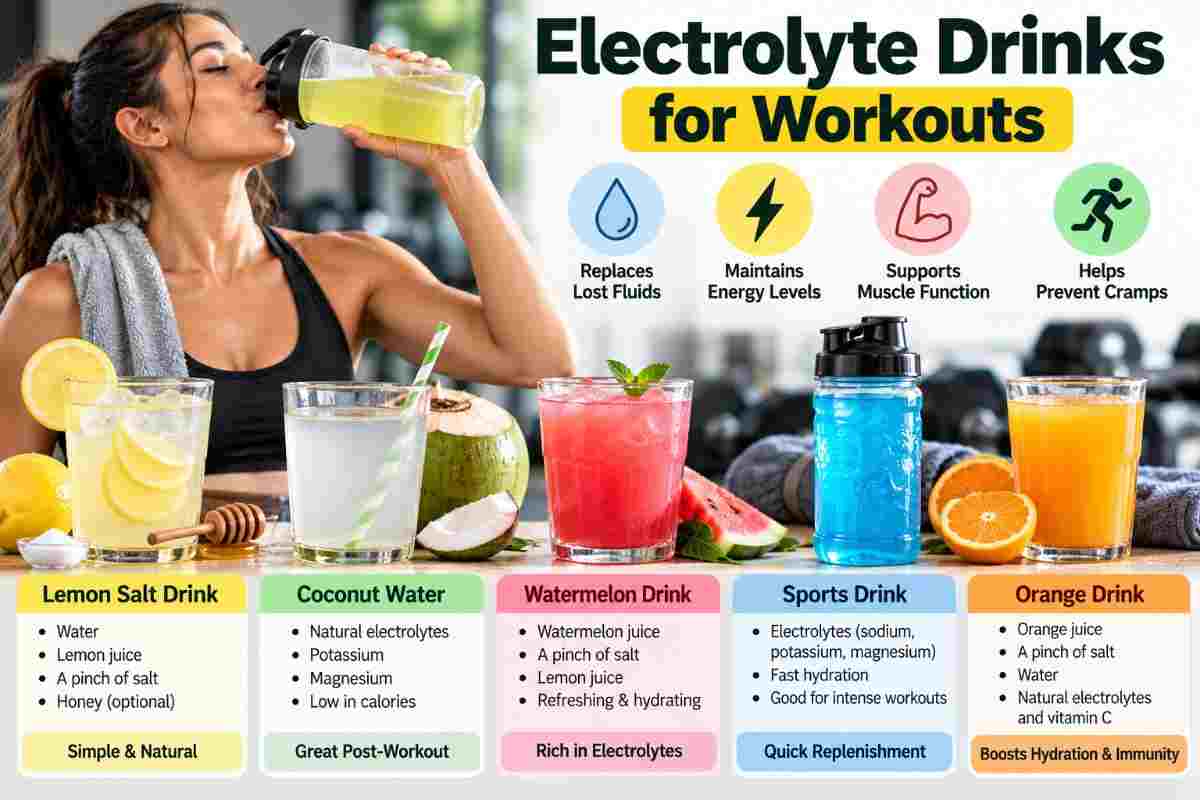
Staying hydrated is essential for a productive workout, whether you’re lifting weights, running, cycling, or performing high-intensity interval training (HIIT). However, while water is sufficient for many exercise sessions, prolonged workouts and heavy sweating can increase your need to replace lost fluids and electrolytes.
Choosing the right electrolyte drink can be confusing. Some beverages contain useful amounts of sodium and carbohydrates, while others provide unnecessary sugar or more sodium than you need.
In this guide, you’ll learn how electrolyte drinks for workouts work, when to choose water over an electrolyte beverage, which ingredients matter most, and how to build a hydration strategy that supports your performance and recovery.
What Are Electrolyte Drinks for Workouts?
Electrolyte drinks for workouts are beverages that provide minerals such as sodium and potassium to help replace electrolytes lost through sweat and support normal fluid balance during exercise. Some formulations also contain magnesium, calcium, and carbohydrates for energy.
Electrolytes are electrically charged minerals that help regulate fluid distribution, nerve signaling, and muscle contractions. Maintaining an appropriate electrolyte balance supports normal body function, particularly during exercise that causes substantial sweating.
Common ingredients include:
- Sodium: Helps maintain fluid balance and replaces sodium lost through sweat.
- Potassium: Supports normal muscle function and fluid balance.
- Magnesium: Contributes to normal muscle and nerve function.
- Calcium: Supports muscle contractions and nerve signaling.
- Carbohydrates: Supply energy during prolonged or demanding exercise.
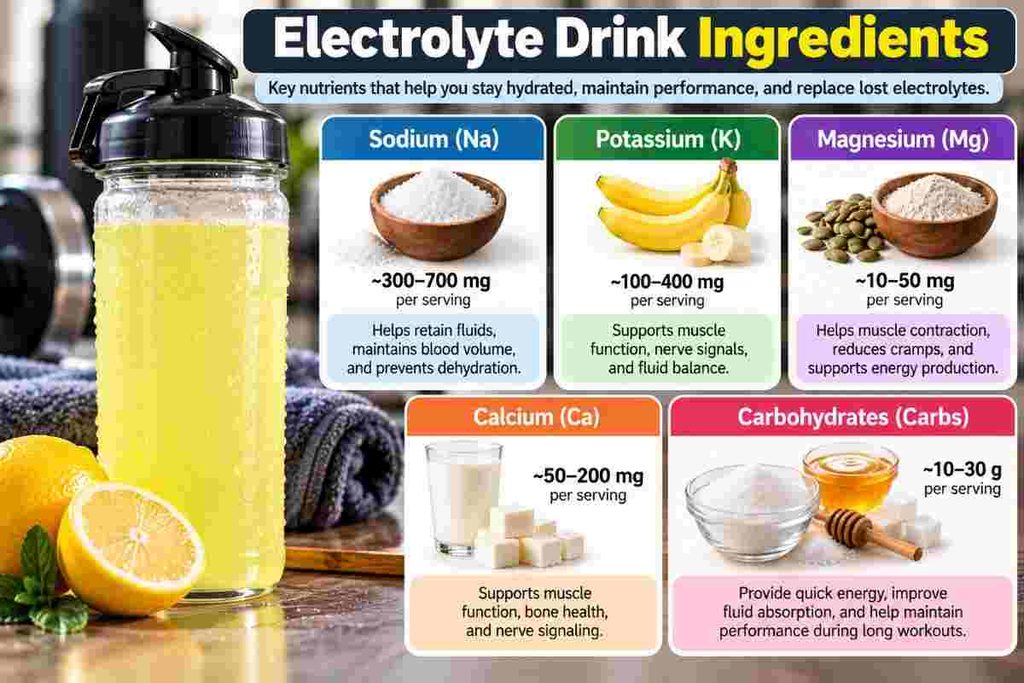
Not every electrolyte drink contains all these ingredients, and their concentrations vary by product. Therefore, checking the nutrition label is more useful than choosing a beverage based on its marketing claims alone.
Why Are Electrolytes Important During Exercise?
Electrolytes are important during exercise because sweating removes both water and minerals, particularly sodium. Replacing these losses can help maintain hydration during prolonged or intense physical activity.
Your electrolyte requirements depend on several factors, including:
- Workout duration and intensity
- Temperature and humidity
- Individual sweat rate and sweat composition
- Clothing and training environment
- Fluid consumed during exercise
For example, someone completing a short indoor strength workout may lose relatively little fluid, while a runner training outdoors in hot weather may sweat heavily for an hour or longer.
Sodium deserves particular attention because it is a major electrolyte lost through sweat. However, sweat rates and sodium losses vary considerably between individuals, so one replacement formula will not suit everyone.
Exercise hydration guidance from the American College of Sports Medicine emphasizes considering exercise duration, environmental conditions, individual sweat rates, and opportunities to drink when planning fluid replacement.
What Is the Best Electrolyte Drink for a Workout?
The best electrolyte drink for a workout is one that matches your exercise duration, sweat losses, carbohydrate needs, and individual health requirements. No single beverage is ideal for every athlete or exercise session.
For example, plain water may be sufficient for a 30-minute gym workout, whereas a carbohydrate-containing sports drink may be useful during a long run in hot weather.
What Types of Electrolyte Drinks Are Available?
Electrolyte drinks are available as ready-to-drink beverages, powders, tablets, and homemade mixtures. Each option offers different levels of convenience, carbohydrates, and electrolyte content.
| Drink type | Main features | Best use case |
|---|---|---|
| Plain water | Hydration without added electrolytes or calories | Short, ordinary workouts |
| Commercial sports drinks | Usually contain water, sodium, and carbohydrates | Prolonged or intense exercise |
| Sugar-free electrolyte drinks | Electrolytes with little or no sugar | When extra carbohydrates are unnecessary |
| Electrolyte powders or tablets | Portable products mixed with water | Convenient hydration during training |
| Homemade electrolyte drinks | Ingredients and concentrations vary by recipe | Home preparation using measured ingredients |
Sports drinks and electrolyte drinks are related but not identical categories. Sports drinks generally combine carbohydrates and electrolytes, whereas some electrolyte beverages focus primarily on mineral replacement.
Are Sugar-Free Electrolyte Drinks Good for Workouts?
Sugar-free electrolyte drinks can be useful when you need additional electrolytes but do not require extra carbohydrates. They may suit people who want to limit added sugar or who sweat heavily during shorter workouts.
However, sugar-free does not automatically mean better. During prolonged endurance exercise, carbohydrates can provide useful energy that a zero-sugar beverage does not supply.
For example, someone lifting weights for 45 minutes may not need carbohydrates from a workout drink, while someone cycling for several hours may benefit from a suitable carbohydrate-containing beverage.
Are Electrolyte Drinks Necessary for Every Workout?
Electrolyte drinks are not necessary for every workout because water and regular meals generally provide sufficient hydration and minerals for many everyday exercise sessions.
For example, someone completing a 20-minute home workout in a cool room can usually drink water according to thirst and eat normal meals afterward.
Additional electrolytes may be helpful when:
- Exercise lasts a prolonged period, particularly beyond an hour.
- You sweat heavily or have unusually salty sweat.
- You train in hot or humid conditions.
- You perform prolonged endurance exercise.
- You need to replace substantial fluid and sodium losses.
Importantly, workout duration alone does not determine electrolyte needs. Temperature, intensity, sweat rate, and individual tolerance also influence the amount of fluid and sodium you may need.
Is Water Better Than an Electrolyte Drink for Exercise?
Water is generally the simplest choice for short, low-to-moderate-intensity workouts, while electrolyte drinks may be more useful when exercise produces substantial sweat losses. Neither option is universally better.
Water provides fluid without added sugar, calories, or sodium. Electrolyte drinks provide additional minerals, and some also deliver carbohydrates that can support prolonged exercise.
Consider these examples:
- Short gym workout: Water is often sufficient.
- Moderate exercise in a cool environment: Water and normal meals will usually meet hydration needs.
- Long summer run: An electrolyte drink may help replace some sodium lost through sweating.
- Extended cycling session: Fluids, electrolytes, and carbohydrates may all be useful.
The practical rule is simple: Choose water for routine hydration and consider electrolyte drinks when the demands of your workout justify them.
What Ingredients Should You Look for in an Electrolyte Drink?
A suitable electrolyte drink contains an appropriate amount of sodium for your sweat losses and, when necessary, enough carbohydrates to support exercise. Potassium and other minerals may also contribute, but sodium often deserves the most attention during substantial sweating.
How Much Sodium Should an Electrolyte Drink Contain?
The appropriate sodium concentration depends on sweat losses, exercise conditions, workout duration, and individual needs. There is no universal sodium target that suits every workout.
For example, someone exercising briefly in an air-conditioned gym may not need a dedicated sodium replacement drink. An endurance athlete training for several hours in the heat may need a more carefully planned hydration strategy.
When comparing electrolyte drinks, check the following:
- Sodium per serving: Look at the actual amount in milligrams.
- Serving size: Check whether the listed amount applies to the whole bottle or a smaller portion.
- Carbohydrates and added sugar: Determine whether the drink provides useful exercise fuel.
- Other electrolytes: Check the amounts of potassium, magnesium, and calcium.
- Total fluid volume: Consider how much water each serving provides.
People with hypertension, kidney disease, heart conditions, or prescribed sodium restrictions should seek medical advice before increasing their electrolyte intake.
Do Carbohydrates and Sugar Matter?
Carbohydrates matter because they provide energy during prolonged exercise, but they are not essential in every workout drink. The appropriate amount depends on how long and intensely you exercise and whether you obtain energy from other sources.
A sugar-free beverage may suit a short strength workout, while a carbohydrate-containing sports drink may be useful during an extended cycling session.
If you track your overall nutrition, a macro calculator can help you estimate your daily carbohydrate requirements. Remember that daily carbohydrate targets and during-workout fueling serve different purposes.
When Should You Drink Electrolytes Before, During, or After Exercise?
Electrolytes are most useful when they help you manage fluid and sodium losses before, during, or after demanding exercise. Your timing should reflect your workout and how much you sweat.
Before a Workout
Begin exercise adequately hydrated. Drink water with meals and before training rather than forcing yourself to consume large amounts immediately before exercising.
A regular gym session after a normal day of eating and drinking usually does not require a special electrolyte preload.
However, if you are preparing for a prolonged outdoor workout in hot weather, consider your expected sweat losses and access to fluids when planning your hydration strategy.
During a Workout
During exercise, drink according to thirst and your training conditions. Longer sessions, heavy sweating, and hot weather may increase your need for both fluids and electrolytes.
For example, a runner training for 90 minutes in humid conditions may benefit from planning fluid access and testing an appropriate electrolyte drink during training.
Avoid drinking excessive amounts simply to prevent thirst. Overconsumption of fluid during prolonged exercise can cause exercise-associated hyponatremia, a potentially dangerous reduction in blood sodium concentration.
After a Workout
After exercise, replace the fluid you lost and eat a balanced meal. If you sweated substantially, a sodium-containing beverage may help your body retain the fluid you consume.
For example, after a long outdoor cycling session, you could combine appropriate fluids with a meal containing carbohydrates, protein, and sodium.
For more guidance, explore Overtraining Recovery Workout and High Protein Plant-Based Foods. Hydration supports recovery, but it does not replace adequate food, sleep, and rest.
Which Electrolyte Drinks Are Best for Running, HIIT, and Weight Training?
The best electrolyte drinks for running, HIIT, and weight training depend on workout duration, sweating, and environmental conditions rather than the exercise category alone.
| Workout | Practical hydration choice | When electrolytes may help |
|---|---|---|
| Weight training | Water for most routine sessions | Long sessions, hot gyms, or heavy sweating |
| HIIT | Water for shorter classes | Extended sessions or substantial sweat losses |
| Running | Water for many short runs | Longer runs, hot weather, or heavy sweating |
| Cycling | Water for shorter rides | Long rides requiring fluid, sodium, and potentially carbohydrates |
| Endurance training | Individualized fluid and fueling plan | Prolonged activity with significant sweat losses |
| Outdoor workouts in heat | Regular access to fluids | Heavy sweating and extended exposure to heat |
What About Electrolyte Drinks for Muscle Recovery?
Electrolyte drinks can support post-workout hydration when you have lost substantial fluid and sodium through sweating. However, they do not independently repair muscle tissue or guarantee faster recovery.
For example, after a sweaty workout, a sodium-containing beverage may help replace losses, while a protein-rich meal supplies nutrients needed for muscle repair.
If you are planning your recovery nutrition, a protein intake calculator can help estimate your protein requirements. The best approach combines hydration, appropriate nutrition, sufficient sleep, and sensible training progression.
Do Electrolyte Drinks Help Prevent Muscle Cramps?
Electrolyte drinks do not reliably prevent every exercise-related muscle cramp because cramps can have multiple causes, including neuromuscular fatigue and individual susceptibility.
For example, a runner may experience cramps near the end of a demanding race even after drinking an electrolyte beverage. Replacing fluids and sodium may help in some situations, but it is not a guaranteed solution.
Therefore, avoid relying on electrolyte supplements alone to prevent cramps. Adjust training loads, manage heat exposure, and develop a hydration plan suited to your individual needs.
Are Homemade Electrolyte Drinks Effective for Exercise?
Homemade electrolyte drinks can provide fluid and electrolytes when prepared with suitable ingredients and measured quantities. However, their sodium and carbohydrate concentrations vary depending on the recipe.
For example, water mixed with measured amounts of sugar and salt can provide fluid, sodium, and carbohydrates. Adding lemon juice may improve the taste, but it does not automatically create a balanced sports drink.
When preparing homemade electrolyte beverages:
- Use a reliable recipe with measured ingredients.
- Avoid estimating salt quantities by eye.
- Consider whether you need carbohydrates as well as electrolytes.
- Keep preparation equipment clean and store the drink safely.
- Do not treat homemade mixtures as medical rehydration solutions unless they follow an appropriate clinical formulation.
Homemade drinks may be convenient for everyday training, but people undertaking prolonged endurance exercise should pay particular attention to the drink’s composition and their individual fluid and sodium losses.
Can You Drink Electrolytes Every Day?
You can consume electrolyte drinks daily when they fit your hydration needs, but most people do not need them every day. Regular meals and ordinary water usually provide sufficient electrolytes for routine activities and shorter workouts.
For example, someone exercising moderately in a cool environment may not gain meaningful benefits from replacing water with a high-sodium sports drink.
Daily use may also add unnecessary sodium, sugar, or calories, depending on the product. People with medical conditions or prescribed fluid and electrolyte restrictions should follow their healthcare professional’s advice.
Can You Drink Too Many Electrolytes During a Workout?
Yes, excessive electrolyte intake can cause problems, and drinking too much fluid can be dangerous even when the beverage contains electrolytes. Safe hydration depends on balancing fluid intake with individual losses.
For example, consuming large volumes of water during a long race without accounting for fluid losses can dilute blood sodium and contribute to exercise-associated hyponatremia.
Excessive sodium intake may also be unsuitable for people with certain medical conditions. Follow product serving instructions, avoid forced drinking, and seek professional guidance when your hydration needs are medically complicated.
The goal is not to consume as many electrolytes as possible. It is to replace what you need without overdoing fluid, sodium, or other ingredients.
What Should You Look for on an Electrolyte Drink Label?
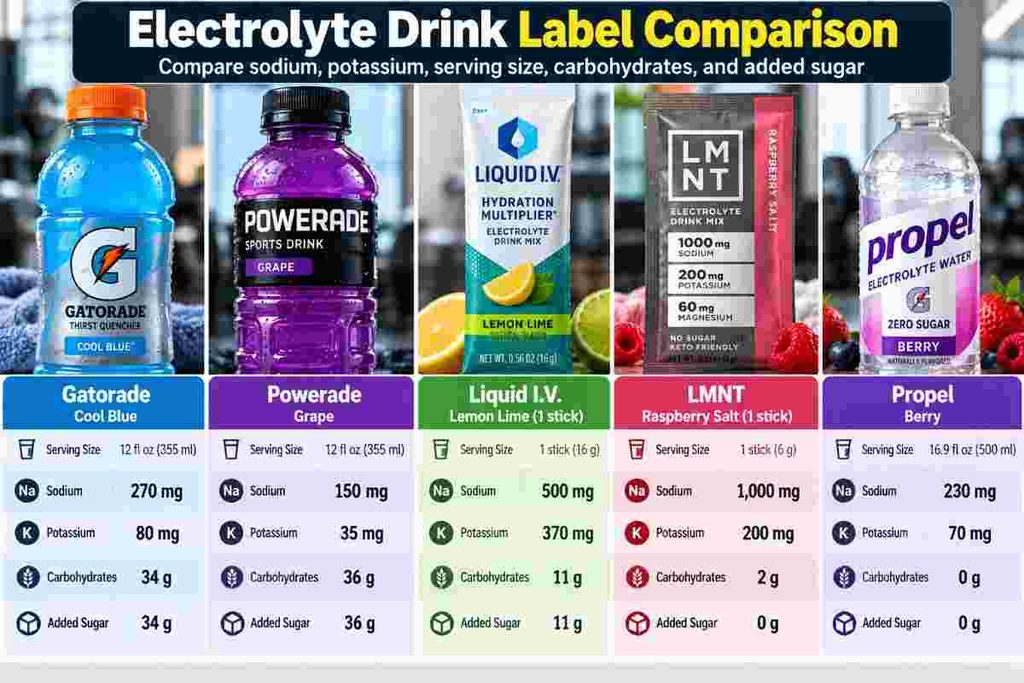
An electrolyte drink label helps you determine how much sodium, carbohydrate, sugar, and fluid each serving provides. Comparing these details is more useful than relying on marketing terms such as advanced hydration or performance formula.
| Label detail | What to check | Why it matters |
|---|---|---|
| Serving size | Millilitres per serving or bottle | Prevents incorrect comparisons |
| Sodium | Milligrams per serving | Helps assess sodium replacement |
| Potassium | Milligrams per serving | Shows additional electrolyte content |
| Carbohydrates | Grams per serving | Indicates potential exercise fuel |
| Added sugar | Grams per serving | Helps assess sugar intake |
| Calories | Calories per serving | Useful for overall nutrition planning |
| Directions | Water required for powders or tablets | Helps achieve the intended concentration |
For example, two products may both advertise electrolytes, yet one may contain substantial sodium and carbohydrates while another contains very little of either.
Compare the actual numbers per serving and determine whether you need both electrolytes and energy for your workout. If you use powders or tablets, follow the dilution instructions rather than making the mixture more concentrated.
How to Build a Simple Workout Hydration Plan
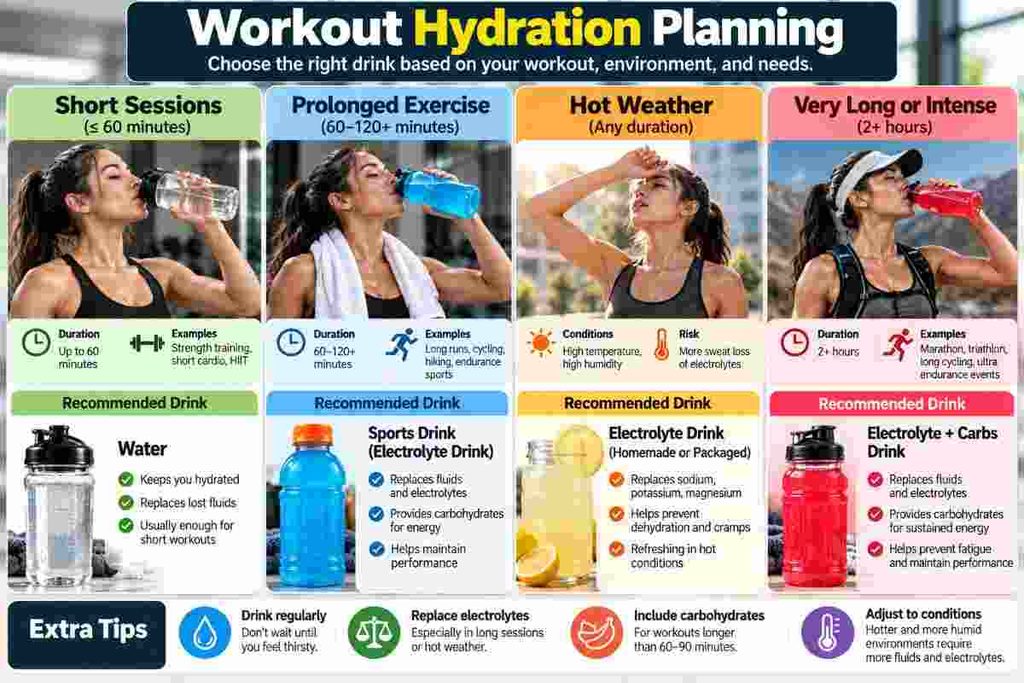
A practical workout hydration plan matches fluid intake and electrolyte replacement to exercise duration, sweat losses, and environmental conditions. Start with a simple approach and adjust it as you learn what works for your body.
- Start with water. Use water for many short, low-to-moderate-intensity workouts.
- Assess your conditions. Consider workout duration, temperature, intensity, and how heavily you sweat.
- Choose the right drink. Consider an electrolyte beverage for prolonged exercise or substantial sweat losses, and include carbohydrates when extended activity requires extra fuel.
- Test during training. Try your hydration strategy during ordinary sessions before relying on it for a race or demanding event.
- Review your response. Pay attention to thirst, comfort, exercise conditions, and recovery rather than following a rigid fluid target.
- Avoid overdrinking. Do not force fluids beyond your needs simply because you are exercising.
Tracking body weight immediately before and after a representative workout can help estimate sweat loss when measurements are taken under consistent conditions. Account for fluid consumed and urine produced; a single measurement is only an estimate, not a universal hydration prescription.
What’s Next? Choose Your Workout Hydration Strategy
Your next step is to choose a drink based on the demands of your actual workout rather than buying a supplement simply because it is marketed to athletes.
For example, use water for a routine 30-minute gym session, consider an electrolyte drink for a prolonged run in hot weather, and evaluate carbohydrate needs during extended endurance exercise.
Additionally, prioritize balanced meals, adequate sleep, and consistent training. If you have kidney or heart disease, hypertension, or prescribed sodium or fluid restrictions, consult a healthcare professional before changing your electrolyte intake.
Conclusion
Electrolyte drinks for workouts can help replace sodium and other minerals lost through sweat, particularly during prolonged exercise, heavy sweating, and hot-weather training. However, water remains sufficient for many ordinary workouts, and additional electrolytes are not automatically beneficial.
Ultimately, choose a beverage that matches your workout duration, sweat losses, carbohydrate requirements, and health needs. By checking nutrition labels and adjusting your hydration strategy to the conditions, you can stay hydrated without unnecessary sugar, sodium, or supplementation.
The most effective approach is simple: understand your workout, replace the fluids and electrolytes you actually lose, and make hydration part of a balanced fitness and recovery routine.
FAQs
What is the best electrolyte drink for workouts?
Water suits short workouts, while electrolyte drinks help during prolonged exercise and heavy sweating.
Are electrolyte drinks better than water?
No. Water is usually enough for everyday workouts.
When should I drink electrolytes?
Drink them during or after prolonged exercise and heavy sweating.
Are sugar-free electrolyte drinks good for workouts?
Yes, when you need electrolytes without extra sugar or carbohydrates.
Do electrolyte drinks help build muscle?
No. They support hydration but do not directly build muscle.
Do electrolyte drinks prevent muscle cramps?
Not always. Cramps can have several causes, including muscle fatigue.
Can I drink electrolytes every day?
Yes, but most people do not need them daily.
How long should I exercise before drinking electrolytes?
They may help during workouts lasting over an hour, especially in hot weather.
Can electrolyte drinks contain too much sodium?
Yes. Check the label and consider your health needs.
Are homemade electrolyte drinks effective?
Yes, when prepared using a suitable recipe and measured ingredients.
Can you drink too much water during exercise?
Yes. Excessive drinking can dangerously lower blood sodium levels.
What should I check before buying electrolyte drinks?
Check sodium, potassium, sugar, carbohydrates, calories, and serving size.
1 thought on “Electrolyte Drinks for Workouts: Benefits, Hydration & Best Options”