
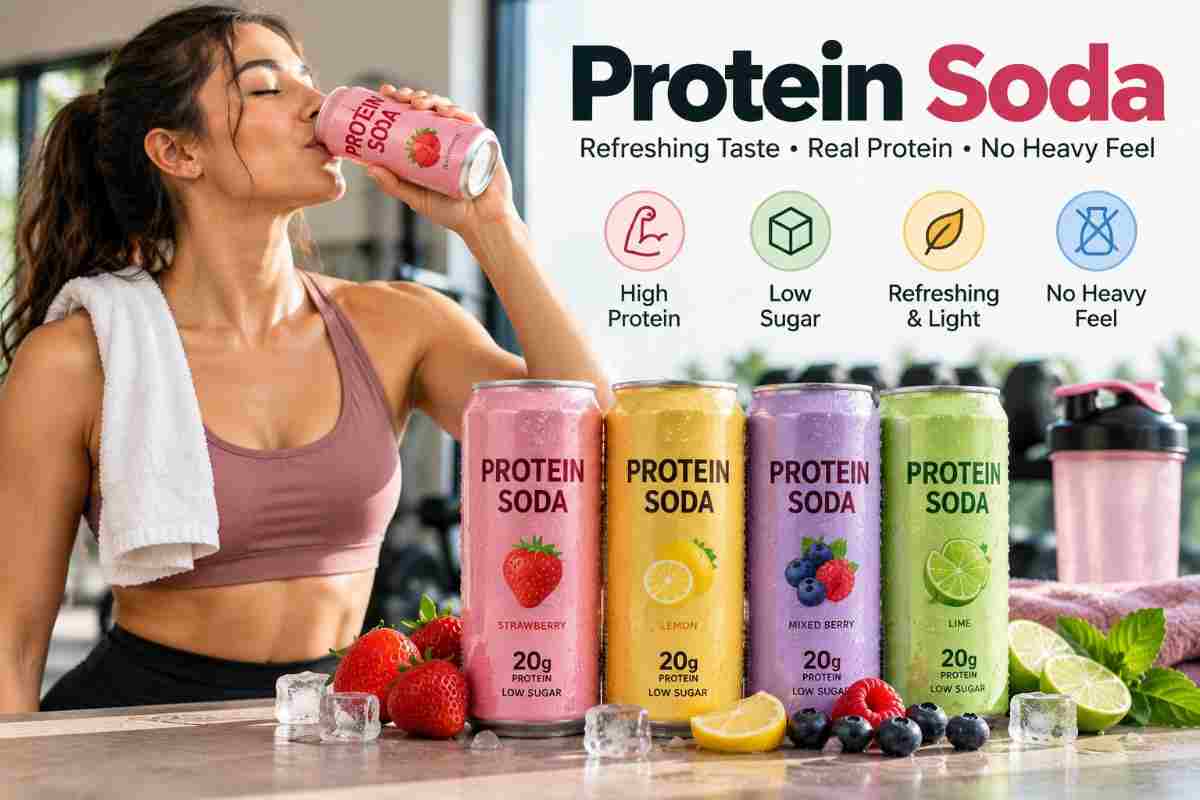
Protein shakes and high-protein snacks are popular among fitness enthusiasts, but protein soda offers a fizzy alternative for increasing daily protein intake. Combining carbonation, flavor, and added protein, this beverage appeals to people who prefer lighter drinks over traditional creamy shakes.
However, not all protein sodas offer the same nutritional value. In this guide, you’ll learn about protein soda benefits, nutrition, potential side effects, and how to choose the right option for your fitness goals.
What Is Protein Soda?
Protein soda is a carbonated beverage containing added protein in a ready-to-drink format. Unlike regular soda, which generally provides little protein, protein soda combines carbonation and flavoring with a protein ingredient.
Some products use whey protein isolate, fruit flavorings, acidity regulators, and low-calorie sweeteners. Ingredients, calories, and protein content vary by manufacturer.
What Makes Protein Soda Different From Regular Soda?
Regular soda often contains added sugar without meaningful protein, while protein soda provides protein that supports muscle maintenance and tissue repair.
Replacing a sugary soft drink with a low-sugar protein soda may increase protein intake while reducing added sugar. However, check the nutrition label because protein soda is not automatically healthier.
What Ingredients Are Found in Protein Soda?
Common protein soda ingredients include:
- Protein: Whey protein isolate or another protein source.
- Carbonated water: Creates the fizzy texture.
- Sweeteners: May include sugar or non-sugar alternatives.
- Flavorings: Provide fruit or other flavors.
- Acidity regulators: Help balance flavor and maintain product characteristics.
Whey protein isolate is derived from milk and contains all nine essential amino acids. It may suit people who consume dairy but is unsuitable for those with a milk allergy.
What Are the Benefits of Protein Soda?
Protein soda can provide convenient dietary protein and offer an alternative to traditional protein shakes. Its benefits depend on its ingredients, serving size, overall diet, and exercise routine.
1. Convenient Daily Protein Intake
Protein soda can help you meet your daily protein target when regular meals do not provide enough. For example, a drink containing 20 grams of protein contributes 20 grams toward your daily intake.
Use a Daily Protein Intake Calculator to estimate your protein requirements.
2. Muscle Growth and Recovery
Protein supplies amino acids that help repair and maintain muscle tissue. However, protein soda supports muscle development only as part of an appropriate diet and resistance-training program.
The International Society of Sports Nutrition suggests that most exercising individuals can benefit from approximately 1.4–2.0 grams of protein per kilogram of body weight daily.
Source: International Society of Sports Nutrition, 2017.
The organization also identifies approximately 20–40 grams of high-quality protein per serving as a general guideline for many exercising adults, although individual needs vary.
Source: International Society of Sports Nutrition, 2017.
3. A Lower-Sugar Beverage Alternative
Some protein sodas contain little or no added sugar. Choosing one instead of a sugary soft drink may help reduce added sugar intake, depending on the products being compared.
The FDA lists 50 grams of added sugar as the Daily Value for a 2,000-calorie diet.
Source: U.S. Food and Drug Administration, 2026.
Always compare calories, added sugar, and serving sizes before choosing a beverage.
Is Protein Soda Healthy to Drink Every Day?
Protein soda can fit into a balanced diet, but drinking it daily is not necessary for good health. Its value depends on your protein needs, overall nutrition, and tolerance.
Before purchasing, check:
- Protein: How many grams does each serving provide?
- Calories: Does it fit your daily energy needs?
- Added sugar: Is the amount appropriate for your goals?
- Sweeteners and sodium: Do they suit your preferences and diet?
- Allergens: Does it contain milk or other ingredients you need to avoid?
Foods such as eggs, lentils, beans, yogurt, and tofu can also provide protein alongside other nutrients.
Is Protein Soda Good for Weight Loss?
Protein soda may support weight management when it helps you meet protein needs without adding excessive calories. However, protein soda does not directly burn fat.
For example, replacing a high-calorie sugary drink with a lower-calorie protein soda may reduce calorie intake. Adding protein soda to your usual diet without adjusting anything else may increase your total calories.
For sustainable fat loss, follow a calorie deficit diet plan.
How Much Protein Does Protein Soda Contain?
Protein content varies by brand, formulation, and serving size. There is no standard amount that applies to every protein soda.
| Beverage | Protein content | Typical characteristics |
|---|---|---|
| Protein soda | Varies by product | Fizzy, often fruit-flavored |
| Protein shake | Varies by product | Usually creamy or thick |
| Protein water | Varies by product | Light and usually non-carbonated |
| Regular soda | Usually negligible | Often sweetened |
For example, a hypothetical 330 mL can containing 20 grams of protein contributes 20 grams toward your daily target.
Compare protein content alongside calories, sugar, sodium, and ingredients rather than relying solely on front-label claims.
Protein Soda vs. Protein Shake vs. Protein Water
Protein soda, protein shakes, and protein water can all provide dietary protein, but their textures and formulations differ.
| Feature | Protein soda | Protein shake | Protein water |
|---|---|---|---|
| Texture | Fizzy and light | Often creamy | Usually light |
| Carbonation | Yes | Usually no | Usually no |
| Protein source | Varies | Whey, casein, or plant protein | Varies |
| Calories and sugar | Product-dependent | Product-dependent | Product-dependent |
Choose protein soda if you enjoy fizzy drinks, a protein shake if you prefer a creamy texture, or protein water if you want a lighter non-carbonated beverage.
What Are the Potential Side Effects of Protein Soda?
Protein soda may cause digestive discomfort depending on carbonation, sweeteners, protein ingredients, and individual tolerance.
Potential side effects include:
- Bloating and gas: Carbonation may increase belching or bloating.
- Digestive discomfort: Some sweeteners or ingredients may not agree with everyone.
- Milk allergy: Whey-based products contain milk proteins.
- Lactose intolerance: Suitability depends on the specific formulation and personal tolerance.
- Extra calories and sugar: Some products may contain more than expected.
If a protein soda causes discomfort, try a smaller serving or switch to a non-carbonated alternative. People with kidney disease or medically prescribed protein restrictions should consult a qualified healthcare professional before increasing protein intake.
How to Choose the Best Protein Soda
The best protein soda provides useful protein, fits your nutritional goals, suits your dietary needs, and offers reasonable value.
Use this buying checklist:
- Protein content: Compare grams per serving.
- Protein source: Check whether it uses whey or another protein.
- Calories and sugar: Choose a product that fits your goals.
- Ingredients: Review sweeteners, additives, and allergens.
- Taste: Choose a flavor and carbonation level you enjoy.
- Price: Compare the cost per serving and per 10 grams of protein.
Product labels and prices can change, so verify them before purchasing.
How to Use Protein Soda in Your Daily Diet
Protein soda can be a convenient addition to meals or snacks when you need extra protein. However, it should not replace balanced meals or adequate hydration.
You could drink it after exercise, alongside lunch, or while travelling. The best timing is whatever helps you meet your daily protein needs.
A practical approach is to:
- Eat protein-rich foods regularly.
- Use protein soda when convenient, not as an essential supplement.
- Drink water throughout the day.
- Track protein and calories if you have specific fitness goals.
Use a Macro Calculator to estimate your calorie and macronutrient targets. For meal ideas, explore high-protein foods for muscle growth.
Can You Drink Protein Soda After a Workout?
Yes, protein soda can be consumed after exercise if it provides a useful amount of protein and agrees with your digestive system. It is one possible post-workout option, not a requirement for recovery.
Pairing it with a balanced meal can provide additional nutrients, including carbohydrates and fats. Protein soda should not replace water as your main hydration drink, especially after heavy sweating.
Does Protein Soda Contain Sugar, Sweeteners, or Caffeine?
Protein soda may contain added sugar, non-sugar sweeteners, caffeine, or none of these ingredients. The formulation depends on the manufacturer.
The FDA recommends limiting added sugars to less than 10% of daily calories.
Source: U.S. Food and Drug Administration, 2026.
Check the nutrition label and ingredient list, particularly if you monitor sugar intake or are sensitive to caffeine.
Can Protein Soda Replace a Protein Shake or Meal?
Protein soda can replace a protein shake when both provide suitable amounts of protein and serve the same nutritional purpose. However, it is not automatically equivalent to a complete meal.
A balanced meal can provide protein, carbohydrates, fats, fiber, vitamins, and minerals. A protein beverage may not supply all these nutrients.
Choose protein soda for convenience, but prioritize balanced meals for broader nutrition.
How to Compare Protein Soda Nutrition Labels
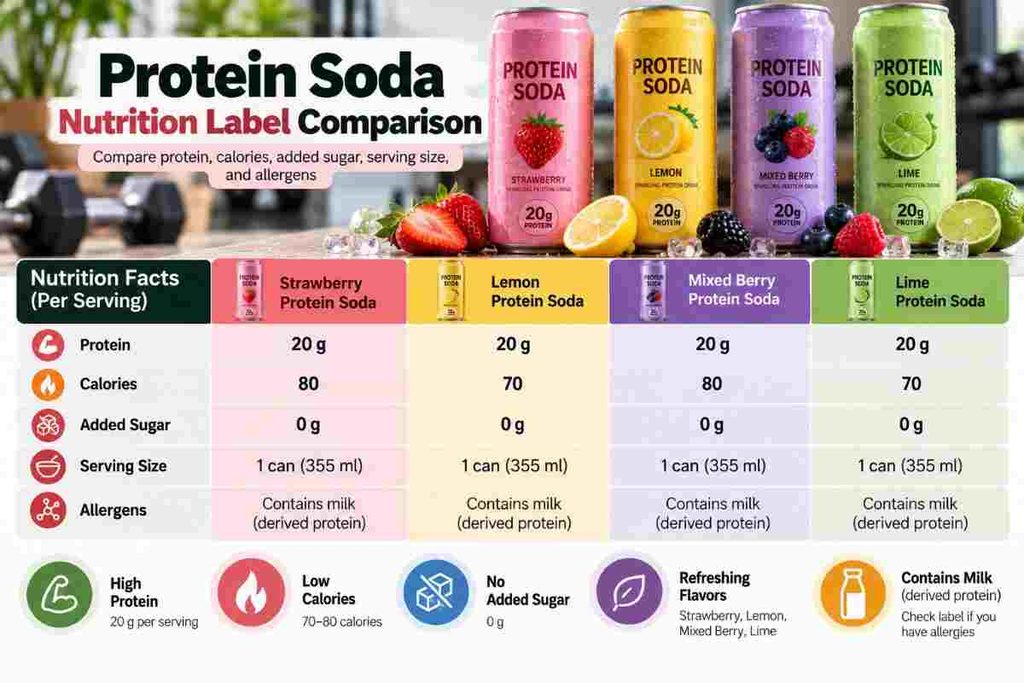
Comparing nutrition labels helps you identify products that provide useful protein without unwanted amounts of sugar or calories.
Check the serving size, protein, calories, added sugar, sodium, sweeteners, and allergens. If a bottle contains multiple servings, calculate the total nutrients you would consume by drinking the entire container.
Compare Price and Protein Value
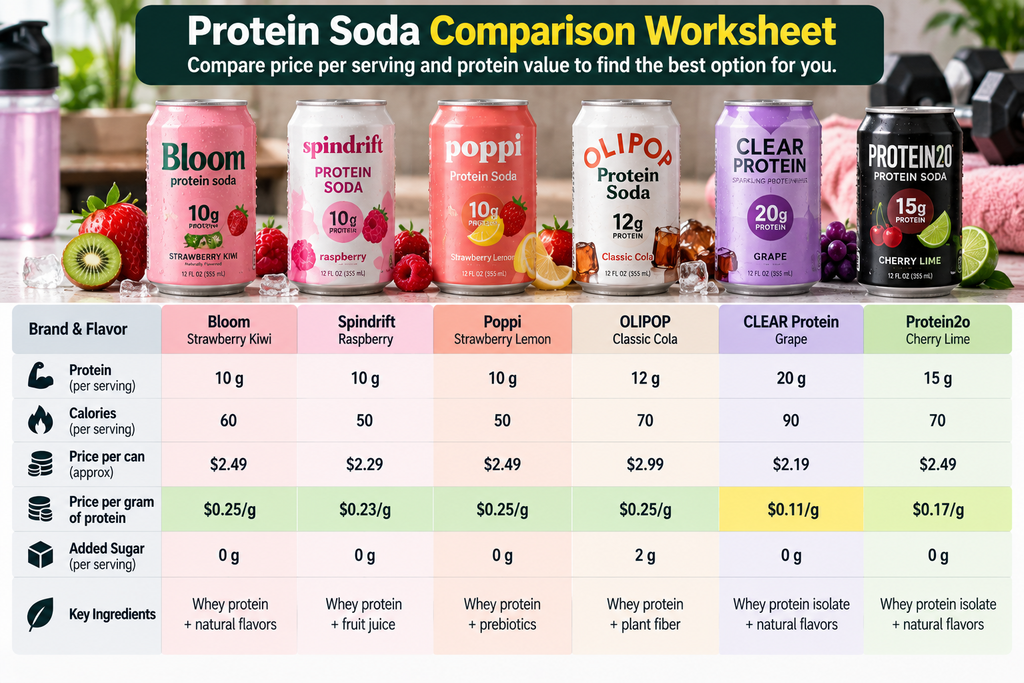
Calculate the cost per serving and compare the amount of protein delivered. You can also calculate the price per 10 grams of protein.
For example, a hypothetical ₹120 drink containing 20 grams of protein costs ₹60 per 10 grams of protein. A hypothetical ₹90 drink containing 15 grams of protein also costs ₹60 per 10 grams of protein.
Conclusion:
Protein soda can be a convenient way to increase dietary protein while enjoying a carbonated beverage. Its value depends on protein content, ingredients, calories, sugar, price, and how well it fits your overall diet.
However, it is not a shortcut to muscle growth or weight loss, and it is not automatically healthier than other protein drinks. Prioritize balanced meals, regular exercise, adequate hydration, and a suitable daily protein intake.
The bottom line: Choose protein soda because it suits your nutritional needs and preferences, not simply because it is trending.
FAQs
What is protein soda?
Protein soda is a fizzy drink containing added protein.
Is protein soda healthy?
Yes, when it fits your nutritional needs and diet.
Does protein soda help build muscle?
Yes, it can support muscle growth alongside exercise and proper nutrition.
How much protein does protein soda contain?
Protein content varies by brand. Check the nutrition label.
Can I drink protein soda every day?
Yes, if it suits your diet and digestive tolerance.
Is protein soda good for weight loss?
It may help manage calories when replacing higher-calorie drinks.
Is protein soda better than a protein shake?
Neither is universally better. Choose based on your preferences and nutritional needs.
Can I drink protein soda after a workout?
Yes, it can provide protein after exercise.
Does protein soda contain sugar or caffeine?
Some products do. Check the ingredient list.
Can protein soda replace a meal?
No, it may lack essential nutrients found in balanced meals.
Is protein soda suitable for vegetarians?
Some products are suitable, depending on their protein source and ingredients.