
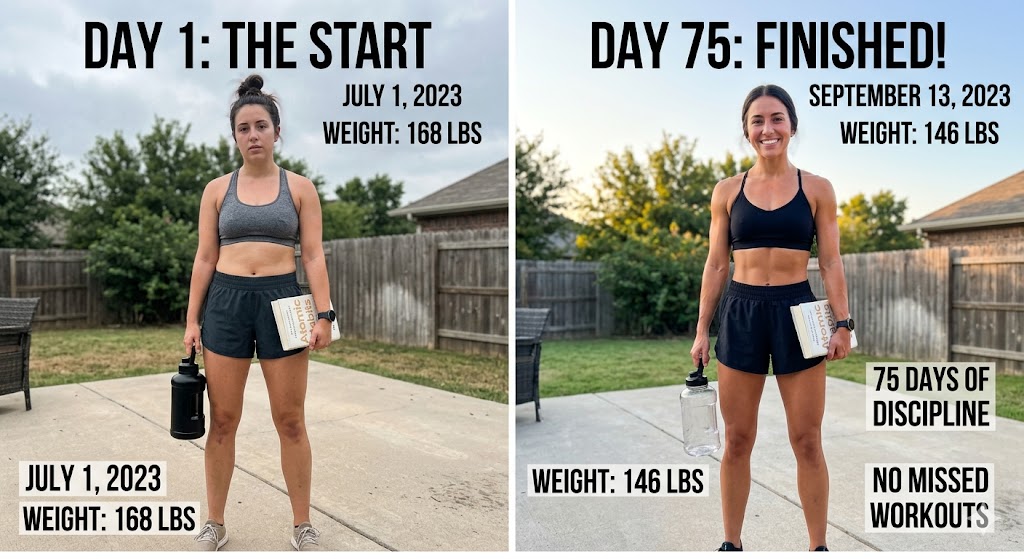
You’ve probably seen dramatic 75 Hard transformation photos and heard people talk about how the challenge changed their lives. What many people don’t realize is that success isn’t just about following the rules—it’s about understanding how to complete the program without burning out or restarting repeatedly.
While many people begin 75 Hard hoping to lose weight or improve their fitness, the challenge is actually designed to develop something even more valuable: mental toughness. Through 75 days of consistent action, participants learn discipline, accountability, and resilience by completing a set of daily tasks without exception.
In this guide, you’ll learn exactly what 75 Hard is, how it works, its benefits and risks, and the best strategies for successfully completing all 75 days.
What Is the 75 Hard Challenge and How Does It Work?
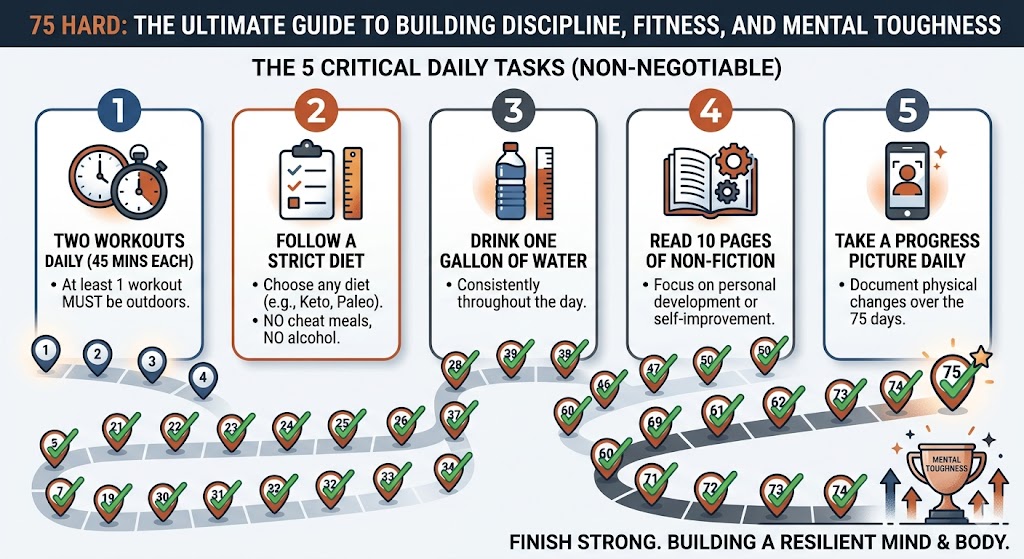
75 Hard is a 75-day mental toughness challenge that combines fitness, nutrition, hydration, reading, and personal accountability into a structured daily routine.
Although many people join the challenge for weight loss or fitness improvements, the primary goal is developing discipline and self-control through consistent action. Participants must complete a set of required tasks every day for 75 consecutive days. Missing even one task means restarting the challenge from Day 1.
Unlike traditional fitness programs, 75 Hard focuses on building mental resilience by requiring participants to follow through on commitments regardless of motivation, weather, or life circumstances.
Statistic: Approximately 25% of adults meet recommended aerobic and strength-training guidelines consistently.
Source: CDC, 2024.
Who Created the 75 Hard Program and Why?
The 75 Hard program was created by Andy Frisella as part of the Live Hard program.
Frisella developed the challenge to help people strengthen discipline, confidence, and resilience. Rather than focusing solely on physical transformation, the program encourages participants to improve their ability to execute commitments consistently.
The philosophy behind 75 Hard is simple: mental toughness is built through repeated action. Completing difficult tasks every day teaches persistence, accountability, and self-control.
Many participants discover that the challenge changes not only their fitness level but also their approach to work, relationships, and personal goals.
Why Is the 75 Hard Challenge So Popular?
The popularity of 75 Hard comes from its unique combination of fitness, personal development, and habit-building.
Unlike many fitness programs that offer flexibility, 75 Hard provides a clear set of rules and expectations. Participants know exactly what must be completed each day, eliminating much of the decision fatigue that often derails progress.
Social media has also played a major role in the challenge’s growth. Transformation stories, progress updates, and success testimonials have inspired millions of people to take on the challenge.
Many participants report improvements in:
- Physical fitness
- Productivity
- Confidence
- Time management
- Self-discipline
- Consistency
The challenge appeals to people who want structure and accountability while pursuing personal growth.
Why 75 Hard Matters
One of the most valuable lessons of 75 Hard is learning to keep promises to yourself.
Self-discipline is closely linked to success in health, fitness, business, and personal development. The challenge reinforces this skill by requiring participants to complete daily tasks consistently for 75 days.
Through repetition, participants often develop habits that continue long after the challenge is complete.
For more insights, see:
Habit formation during 75 Hard is driven by daily repetition of structured behaviors over a 75-day period.
What Are the Official Rules of 75 Hard?
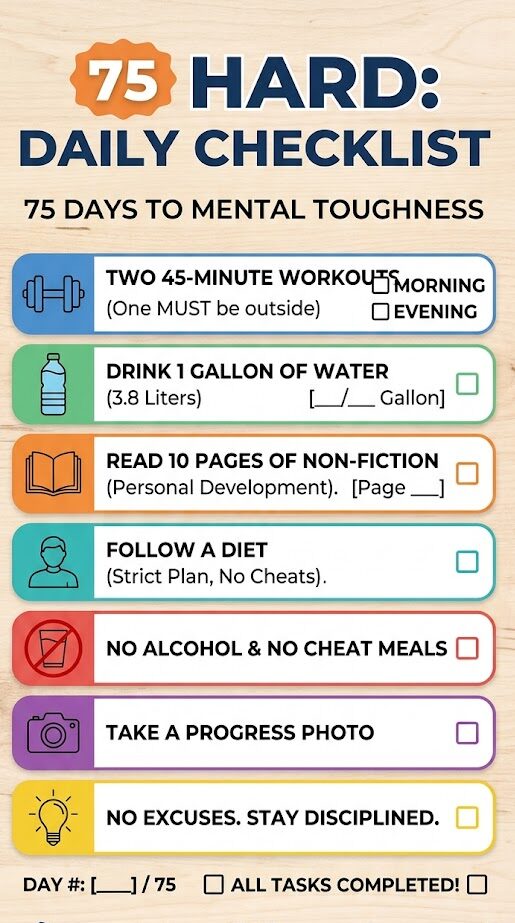
The challenge consists of several non-negotiable tasks that must be completed every day.
The Official Daily Tasks
- Follow a diet of your choice
- No cheat meals
- No alcohol
- Drink one gallon (3.78 liters) of water
- Complete two 45-minute workouts
- One workout must be outdoors
- Read 10 pages of a nonfiction book
- Take a daily progress photo
Rule Summary
| Rule | Requirement |
|---|---|
| Workouts | Two 45-minute sessions daily |
| Outdoor Training | One workout outdoors |
| Diet | Follow chosen diet plan |
| Alcohol | Not allowed |
| Cheat Meals | Not allowed |
| Water | 1 gallon daily |
| Reading | 10 pages nonfiction |
| Progress Photo | Daily |
| Miss a Task? | Restart from Day 1 |
Missing any requirement during 75 Hard requires participants to restart the challenge from Day 1.
Is 75 Hard a Fitness Program or a Mental Toughness Program?
Many people assume 75 Hard is simply a workout challenge, but that isn’t the case.
75 Hard is primarily a mental toughness program that uses fitness as one tool for developing discipline. The challenge intentionally creates situations that test consistency and commitment.
For example, completing an outdoor workout during poor weather conditions requires participants to follow through even when conditions are less than ideal.
The primary goal of 75 Hard is to build discipline, consistency, and resilience rather than simply promote weight loss.
How Do You Prepare for the 75 Hard Challenge?
Preparation is one of the most important factors influencing success.
Many people fail the challenge not because the tasks are impossible but because they underestimate the planning required.
Set Clear Goals
Before starting, identify why you want to complete 75 Hard.
Common goals include:
- Weight loss
- Improved fitness
- Increased discipline
- Better productivity
- Personal growth
For additional guidance, see:
Plan Your Workouts
Scheduling workouts in advance significantly reduces the risk of missing sessions.
Examples include:
- Morning outdoor walks
- Evening strength training
- Weekend hiking
- Yoga or mobility sessions
Related resources:
Plan Your Nutrition
Selecting a diet before Day 1 helps eliminate unnecessary decisions.
Popular choices include:
- High-protein diets
- Mediterranean diet
- Calorie-controlled nutrition
- Whole-food eating plans
Learn more here:
healthy meal planning for beginners

What Diet Can You Follow During 75 Hard?
One of the most flexible aspects of the challenge is nutrition.
There is no official 75 Hard diet plan. Participants can choose any eating strategy that aligns with their goals.
Popular options include:
- High-protein diets
- Weight-loss meal plans
- Low-carb diets
- Mediterranean diets
- Whole-food nutrition plans
The key requirement is consistency. Whatever diet you choose must be followed without cheat meals or alcohol throughout the challenge.
Successful nutrition during 75 Hard depends more on adherence than complexity.
What Counts as a Workout in 75 Hard?
A workout in 75 Hard is any intentional physical activity lasting at least 45 minutes.
Examples include:
- Walking
- Running
- Cycling
- Weight training
- Swimming
- Yoga
- Hiking
- Sports training
The two workouts must be separated throughout the day, and one must take place outdoors regardless of weather conditions.

What Happens If You Miss a Day During 75 Hard?
Missing any task during 75 Hard requires restarting the challenge from Day 1.
This strict rule is what makes the challenge so difficult and mentally demanding.
Whether you forget a progress photo, fail to finish your water intake, or miss a workout, the result is the same—you start over.
The restart rule reinforces accountability and commitment to daily execution.
What Are the Biggest Benefits of Completing 75 Hard?
The benefits of 75 Hard extend far beyond physical appearance.
Physical Benefits
Participants commonly experience:
- Weight loss
- Improved endurance
- Increased strength
- Better cardiovascular fitness
- Higher activity levels
Mental Benefits
Many people report:
- Increased confidence
- Improved focus
- Better self-control
- Greater resilience
- Stronger discipline
For additional reading:
mental toughness training techniques
Productivity Benefits
Because the challenge requires careful planning and daily execution, participants often develop:
- Better time management
- Stronger routines
- Improved organization
- Higher productivity
What Are the Potential Risks or Criticisms of 75 Hard?
Although the challenge has helped many people, it isn’t perfect for everyone.
Recovery Concerns
Two daily workouts for 75 consecutive days can increase recovery demands, particularly for beginners.
Without proper planning, participants may experience:
- Excessive fatigue
- Overtraining
- Muscle soreness
- Increased injury risk
Strict All-or-Nothing Structure
Some people find the restart rule highly motivating, while others believe it can be discouraging.
The challenge’s rigid structure may not suit individuals who prefer a more gradual approach to habit formation.
Consistency should never come at the expense of safety, recovery, or medical guidance.
Can Beginners Successfully Complete 75 Hard?
Yes, beginners can successfully complete 75 Hard when they approach it strategically.
The key is choosing sustainable workouts rather than trying to maximize intensity every day.
For example:
- Outdoor walking
- Beginner strength training
- Yoga
- Mobility work
- Moderate cardio
Proper planning, meal preparation, and scheduling can dramatically improve adherence.
What Results Can You Expect After 75 Days?
Results vary depending on starting fitness level, nutrition, and consistency.
Common Physical Changes
- Fat loss
- Improved endurance
- Better cardiovascular health
- Increased strength
- Improved body composition
Common Mental Changes
- Stronger self-discipline
- Better consistency
- Increased confidence
- Greater resilience
Lifestyle Improvements
Many participants also report:
- Improved planning skills
- Better organization
- Stronger routines
- Increased productivity
Related reading:
Which Apps and Tools Help Track 75 Hard Progress?
Tracking tools can improve accountability and make it easier to complete every requirement.
Popular options include:
| Tool Type | Purpose |
|---|---|
| Habit Tracker Apps | Daily task completion |
| Fitness Apps | Workout logging |
| Water Tracking Apps | Hydration monitoring |
| Fitness Journals | Progress recording |
| Smartwatches | Activity tracking |
Common Mistakes That Cause People to Fail 75 Hard
Most people fail 75 Hard because of poor planning rather than lack of motivation.
Common mistakes include:
- Forgetting progress photos
- Underestimating water intake
- Missing reading sessions
- Poor workout scheduling
- Overtraining
- Lack of meal preparation
Creating reminders, alarms, and checklists can dramatically reduce these mistakes.
For additional support:
What Should You Do After Finishing 75 Hard?
Completing the challenge is only the beginning.
After finishing 75 Hard, evaluate which habits produced the greatest improvements in your life.
Many participants continue with:
- Daily exercise
- Reading
- Improved nutrition
- Consistent hydration
- Habit tracking
Others move on to the Live Hard program for additional personal development challenges.
Learn more here:
FAQs
Is 75 Hard good for weight loss?
Yes, many participants lose weight during 75 Hard due to increased activity levels, structured nutrition, and improved consistency.
Can beginners do 75 Hard?
Yes, beginners can successfully complete the challenge by choosing realistic workouts and preparing properly.
What happens if you miss a task?
You must restart the challenge from Day 1 regardless of how many days you’ve already completed.
Can walking count as a workout in 75 Hard?
Yes, walking qualifies as a workout if it is intentional and lasts at least 45 minutes.
How much water do you have to drink during 75 Hard?
Participants must drink one gallon (3.78 liters) of water every day.
Conclusion
75 Hard is a 75-day mental toughness challenge that combines fitness, nutrition, hydration, reading, and personal accountability into one structured system. Its strict rules create discipline, consistency, and resilience that can lead to meaningful physical and mental transformation.
Successful completion typically requires planning, time management, and a commitment to daily execution. While the challenge is demanding, the habits developed throughout those 75 days often provide benefits that extend far beyond fitness.
If you’re ready to build discipline, improve your fitness, and strengthen your mindset, 75 Hard can be a powerful starting point—provided you approach it with preparation, realism, and commitment.