
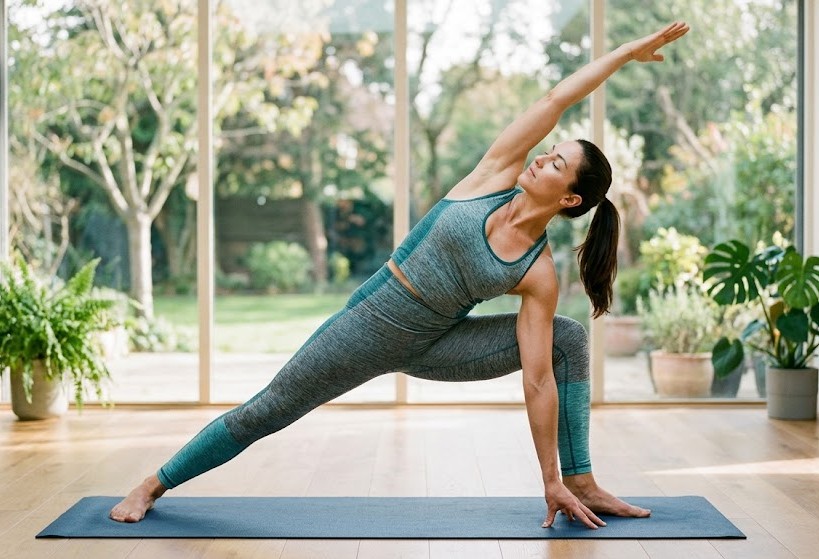
You probably already know that yoga can improve flexibility and help reduce stress. However, many people don’t realize that a well-designed full body yoga routine can also build strength, improve mobility, enhance balance, and provide a complete workout without requiring any gym equipment.
Unlike workouts that focus on only one area of the body, full body yoga engages multiple muscle groups simultaneously. It strengthens the legs, core, back, shoulders, and arms while improving flexibility and movement quality. Whether your goal is better fitness, improved posture, stress relief, or overall wellness, full body yoga offers a sustainable and effective approach.
In this guide, you’ll learn what full body yoga is, its benefits, the best poses to practice, and how to create a complete yoga routine that supports your fitness goals.
What Is Full Body Yoga?
Full body yoga is a style of yoga that engages all major muscle groups in a single practice to improve strength, flexibility, mobility, balance, and overall fitness.
Unlike specialized yoga sessions that focus only on relaxation, flexibility, or recovery, a full body yoga workout challenges the entire body through a combination of standing poses, balance work, core exercises, and mobility movements.
For example, moving from Downward Dog into Plank Pose and then into Warrior poses activates the upper body, lower body, and core simultaneously. This creates a balanced workout that develops both strength and flexibility.
A typical full body yoga session may target:
- Legs and glutes
- Core muscles
- Back muscles
- Shoulders and arms
- Hips and hamstrings
- Postural muscles
The result is a workout that improves how your body moves both during exercise and in everyday life.
Why Full Body Yoga Is Important for Overall Fitness
Many traditional workouts focus on a single component of fitness. Weight training develops strength, stretching improves flexibility, and cardio enhances endurance.
Full body yoga combines multiple fitness elements into one practice.
Improves Strength Naturally
Yoga uses your body weight as resistance.
Holding poses such as Plank, Chair Pose, and Warrior II forces muscles to stabilize the body against gravity, building functional strength throughout the entire body.
Unlike isolated gym exercises, yoga develops strength that translates directly into everyday movement.
Increases Flexibility and Mobility
Flexibility and mobility are often confused, but both are important.
Flexibility refers to muscle length, while mobility refers to how well your joints move through their range of motion.
Full body yoga improves both.
Regular practice can help:
- Reduce muscle tightness
- Improve joint health
- Enhance movement quality
- Decrease stiffness
best yoga poses for flexibility
Enhances Balance and Coordination
Many yoga poses require balance and body control.
Single-leg movements such as Warrior III challenge stabilizing muscles while improving coordination and overall body awareness.
Better balance becomes increasingly valuable as we age and helps improve athletic performance as well.
Supports Mental Well-Being
One of yoga’s greatest strengths is its ability to train both the body and mind.
Regular practice can help:
- Reduce stress
- Improve focus
- Increase mindfulness
- Enhance relaxation
- Improve emotional resilience
This combination of physical and mental benefits is one reason yoga remains popular worldwide.
Benefits of Practicing Full Body Yoga
A consistent full body yoga routine offers numerous health and fitness benefits.
Better Posture
Modern lifestyles often involve long hours of sitting, which can contribute to:
- Rounded shoulders
- Forward head posture
- Tight hips
- Lower back discomfort
Yoga strengthens postural muscles while improving mobility in areas commonly affected by prolonged sitting.
Increased Muscular Endurance
Unlike explosive workouts, yoga often requires holding positions for extended periods.
These sustained holds improve muscular endurance and stability throughout the body.
Improved Recovery
Yoga promotes circulation and movement without placing excessive stress on the body.
Many people use full body yoga on recovery days to reduce soreness and improve mobility.
Greater Body Awareness
Yoga encourages mindfulness and movement control.
Over time, practitioners often develop a stronger connection between mind and body, leading to better movement quality and posture.
Best Full Body Yoga Poses
The following poses provide some of the most effective total-body benefits.
1. Downward Dog
Downward Dog is one of the most recognizable yoga poses and provides both strength and flexibility benefits.
Benefits include:
- Shoulder stability
- Hamstring flexibility
- Improved posture
- Spinal decompression
2. Plank Pose
Plank Pose develops full-body strength and core stability.
Benefits include:
- Stronger core
- Improved shoulder strength
- Better posture
- Enhanced stability
3. Warrior I
Warrior I strengthens the lower body while improving balance and hip mobility.
Benefits include:
- Leg strength
- Hip flexibility
- Core engagement
4. Warrior II
Warrior II improves endurance and body control.
Benefits include:
- Stronger legs
- Better balance
- Improved stability
5. Chair Pose
Chair Pose is one of the most effective yoga exercises for building lower-body strength.
Benefits include:
- Stronger quadriceps
- Glute activation
- Core engagement
- Improved posture
6. Triangle Pose
Triangle Pose combines flexibility and mobility training.
Benefits include:
- Hamstring flexibility
- Hip mobility
- Improved spinal movement
7. Cobra Pose
Cobra Pose strengthens the back while opening the chest.
Benefits include:
- Better posture
- Stronger spinal muscles
- Improved chest mobility
8. Bridge Pose
Bridge Pose activates the posterior chain and supports spinal health.
Benefits include:
- Glute strength
- Hip stability
- Lower-back support
9. Boat Pose
Boat Pose is one of the best yoga poses for developing core strength.
Benefits include:
- Stronger abdominals
- Improved balance
- Better coordination
10. Child’s Pose
Child’s Pose provides relaxation and recovery.
Benefits include:
- Reduced tension
- Gentle stretching
- Improved relaxation
Full Body Yoga Routine for Strength and Flexibility
This beginner-friendly routine targets every major muscle group.
Warm-Up (5 Minutes)
Start with:
- Cat-Cow Stretch – 1 minute
- Child’s Pose – 1 minute
- Gentle Spinal Twists – 1 minute
- Downward Dog – 2 minutes
Main Yoga Flow (15–20 Minutes)
Perform:
- Warrior I – 30 seconds per side
- Warrior II – 30 seconds per side
- Chair Pose – 45 seconds
- Plank Pose – 30 seconds
- Cobra Pose – 30 seconds
- Bridge Pose – 45 seconds
- Boat Pose – 30 seconds
Repeat the sequence 2–3 times depending on fitness level.
Cool-Down (5 Minutes)
Finish with:
- Forward Fold
- Butterfly Stretch
- Seated Twist
- Child’s Pose
- Deep Breathing
Can Full Body Yoga Help With Weight Loss?
Full body yoga can support weight management when combined with proper nutrition and healthy lifestyle habits.
While yoga typically burns fewer calories than high-intensity workouts, it offers several advantages:
- Encourages consistent exercise
- Builds lean muscle
- Reduces stress
- Improves body awareness
- Supports healthy habits
Dynamic yoga flows that include:
- Sun Salutations
- Warrior sequences
- Chair Pose holds
- Plank variations
can significantly increase calorie expenditure.
Common Mistakes to Avoid
Skipping the Warm-Up
A proper warm-up prepares muscles and joints for movement.
Jumping directly into challenging poses increases injury risk.
Poor Alignment
Incorrect form can reduce benefits and place unnecessary stress on joints.
Focus on quality rather than depth.
Holding Your Breath
Breathing is a fundamental part of yoga.
Try to:
- Inhale during expansion
- Exhale during effort
- Maintain steady breathing throughout practice
Overstretching
Flexibility improvements happen gradually.
Avoid forcing positions beyond your current range of motion.
Inconsistent Practice
Consistency matters far more than workout duration.
Practicing 20 minutes three times per week is generally more effective than a single long session once per week.
Equipment Needed for Full Body Yoga
One of yoga’s biggest advantages is its simplicity.
Essential Equipment
- Yoga mat
- Comfortable clothing
- Water bottle
Optional Accessories
- Yoga blocks
- Yoga strap
- Yoga bolster
Image Placement: Home yoga setup with mat, blocks, and strap
Alt Text: Full body yoga home practice setup for beginners
How Long Should a Full Body Yoga Session Last?
The ideal workout length depends on your goals.
| Goal | Recommended Duration |
|---|---|
| Beginners | 15–20 minutes |
| General Fitness | 30–45 minutes |
| Strength Building | 45–60 minutes |
| Stress Relief | 20–30 minutes |
| Mobility Improvement | 20–40 minutes |
Even shorter sessions can provide meaningful benefits when performed consistently.
Creating a Sustainable Yoga Practice
Long-term success comes from building habits you can maintain.
A simple weekly schedule might look like:
Monday
Full Body Yoga
Tuesday
Walking or Light Activity
Wednesday
Full Body Yoga
Thursday
Recovery Session
Friday
Full Body Yoga
Saturday
Mobility Work
Sunday
Rest
Track progress by monitoring:
- Flexibility improvements
- Balance
- Strength
- Energy levels
- Workout consistency
Image Placement: Weekly yoga practice calendar
Alt Text: Weekly full body yoga schedule for consistent practice
Image Placement: Full body yoga pose sequence infographic
Alt Text: Step-by-step full body yoga workout routine
Conclusion
Full body yoga is one of the most effective ways to improve strength, flexibility, mobility, balance, and overall well-being through a single workout. Unlike many fitness programs that focus on only one aspect of health, yoga develops the entire body while supporting mental wellness at the same time.
The best part is that you don’t need expensive equipment or advanced experience to get started. A few foundational poses practiced consistently can create significant improvements in posture, movement quality, flexibility, and strength.
Start with a simple routine, focus on proper breathing and alignment, and gradually build your practice over time. Even a few sessions per week can help you move better, feel stronger, and support long-term health and fitness goals.
FAQs
Is full body yoga good for beginners?
Yes. Full body yoga can be modified for all fitness levels and is an excellent starting point for beginners.
Can yoga build muscle?
Yoga can help build muscular endurance and strength, particularly through poses that require bodyweight resistance.
How often should I do full body yoga?
Most people benefit from practicing 2–5 times per week.
Can full body yoga help with weight loss?
Yes. While yoga is not the highest calorie-burning activity, it supports weight loss through increased activity levels and improved lifestyle habits.
How long does it take to see results from yoga?
Many people notice improvements in flexibility, mobility, and energy levels within a few weeks of consistent practice.
Is yoga better than stretching?
Yoga provides additional benefits such as strength development, balance training, breathing control, and mindfulness that traditional stretching alone does not offer.
Can I do full body yoga every day?
Yes. Many people practice yoga daily, especially when balancing more challenging sessions with recovery-focused routines.
Do I need equipment for full body yoga?
A yoga mat is typically all you need to begin. Optional props can make certain poses more comfortable and accessible.
2 thoughts on “Full Body Yoga: Strength, Flexibility & Total-Body Fitness Guide”