
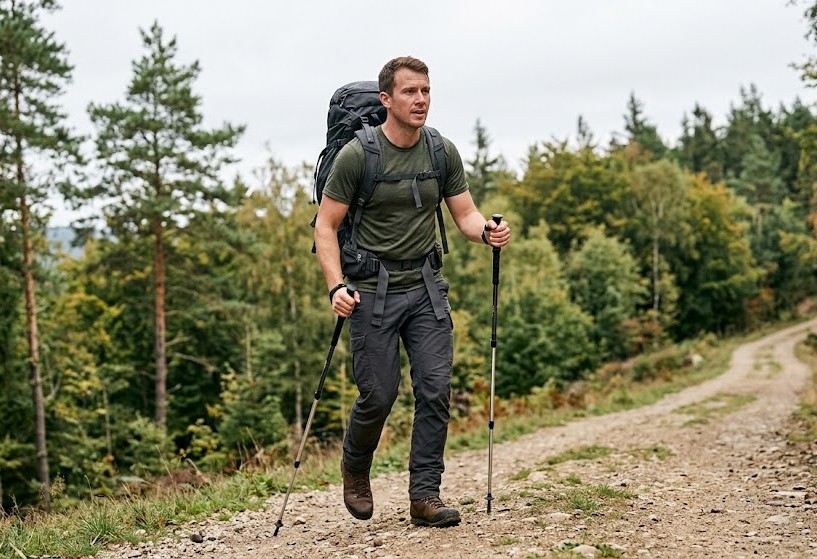
Walking has long been one of the simplest and most accessible forms of exercise. However, many people eventually reach a point where regular walks no longer provide the same fitness challenge or calorie-burning benefits. That’s where a rucking workout comes in.
By simply adding weight to a backpack while walking, you can transform an ordinary stroll into a powerful full-body training session that improves cardiovascular fitness, muscular endurance, functional strength, and calorie expenditure—all without the high impact of running.
Originally developed through military training programs, rucking has evolved into one of the fastest-growing fitness trends among outdoor enthusiasts, hikers, athletes, and everyday exercisers looking for a practical and sustainable way to get fit.
In this comprehensive guide, you’ll learn exactly what a rucking workout is, how it works, its benefits, how many calories it burns, how to get started safely, and how to progress over time for long-term success.
What Is a Rucking Workout?
A rucking workout is a form of exercise that combines walking with carrying additional weight in a backpack.
The concept is simple: by adding weight to your body, your muscles, heart, and lungs must work harder than they would during a regular walk. This increased workload leads to greater fitness adaptations while still maintaining the low-impact nature of walking.
Rucking originated in military training, where soldiers routinely carry heavy packs over long distances. Today, fitness enthusiasts use the same principle to improve endurance, strength, cardiovascular health, and overall conditioning.
For example, a beginner may place 10–20 pounds in a backpack and walk around their neighborhood for 20–30 minutes. That small adjustment can significantly increase the physical demands of the workout.
Unlike many fitness routines that require expensive equipment or gym memberships, rucking is accessible to almost everyone.
Rucking is also considered a form of functional fitness because it closely mimics real-world activities such as carrying groceries, luggage, hiking gear, or work equipment.
Why Is Rucking Becoming So Popular?
The popularity of rucking has surged because it combines several fitness benefits into a single workout.
Many people are looking for alternatives to running due to concerns about joint stress and repetitive impact. Rucking offers a solution by providing a challenging cardiovascular workout while remaining gentler on the knees, hips, and ankles.
Additionally, modern fitness trends increasingly emphasize functional movement and real-world strength.
According to the American College of Sports Medicine, functional fitness remains one of the leading fitness trends worldwide.
Source: ACSM, 2025.
Rucking directly supports this trend by training the body to move efficiently while carrying external loads.
Reasons People Love Rucking
- Low-impact compared to running
- Increases calorie burn
- Builds endurance and strength simultaneously
- Requires minimal equipment
- Can be performed almost anywhere
- Helps prepare for hiking and outdoor activities
- Improves posture and stability
Why Does Rucking Matter for Fitness, Weight Loss, and Functional Strength?
Many exercise programs focus on a single objective.
For example:
- Running primarily improves cardiovascular endurance.
- Weightlifting primarily builds strength.
- Cycling emphasizes aerobic fitness.
A rucking workout bridges these categories by combining resistance and cardiovascular training in a single activity.
Research consistently shows that walking with additional load increases energy expenditure compared to unloaded walking.
Source: National Institutes of Health, 2024.
As a result, rucking can support multiple fitness goals simultaneously:
- Weight management
- Cardiovascular health
- Muscular endurance
- Functional strength
- Hiking performance
- General physical preparedness
Someone who burns approximately 250 calories during a standard walk may burn substantially more during a ruck, depending on load, pace, body weight, and terrain.
Can Rucking Build Muscle and Strength?
Although rucking is not a substitute for traditional strength training, it can help build muscular endurance and functional strength.
When carrying a weighted backpack, your body continuously works to stabilize the load.
Muscles Worked During a Rucking Workout
| Muscle Group | Role During Rucking |
|---|---|
| Glutes | Drive forward movement |
| Quadriceps | Support walking mechanics |
| Hamstrings | Assist propulsion |
| Calves | Improve stability and endurance |
| Core | Maintain posture |
| Upper Back | Support backpack load |
| Shoulders | Stabilize weight |
The constant load challenges muscles throughout the entire workout rather than only during individual exercise repetitions.
For example, military personnel and experienced hikers often develop strong postural muscles due to frequent load-bearing activities.
What Are the Main Benefits of a Rucking Workout?
A rucking workout offers a unique combination of physical and mental benefits.
Increased Calorie Burn
Carrying extra weight requires more energy, leading to greater calorie expenditure.
According to Harvard Health Publishing, a 155-pound person walking briskly burns approximately 280 calories per hour. Adding weight can significantly increase that number depending on pack load and pace.
Source: Harvard Health Publishing, 2024.
Improved Cardiovascular Endurance
Rucking elevates heart rate without requiring high-impact activities.
Walking uphill while carrying a weighted pack can quickly move you into aerobic training zones, strengthening the heart and lungs over time.
Functional Strength Development
One of the greatest advantages of rucking is that it develops strength that transfers directly into everyday life.
Activities such as:
- Carrying groceries
- Moving luggage
- Climbing stairs with equipment
- Hiking with gear
all become easier after consistent rucking.
Joint-Friendly Conditioning
Compared with running, rucking generally produces less impact stress.
Many individuals recovering from excessive running volume use rucking to maintain conditioning while reducing repetitive impact forces.
best cardio exercises for weight loss
How Many Calories Does Rucking Burn?
One of the most common questions about a rucking workout is how many calories it burns.
The answer depends on:
- Body weight
- Backpack weight
- Walking speed
- Terrain
- Workout duration
Estimated Calories Burned Per Hour
| Activity | Estimated Calories Burned Per Hour* |
|---|---|
| Walking | 200–350 |
| Rucking (Light Load) | 300–500 |
| Rucking (Moderate Load) | 400–650 |
| Hiking with Load | 450–700 |
| Running | 500–900 |
*Actual values vary by individual factors.
Rucking can be highly effective for weight loss because it increases energy expenditure without requiring intense running sessions.
Is Rucking Better Than Walking for Weight Loss?
In most cases, yes.
A rucking workout typically burns more calories than regular walking because your body must move both your body weight and the additional load.
Benefits of Rucking for Weight Loss
- Higher calorie burn
- Greater muscular engagement
- Increased heart-rate response
- Improved workout efficiency
For example, walking three miles with a 20-pound backpack generally requires significantly more effort than walking the same distance without extra weight.
However, consistency remains the most important factor. A sustainable walking routine is still extremely beneficial if rucking isn’t practical.
Rucking vs Walking vs Hiking vs Running
Choosing the right activity depends on your goals.
| Factor | Rucking | Walking | Hiking | Running |
|---|---|---|---|---|
| Added Weight | Yes | No | Optional | No |
| Impact Level | Low | Very Low | Low | High |
| Strength Benefits | Moderate | Low | Moderate | Low |
| Calorie Burn | High | Moderate | High | Very High |
| Beginner Friendly | Yes | Yes | Yes | Depends |
| Outdoor Adventure | Moderate | Low | High | Moderate |
Rucking vs Running
If your goal is speed and aerobic performance, running may be preferable.
If your goal is sustainable conditioning with lower impact and added strength benefits, rucking is often the better choice.
Is Rucking Good for Hiking Preparation?
Absolutely.
Rucking closely simulates the demands of hiking with equipment, making it one of the best preparation methods available.
How Much Weight Should Beginners Use for Rucking?
One of the biggest mistakes beginners make is starting too heavy.
The goal is to challenge your body while maintaining proper posture and walking mechanics.
Recommended Starting Weights
| Experience Level | Weight |
|---|---|
| Beginner | 10–15 pounds (4.5–7 kg) |
| Intermediate | 20–35 pounds (9–16 kg) |
| Advanced | 35–50+ pounds (16–23+ kg) |
Rucking for beginners should emphasize technique and consistency rather than maximum load.
A 30-minute walk carrying 10 pounds is often more beneficial than struggling through a heavier session with poor form.
How to Start Rucking as a Beginner
Getting started is straightforward.
Step 1: Choose a Backpack
Select a backpack with supportive straps and a secure fit.
Step 2: Add a Light Load
Begin with 10–15 pounds using:
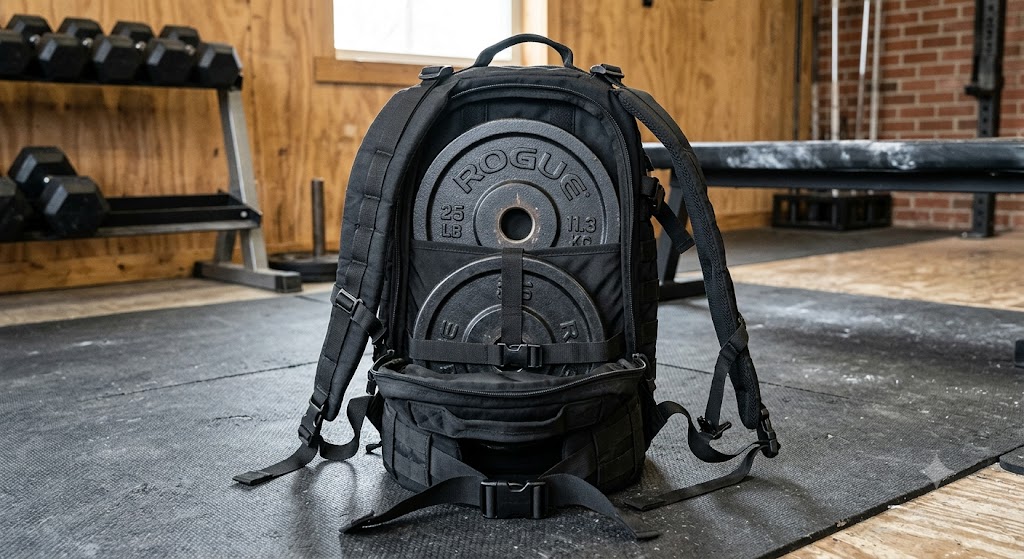
- Weight plates
- Sandbags
- Books
- Water bottles
Step 3: Walk for Time
Focus on completing 20–30 minutes rather than chasing a specific distance.
Step 4: Maintain Good Posture
Keep:
- Chest up
- Shoulders back
- Core engaged
- Eyes forward
Step 5: Progress Gradually
Increase only one variable at a time:
- Weight
- Distance
- Pace
- Terrain difficulty
What Equipment Do You Need for a Rucking Workout?
You do not need much equipment to begin.
Essential Gear
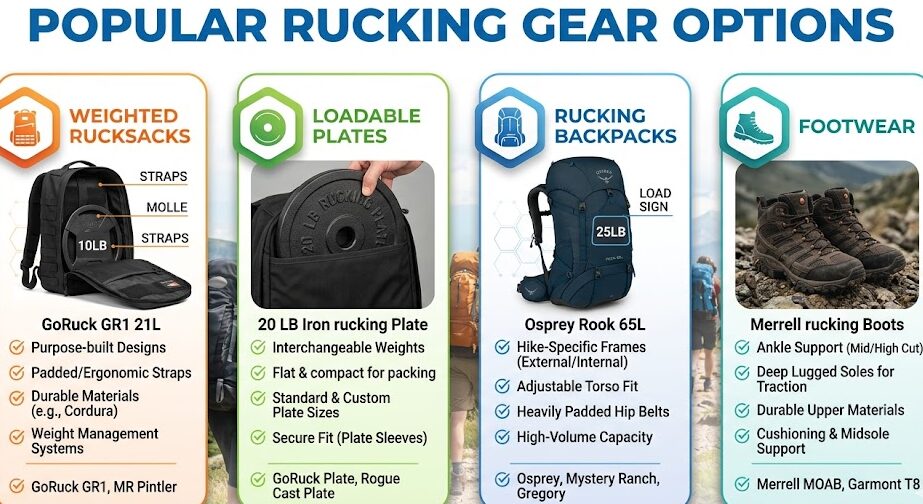
- Rucking backpack
- Weight plates or sandbags
- Walking or hiking shoes
- Moisture-wicking clothing
- Water bottle or hydration pack
Features to Look For
A properly fitted backpack can significantly improve comfort and reduce injury risk.
Look for:
- Padded shoulder straps
- Adjustable chest straps
- Waist support
- Durable materials
- Secure weight placement
Best Beginner Rucking Workout Plan
Consistency should come before intensity.
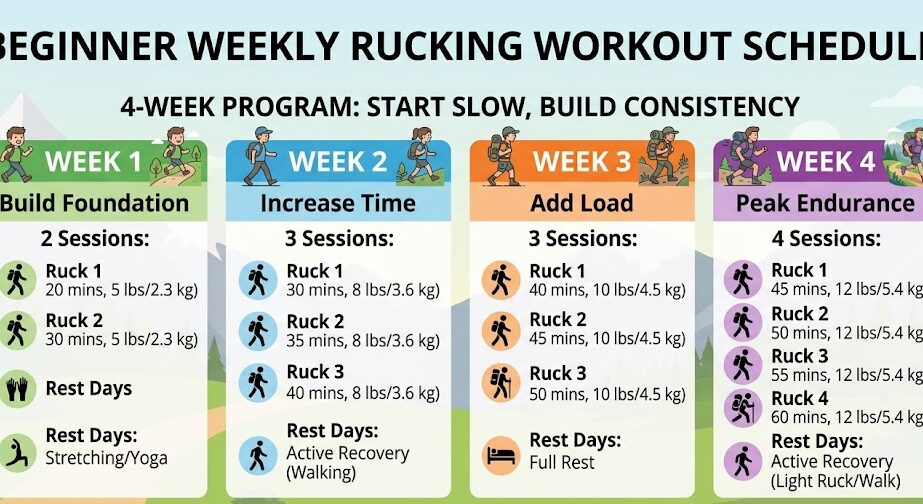
Weeks 1–2
- 2 sessions weekly
- 20–30 minutes
- 10–15 pounds
Weeks 3–4
- 3 sessions weekly
- 30–40 minutes
- 15–20 pounds
Weeks 5–6
- 3 sessions weekly
- 40–50 minutes
- 20–25 pounds
Sample Weekly Schedule
| Day | Workout |
|---|---|
| Monday | 30-Minute Ruck |
| Tuesday | Recovery Walk |
| Wednesday | 40-Minute Ruck |
| Thursday | Mobility Training |
| Friday | 30-Minute Ruck |
| Saturday | Optional Long Ruck |
| Sunday | Recovery |
Common Rucking Mistakes Beginners Make
Avoiding common mistakes can dramatically improve results.
Starting Too Heavy
Many beginners assume more weight equals better results.
In reality, excessive weight often leads to poor form and unnecessary injury risk.
Ignoring Recovery
Recovery remains essential even though rucking feels easier than running.
Poor Backpack Fit
Loose straps and improper weight placement can create:
- Shoulder pain
- Neck discomfort
- Lower-back strain
- Excessive friction
Is Rucking Safe for Daily Exercise?
For many people, yes.
Light daily rucks can be sustainable when intensity remains moderate and recovery is prioritized.
Research continues to show that gradual progression reduces exercise-related injury risk.
Source: American Orthopaedic Society for Sports Medicine, 2024.
Injury Prevention Tips
- Increase weight gradually
- Wear supportive footwear
- Stay hydrated
- Maintain upright posture
- Avoid sudden mileage increases
- Pay attention to fatigue
Best Rucking Gear and Equipment
Choosing quality equipment can improve both comfort and performance.
Backpack Selection
Dedicated rucking backpacks often offer superior weight distribution and durability compared to standard backpacks.
Footwear Selection
Popular options include:
- Trail-running shoes
- Hiking shoes
- Lightweight hiking boots
Weight Options
Common rucking loads include:
- Weight plates
- Sandbags
- Ruck bricks
- Adjustable weighted inserts
How Often Should You Do Rucking Workouts?
Most people benefit from performing a rucking workout two to four times per week.
General Guidelines
- Beginners: 2–3 sessions weekly
- Intermediate: 3–4 sessions weekly
- Advanced: 4–5 sessions weekly
Three moderate sessions each week often provide excellent results while allowing adequate recovery.
Remember: consistency always beats occasional extreme workouts.
How Can You Progress Your Rucking Workout Over Time?
Like any training program, improvement requires progressive overload.
Progressive overload in rucking involves gradually increasing pack weight, distance, pace, or terrain difficulty to continue improving performance.
Ways to Progress
- Increase pack weight
- Walk farther
- Walk faster
- Add hills
- Extend workout duration
- Explore more challenging terrain
For example, adding five pounds every few weeks can create sustainable progress without overwhelming recovery.
What’s Next: Taking Your Rucking Training to the Next Level
Once you’ve established consistency, start aligning your training with specific goals.
Weight Loss
Prioritize:
- Higher weekly frequency
- Longer durations
- Moderate loads
Hiking Preparation
Focus on:
- Loaded trail walks
- Elevation gain
- Longer distances
Endurance Development
Gradually increase total weekly mileage while maintaining good technique.
Conclusion
A rucking workout is one of the most effective and practical ways to combine cardiovascular exercise, strength training, endurance development, and functional fitness into a single activity. By carrying a weighted backpack while walking, you can increase calorie burn, improve muscular endurance, strengthen postural muscles, and build real-world fitness without the high impact commonly associated with running.
The key to long-term success is gradual progression. Start with a manageable load, focus on maintaining proper posture, invest in quality equipment, and consistently challenge yourself over time. Whether your goal is weight loss, hiking preparation, improved conditioning, or overall health, rucking offers a sustainable path toward greater fitness and resilience.
FAQs
What is a rucking workout?
A rucking workout is a form of exercise that combines walking with carrying weight in a backpack to increase cardiovascular demand, muscular endurance, and calorie expenditure.
How many calories does rucking burn?
Rucking generally burns more calories than regular walking. The exact amount depends on body weight, pack weight, pace, terrain, and workout duration.
Is rucking good for weight loss?
Yes. Rucking can support weight-loss goals by increasing energy expenditure while remaining lower impact than running.
How much weight should beginners use for rucking?
Most beginners should start with approximately 10–15 pounds and gradually increase the load as fitness improves and technique remains solid.
Can rucking build muscle?
Rucking helps develop muscular endurance and functional strength, particularly in the legs, glutes, core, shoulders, and upper back.
Is rucking better than running?
Neither is universally better. Rucking provides lower-impact conditioning and strength benefits, while running generally produces greater speed and aerobic adaptations.
Can I do rucking every day?
Many people can perform light rucking daily. However, heavier sessions should be balanced with proper recovery, mobility work, and adequate hydration.