
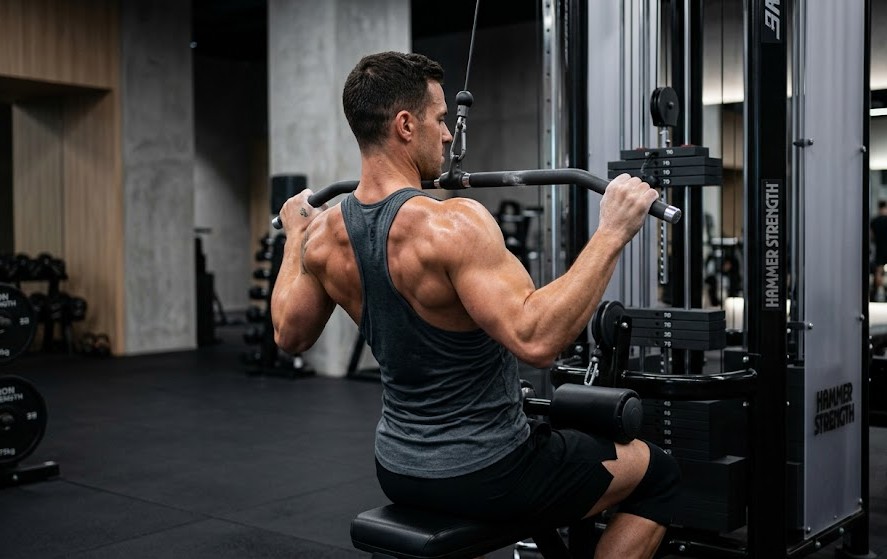
Most people know they should train their back, but many lifters overlook a critical detail: not all back exercises develop the upper back equally. While rows and pulldowns are staples in most training programs, a truly effective upper back routine requires a strategic combination of exercises that target the traps, rhomboids, rear delts, and lats.
The best upper back workout does much more than build muscle. It improves posture, enhances pulling strength, supports shoulder health, boosts athletic performance, and creates the thick, powerful upper-body appearance many people strive for.
In this comprehensive guide, you’ll learn how the upper back works, why it deserves dedicated attention in your training program, the most effective exercises for muscle growth and strength, and how to structure workouts that deliver long-term results.
What Is an Upper Back Workout and Which Muscles Does It Target?
An upper back workout is a training session designed to strengthen and develop the muscles responsible for posture, shoulder blade movement, pulling power, and upper-body stability.
Unlike lower back training, which primarily targets the spinal erectors and hip extensors, upper back workouts focus on rowing, pulling, and scapular control movements.
A strong upper back is essential for balanced muscular development. Lifters who regularly perform pressing exercises but neglect upper back training often develop rounded shoulders, poor posture, and muscular imbalances that can eventually affect performance and increase injury risk.
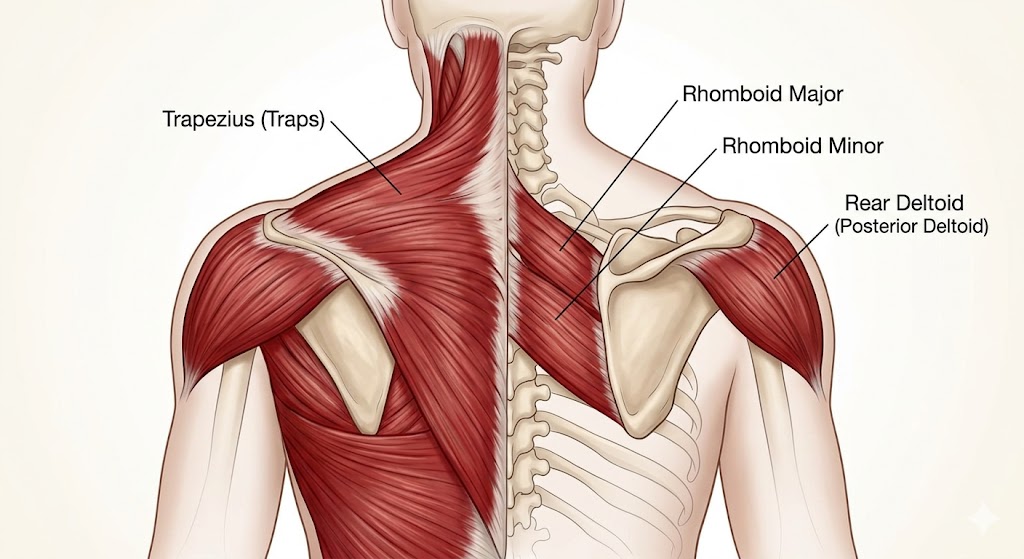
Upper Back Muscle Anatomy Explained
Understanding the major muscles involved in upper back training can help you choose better exercises and maximize your results.
Trapezius (Traps)
The trapezius is the largest muscle in the upper back and plays a vital role in shoulder elevation, retraction, and stabilization.
Exercises such as barbell rows, chest-supported rows, and face pulls heavily recruit the middle and lower trap fibers. Strong traps contribute to improved posture, greater upper-body stability, and increased pulling strength.
Rhomboids
The rhomboids sit between the shoulder blades and are responsible for retracting and stabilizing the scapulae.
Whenever you pull your shoulder blades together during a row, the rhomboids are working hard. Seated cable rows and chest-supported rows are particularly effective for developing these muscles.
Strong rhomboids help improve posture and create a thicker, more developed upper back.
Rear Deltoids
The rear deltoids are located on the back of the shoulders and assist with horizontal pulling and shoulder extension.
In addition to improving shoulder aesthetics, strong rear delts contribute significantly to shoulder stability and injury prevention.
Some of the best rear delt exercises include:
- Face pulls
- Reverse pec deck
- Rear delt flyes
- Chest-supported rear delt raises
Latissimus Dorsi (Lats)
The latissimus dorsi is the largest pulling muscle in the upper body and plays a key role in creating width and the coveted V-taper physique.
While commonly associated with back width, the lats also contribute to overall upper back development when trained through pull-ups, lat pulldowns, and rowing variations.
Rotator Cuff Support Muscles
The rotator cuff consists of smaller muscles that stabilize the shoulder joint during movement.
Although often overlooked, strengthening these muscles improves shoulder function, enhances lifting performance, and reduces injury risk during heavy training.
Why Is Upper Back Training Important for Strength and Posture?
Upper back training is one of the most valuable investments you can make in your overall fitness. Beyond aesthetics, it supports posture, movement quality, athletic performance, and long-term joint health.
According to the National Institutes of Health, musculoskeletal discomfort related to poor posture affects a large percentage of office workers worldwide — Source: NIH, 2023.
Better Posture
Modern lifestyles often involve hours of sitting, computer work, and smartphone use.
Over time, these habits can contribute to forward-rounded shoulders and poor posture. Strengthening the upper back helps counteract these effects by reinforcing the muscles responsible for shoulder blade retraction and spinal alignment.
Regular rowing exercises can significantly improve posture and upper-body positioning.
Increased Pulling Strength
Upper back muscles play a crucial role in nearly every pulling movement.
Stronger rhomboids, traps, and lats contribute to improved performance in:
- Pull-ups
- Deadlifts
- Rows
- Olympic lifts
- Athletic movements
Building upper back strength often translates directly into better gym performance.
Enhanced Athletic Performance
Athletes rely heavily on upper back strength for force transfer, stability, and power production.
Sports that benefit from a strong upper back include:
- Sprinting
- Swimming
- Wrestling
- Grappling
- Baseball
- Football
A stronger upper back creates a more stable foundation for explosive movement.
Improved Shoulder Health
Exercises like face pulls strengthen the rear deltoids and upper back muscles while promoting healthy shoulder mechanics.
For this reason, many physical therapists and strength coaches incorporate face pulls into rehabilitation and injury-prevention programs.
Better Physique and V-Taper Appearance
From an aesthetic perspective, upper back development contributes significantly to a powerful physique.
Broader lats, thicker traps, and well-developed rear delts create visual width and muscularity that enhance overall proportions.
What Are the Best Exercises for Building Upper Back Muscle?
Compound pulling exercises consistently provide the highest levels of upper back muscle activation and strength development.
According to EMG analyses published in strength-training research, rowing variations consistently rank among the highest exercises for upper-back activation — Source: Journal of Strength and Conditioning Research, 2022.
Ranked List of the Best Upper Back Exercises
| Rank | Exercise | Primary Muscles | Best For |
|---|---|---|---|
| 1 | Barbell Row | Traps, Rhomboids, Lats | Overall Mass |
| 2 | Chest-Supported Row | Rhomboids, Rear Delts | Isolation |
| 3 | Pull-Up | Lats, Upper Back | Strength |
| 4 | Lat Pulldown | Lats, Rhomboids | Hypertrophy |
| 5 | Seated Cable Row | Mid Back | Muscle Growth |
| 6 | Face Pull | Rear Delts, Traps | Shoulder Health |
| 7 | Dumbbell Row | Lats, Rhomboids | Unilateral Strength |
| 8 | T-Bar Row | Entire Upper Back | Thickness |
| 9 | Reverse Pec Deck | Rear Delts | Isolation |
| 10 | Inverted Row | Upper Back | Beginners |
Barbell Row
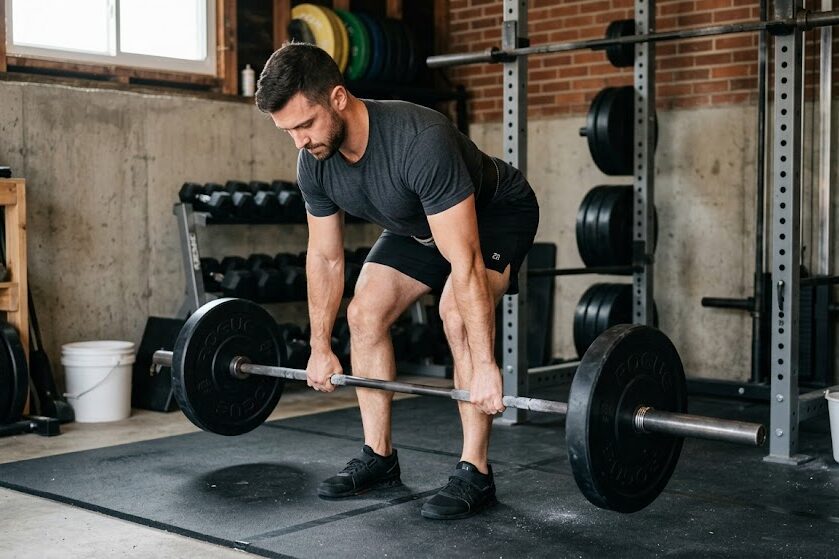
The barbell row remains one of the most effective exercises for building upper back mass and strength.
It simultaneously trains the:
- Traps
- Rhomboids
- Rear delts
- Lats
Few exercises deliver as much overall upper-back stimulation in a single movement.
Pull-Ups and Lat Pulldowns
These vertical pulling exercises emphasize lat development while still engaging much of the upper back.
Lifters looking to increase back width and create a stronger V-taper often prioritize these movements.
Face Pulls
Face pulls are among the most effective exercises for rear delt development and shoulder health.
Benefits include:
- Improved posture
- Better scapular control
- Enhanced shoulder stability
- Increased rear delt activation
Performing face pulls with higher repetitions often produces excellent results.
Which Upper Back Exercises Are Best for Beginners?
Beginners should focus on exercises that offer stability, straightforward technique, and consistent muscle activation.
Mastering proper movement patterns is more important than lifting heavy weights during the early stages of training.
Best Beginner Upper Back Exercises
- Seated Cable Row
- Lat Pulldown
- Chest-Supported Row
- Face Pull
- Inverted Row
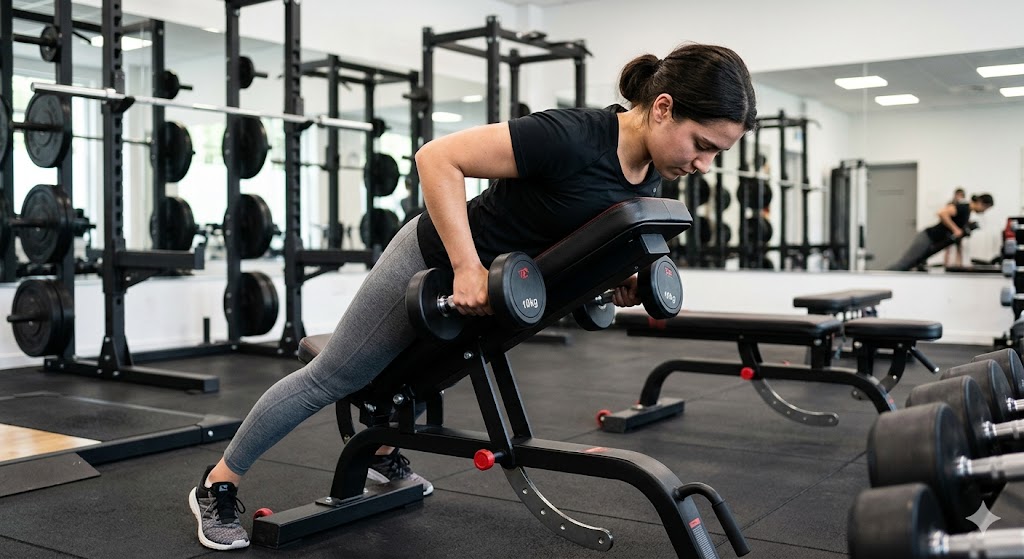
Chest-supported rows are especially useful because they minimize lower-back involvement and allow beginners to focus solely on upper-back contraction.
beginner strength training plan
How Often Should You Train Your Upper Back Each Week?
Training frequency plays a major role in muscle growth and strength development.
According to a systematic review on resistance training frequency, training muscle groups at least twice weekly generally produces greater hypertrophy than once-weekly training — Source: Sports Medicine, 2023.
Recommended Weekly Frequency
| Goal | Sessions Per Week |
|---|---|
| General Fitness | 2 |
| Muscle Growth | 2–3 |
| Strength Development | 2–3 |
| Advanced Bodybuilding | 3–4 |
Progressive Overload Is Essential
Progressive overload is the process of gradually increasing training demands over time.
You can apply progressive overload by increasing:
- Weight
- Repetitions
- Sets
- Training volume
- Exercise difficulty
For example, adding five pounds to your barbell row every few weeks can stimulate continued adaptation and muscle growth.
how progressive overload works
muscle recovery and training frequency
What Is the Best Upper Back Workout for Muscle Growth?
The most effective upper back workouts combine horizontal pulls, vertical pulls, and rear-delt-focused exercises.
This approach ensures every major upper back muscle receives sufficient training volume.
Muscle-Building Upper Back Workout
- Barbell Row – 4 × 6–8
- Pull-Up – 4 × 6–10
- Chest-Supported Row – 3 × 8–12
- Seated Cable Row – 3 × 10–12
- Face Pull – 3 × 12–15
- Reverse Pec Deck – 3 × 12–15
This routine targets every major upper back muscle through multiple movement patterns, making it one of the best upper back workout structures for hypertrophy.
Strength-Focused Upper Back Workout
- Barbell Row – 5 × 5
- Weighted Pull-Up – 5 × 5
- T-Bar Row – 4 × 6
- Face Pull – 3 × 12
Why Exercise Order Matters
Always perform compound exercises before isolation exercises.
Movements such as barbell rows and pull-ups require the greatest amount of energy and strength. Performing them first allows maximum performance and training quality.
How Can You Build a Stronger Upper Back at Home?
You don’t need a commercial gym to build a strong upper back.
With bodyweight exercises, resistance bands, and dumbbells, you can achieve impressive results from home.
Home Upper Back Workout
- Resistance Band Rows – 4 × 15
- Band Face Pulls – 3 × 20
- Inverted Rows – 4 × 10
- Single-Arm Dumbbell Rows – 4 × 12
- Band Pull-Aparts – 3 × 25
Resistance bands are particularly effective because they provide scalable resistance and allow training from virtually anywhere.
best resistance band exercises
Are Rows or Pull-Ups Better for Upper Back Development?
Rows and pull-ups each provide unique benefits and should be viewed as complementary rather than competing exercises.
Benefits of Rows
Rows primarily develop:
- Mid-back thickness
- Rhomboid strength
- Trap development
- Scapular retraction
Barbell rows are especially effective for building overall upper-back mass.
Benefits of Pull-Ups
Pull-ups primarily improve:
- Lat width
- Vertical pulling strength
- V-taper development
- Relative upper-body strength
Weighted pull-ups are among the most effective exercises for building back width.
The ideal upper back workout includes both movement patterns to maximize development.
What Mistakes Prevent Upper Back Muscle Growth?
Even the best workout program can produce poor results if common mistakes aren’t addressed.
Excessive Momentum
Using body swing during rows often shifts tension away from the target muscles.
Focus on controlled repetitions and proper technique.
Poor Range of Motion
Partial repetitions limit muscle activation and reduce growth potential.
Ensure full shoulder blade retraction and controlled movement throughout each repetition.
Ignoring Rear Delts
Many lifters focus heavily on rows and pulldowns while neglecting rear delt training.
Including face pulls and reverse pec deck exercises can help create balanced development.
Neglecting Progressive Overload
Performing the same weights and repetitions indefinitely often leads to stalled progress.
Consistent progression is necessary for continued adaptation.
Overtraining Pulling Muscles
More isn’t always better.
According to the American College of Sports Medicine, recovery is a critical component of resistance-training adaptation — Source: ACSM, 2024.
Allow adequate recovery between training sessions for optimal results.
How Many Sets and Reps Should You Use for Upper Back Training?
The ideal volume depends on your experience level and training goals.
Most lifters achieve excellent results with 10–20 weekly sets per muscle group.
Hypertrophy Guidelines
- 3–5 sets
- 6–15 reps
- Moderate rest periods
Strength Guidelines
- 3–6 sets
- 3–6 reps
- Longer rest periods
Endurance Guidelines
- 2–4 sets
- 15–25 reps
- Shorter rest periods
Most intermediate lifters experience strong muscle growth with approximately 12–18 weekly working sets.
What Equipment Is Best for Upper Back Workouts?
The best upper back workout programs utilize a variety of equipment to challenge muscles from different angles.
Essential Equipment
- Barbells for heavy compound rows
- Dumbbells for unilateral training
- Cable machines for constant tension
- Pull-up bars for vertical pulling
- Resistance bands for home workouts
Each tool offers unique advantages and can contribute to long-term progress.
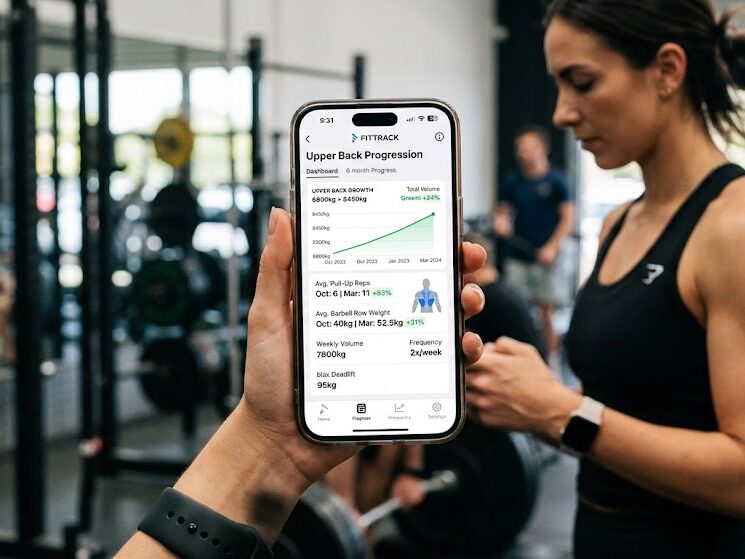
Practical Applications and Tracking Tools
Tracking workouts can significantly improve consistency and long-term progress.
Popular fitness tracking apps include:
- Strong
- Hevy
- FitNotes
These tools make it easier to monitor training volume, progression, and recovery.
What’s Next: Creating a Complete Back Development Plan
The best upper back workout should be part of a complete back-training strategy.
To maximize results:
- Include lower-back strengthening exercises such as Romanian deadlifts and back extensions.
- Perform mobility drills for the shoulders and thoracic spine.
- Track training volume and progression.
- Schedule two to three pulling sessions weekly.
- Continuously apply progressive overload.
Thoracic spine mobility exercises, such as thoracic extensions, can improve rowing mechanics and overall movement quality.
Conclusion
The best upper back workout combines compound rowing movements, vertical pulls, cable exercises, and targeted rear-delt training to maximize strength, posture, muscle growth, and overall athletic performance.
Developing a strong upper back requires more than simply adding a few rows to your routine. Success comes from balancing horizontal and vertical pulling patterns, training consistently two to three times per week, and applying progressive overload over time.
Whether your goal is improved posture, greater pulling strength, better shoulder health, or a wider and thicker back, a structured upper back program can help you achieve it. Stay consistent, track your progress, and continue refining your training as you get stronger.
FAQs
What is the best upper back workout for muscle growth?
A combination of rows, pull-ups, face pulls, and cable rows works best for muscle growth.
How many times per week should I train my upper back?
Train your upper back 2–3 times per week for optimal results.
Are rows better than pull-ups for upper back development?
Both are important. Rows build thickness, while pull-ups build width.
Can I build my upper back at home?
Yes. Resistance bands, dumbbells, and bodyweight exercises are effective.
What muscles does the upper back workout target?
It mainly targets the traps, rhomboids, rear delts, and lats.
How many sets should I perform for upper back growth?
Aim for 10–20 total weekly sets per muscle group.
Do face pulls help build the upper back?
Yes. They strengthen the rear delts, traps, and shoulder stabilizers.
How long does it take to see upper back results?
Most people notice improvements within 6–12 weeks of consistent training.