
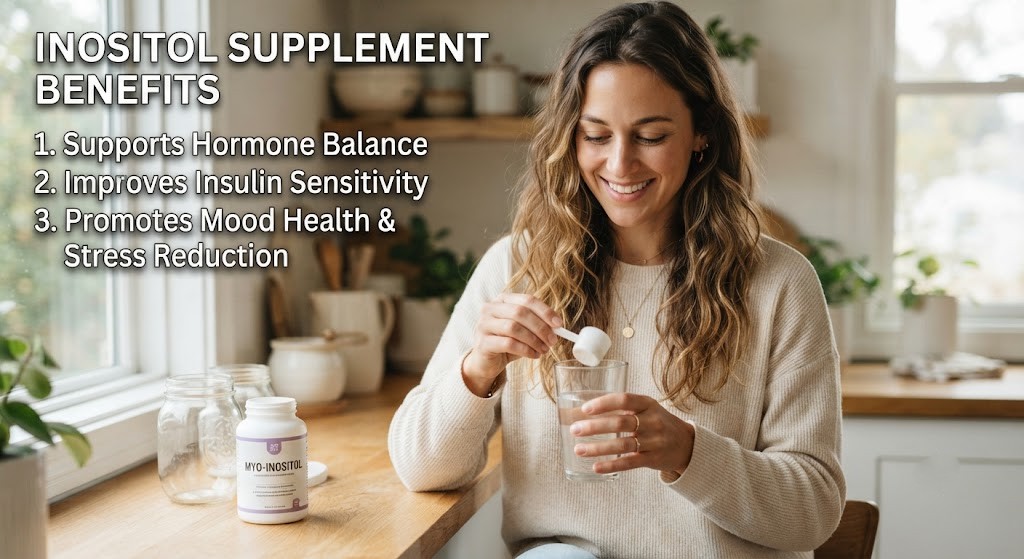
If you’re exploring supplements for metabolic wellness, menstrual health, or PCOS, you’ve probably come across inositol. But understanding what inositol actually does—and what the research really supports—can be surprisingly confusing.
Inositol is a naturally occurring compound involved in cellular signaling and insulin-related pathways. Supplements commonly contain myo-inositol or D-chiro-inositol, either individually or together. Researchers have studied these forms for metabolic health, menstrual regularity, ovulation, and PCOS-related outcomes.
In this guide to inositol supplement benefits, you’ll learn how inositol works, what research says about its potential benefits, how myo-inositol differs from D-chiro-inositol, how dosage is approached, possible side effects, and how to evaluate an inositol supplement before using it.
What Are Inositol Supplements and How Do They Work?
Inositol is a naturally occurring compound involved in cell signaling and is available as a dietary supplement. It occurs naturally in the body and in foods, while supplements commonly provide myo-inositol or D-chiro-inositol.
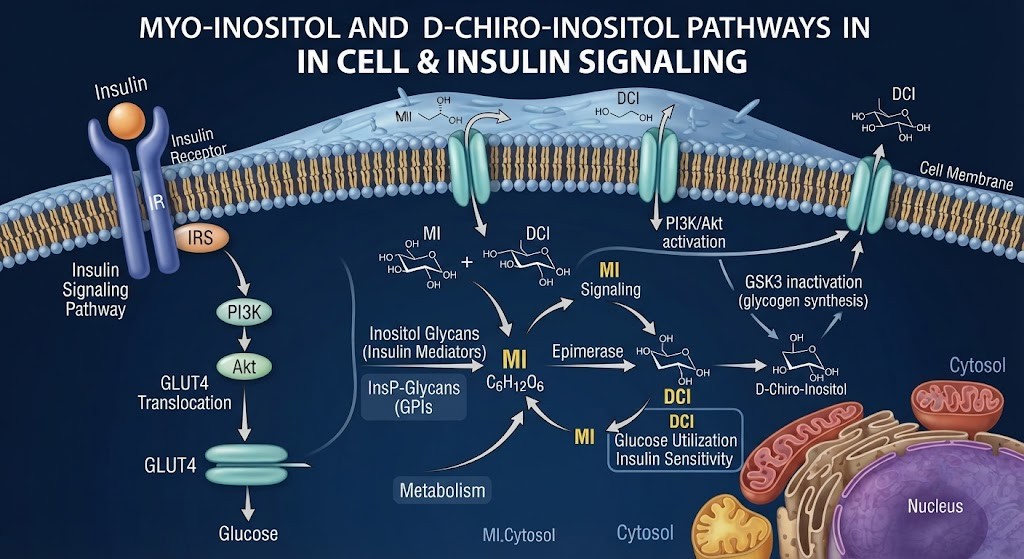
Inositol is involved in cellular signaling and insulin-related pathways, which helps explain why researchers have investigated it for metabolic and reproductive health. The 2023 international PCOS guideline describes inositol as a secondary messenger involved in insulin-signal transduction.
Myo-inositol is the most abundant form of inositol in the human body. D-chiro-inositol is another biologically active form, and researchers have studied both because they participate in different aspects of cellular signaling.
Understanding these biological roles is important because the effects of an inositol supplement can depend on its specific form, formulation, dose, and intended use.
Why Do Inositol Supplement Benefits Matter?
Inositol supplement benefits are being investigated because inositol may influence metabolic, menstrual, reproductive, and PCOS-related outcomes. Interest is particularly strong among people looking for nutritional strategies that may complement lifestyle changes or medical care.
Insulin resistance is an important metabolic feature of PCOS, and inositol has been studied partly because of its involvement in insulin signaling.
A systematic review of 20 randomized controlled trials involving 1,239 participants found improvements in several measures of glucose homeostasis, although the researchers also noted limitations in the available evidence. — Source: Clinical Nutrition, 2019.
PCOS-specific evidence remains mixed. A 2024 systematic review informing the international PCOS guidelines included 30 trials involving 2,230 participants and concluded that evidence for inositol in PCOS remains limited and inconclusive. — Source: Journal of Clinical Endocrinology & Metabolism, 2024.
What Are the Potential Benefits of Inositol Supplements?
Potential inositol supplement benefits include effects on insulin signaling, metabolic health, menstrual function, ovulation, and some PCOS-related outcomes. However, the quality and certainty of evidence vary depending on the specific benefit being studied.
That distinction matters. A supplement can show promising results in research without being established as a guaranteed treatment for a particular condition.
Can Inositol Support Insulin Sensitivity and Metabolic Health?
Inositol may support insulin sensitivity by participating in cellular pathways involved in insulin signaling. Research has reported improvements in markers such as fasting insulin and HOMA-IR in some populations.
However, inositol should not be considered a replacement for diabetes treatment, prescribed medication, or established healthy lifestyle practices.
For example, a meta-analysis of 20 randomized trials reported reductions in fasting glucose, fasting insulin, and HOMA-IR, while finding no significant difference in BMI or HbA1c. — Source: Clinical Nutrition, 2019.
These findings suggest that metabolic effects may be one area where inositol has potential, but they do not mean that everyone taking an inositol supplement will experience the same results.
Can Inositol Help With PCOS-Related Symptoms?
Inositol may improve some metabolic or reproductive measures in people with PCOS, but current evidence does not establish it as a universal PCOS treatment.
The 2024 systematic review found possible benefits for certain metabolic outcomes and potential ovulatory benefits with D-chiro-inositol, while other outcomes showed little or uncertain benefit.
The international PCOS guideline states that inositol may be considered based on individual preferences, while emphasizing uncertainty surrounding its benefits and risks. — Source: International Evidence-based PCOS Guideline, 2023.
This means people with PCOS should view inositol as a potential complementary option rather than assuming it can address every symptom or replace standard treatment.
Can Inositol Support Menstrual Regularity and Ovulation?
Inositol may support menstrual regularity and ovulatory function in some people with PCOS, although results vary across studies.
Earlier research has reported improvements in menstrual-cycle regularity, while newer guideline-level reviews emphasize that the overall certainty of evidence remains limited.
One systematic review of 26 randomized controlled trials involving 1,691 participants reported a higher likelihood of regular menstrual cycles with inositol compared with placebo. — Source: European Review for Medical and Pharmacological Sciences, 2023.
It is important, however, not to describe inositol as a proven fertility treatment.
The 2023 international guideline considers inositol for PCOS-related infertility an experimental therapy because evidence concerning ovulation, pregnancy, and live birth remains uncertain. — Source: International Evidence-based PCOS Guideline, 2023.
Therefore, anyone using inositol for fertility should discuss its role with a qualified healthcare professional rather than using it as a substitute for established fertility care.
What Is the Difference Between Myo-Inositol and D-Chiro-Inositol?
Myo-inositol and D-chiro-inositol are two forms of inositol with different biological roles, and both have been studied individually and in combination.
Myo-inositol is the predominant form in the body, while D-chiro-inositol participates in pathways associated with glucose metabolism.
| Feature | Myo-Inositol | D-Chiro-Inositol |
|---|---|---|
| Common abbreviation | MI | DCI |
| Biological role | Prominent in cellular signaling and reproductive pathways | Involved in insulin-related signaling and glucose metabolism |
| Research focus | Metabolic and reproductive outcomes | Metabolic and ovulatory outcomes |
| Supplement formats | Powder and capsules | Capsules and combination products |
| PCOS evidence | Studied extensively | Studied extensively, but evidence varies |
Combination products often contain both forms because researchers have investigated whether their complementary biological roles may be useful.
However, the available evidence does not establish one universal ratio or formulation as best for everyone. The appropriate choice can depend on the individual’s goal, formulation, and professional advice.
How Much Inositol Should You Take?
Inositol dosage depends on the form, formulation, health goal, and evidence available for that particular use. For that reason, there is no single dose that can appropriately be recommended to everyone.
Research protocols can also differ substantially from commercially available products. Some clinical studies have investigated gram-level daily amounts, while retail products may provide substantially different serving sizes.
Instead of copying another person’s regimen, follow the product’s instructions or seek individualized advice from a qualified healthcare professional.
What Is the Best Time to Take Inositol?
The best time to take inositol depends on the product instructions, dosage schedule, and individual tolerance.
For most people, consistency may be more practical than focusing on a particular hour of the day.
For example, a powder may be divided into servings throughout the day if the product directions specify that approach, while capsules may provide a simpler routine. Always follow the instructions for the specific formulation you are using.
What Are the Common Side Effects of Inositol Supplements?
Inositol supplements are generally considered well tolerated, but some people may experience digestive side effects. Reported digestive effects can include nausea, gas, or diarrhea, particularly at higher intakes.
A clinical safety review reported mild gastrointestinal effects at a very high studied intake of 12 grams per day. — Source: European Review for Medical and Pharmacological Sciences, 2011.
Individual tolerance can vary, so taking more does not necessarily mean achieving greater benefits. If side effects occur, discuss the appropriate approach with a healthcare professional.
Who Should Avoid or Discuss Inositol With a Healthcare Professional?
People who are pregnant, planning pregnancy, taking medications, or managing medical conditions should discuss inositol supplementation with a healthcare professional.
This is particularly important when inositol is being considered for fertility or PCOS. A supplement should not be used to replace prescribed treatment without appropriate medical guidance.
The international PCOS guideline specifically highlights uncertainty around inositol’s safety, effectiveness, dose, quality, and consistency. — Source: International Evidence-based PCOS Guideline, 2023.
How Do You Choose a High-Quality Inositol Supplement?
A high-quality inositol supplement should have transparent labeling, clearly identify its form and serving size, and provide appropriate quality information.
Supplement products can differ in their ingredients, formulations, serving sizes, and manufacturing standards. Reading the label carefully can help you understand exactly what you are purchasing.
A useful label should clearly indicate whether the product contains myo-inositol, D-chiro-inositol, or both, as well as the amount provided per serving and any additional active ingredients.
Inositol Supplement Buying Checklist
When comparing products, check the following:
- Form: Identify the type of inositol provided.
- Serving information: Check the amount per serving rather than relying only on the number of capsules.
- Ingredient transparency: Look for clearly listed active and inactive ingredients.
- Quality testing: Prefer products with credible third-party or independent quality verification when available.
- Unnecessary additives: Consider whether the formulation contains ingredients you do not need.
- Intended use: Make sure the formulation aligns with your specific goal.
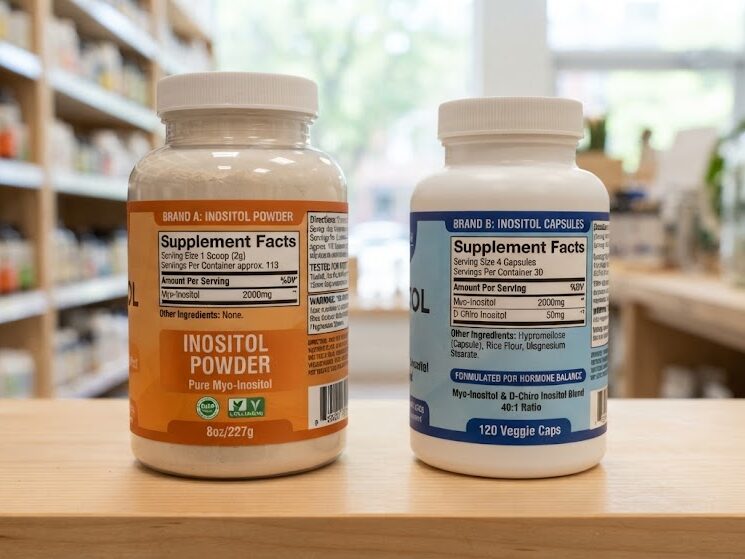
Choosing a supplement based on transparent information is especially important when comparing products marketed for PCOS, insulin sensitivity, menstrual health, or reproductive wellness.
How Long Does It Take for Inositol to Work?
How long inositol takes to work depends on the health goal, individual response, formulation, and outcome being measured.
Research studies commonly evaluate outcomes over weeks or months, rather than expecting an immediate effect after taking a supplement.
For example, menstrual patterns and metabolic markers require different periods of assessment. As a result, not noticing an immediate change does not necessarily demonstrate whether an inositol supplement is helping.
Likewise, people should avoid treating a particular timeline as guaranteed. If you are using inositol for a medical or reproductive goal, a healthcare professional can help determine appropriate monitoring and follow-up.
What Should You Consider Before Taking an Inositol Supplement?
Before starting an inositol supplement, it helps to take a goal-based approach rather than choosing a product simply because it is popular or trending.
1. Identify Your Main Goal
Start by determining why you are considering inositol.
Your goal might involve:
- Metabolic health
- Insulin-related concerns
- Menstrual regularity
- PCOS-related concerns
- Ovulatory function
- Another specific health objective
The evidence can differ substantially depending on the reason for supplementation.
2. Understand the Form
Check whether the product contains myo-inositol, D-chiro-inositol, or a combination.
Because these forms have different biological roles, understanding the formulation can help you make a more informed decision.
3. Review the Serving Size
Don’t judge a product solely by the number of capsules or scoops. Check how much inositol is actually provided per serving and compare that information with the product directions and professional advice.
4. Evaluate Product Quality
Look for transparent ingredient lists, clear serving information, and credible quality-testing information when available.
5. Consider the Bigger Picture
Inositol is best considered as part of a broader approach to health rather than as a standalone solution.
Balanced nutrition, physical activity, sleep, and appropriate medical care can remain important components of overall metabolic and reproductive health.
Conclusion: Are Inositol Supplements Worth Considering?
Inositol supplements may be worth considering for specific health goals, but their potential benefits depend on the individual, formulation, and quality of evidence for that particular use.
Research has focused most prominently on insulin signaling, metabolic health, menstrual function, ovulation, and PCOS-related outcomes. Some findings are promising, while other evidence remains limited or inconclusive.
Ultimately, inositol is not a universal solution or guaranteed treatment. A sensible approach is to identify your health goal, understand the evidence, compare product forms and serving information, choose a transparent supplement, and seek professional guidance when medications, pregnancy, fertility, or an existing health condition are involved.
FAQs
What are the main inositol supplement benefits?
Inositol may support insulin sensitivity, metabolic health, menstrual regularity, ovulation, and some PCOS-related outcomes.
What are the benefits of taking inositol?
Inositol may support metabolic and reproductive health, especially in some people with PCOS.
What is inositol used for?
Inositol is mainly studied for insulin signaling, metabolic health, menstrual function, ovulation, and PCOS.
What is the difference between myo-inositol and D-chiro-inositol?
Myo-inositol and D-chiro-inositol are different forms with distinct biological roles.
Can I take inositol for PCOS?
Inositol may be considered for PCOS, although current evidence remains limited and inconclusive.
Can inositol regulate periods?
Inositol may help support menstrual regularity in some people with PCOS.
Can inositol improve ovulation?
Inositol may support ovulation in some people with PCOS, but evidence remains uncertain.
Does inositol reduce belly fat?
Inositol is not proven to specifically reduce belly fat or cause weight loss.
What is the recommended inositol dosage?
The appropriate dosage varies based on the form, formulation, health goal, and research protocol.
What are the side effects of inositol?
Possible side effects include nausea, gas, and diarrhea, particularly at higher intakes.
Who shouldn’t take inositol?
People who are pregnant, taking medications, or managing health conditions should consult a healthcare professional first.
How long does inositol take to work?
Results vary, and studies generally assess effects over several weeks or months.
Should you take inositol with food?
Follow the product instructions and choose a schedule that suits your individual tolerance.
Is inositol safe during pregnancy?
People who are pregnant should discuss inositol use with a healthcare professional.
How do you choose a good inositol supplement?
Check the inositol form, serving size, ingredients, and available quality-testing information.