
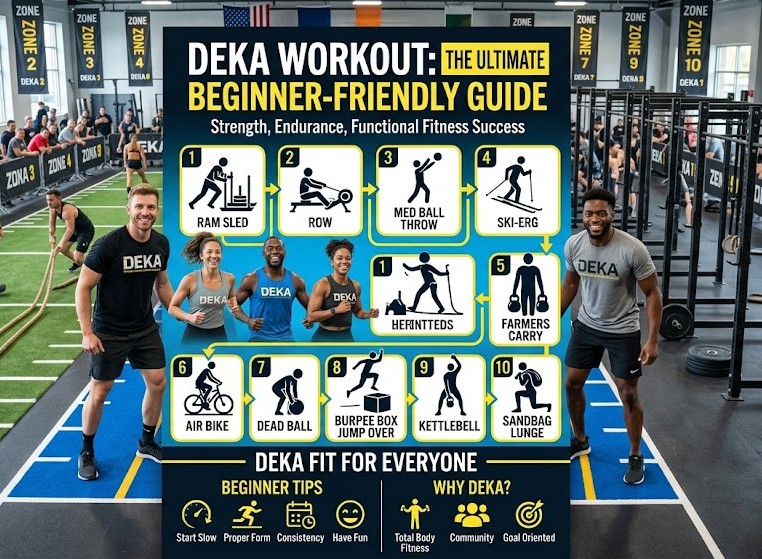
You’ve probably heard fitness enthusiasts talking about DEKA workouts and wondering why this training style is growing so quickly. While many people understand that DEKA combines strength and endurance, few know exactly how the system works or how to train effectively for it. In this guide, you’ll learn what a DEKA workout is, how the ten zones work, the benefits of DEKA training, and how to prepare for your first event.
Key Takeaways
- DEKA workout training combines functional strength exercises with endurance-focused conditioning.
- DEKA fitness events use a standardized format built around ten training zones that test overall athletic performance.
- DEKA STRONG, DEKA MILE, and DEKA FIT provide different competition formats for varying fitness levels.
- Consistent DEKA training can improve cardiovascular fitness, muscular endurance, and functional strength simultaneously.
- Beginner athletes can successfully prepare for DEKA events by following structured strength and conditioning programs.
- Proper pacing, recovery, and endurance development are critical factors for improving DEKA performance.
- Progressive training and regular fitness assessments help athletes achieve faster times and better results.
What Is a DEKA Workout and How Does It Work?
A DEKA workout is a functional fitness training system that combines strength, endurance, and athletic performance exercises into a standardized format.
First, DEKA fitness was developed to create a measurable and accessible fitness challenge for athletes of different skill levels. Unlike many fitness competitions, DEKA uses the same exercise stations worldwide, allowing participants to compare performances accurately.
Moreover, DEKA fitness events consist of ten exercise zones designed to measure overall fitness through strength, endurance, power, and conditioning challenges. For example, athletes may perform rowing, sled pushes, lunges, and wall balls during a single event.
In addition, DEKA sits within the growing category of hybrid fitness training, which combines cardiovascular conditioning with strength development. This approach helps participants improve multiple fitness qualities simultaneously.
What Is DEKA Fitness?
DEKA fitness is a standardized fitness competition system designed to evaluate complete athletic performance.
For example, rather than focusing only on running or lifting weights, DEKA tests how effectively you can combine strength, endurance, coordination, and work capacity. This creates a more comprehensive fitness assessment than many traditional gym workouts.
Why Has DEKA Fitness Become So Popular?
DEKA fitness has become popular because it provides a structured, measurable, and beginner-friendly competitive fitness experience.
According to industry reports, participation in functional fitness events has increased significantly during the last decade as more people seek performance-based fitness goals rather than appearance-focused training — Source: IHRSA, 2024.
Additionally, DEKA appeals to runners, obstacle course racers, gym members, and hybrid athletes because the format remains consistent across locations.
Why Do DEKA Workouts Matter?
DEKA workouts matter because they develop real-world fitness through balanced strength and endurance training.
First, many traditional fitness programs focus heavily on either cardiovascular exercise or resistance training. DEKA bridges this gap by requiring athletes to perform both efficiently.
Moreover, consistent DEKA training improves cardiovascular endurance, muscular stamina, and functional movement patterns simultaneously. For example, carrying heavy loads after running mimics the demands of everyday physical tasks and recreational sports.
According to the American College of Sports Medicine, combining aerobic and resistance training produces greater overall fitness improvements than performing either method alone — Source: ACSM, 2024.
Benefits of Combining Strength and Endurance
A strength and endurance workout develops multiple fitness systems simultaneously.
Key advantages include:
- Better cardiovascular health
- Increased muscular endurance
- Improved athletic performance
- Enhanced calorie expenditure
- Greater functional movement capacity
strength and endurance workout plan
Real-World Fitness Applications
Functional fitness training improves your ability to perform everyday activities efficiently.
For example, lifting groceries, climbing stairs, moving furniture, and recreational sports all require a combination of strength, coordination, and endurance similar to DEKA-style workouts.
How Does the DEKA Fitness Format Work?
The DEKA fitness format is a standardized competition structure featuring ten exercise zones and varying running distances.
What Is DEKA STRONG?
DEKA STRONG eliminates running components and focuses entirely on completing the ten fitness zones.
This format is often recommended for beginners because it allows athletes to learn exercise standards before incorporating running demands.
What Is DEKA MILE?
DEKA MILE combines the ten DEKA zones with one-mile running segments to create a balanced strength-and-endurance challenge.
Athletes alternate between running and fitness stations, creating a hybrid event that challenges both aerobic capacity and muscular endurance.
What Is DEKA FIT?
DEKA FIT integrates the ten DEKA zones with 500-meter runs between stations, creating a comprehensive hybrid fitness competition.
This version is generally considered the most demanding because it requires repeated transitions between high-intensity exercise and running.
DEKA Event Comparison Table
| Format | Running Included | Difficulty Level | Best For |
|---|---|---|---|
| DEKA STRONG | No | Beginner-Intermediate | Strength-focused athletes |
| DEKA MILE | Yes (1 mile segments) | Intermediate | Hybrid fitness athletes |
| DEKA FIT | Yes (500m between zones) | Intermediate-Advanced | Competitive athletes |
What Are the 10 DEKA Zones in a DEKA Event?
The 10 DEKA zones are standardized exercise stations that collectively test strength, endurance, power, and conditioning.
Zone Breakdown
- 30 Ram Alternating Reverse Lunges
- 500m Row
- 20 Box Step-Overs
- 25 Med Ball Sit-Up Throws
- 500m Ski Erg
- 100m Farmer Carry
- 25 Calorie Air Bike
- 20 Dead Ball Wall Overs
- 100m Tank Push/Pull
- 20 Ram Burpees
Each station targets different physical capacities. For example, rowing develops cardiovascular endurance, while farmer carries challenge grip strength and core stability.
Furthermore, standardized zone requirements allow athletes worldwide to compare performances objectively.
According to fitness competition trend reports, standardized fitness testing formats continue to gain popularity because they provide measurable progress benchmarks — Source: Sports & Fitness Industry Association, 2024.
How Can Beginners Start Training for a DEKA Workout?
Beginner DEKA training should focus on building foundational strength, endurance, and movement efficiency.
First, most beginners benefit from a 12-week preparation period before attempting a DEKA event. This timeframe allows gradual progression while reducing injury risk.
Beginner Weekly DEKA Training Schedule
| Day | Focus |
|---|---|
| Monday | Full-body strength |
| Tuesday | Easy run or cardio |
| Wednesday | Functional conditioning |
| Thursday | Recovery or mobility |
| Friday | Strength + intervals |
| Saturday | DEKA simulation workout |
| Sunday | Rest |
Running and Endurance Preparation
Running fitness is one of the most overlooked aspects of DEKA preparation.
For example, athletes often focus heavily on gym training but neglect cardiovascular conditioning. This can significantly affect performance during DEKA FIT and DEKA MILE events.
best endurance training methods
Strength and Conditioning Recommendations
Strength training for DEKA should prioritize movement patterns rather than bodybuilding-style isolation exercises.
Focus on:
- Squats
- Lunges
- Deadlifts
- Carries
- Push exercises
- Pull exercises
Successful DEKA preparation involves progressive strength training, endurance conditioning, proper recovery, and event-specific practice.
What Are Some Common DEKA Workout Examples?
DEKA workout examples help athletes develop event-specific fitness through structured training sessions.
Beginner DEKA Workout
Complete 3 rounds:
- 500m row
- 15 lunges
- 20 step-ups
- 10 burpees
- 400m run
Intermediate DEKA Workout
Complete 4 rounds:
- 500m Ski Erg
- 20 wall balls
- 20 box step-overs
- 100m farmer carry
- 500m run
Advanced DEKA Workout
Complete all ten zones for time while maintaining competition standards.
Home-Based DEKA Modifications
Home DEKA workouts substitute equipment while maintaining movement patterns.
For example:
- Row → Jump rope
- Ski Erg → Resistance bands
- Tank push → Weighted sled alternative
- Wall overs → Medicine ball throws
high-intensity interval training workouts
What Equipment Do You Need for DEKA Training?
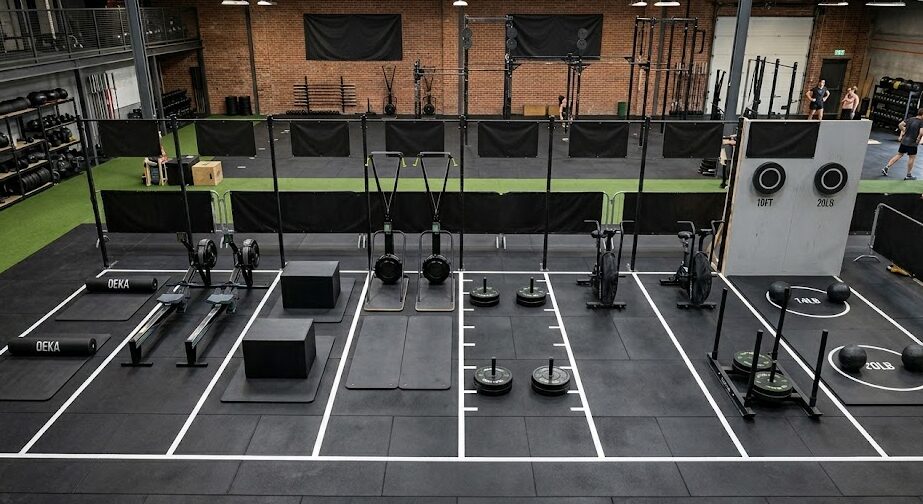
DEKA training equipment includes both cardiovascular and strength-training tools commonly found in functional fitness facilities.
Essential Equipment
- Rowing machine
- Ski Erg
- Sled
- Kettlebells
- Dumbbells
- Medicine balls
- Plyometric box
Home Gym Alternatives
Home-based athletes can successfully prepare using modified equipment.
For example, resistance bands, adjustable dumbbells, and weighted backpacks can replicate many DEKA movement patterns.
What Muscles Does a DEKA Workout Target?
A DEKA workout targets nearly every major muscle group while simultaneously challenging the cardiovascular system.
First, lower-body exercises such as lunges and sled pushes develop quadriceps, glutes, and hamstrings. Second, rowing and Ski Erg work strengthen the back, shoulders, and core.
Moreover, carrying movements improve grip strength and trunk stability. This creates a full-body training effect that supports both athletic performance and daily function.
What Are the Biggest Benefits of DEKA Fitness Training?
DEKA fitness training improves overall athletic performance through comprehensive physical development.
Cardiovascular Fitness
DEKA workouts improve aerobic capacity and cardiovascular efficiency.
Research shows regular aerobic exercise can reduce cardiovascular disease risk and improve endurance performance — Source: American Heart Association, 2024.
Functional Strength
Functional strength is the ability to apply force during real-world movements.
For example, farmer carries and sled pushes directly improve practical strength capacities.
Fat Loss Potential
DEKA workouts can support fat loss because they combine resistance training and cardiovascular exercise within the same session.
According to the CDC, combining aerobic exercise with strength training is highly effective for body composition improvements — Source: CDC, 2024.
Mental Resilience
DEKA training develops mental toughness through repeated exposure to challenging workloads.
For example, pushing through fatigue during multiple exercise zones teaches pacing, discipline, and persistence.
What Common Mistakes Should You Avoid During DEKA Training?
Common DEKA training mistakes reduce performance and increase injury risk.
Overtraining
Overtraining occurs when recovery cannot keep pace with training stress.
For example, performing high-intensity sessions every day often leads to fatigue and reduced performance.
Poor Pacing
Poor pacing causes athletes to start too aggressively and lose performance later.
A smarter strategy involves maintaining a sustainable effort level throughout the workout.
Neglecting Running Fitness
Running fitness is a major performance factor in DEKA MILE and DEKA FIT events.
Many strength-focused athletes lose significant time because they underestimate endurance requirements.
Improper Recovery
Recovery is an essential component of performance improvement.
What Should You Eat Before and After a DEKA Workout?
Proper DEKA nutrition supports energy production, recovery, and performance adaptation.
Pre-Workout Nutrition
Consume:
- Complex carbohydrates
- Moderate protein
- Adequate hydration
For example, oatmeal with fruit and protein can provide sustained energy before training.
Post-Workout Nutrition
Consume:
- Protein for muscle recovery
- Carbohydrates for glycogen replenishment
- Fluids and electrolytes
How Does DEKA Compare to Other Functional Fitness Competitions?
DEKA differs from other competitions by emphasizing standardized fitness testing rather than constantly changing workout formats.
DEKA vs HYROX
| Category | DEKA | HYROX |
|---|---|---|
| Format | 10 Zones | 8 Functional Stations |
| Distance | Varies | 8km Running |
| Accessibility | High | Moderate |
| Skill Complexity | Moderate | Moderate |
DEKA vs CrossFit
CrossFit emphasizes constantly varied workouts, while DEKA uses a fixed competition structure.
This consistency makes performance tracking easier for many athletes.
Is DEKA Suitable for Beginners and Older Adults?
DEKA is suitable for beginners and many older adults because the format can be scaled to individual fitness levels.
First, DEKA STRONG provides an accessible entry point without running requirements. Second, training programs can be adjusted based on age, fitness history, and physical limitations.
For example, many participants begin with modified movements before progressing toward full competition standards.
Tools, Apps, and Resources for DEKA Athletes
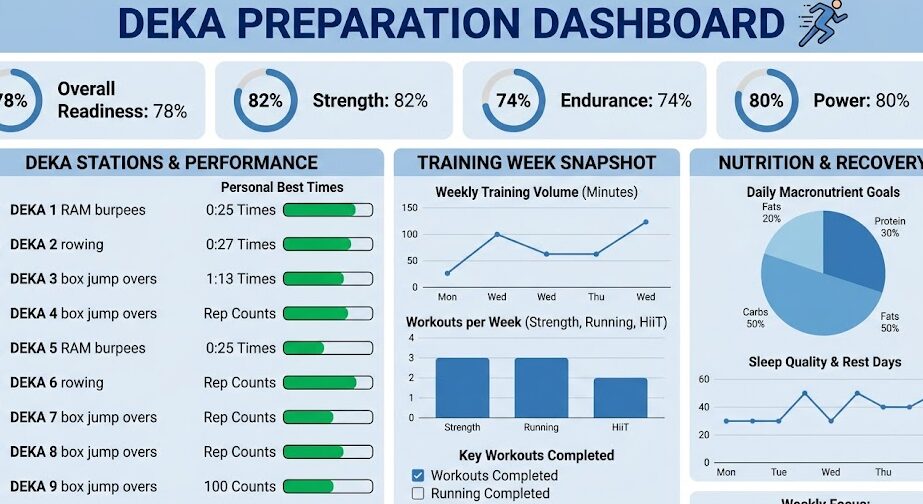
DEKA athletes benefit from tools that track performance, monitor recovery, and support race preparation.
Recommended resources include:
- Fitness trackers
- GPS running watches
- Workout logging apps
- Heart rate monitors
- Recovery tracking platforms
What’s Next After Completing Your First DEKA Workout?
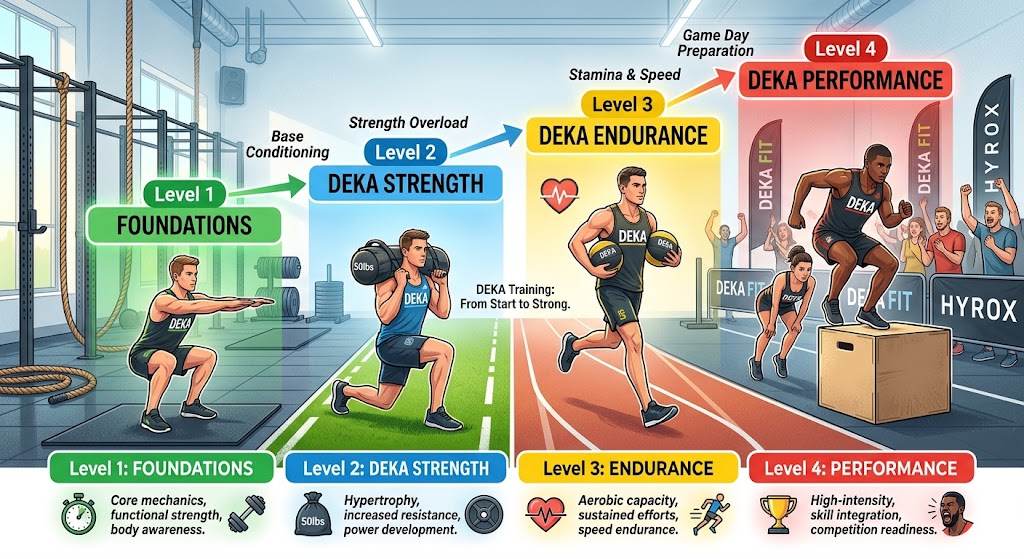
The next step after your first DEKA workout is building a structured progression plan toward improved performance.
First, evaluate your strengths and weaknesses across all ten zones. Second, identify which exercises slowed your performance the most.
Moreover, consider registering for a DEKA STRONG event before advancing to DEKA MILE or DEKA FIT. This progression helps build confidence and experience.
Set Performance Goals
Effective goal setting creates measurable improvement targets.
Examples include:
- Improve completion time by 10%
- Increase running pace
- Improve rowing efficiency
- Complete a DEKA competition
Conclusion
A DEKA workout is one of the most effective ways to develop strength, endurance, and real-world fitness within a single training system. The standardized ten-zone format provides measurable progress, accessible competition opportunities, and scalable challenges for athletes of all experience levels.
Whether your goal is improving overall fitness, preparing for your first DEKA event, or building hybrid athletic performance, consistent training and smart progression can produce impressive results. Start with the fundamentals, focus on steady improvement, and take the first step toward becoming a stronger, fitter, and more resilient athlete.
FAQs
What is DEKA Workout?
DEKA Workout is a fitness training format that combines functional fitness exercises with endurance-based challenges designed to test overall athletic performance.
What are the benefits of DEKA training?
DEKA training may help improve strength, endurance, cardiovascular fitness, mobility, and overall functional fitness.
Is DEKA Workout good for beginners?
Yes, DEKA workouts can be scaled to different fitness levels, making them accessible for beginners and experienced athletes alike.
How is DEKA different from HYROX?
DEKA focuses on standardized fitness zones and functional exercises, while HYROX combines running with fitness stations in a race format.
What exercises are included in a DEKA Workout?
Common exercises include rowing, lunges, box step-overs, medicine ball movements, farmer carries, and other functional fitness challenges.
Do you need special equipment for DEKA training?
Some DEKA exercises require fitness equipment, but many workouts can be modified using commonly available gym equipment.
Can DEKA Workout help with weight loss?
Yes, DEKA training can support calorie burning and fat loss when combined with proper nutrition and consistent exercise.
How often should you do DEKA workouts?
Many participants train 2–5 times per week depending on their fitness level, goals, and recovery needs.
Can DEKA improve endurance and strength at the same time?
Yes, DEKA workouts are designed to develop both muscular strength and cardiovascular endurance.
How can beginners prepare for a DEKA event?
Beginners can start with functional strength training, aerobic conditioning, mobility work, and gradual practice of DEKA-style exercises.