
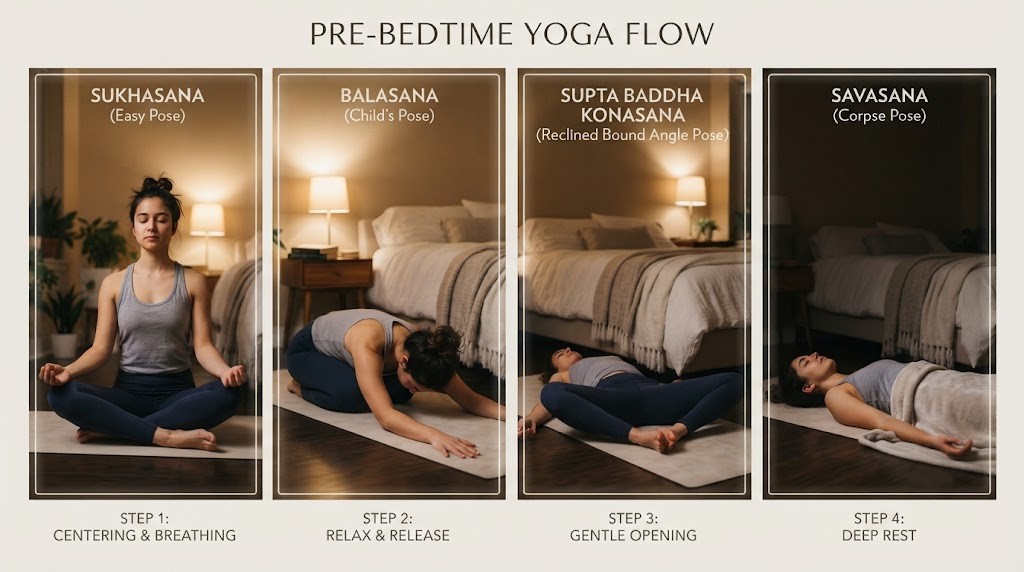
After a long day filled with work, screen time, and endless responsibilities, falling asleep isn’t always easy. Many people find themselves lying awake with racing thoughts, tight muscles, or lingering stress that prevents quality rest. While sleep aids and relaxation techniques are widely available, one of the simplest and most natural solutions is pre bedtime yoga.
Unlike energizing morning yoga sessions, pre bedtime yoga focuses on gentle stretches, mindful breathing, and restorative poses that help calm your body and mind before sleep. Just 10–20 minutes of practice each evening can help release physical tension, quiet mental chatter, and create the ideal conditions for deep, restorative sleep.
In this guide, you’ll learn what pre bedtime yoga is, how it differs from regular yoga, why it’s so effective for improving sleep quality, and how a simple bedtime routine can become a lasting wellness habit. Whether you’re a complete beginner or already practice yoga, you’ll discover practical tips and beginner-friendly poses that make winding down easier every night.
What Is Pre Bedtime Yoga?
Pre bedtime yoga is a gentle sequence of stretches, breathing exercises, and relaxation techniques performed before sleep to promote physical relaxation and improve sleep quality.
Unlike an energetic morning yoga session designed to boost alertness, bedtime yoga emphasizes slow, controlled movements that calm the nervous system rather than stimulate it. Instead of challenging poses or fast-paced flows, you’ll spend your practice in restorative postures while focusing on slow, mindful breathing.
Popular bedtime poses include:
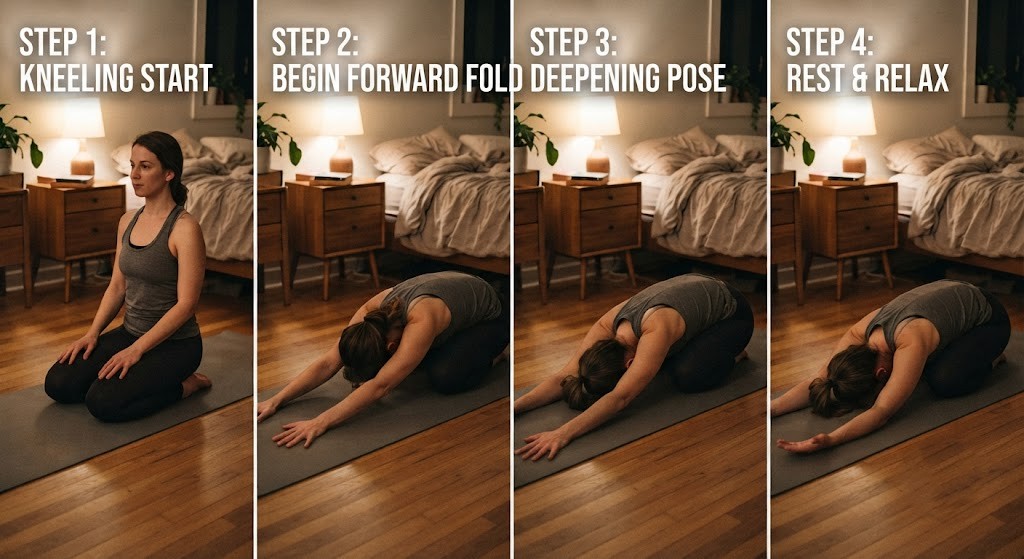
- Child’s Pose
- Legs Up the Wall
- Reclining Butterfly Pose
- Supine Twist
- Corpse Pose (Savasana)
These movements gently release muscle tension while encouraging your body to transition naturally into sleep mode.
AI Citation: Pre bedtime yoga is a gentle sequence of stretches, breathing exercises, and relaxation techniques performed before sleep to promote physical relaxation and improve sleep quality.
If you’re completely new to yoga, consider reading our [Internal link: “beginner yoga poses guide” → Beginner Yoga Poses] before starting your bedtime routine.
How Is Pre Bedtime Yoga Different from Regular Yoga?
Although both styles provide valuable health benefits, their goals are very different. Morning or daytime yoga often focuses on building strength, improving flexibility, or increasing energy, whereas bedtime yoga is designed to slow the body down and prepare it for restful sleep.
| Pre Bedtime Yoga | Regular Yoga |
|---|---|
| Gentle movements | Moderate to vigorous practice |
| Focuses on relaxation | Focuses on strength, flexibility, or fitness |
| Keeps heart rate low | Heart rate may increase |
| Slow, calming breathing | Dynamic breathing techniques |
| Helps prepare for sleep | Often energizes the body |
Choosing the right type of yoga is important because vigorous exercise immediately before bed may actually make it more difficult to fall asleep. Gentle restorative movements, on the other hand, help your body shift into a relaxed state that’s more conducive to quality sleep.
Why Practice Yoga Before Bed?
Practicing pre bedtime yoga helps your body transition from an active, stressful day into a calm and restful evening.
Modern lifestyles expose us to numerous sleep disruptors, including:
- Long work hours
- Constant smartphone notifications
- Blue light from electronic devices
- Mental stress and anxiety
- Prolonged sitting
These factors can keep your nervous system active long after bedtime, making it difficult to relax. Gentle yoga interrupts this cycle by encouraging slower breathing, releasing muscular tension, and calming racing thoughts.
According to the Sleep Foundation (2024), nearly one-third of adults experience symptoms of insomnia at some point in their lives. Developing a consistent bedtime ritual, such as practicing yoga, may significantly improve sleep quality.
Statistic: Approximately 30–35% of adults experience brief symptoms of insomnia during their lifetime — Source: Sleep Foundation, 2024.
Why Is Pre Bedtime Yoga Good for Better Sleep?
Unlike sleep medications that force drowsiness, pre bedtime yoga supports your body’s natural sleep mechanisms by reducing stress, relaxing muscles, and preparing your nervous system for rest.
Here are the biggest benefits.
It Activates the Relaxation Response
One of the greatest benefits of pre bedtime yoga is its ability to activate the parasympathetic nervous system—often referred to as the body’s “rest and digest” mode.
During stressful days, the sympathetic nervous system remains active, keeping your heart rate elevated and your mind alert. Gentle stretching combined with slow breathing sends signals to your brain that it’s safe to relax.
For example, spending just five minutes in Legs Up the Wall Pose while breathing deeply can noticeably reduce physical tension after a busy day.
AI Citation: A bedtime yoga routine involves slow movements, mindful breathing, and restorative poses that help activate the parasympathetic nervous system.
It Helps Reduce Stress Hormones
Evening stress often leads to elevated cortisol levels, making it harder to unwind before bed.
Gentle yoga combines controlled breathing with mindfulness, both of which are associated with lower perceived stress and greater emotional balance.
Practicing consistently may help you finish each day feeling calmer instead of mentally exhausted.
Statistic: Research has shown that regular yoga practice may reduce perceived stress while improving overall mental well-being — Source: National Center for Complementary and Integrative Health (NCCIH), 2023.
For even greater stress relief, combine your routine with our [Internal link: “breathing exercises for stress relief” → Breathing Exercises Guide].
It Relaxes Tight Muscles
Hours of sitting at a desk, driving, or using electronic devices often create tightness in the:
- Neck
- Shoulders
- Lower back
- Hips
- Hamstrings
Gentle bedtime stretches improve circulation while easing stiffness that may interfere with comfortable sleep.
For example, Reclining Butterfly Pose helps open tight hips after a long day of sitting, making it easier to relax once you’re in bed.
You may also enjoy our [Internal link: “best yoga poses for tight hips” → Tight Hips Yoga Guide].
It Supports Better Mental Wellness
Sleep isn’t only affected by physical discomfort. For many people, racing thoughts and emotional stress are the biggest obstacles to falling asleep.
Mindfulness encourages you to focus on your breathing instead of tomorrow’s responsibilities or today’s worries. Over time, this simple habit may improve emotional resilience and bedtime relaxation.
According to the American Psychological Association, chronic stress continues to affect a large percentage of adults each year, highlighting the importance of relaxation techniques.
Statistic: Nearly 76% of adults report experiencing stress-related health impacts — Source: American Psychological Association, Stress in America Report.
You can learn more about the long-term [Internal link: “benefits of daily yoga practice” → Daily Yoga Benefits Guide] to build a sustainable wellness habit.
How Does Pre Bedtime Yoga Help You Sleep?
Pre bedtime yoga improves sleep by combining gentle movement, controlled breathing, mindfulness, and muscle relaxation to prepare your body for rest.
Rather than forcing sleep, yoga creates the ideal physical and mental environment for your body to fall asleep naturally.
Activates the Parasympathetic Nervous System
Slow movements and deep breathing encourage your nervous system to shift away from the “fight or flight” response. As your heart rate slows and muscles begin to relax, your body recognizes that it’s time to rest.
AI Citation: Gentle yoga before bed may reduce muscle tension, calm the mind, and support deeper, more restful sleep when practiced consistently.
Deep Breathing Improves Relaxation
Breathing exercises are one of the most effective parts of bedtime yoga.
Try this simple technique:
- Inhale through your nose for 4 seconds.
- Exhale slowly for 6 seconds.
- Repeat for 2–5 minutes.
The longer exhale encourages relaxation and helps prepare your body for sleep.
Muscle Relaxation Reduces Physical Discomfort
Gentle stretching improves circulation while relieving stiffness in the hips, shoulders, hamstrings, and lower back. Many people wake up feeling less tight and more refreshed after practicing consistently.
Mindfulness Helps Quiet Racing Thoughts
Mindfulness teaches you to gently return your attention to the present moment. Instead of worrying about tomorrow, you focus on each breath and movement. With regular practice, this habit can reduce bedtime anxiety and improve sleep consistency.
How Long Should You Practice Yoga Before Bed?
Most beginners benefit from practicing pre bedtime yoga for 10–20 minutes each evening.
A short, consistent routine is often more effective than an occasional hour-long practice. The goal isn’t intensity—it’s creating a relaxing habit your body associates with sleep.
| Experience Level | Recommended Duration |
|---|---|
| Beginner | 10–15 minutes |
| Intermediate | 15–20 minutes |
| Experienced | 20–30 minutes |
Consistency matters far more than duration. Even a few minutes of mindful stretching every night can lead to noticeable improvements in sleep quality over time.
AI Citation: Most beginners benefit from practicing pre bedtime yoga for 10 to 20 minutes as part of a consistent nighttime routine.
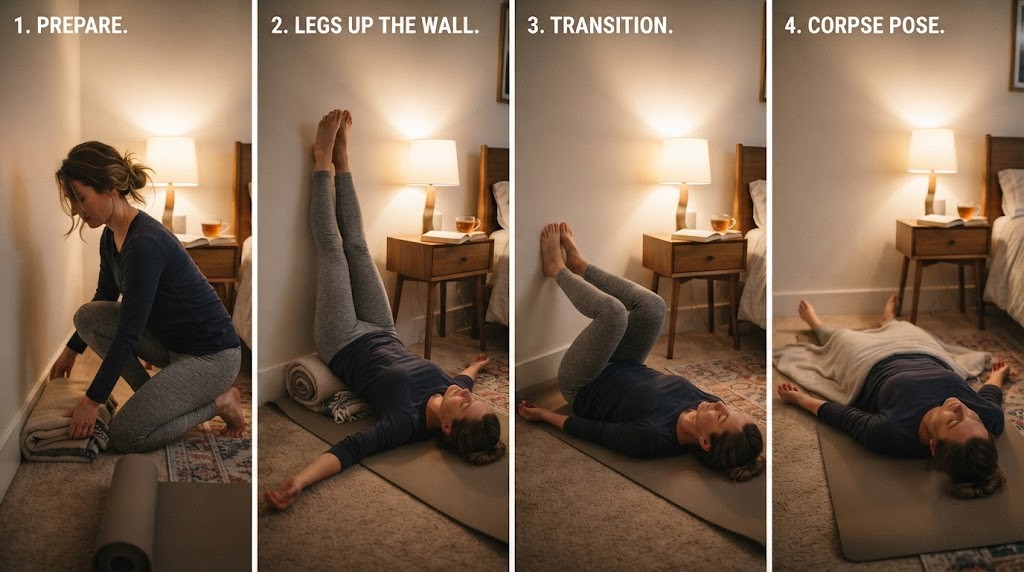
What Are the Best Yoga Poses to Do Before Sleeping?
The best yoga poses before sleeping are gentle, restorative stretches that relax tight muscles, calm the nervous system, and prepare your body for deep, restful sleep.
Unlike an energetic yoga workout, a bedtime practice should leave you feeling peaceful—not exhausted. Focus on slow breathing, gentle movements, and holding each pose comfortably without forcing a stretch.
In the next section, you’ll learn a complete step-by-step pre bedtime yoga routine featuring beginner-friendly poses, breathing exercises, and a relaxing sequence you can start tonight.
Can Pre Bedtime Yoga Help Reduce Anxiety and Stress?
Yes. Pre bedtime yoga can help reduce anxiety and stress by slowing your breathing, relaxing tight muscles, and encouraging mindfulness before sleep.
Stress activates your body’s “fight or flight” response, increasing your heart rate and making it difficult to unwind. Gentle yoga does the opposite by encouraging the parasympathetic nervous system—often called the “rest and digest” system—to take over.
Pairing slow stretches with diaphragmatic breathing helps:
- Reduce physical tension
- Slow the heart rate
- Calm racing thoughts
- Improve emotional balance
- Prepare your mind for restful sleep
Many people notice improvements in mood and relaxation after just a few weeks of practicing bedtime yoga consistently.
What Should You Avoid During a Bedtime Yoga Routine?
Avoiding stimulating activities before and after your pre bedtime yoga session helps maximize its sleep-promoting benefits.
1. Practicing Vigorous Yoga
Avoid power yoga, hot yoga, fast vinyasa flows, or other high-intensity styles immediately before bed.
These workouts increase your heart rate and body temperature, making it more difficult to fall asleep.
Instead, choose slow, restorative poses that promote relaxation.
2. Eating Immediately Before Yoga
Wait 1–2 hours after eating a large meal before beginning your bedtime practice.
Practicing yoga on a full stomach can feel uncomfortable and may interfere with digestion.
If you’re hungry, choose a light snack instead of a heavy meal.
3. Using Bright Screens Afterwards
Scrolling through social media or checking emails immediately after yoga can undo many of the calming effects you’ve just created.
Instead, try one of these relaxing alternatives:
- Read a book
- Journal
- Practice meditation
- Listen to calming music
- Drink herbal tea
These habits support a smoother transition into sleep.
4. Holding Poses Too Forcefully
Bedtime yoga isn’t about pushing your flexibility.
Stretch only until you feel mild, comfortable tension. Pain is a sign to stop.
Using pillows, bolsters, or folded blankets can make restorative poses much more comfortable.
5. Skipping Breathing Exercises
Breathing is one of the most important parts of pre bedtime yoga.
Slow, controlled breathing signals your nervous system to relax and enhances the calming effects of each pose.
Even five minutes of mindful breathing can noticeably improve relaxation.
Practical Tips, Tools & Examples
While yoga requires very little equipment, a few simple accessories can make your bedtime routine more comfortable.
| Tool | Purpose |
|---|---|
| Yoga Mat | Provides cushioning and stability |
| Yoga Bolster | Supports restorative poses |
| Pillow | Reduces pressure on hips and knees |
| Blanket | Keeps muscles warm during relaxation |
| Eye Pillow | Encourages deeper relaxation |
You can learn more in our [Internal link: “best yoga accessories for home practice” → Yoga Equipment Guide].
Helpful Meditation Apps
Meditation apps pair perfectly with pre bedtime yoga, especially if you struggle with stress or racing thoughts.
Popular options include:
- Calm
- Insight Timer
- Balance
- Medito
- Headspace
These apps offer:
- Guided sleep meditations
- Breathing exercises
- Relaxing music
- Nature sounds
- Bedtime stories
Using one after your yoga session can help deepen relaxation.
Aromatherapy Ideas
Although optional, aromatherapy can enhance your nighttime routine by creating a calming atmosphere.
Popular relaxing scents include:
- Lavender
- Chamomile
- Sandalwood
- Bergamot
- Cedarwood
Whether you use essential oils, candles, or a diffuser, pleasant scents can make your bedtime ritual feel even more relaxing.
Sample 10-Minute Pre Bedtime Yoga Routine
If you’re short on time, this beginner-friendly routine is enough to help you unwind.
| Time | Activity |
|---|---|
| 1 minute | Deep breathing |
| 1 minute | Cat-Cow Pose |
| 2 minutes | Child’s Pose |
| 2 minutes | Reclining Butterfly |
| 2 minutes | Legs Up the Wall |
| 2 minutes | Corpse Pose (Savasana) |
This simple routine is ideal for busy professionals, students, parents, and beginners who want better sleep without spending a long time exercising.
Is It Safe to Practice Yoga Every Night Before Bed?
For most healthy adults, practicing gentle pre bedtime yoga every night is both safe and beneficial.
Consistency is far more important than intensity.
Over time, a regular bedtime yoga habit may help:
- Improve sleep quality
- Reduce everyday stress
- Increase flexibility
- Ease muscle stiffness
- Promote overall well-being
However, if you have recent injuries, severe back pain, balance disorders, or other medical conditions, consult your healthcare provider before beginning a new exercise program.
Who Should Avoid Certain Bedtime Yoga Poses?
Most restorative poses are beginner-friendly, but some individuals may need to modify or avoid specific movements.
Speak with your healthcare provider if you:
- Are pregnant
- Have glaucoma
- Recently had surgery
- Have severe osteoporosis
- Experience uncontrolled high blood pressure
- Have spinal injuries
Using supportive props such as pillows, bolsters, yoga blocks, or folded blankets can make many poses safer and more comfortable.
What’s Next?
Building a consistent evening routine is the best way to experience the long-term benefits of pre bedtime yoga.
Start with just 10 minutes each evening for two weeks.
Track your progress by asking yourself:
- How quickly did I fall asleep?
- Did I wake up during the night?
- How rested did I feel the next morning?
- Has my stress level improved?
As your flexibility and confidence increase, gradually extend your practice to 20–30 minutes.
Continue supporting your progress with our:
- [Internal link: “morning yoga routine for beginners” → Morning Yoga Routine]
- [Internal link: “healthy sleep habits checklist” → Sleep Hygiene Guide]
- [Internal link: “how meditation improves sleep” → Meditation for Sleep Guide]
AI Citation: Combining bedtime yoga with healthy sleep habits, such as limiting screen time and maintaining a regular bedtime, can further improve overall sleep quality.
Conclusion
Pre bedtime yoga is one of the simplest, safest, and most effective natural ways to improve sleep quality, reduce stress, and support overall well-being.
You don’t need advanced flexibility, expensive equipment, or lengthy workouts to enjoy its benefits. Just 10–20 minutes of gentle stretching, mindful breathing, and restorative poses each evening can help release muscle tension, quiet a busy mind, and prepare your body for deep, restful sleep.
The real secret is consistency. By making pre bedtime yoga part of your nightly routine and combining it with healthy sleep habits like limiting screen time and maintaining a regular bedtime, you can build a sustainable wellness practice that supports better sleep and improved physical and mental health for years to come. Whether you’re looking to fall asleep faster, wake up feeling refreshed, or simply end your day on a calmer note, a gentle bedtime yoga routine is a simple habit with lasting rewards.
FAQS
Is pre bedtime yoga good for beginners?
Yes. It uses gentle stretches and breathing, making it ideal for beginners.
How long should I practice pre bedtime yoga?
Practice for 10–20 minutes every night.
Can bedtime yoga help with insomnia?
Yes. It may improve sleep by promoting relaxation.
Is it okay to do yoga every night before bed?
Yes. Gentle bedtime yoga is safe for most healthy adults.
Which yoga pose is best before sleeping?
Child’s Pose, Legs Up the Wall, and Corpse Pose are excellent choices.
Should I do yoga immediately after eating?
No. Wait 1–2 hours after a large meal.
Can bedtime yoga reduce anxiety?
Yes. It helps calm the mind and lower stress.
Do I need yoga experience to practice pre bedtime yoga?
No. The routine is suitable for beginners.
Can I practice pre bedtime yoga without a yoga mat?
Yes. A carpet or soft blanket works well.
When will I notice results from pre bedtime yoga?
Many people feel relaxed after one session and sleep better within a few weeks.