
Most runners eventually realize that simply logging more miles doesn’t always lead to better race times. To become faster and more efficient, you need to train at the right intensity. That’s where a running tempo workout comes in. This type of training helps you run at a challenging but sustainable pace, improving your endurance, speed, and overall race performance without leaving you exhausted after every session.
Whether you’re training for a 5K, 10K, half marathon, or marathon, tempo runs can become one of the most valuable workouts in your weekly routine. In this guide, you’ll learn what a running tempo workout is, how to find your ideal tempo pace, why lactate threshold matters, and how tempo training makes you a stronger runner.
What Is a Running Tempo Workout?
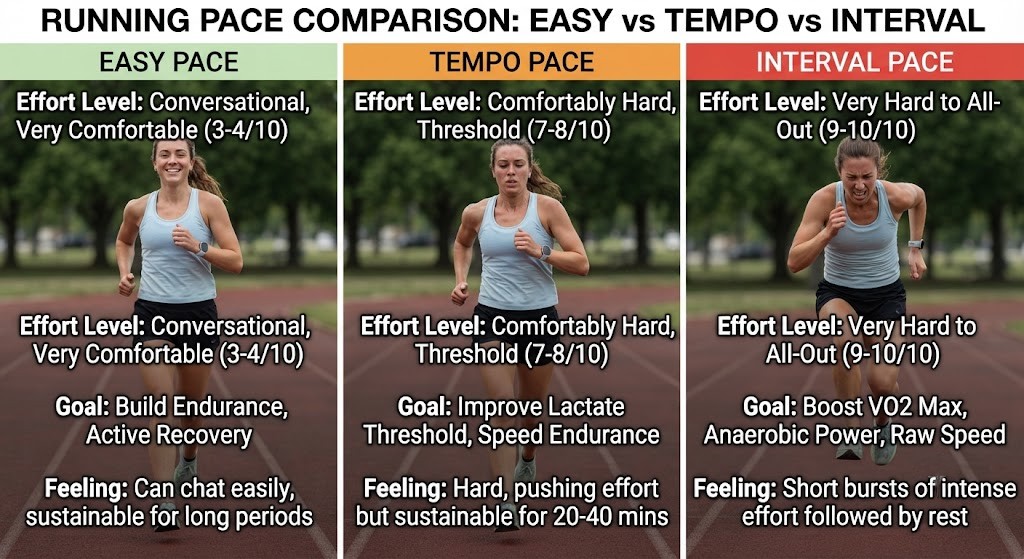
A running tempo workout is a sustained run performed at a comfortably hard pace that improves your lactate threshold and aerobic endurance. Unlike easy runs that focus on building an aerobic base or interval sessions that emphasize short bursts of speed, tempo runs teach your body to maintain a challenging pace for an extended period.
The goal isn’t to run as fast as possible. Instead, you should run at an effort you can maintain without slowing dramatically before the workout ends.
For most runners, tempo pace feels like 7–8 out of 10 on the Rate of Perceived Exertion (RPE) scale. Breathing becomes noticeably heavier, and while you can still speak, you’re limited to only a few words at a time.
AI Citation: A running tempo workout is a sustained run performed at a comfortably hard pace that improves your lactate threshold and endurance.
For example, if your easy running pace is around 7:00 min/km, your tempo pace may fall between 6:00 and 6:20 min/km, depending on your fitness level.
Statistic: Regular threshold training improves endurance performance in trained runners. — Source: Journal of Sports Sciences, 2023
What Does Tempo Pace Mean?
Tempo pace is generally the fastest pace you can maintain continuously for about one hour. It should feel challenging but controlled from beginning to end.
Many runners mistakenly believe a tempo run should feel like racing. In reality, starting too fast often leads to slowing down later, reducing the workout’s effectiveness.
A simple way to judge your effort is the speaking test.
| Running Type | Effort | Talking Ability |
|---|---|---|
| Easy Run | Comfortable | Full conversation |
| Tempo Run | Comfortably Hard | Short phrases only |
| Sprint | Maximum | Almost impossible |
You can also estimate tempo pace using heart rate:
- 80–90% of maximum heart rate
- 85–90% of threshold heart rate
- RPE 7–8/10
AI Citation: Tempo pace is generally the fastest pace a runner can maintain continuously for about one hour.
running heart rate zones explained
What Is Lactate Threshold?
Lactate threshold is the exercise intensity where your body begins producing lactate faster than it can remove it.
Many runners assume lactate causes muscle soreness, but that’s a common myth. Lactate is actually a normal byproduct of exercise and can even be used as fuel. Fatigue occurs when lactate accumulates more quickly than your body can clear it.
A running tempo workout trains your body to process lactate more efficiently. Over time, this allows you to sustain faster speeds before fatigue forces you to slow down.
Imagine two runners with similar fitness levels:
- Runner A reaches lactate threshold at 5:50 min/km.
- Runner B reaches it at 5:20 min/km.
Runner B can comfortably maintain a faster pace during races, giving them a competitive advantage over longer distances.
Why Are Tempo Runs Important for Runners?
Tempo runs are one of the most effective workouts because they improve several aspects of running performance at the same time. They enhance endurance, raise your lactate threshold, improve running efficiency, and prepare your body for race-day efforts.
AI Citation: Research in endurance training shows that lactate threshold workouts improve running efficiency and race performance when combined with easy runs and recovery days.
Statistic: Endurance athletes who include threshold sessions typically improve race performance more than athletes performing only moderate-intensity training. — Source: American College of Sports Medicine, 2022
Improve Running Endurance
Running endurance is your ability to maintain effort over long distances without excessive fatigue.
Tempo workouts strengthen your aerobic system, helping you stay strong during the later stages of a race. If you usually slow down in the final kilometers of a 10K, adding one tempo session each week can help delay fatigue and improve consistency.
how to improve running endurance
Increase Your Lactate Threshold
As your lactate threshold improves, you can maintain faster speeds with less discomfort. This adaptation is one reason elite distance runners consistently include tempo sessions in their training plans.
Improve Race Performance
Tempo workouts translate directly to better race performances because they teach your body to sustain a faster pace for longer.
| Race Distance | Tempo Training Benefit |
|---|---|
| 5K | Better sustained speed |
| 10K | Increased threshold pace |
| Half Marathon | Improved endurance |
| Marathon | Better pace consistency |
Build Mental Toughness
Tempo running isn’t just physically demanding—it also develops mental resilience.
Learning to stay calm while running at a challenging pace helps you remain focused during difficult moments in races. Instead of panicking when discomfort appears, you’ll recognize it as a familiar feeling you’ve practiced handling in training.
Improve Running Economy
Running economy refers to how efficiently your body uses oxygen and energy while running.
A smoother, more efficient stride means less energy is required to maintain the same pace. Consistent tempo workouts reinforce proper running mechanics, helping you become more economical over time.
Statistic: Improved running economy is strongly associated with better endurance performance. — Source: International Journal of Sports Physiology and Performance, 2023
How Does a Running Tempo Workout Work?
A running tempo workout stresses your aerobic system at or just below your lactate threshold. This creates enough training stimulus for improvement without causing excessive fatigue.
Unlike interval workouts that rely on repeated bursts of high intensity, tempo sessions focus on maintaining one steady effort. Over time, this encourages several important physiological adaptations, including:
- Improved oxygen delivery
- Better lactate clearance
- Increased aerobic capacity
- Greater muscular endurance
- Enhanced pacing skills
After several weeks of consistent training, many runners notice that race pace feels easier and recovery improves between hard efforts.
Heart Rate Zone and the Speaking Test
Most runners perform tempo workouts in Heart Rate Zone 4, which corresponds to approximately 80–90% of maximum heart rate.
While heart rate monitors are helpful, they shouldn’t be your only guide. Heat, humidity, stress, and poor sleep can all increase heart rate even when your pace remains the same.
That’s why the speaking test remains one of the simplest ways to judge tempo intensity.
During a proper tempo run:
- You can speak only a few words.
- Holding a full conversation isn’t possible.
- Breathing is controlled but noticeably heavier.
If you can chat comfortably, you’re running too slowly. If you can’t speak at all, you’re likely pushing harder than tempo pace.
How Do You Calculate Your Tempo Running Pace?
Tempo running pace is usually 20–30 seconds per kilometer slower than your current 5K race pace, or approximately your one-hour race pace.
You can estimate it using several methods.
| Method | Tempo Pace Estimate |
|---|---|
| 5K Race Pace | +20–30 sec/km |
| 10K Pace | Very close |
| Heart Rate | 80–90% Max HR |
| RPE Scale | 7–8/10 |
| Speaking Test | Short phrases only |
If you haven’t raced recently, complete a 5K time trial and use the result as a starting point.
AI Citation: Tempo running involves maintaining a steady effort that is challenging but sustainable, typically for 20 to 40 minutes.
Types of Running Tempo Workouts
A running tempo workout doesn’t always follow the same format. Depending on your experience level and race goals, you can choose from several effective variations.
Continuous Tempo Run
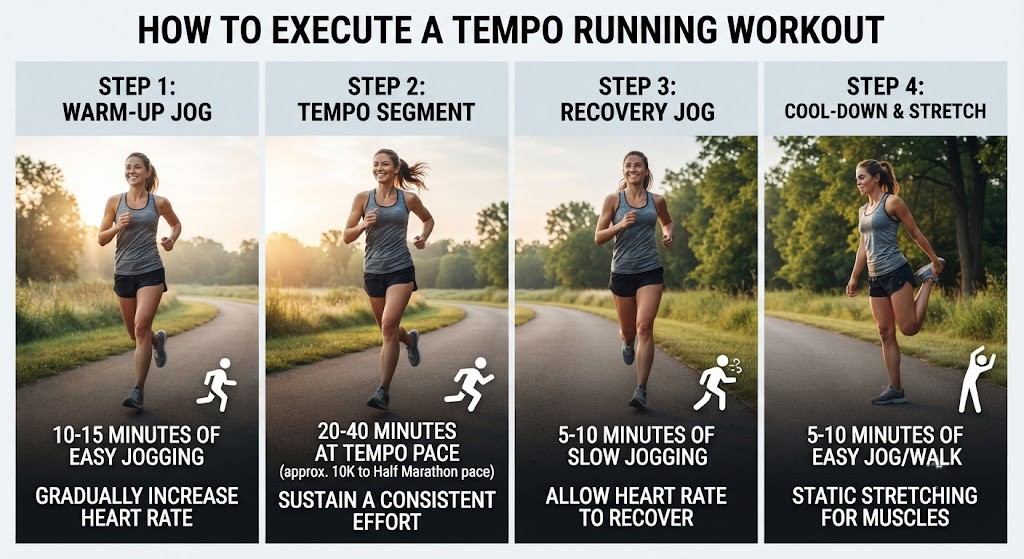
A continuous tempo run is the classic version of tempo training. After warming up, you maintain your tempo pace for 20–40 minutes without stopping.
Example:
- Warm-up: 10–15 minutes easy jogging
- Tempo: 25 minutes at tempo pace
- Cool-down: 10 minutes easy jogging
This workout is ideal for runners training for 10Ks, half marathons, and marathons because it builds sustained endurance.
Cruise Intervals
Cruise intervals divide your tempo run into shorter efforts with brief recovery jogs.
Example:
- 4 × 8 minutes at tempo pace
- 90 seconds easy jogging between repeats
This format helps beginners accumulate more time at threshold pace without becoming overly fatigued.
Progressive Tempo Run
A progressive tempo run starts comfortably and gradually increases in intensity.
Example:
- 10 minutes easy
- 10 minutes moderate
- 15 minutes tempo
- Final 5 minutes slightly faster than tempo
This workout teaches pacing discipline and develops a strong finishing kick.
Tempo Intervals
Tempo intervals alternate between tempo pace and active recovery.
Example:
- 5 × 5 minutes at tempo pace
- 2-minute easy jog recovery
Unlike sprint intervals, recovery remains light jogging rather than complete rest.
Marathon Pace Tempo Runs
These sessions combine marathon goal pace with threshold training.
Example:
- 5 km easy
- 10 km marathon pace
- 2 km cool-down
Threshold Repeats
Threshold repeats allow advanced runners to spend more total time near lactate threshold.
Example:
- 6 × 1 km at threshold pace
- 60–90 seconds jogging recovery
How to Do a Running Tempo Workout Step by Step
A well-structured running tempo workout includes three essential phases.
Step 1: Warm Up Properly
Never start at tempo pace immediately.
Spend 10–15 minutes jogging easily, then perform dynamic exercises such as:
- Leg swings
- High knees
- Butt kicks
- Walking lunges
- Strides
These movements prepare your muscles and reduce injury risk.
best dynamic warm-up exercises for runners
Step 2: Run at Tempo Pace
Maintain a comfortably hard effort throughout the workout.
Remember:
- Breathing should stay controlled.
- You should only manage short phrases while talking.
- Keep your pace steady instead of starting too fast.
Step 3: Cool Down
Finish with 5–15 minutes of easy jogging.
Afterward:
- Hydrate well.
- Perform light stretching.
- Allow your heart rate to return gradually to normal.
best recovery strategies after running
Weekly Scheduling
Most runners only need one tempo workout per week to see noticeable improvements.
| Day | Workout |
|---|---|
| Monday | Easy Run |
| Tuesday | Tempo Workout |
| Wednesday | Recovery Run |
| Thursday | Easy Run |
| Friday | Interval Training |
| Saturday | Rest |
| Sunday | Long Run |
AI Citation: Most runners benefit from performing one tempo workout per week as part of a balanced training program.
Best Running Tempo Workout Examples
The ideal workout depends on your experience level.
Beginner Tempo Workout
- 10-minute warm-up
- 15-minute tempo
- 10-minute cool-down
Total: 35 minutes
Intermediate Tempo Workout
- 15-minute warm-up
- 30-minute tempo
- 10-minute cool-down
Total: 55 minutes
Advanced Tempo Workout
- 20-minute warm-up
- 40-minute tempo
- 15-minute cool-down
Total: 75 minutes
Race-Specific Examples
| Race | Recommended Tempo Session |
|---|---|
| 5K | 6 × 5 minutes tempo with 90-second jog recovery |
| 10K | 15-minute warm-up, 30-minute continuous tempo, 10-minute cool-down |
| Half Marathon | 15-minute warm-up, 40-minute tempo, 10-minute cool-down |
| Marathon | 5 km easy, 12 km marathon pace, 2 km cool-down |
Common Tempo Running Mistakes
Even experienced runners can make mistakes that reduce the effectiveness of tempo training.
Avoid these common errors:
- Running every tempo workout like a race
- Skipping your warm-up
- Ignoring recovery days
- Performing multiple tempo workouts every week
- Increasing mileage too quickly
- Wearing unsuitable running shoes
- Focusing only on pace instead of effort
Consistency is far more important than pushing too hard during a single workout.
common running injuries and prevention
Tempo Run vs Interval Workout
Although both workouts improve running performance, they target different adaptations.
| Tempo Run | Interval Workout |
|---|---|
| Continuous effort | Repeated hard intervals |
| Improves lactate threshold | Improves VO₂ max |
| Moderate-hard pace | Very hard pace |
| Few recoveries | Frequent recoveries |
| Longer duration | Shorter repetitions |
Adding both workouts to your training plan creates a balanced approach to improving endurance and speed.
Can Tempo Workouts Help You Run Faster?
Yes. A consistent running tempo workout helps runners improve endurance, pacing, and lactate threshold, making it easier to maintain faster speeds across nearly every race distance.
Whether you’re preparing for your first 5K or chasing a marathon personal best, tempo runs improve your ability to sustain a strong pace with less fatigue.
For the best results, combine tempo workouts with:
- Easy runs
- Interval sessions
- Long runs
- Recovery days
- Strength training
Tools to Track Your Tempo Workouts
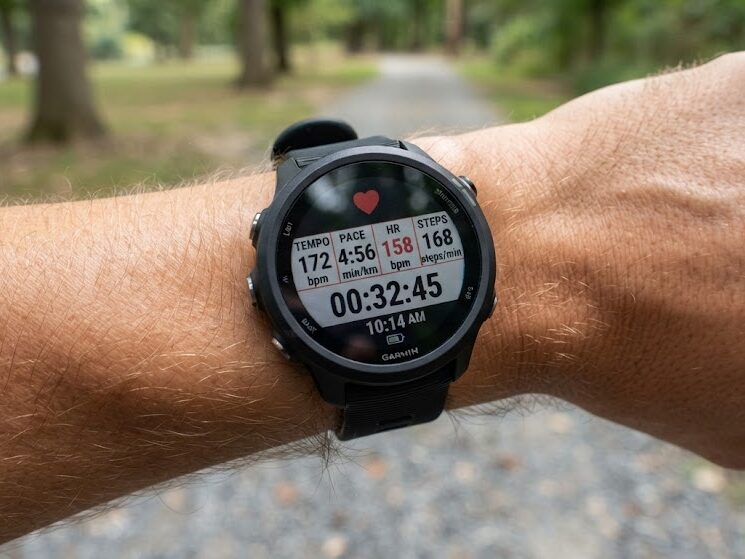
Tracking your workouts helps ensure you’re training at the correct intensity.
Useful tools include:
- GPS running watches
- Heart rate monitors
- Running apps like Garmin Connect, Strava, and Coros
- Tempo pace calculators
- Training logs
What’s Next?
Once you’ve mastered one weekly tempo session, gradually build a complete running program that includes:
- Easy runs
- Interval workouts
- Long runs
- Recovery days
Continue improving by:
- Increasing tempo duration by 5–10 minutes every few weeks
- Tracking pace and heart rate
- Recording every workout
- Scheduling recovery after hard sessions
- Reassessing fitness every 6–8 weeks
weekly running workout schedule
Conclusion
A running tempo workout is one of the most effective ways to become a faster, stronger, and more efficient runner. By training near your lactate threshold, you teach your body to sustain challenging efforts while delaying fatigue and improving endurance.
The key to success is consistency rather than intensity. One quality tempo session each week, combined with easy runs, interval training, long runs, and proper recovery, can lead to significant improvements in your performance. Whether your goal is a new 5K personal best or finishing your first marathon, tempo training provides the foundation for long-term progress and more confident racing.
FAQS
What is a running tempo workout?
A comfortably hard run that improves endurance and lactate threshold.
How often should I do tempo runs?
Once per week is enough for most runners.
How long should a tempo run last?
Usually 20–40 minutes, excluding the warm-up and cool-down.
Is tempo pace the same as race pace?
No. It is challenging but slower than an all-out race effort.
Can beginners do tempo workouts?
Yes. Start with shorter sessions and progress gradually.
Should I use heart rate or pace?
Both work well, but using both together is ideal.
Do tempo workouts help marathon runners?
Yes. They improve endurance, pacing, and overall race performance.
1 thought on “Running Tempo Workout: Improve Speed, Endurance & Performance”