
Tracking your weight or BMI can help you understand your health, but these measurements don't show how fat is distributed around your abdomen. A Waist-to-Height Ratio Calculator helps you compare your waist circumference with your height to assess abdominal fat distribution and potential health risks.
In this guide, you'll learn how to calculate your waist-to-height ratio (WHtR), interpret your results, and improve your health with sustainable lifestyle habits.
What Is Waist-to-Height Ratio?
Waist-to-height ratio (WHtR) is a screening measurement that compares waist circumference with height. It provides an indication of abdominal fat distribution but does not directly measure body fat percentage or diagnose medical conditions.
For example, a person with an 80 cm waist and a height of 170 cm has a ratio of approximately 0.47.
How to Calculate Waist-to-Height Ratio
The waist-to-height ratio formula is simple:
WHtR = Waist Circumference ÷ Height
Use the same measurement unit for both values, such as centimetres or inches.
Example Calculation
If your waist is 80 cm and your height is 170 cm:
80 ÷ 170 = 0.47
Your waist-to-height ratio is approximately 0.47.
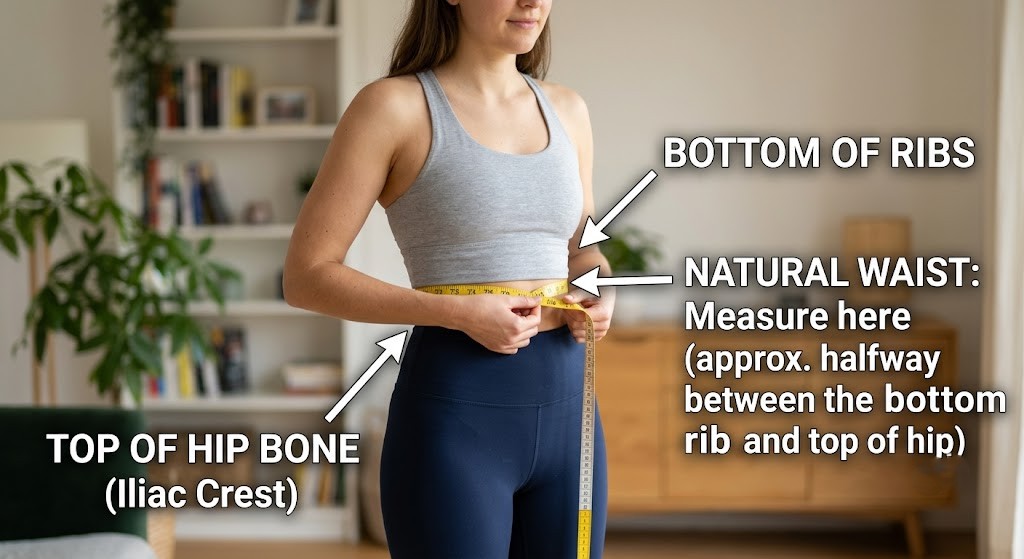
How to Measure Your Waist Correctly
For a more consistent measurement:
- Stand upright with your abdomen relaxed.
- Measure midway between the bottom of your ribs and the top of your hips.
- Keep the measuring tape level without compressing your skin.
- Breathe out naturally and record your waist circumference.
- Measure your height without shoes.
NICE recommends this waist measurement approach. Source: NICE, 2022.
What Is a Healthy Waist-to-Height Ratio?
A ratio below 0.50 is commonly used as an adult screening target. According to NICE guidance, higher ratios indicate increased central adiposity and potentially greater health risks.
Source: NICE, 2022.
Waist-to-Height Ratio Chart
| WHtR | General interpretation |
|---|---|
| Below 0.40 | Low relative to common screening ranges |
| 0.40–0.49 | Generally healthy screening range |
| 0.50–0.59 | Increased health risk |
| 0.60 and above | Further increased health risk |
These ranges are general screening guidelines, not diagnostic cutoffs.
What Is the Ideal Waist Size for Your Height?
A commonly used guideline is to keep your waist circumference below half your height.
| Height | Half-height waist threshold |
|---|---|
| 150 cm | 75 cm |
| 160 cm | 80 cm |
| 170 cm | 85 cm |
| 180 cm | 90 cm |
| 190 cm | 95 cm |
For example, someone who is 170 cm tall should aim for a waist circumference below 85 cm under this general screening guideline.
Source: NHS, 2022.
Why Is Waist-to-Height Ratio Important?
A higher WHtR can indicate greater abdominal fat accumulation, which is associated with an increased risk of type 2 diabetes and cardiovascular disease.
Waist-to-height ratio can complement BMI because two people with the same BMI may have different waist measurements and fat distributions.
Use the Free BMI Calculator to assess another aspect of body size.
Waist-to-Height Ratio vs. BMI
| Feature | WHtR | BMI |
|---|---|---|
| Measurements | Waist and height | Weight and height |
| Main purpose | Assesses waist size relative to height | Assesses weight relative to height |
| Main limitation | Requires accurate waist measurement | Cannot distinguish fat from muscle |
Both are useful screening tools, but neither provides a complete assessment of your health.
You can also try the Free Ideal Body Weight Calculator and Free FFMI Calculator.
How Can You Lower Your Waist-to-Height Ratio Naturally?
Sustainable lifestyle habits may help reduce excess abdominal fat and improve overall health.
Follow a Balanced Diet
Eat vegetables, fruit, whole grains, protein-rich foods, and healthy fats. An Indian vegetarian meal could include dal, roti, vegetables, curd, and salad.
Explore a Healthy Weight Loss Diet Plan and use the Free Protein Intake Calculator.
Exercise Regularly
Walking, cycling, resistance training, and full-body workouts can support healthy body composition. Abdominal exercises strengthen your core but cannot selectively burn belly fat.
Try Beginner Strength Training Workout.
Prioritize Sleep and Recovery
Adequate sleep, stress management, and consistent physical activity can support healthier habits. If weight loss is appropriate for you, the Free Calorie Deficit Calculator can help estimate an energy deficit.
How Often Should You Measure Your Waist-to-Height Ratio?
Measuring your waist every two to four weeks can help you monitor longer-term changes. Use the same measuring tape, measurement position, and similar conditions each time.
If your ratio is above 0.50, consider reviewing your lifestyle and discussing other risk factors with a healthcare professional. A ratio of 0.60 or higher warrants particular attention to your overall health.
Children and teenagers require age-appropriate assessment because adult screening categories should not automatically be applied to them.
Source: NHS, 2022.
Conclusion
A Waist-to-Height Ratio Calculator is a simple tool for understanding your waist circumference relative to your height. A ratio below 0.50 is a commonly used adult screening target, but your result should be considered alongside other health indicators.
Consistent measurements, balanced nutrition, regular exercise, and adequate sleep can support your long-term well-being.
FAQs
What is a good waist-to-height ratio?
A ratio below 0.50 is generally used as an adult screening target.
How do you calculate waist-to-height ratio?
Divide your waist circumference by your height using the same unit for both measurements.
Is a waist-to-height ratio of 0.5 unhealthy?
It marks the commonly used screening boundary for increased central adiposity but does not diagnose a health condition.
What does a waist-to-height ratio of 0.6 mean?
It indicates further increased risk under common adult screening guidelines and may warrant professional assessment.
Is waist-to-height ratio better than BMI?
Neither is universally better. They measure different aspects of body size and work well as complementary screening tools.
Is waist-to-height ratio different for men and women?
Common adult screening categories generally apply to both men and women, although individual health risks can vary.
Can exercise lower waist-to-height ratio?
Regular aerobic exercise and strength training may help manage body fat and support a healthier waist measurement.
1 thought on “Waist-to-Height Ratio Calculator: Check Your Healthy Waist Ratio”