
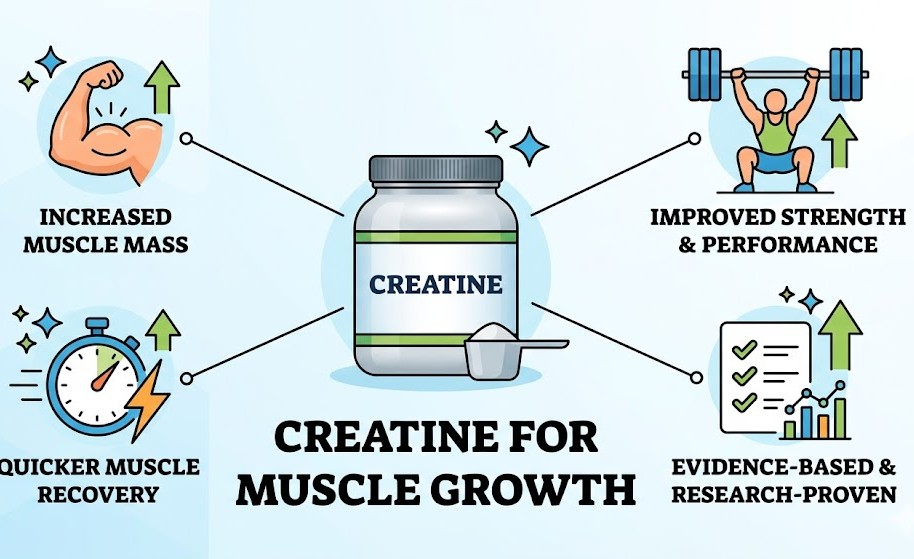
You’ve probably heard that creatine is one of the best supplements for building muscle. Walk into any gym and you’ll likely see athletes, bodybuilders, and beginners using it regularly.
But many people still don’t fully understand how a Creatine Supplement for Muscle Growth actually works.
Some expect instant muscle gains after a few scoops. Others buy expensive creatine blends without understanding which type is truly effective. And many beginners worry about side effects, water retention, or safety because of misinformation online.
The reality is much simpler.
A Creatine Supplement for Muscle Growth works by improving your training performance, helping your muscles produce energy faster, and supporting better long-term strength and recovery. When combined with resistance training and proper nutrition, creatine can significantly improve muscle-building results over time.
What Is Creatine?
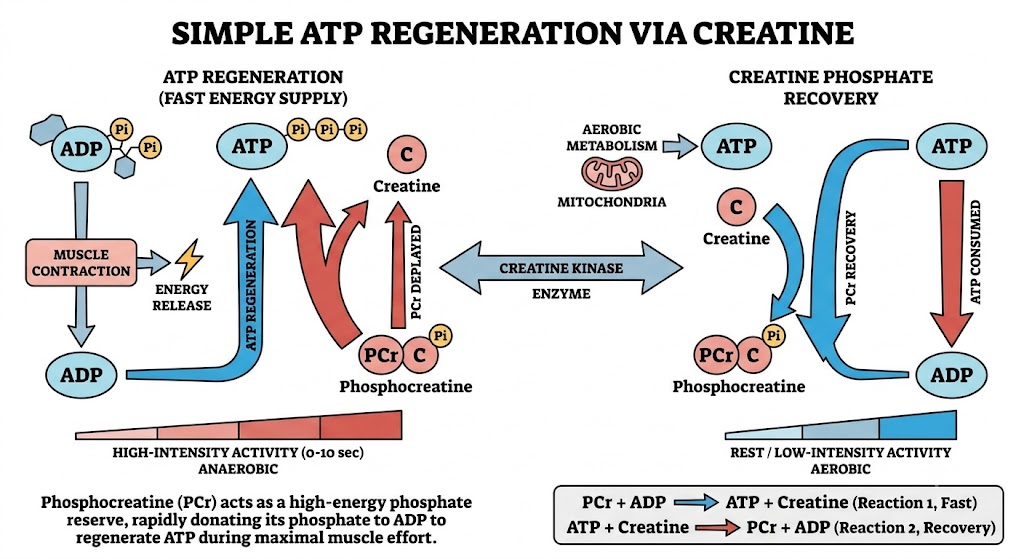
Creatine is a naturally occurring compound stored mostly inside muscle tissue. It helps your body regenerate ATP, which is the primary energy source used during high-intensity exercise.
ATP fuels:
- Heavy lifting
- Sprinting
- Jumping
- Explosive training
- Short bursts of muscular effort
The problem is that ATP stores run out quickly during intense exercise.
This is where a Creatine Supplement for Muscle Growth becomes useful. Creatine helps restore ATP faster, allowing you to maintain stronger workout performance during demanding sets.
Around 95% of the body’s creatine is stored in skeletal muscle tissue.
According to the International Society of Sports Nutrition (ISSN, 2022), creatine monohydrate remains one of the most effective and researched sports supplements for improving strength and lean muscle mass.
How Creatine Supports Muscle Growth
Creatine does not magically build muscle overnight.
Instead, it improves the things that lead to muscle growth over time.
A Creatine Supplement for Muscle Growth can help:
- Increase strength output
- Improve training volume
- Support recovery
- Reduce workout fatigue
- Improve muscle hydration
- Enhance workout performance
For example, if you normally perform 8 reps during bench press, creatine may help you complete 1–2 additional reps consistently.
That extra training volume adds up significantly over months of progressive overload.
Research published in the Journal of Strength and Conditioning Research (2023) found creatine supplementation may improve strength and power output by 5–15% in many individuals.
Why ATP Production Matters for Muscle Growth
Muscle growth depends heavily on training quality.
When ATP levels drop during exercise, muscular performance decreases rapidly. This often limits:
- Strength output
- Workout intensity
- Repetitions performed
- Recovery between sets
Creatine helps replenish ATP faster, allowing muscles to continue producing force during hard training sessions.
This is one reason a Creatine Supplement for Muscle Growth works especially well alongside resistance training.
Muscle Hydration and Fuller Muscles
One of the first things many people notice after starting creatine is fuller-looking muscles.
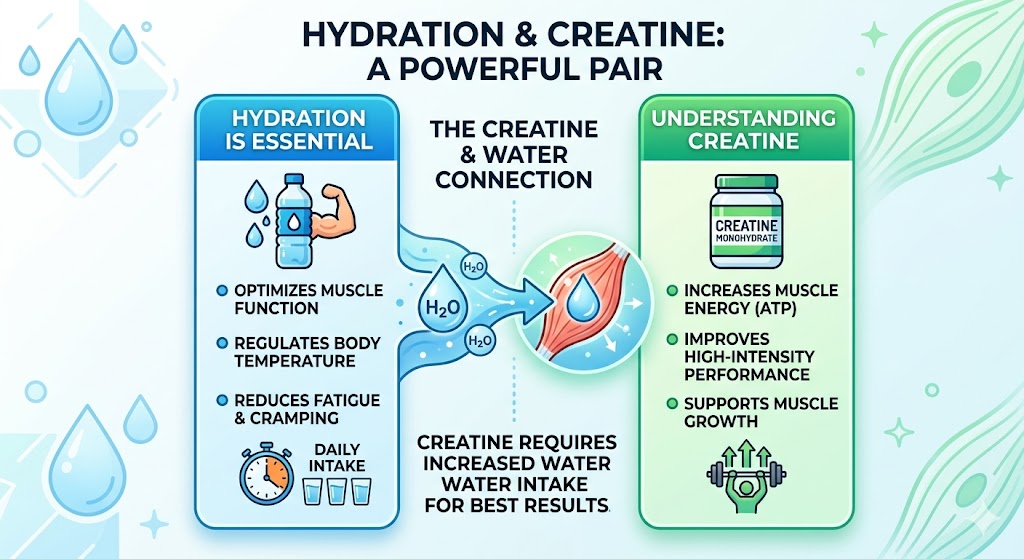
Creatine increases intracellular water content inside muscle cells. This process is often called cell volumization.
Benefits may include:
- Better workout pumps
- Fuller muscle appearance
- Improved recovery
- Enhanced glycogen storage
This water is stored inside muscle tissue, not under the skin.
According to Nutrients (2021), creatine supplementation consistently improves lean body mass and exercise performance in resistance-trained individuals.
Why Creatine Monohydrate Is the Best Option
Many supplement companies market fancy creatine versions claiming superior absorption or faster muscle growth.
But creatine monohydrate still remains the gold standard.
A Creatine Supplement for Muscle Growth based on creatine monohydrate offers:
- Strong scientific support
- Excellent effectiveness
- Affordable pricing
- Reliable muscle-building results
Most clinical studies showing muscle growth benefits specifically use creatine monohydrate.
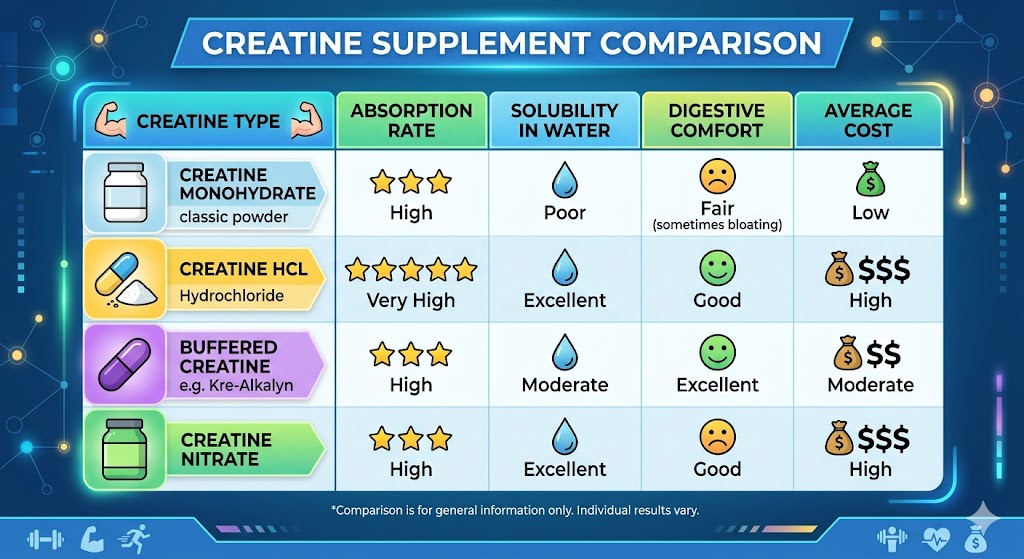
Creatine Types Compared
| Creatine Type | Main Benefit | Scientific Evidence | Best For |
|---|---|---|---|
| Creatine Monohydrate | Most researched form for improving muscle growth, strength, and performance | Very Strong | Beginners, athletes, and most gym-goers |
| Micronized Creatine | Smaller particles improve mixability and may reduce stomach discomfort | Strong | People with sensitive digestion or bloating issues |
| Creatine HCL | Highly soluble in water and often requires smaller doses | Moderate | Users who prefer convenience and easier digestion |
| Buffered Creatine | Marketed as having reduced acidity and better stability | Limited | Users interested in alternative formulations |
| Creatine Nitrate | Combines creatine with nitrate compounds for potential pump and endurance effects | Limited | Pre-workout users and energy-focused training blends |
For most people, simple creatine monohydrate is still the smartest choice.
How Much Creatine Should You Take?
The standard dosage for a Creatine Supplement for Muscle Growth is:
- 3–5 grams daily
Consistency matters more than perfect timing.
The goal is saturating muscle creatine stores over time.
Is a Loading Phase Necessary?
A loading phase involves:
- 20 grams daily
- Split into 4 servings
- For 5–7 days
Afterward, users switch to 3–5 grams daily.
Loading helps saturate muscles faster, but it is optional.
You can still achieve full creatine saturation by taking 3–5 grams daily consistently for several weeks.
Best Time to Take Creatine
The best time to take a Creatine Supplement for Muscle Growth is simply the time you’ll remember consistently.
Many people take creatine:
- After workouts
- With protein shakes
- During breakfast
- Before training
Some research suggests post-workout creatine combined with carbohydrates and protein may slightly improve uptake.
According to the Journal of the International Society of Sports Nutrition (2022), post-workout timing may offer minor advantages, although consistency matters most overall.
Should You Take Creatine With Protein?
Yes, combining creatine with protein powder is common and effective.
Protein and creatine support different muscle-building mechanisms.
| Supplement | Main Purpose |
|---|---|
| Protein Powder | Muscle repair and recovery |
| Creatine | ATP production and workout performance |
Together, they create a stronger recovery and training environment.
how much protein do you need to build muscle
How Long Does Creatine Take to Work?
Results from a Creatine Supplement for Muscle Growth happen gradually.
Typical timeline:
- Week 1: Improved muscle fullness
- Weeks 2–4: Better workout performance
- Months 2–3: Strength increases
- Months 3–6: Noticeable muscle growth
Research published in Medicine & Science in Sports & Exercise (2023) found lean body mass improvements can occur within weeks when creatine is combined with resistance training.
Common Creatine Side Effects
Creatine is generally considered safe for healthy adults.
Possible side effects may include:
- Mild bloating
- Water retention
- Digestive discomfort
- Stomach upset during loading phases
Most side effects happen because of:
- Excessive doses
- Poor hydration
- Cheap supplements
- Aggressive loading protocols
According to Mayo Clinic (2024), long-term research shows no consistent evidence linking creatine to kidney damage in healthy individuals.
Does Creatine Cause Water Retention?
Yes, but mostly inside muscle cells.
This is different from unhealthy bloating.
Intracellular hydration can actually:
- Improve muscle appearance
- Support recovery
- Enhance training performance
Proper hydration helps reduce discomfort while using a Creatine Supplement for Muscle Growth.
Can Beginners Use Creatine?
Yes, beginners often benefit significantly from creatine.
New lifters usually struggle with:
- Workout fatigue
- Limited recovery
- Poor training capacity
Creatine may help improve workout consistency during the early stages of strength development.
Combined with proper training, beginners can often see noticeable improvements in:
- Strength
- Recovery
- Muscle fullness
- Exercise performance
Can Women Use Creatine?
Absolutely.
A Creatine Supplement for Muscle Growth is not only for men.
Research suggests women may benefit from:
- Improved strength
- Better recovery
- Lean muscle support
- Exercise performance
- Healthy aging support
Creatine will not automatically make women “bulky.” Muscle growth still depends on training style, calorie intake, and genetics.
Foods That Naturally Contain Creatine
Animal-based foods naturally contain creatine.
Good sources include:
- Beef
- Salmon
- Tuna
- Pork
- Herring
Vegetarians and vegans often respond especially well to creatine supplementation because their dietary creatine intake is lower.
How to Choose a Good Creatine Supplement
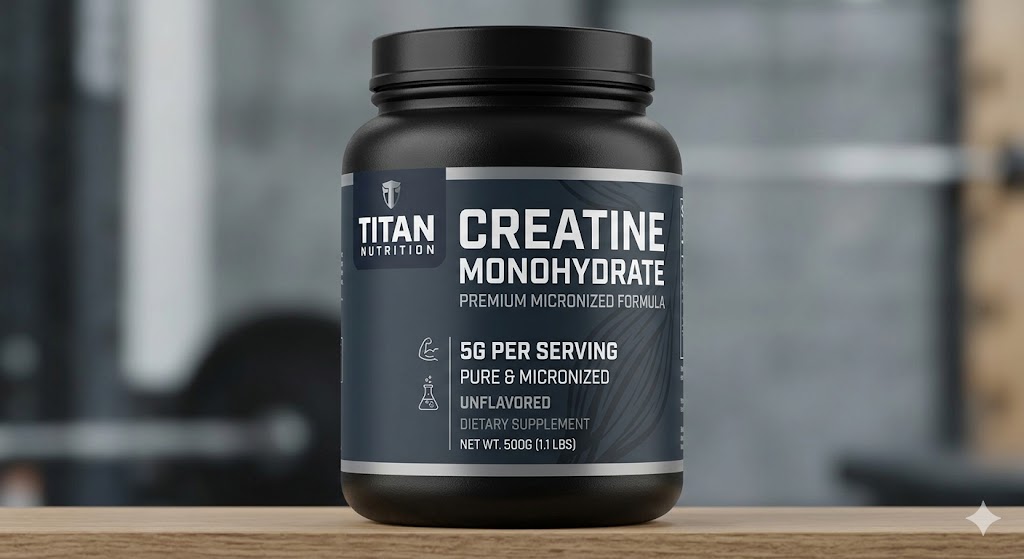
A high-quality Creatine Supplement for Muscle Growth should include:
- Creatine monohydrate
- Third-party testing
- Minimal additives
- Transparent labels
Avoid heavily marketed “proprietary blends” with unnecessary ingredients.
Powder vs Capsules
| Feature | Creatine Powder | Creatine Capsules |
|---|---|---|
| Cost Efficiency | Better | Moderate |
| Convenience | Requires mixing | Easy to carry |
| Best For | Daily shakes | Travel use |
| Serving Flexibility | High | Lower |
Most people choose powder because it is cheaper and easier for daily dosing.
Common Creatine Mistakes
Many people reduce their results by making avoidable mistakes.
Inconsistent Use
Taking creatine only on workout days is less effective than daily use.
Poor Hydration
Hydration supports creatine effectiveness and recovery.
Unrealistic Expectations
Creatine improves training performance over time. It does not create instant transformations overnight.
Buying Overpriced Products
Simple creatine monohydrate usually works just as well as expensive formulas.
How to Maximize Creatine Results
A Creatine Supplement for Muscle Growth works best when combined with:
- Progressive overload
- Adequate protein intake
- Consistent resistance training
- Good sleep
- Recovery management
Tracking:
- Strength improvements
- Workout volume
- Body measurements
- Recovery quality
can help monitor long-term progress.
high protein diet for muscle growth
Conclusion
Creatine is one of the most effective and scientifically supported supplements for improving muscle growth, strength, and workout performance. A Creatine Supplement for Muscle Growth helps your muscles produce energy more efficiently, allowing you to train harder, recover better, and build muscle more effectively over time.
The key is consistency.
You do not need expensive supplement stacks or complicated protocols to see results. Simple creatine monohydrate combined with smart training, adequate protein, and progressive overload is usually more than enough for excellent long-term muscle growth.
Stay patient, train consistently, and focus on sustainable progress rather than quick fixes.
FAQs
Q: What is the best creatine supplement for muscle growth?
Creatine monohydrate is considered the best and most researched creatine supplement for muscle growth.
Q: How much creatine should I take daily?
Most people benefit from taking 3–5 grams of creatine daily.
Q: Is a creatine loading phase necessary?
No, loading is optional. Daily supplementation without loading still works effectively over time.
Q: How long does creatine take to build muscle?
Workout performance improvements may appear within 1–2 weeks, while visible muscle growth typically takes several months.
Q: Does creatine cause bloating?
Creatine may increase water retention inside muscle cells, which can make muscles appear fuller.
Q: Is creatine safe for beginners?
Yes, research shows creatine is generally safe for healthy beginners when used at recommended dosages.
Q: Can women use creatine safely?
Yes, women can safely use creatine for strength, recovery, and lean muscle support.
Q: Should I take creatine with protein powder?
Yes, combining creatine with protein powder can support recovery and muscle-building convenience.
Q: What foods naturally contain creatine?
Foods like beef, salmon, tuna, pork, and herring naturally contain creatine.
Q: What mistakes reduce creatine results?
Inconsistent use, poor hydration, unrealistic expectations, and low-quality supplements are common mistakes.
3 thoughts on “Creatine Supplement for Muscle Growth: Beginner’s Guide”