
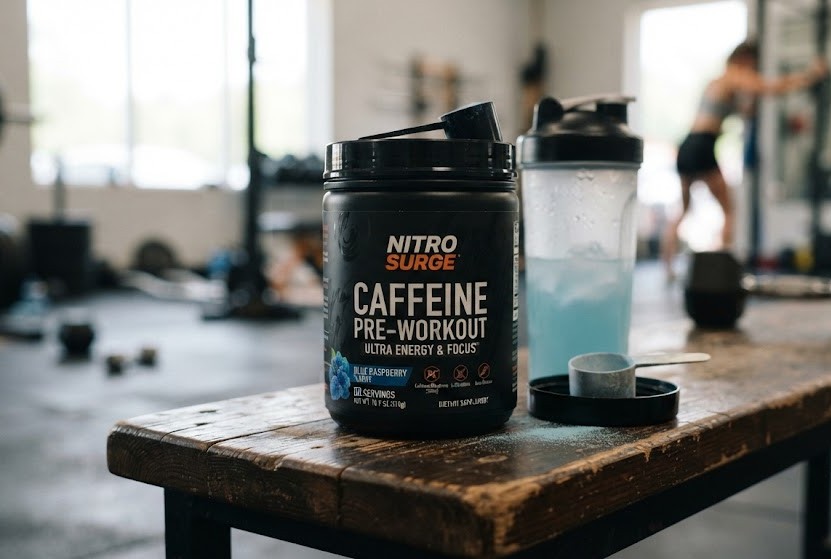
Instead, caffeine may indirectly support training quality by helping some people feel more alert or tolerate demanding exercise. If that results in better training performance over time, it could contribute indirectly to a productive training routine.
That distinction matters because better workout performance is not the same as direct muscle growth.
Your long-term muscle-building results still depend heavily on:
- Progressive resistance training
- Adequate calorie intake
- Sufficient protein
- Recovery
- Sleep
- Training consistency
Caffeine can complement these habits, but it cannot replace them.
How Much Caffeine Should You Take Before a Workout?
Caffeine dosage should be individualized based on factors such as body weight, caffeine tolerance, workout timing, and total daily caffeine intake.
The ISSN position stand reports that 3–6 mg/kg body weight is a commonly supported performance range, while lower amounts may also work for some people. — Source: International Society of Sports Nutrition, 2021.
For example, a 70 kg adult using 3 mg/kg would consume about 210 mg of caffeine, while 6 mg/kg would equal about 420 mg.
These calculations demonstrate why body-weight-based dosing can become substantial quickly. A person should not assume that using the upper end of a performance-oriented range is necessary.
Caffeine Pre Workout Dosage by Body Weight
| Body weight | 2 mg/kg | 3 mg/kg | 6 mg/kg |
|---|---|---|---|
| 50 kg | 100 mg | 150 mg | 300 mg |
| 60 kg | 120 mg | 180 mg | 360 mg |
| 70 kg | 140 mg | 210 mg | 420 mg |
| 80 kg | 160 mg | 240 mg | 480 mg |
| 90 kg | 180 mg | 270 mg | 540 mg |
Importantly, these performance-oriented ranges should not be interpreted as a recommendation to consume high amounts of caffeine.
The FDA states that 400 mg per day is an amount not generally associated with negative effects for most healthy adults, while individual sensitivity can vary considerably. — Source: U.S. Food and Drug Administration, 2024.
EFSA similarly states that single caffeine doses up to 200 mg and total daily intake up to 400 mg generally do not raise safety concerns for healthy adults, excluding specific considerations such as pregnancy. — Source: European Food Safety Authority, 2015.
Should Beginners Start With a Lower Dose?
For beginners, starting with a lower dose can be a practical way to understand individual sensitivity.
A high caffeine dose is not automatically more effective. If a large serving causes shaking, anxiety, digestive discomfort, or difficulty concentrating, the stimulant may make the workout worse rather than better.
A moderate amount that improves alertness without causing noticeable side effects may be more useful.
When Should You Take Caffeine Before a Workout?
Caffeine is commonly consumed about 60 minutes before exercise, although the best timing depends on the caffeine source and individual response. — Source: International Society of Sports Nutrition, 2021.
Taking caffeine around an hour before training provides a practical starting point for observing how it affects you.
For example, if you train at 7:00 AM, you might consume your chosen caffeine source around 6:00 AM.
However, workout timing is only one part of the equation. Your bedtime also matters.
EFSA notes that even 100 mg of caffeine may affect sleep in some adults, particularly when consumed close to bedtime. — Source: European Food Safety Authority, 2015.
Therefore, evening exercisers may need a smaller dose, an earlier caffeine cutoff, or a stimulant-free alternative.
Caffeine Timing and Sleep
The goal of caffeine pre-workout should be improved training—not sacrificing recovery.
If caffeine consistently delays your bedtime or interferes with sleep quality, the potential workout benefit may not be worth the trade-off.
Because individual caffeine sensitivity varies, pay attention to how your sleep responds rather than assuming that a particular cutoff time works for everyone.
What Ingredients Are Commonly Found in Caffeine Pre Workout?
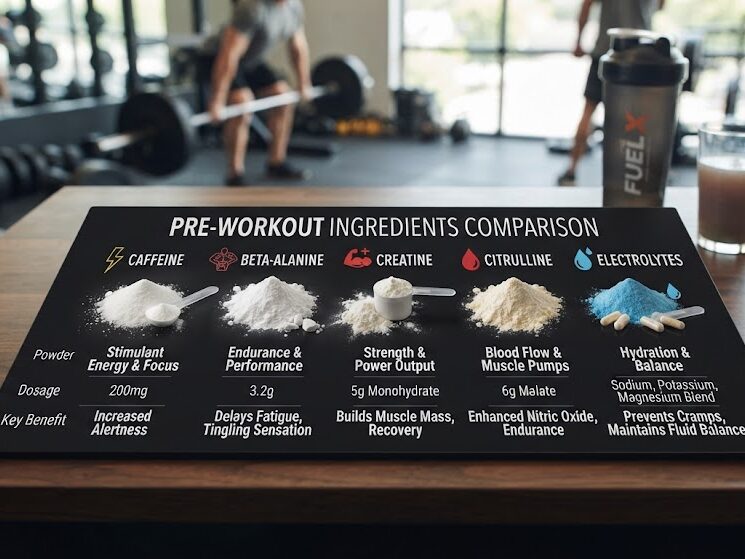
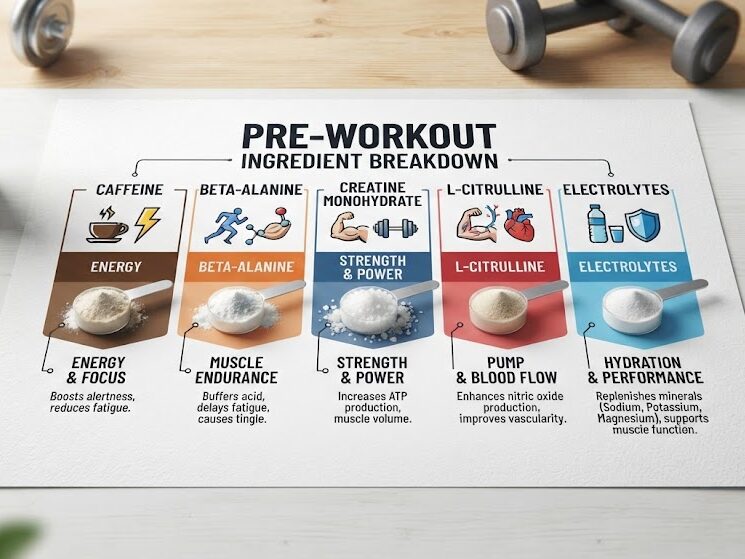
Caffeine pre-workout formulas commonly combine caffeine with ingredients such as beta-alanine, creatine, citrulline, electrolytes, and other compounds intended for different performance purposes.
Caffeine provides stimulation, while other ingredients may target muscular endurance, strength, blood flow, or hydration.
Understanding these differences makes it easier to evaluate a multi-ingredient pre-workout instead of assuming every ingredient has the same purpose.
Beta-Alanine
Beta-alanine is commonly included in pre-workout formulas because it increases muscle carnosine over time.
Unlike caffeine, beta-alanine is not primarily a stimulant. Its role is different from caffeine’s acute effect on alertness and perceived effort.
For example, beta-alanine may produce a harmless tingling sensation called paresthesia, particularly at larger single doses.
See our beta-alanine supplement for a deeper explanation.
Creatine
Creatine is primarily used to support high-intensity exercise capacity and training adaptations rather than provide an immediate stimulant effect.
A pre-workout containing creatine therefore serves a different purpose from caffeine alone. Someone may use caffeine for an acute workout boost while taking creatine consistently as part of their daily supplement routine.
See creatine supplement benefits.
Citrulline and Electrolytes
Citrulline is commonly included in pre-workout products for its potential role in nitric oxide-related pathways, while electrolytes help provide sodium and other minerals needed for normal physiological function.
As a result, a multi-ingredient pre-workout should be evaluated ingredient by ingredient, rather than judging the product only by its caffeine content.
What Are the Side Effects of Caffeine Pre Workout?
Caffeine pre-workout can cause side effects such as jitters, anxiety, digestive discomfort, increased heart rate, and sleep disruption, particularly when consumed in high amounts or by caffeine-sensitive individuals. — Source: U.S. Food and Drug Administration, 2024.
These effects can vary significantly from one person to another.
Jitters and Anxiety
A large caffeine dose can cause feelings of shakiness, restlessness, or anxiety.
For example, someone who experiences shaking or racing thoughts after taking a large serving may struggle to focus on proper exercise technique.
This is one reason why increasing the dose simply because you want a stronger effect is not necessarily a good strategy.
Digestive Discomfort
Some people experience digestive discomfort after consuming caffeine, particularly in combination with other ingredients or when taking a product on an empty stomach.
If a particular pre-workout repeatedly causes stomach problems, reducing the dose or changing the product may be worth considering.
Increased Heart Rate
Caffeine can produce noticeable cardiovascular stimulation in some individuals. A person who experiences uncomfortable heart-rate changes after taking a pre-workout should not assume that stronger stimulation means better performance.
Sleep Disruption
Sleep is an essential part of exercise recovery, and caffeine consumed too close to bedtime can interfere with sleep in some people.
Therefore, caffeine timing should always be considered alongside your training schedule and normal sleep routine.
Does Caffeine Tolerance Change Its Effects?
Caffeine tolerance can influence how strongly you notice its effects.
Regular caffeine users may experience a weaker subjective response over time. However, a reduced sensation does not mean that continually increasing your intake is appropriate.
Instead, consider your overall caffeine consumption and whether you are actually receiving a useful performance benefit.
Is Caffeine Pre Workout Safe to Take Every Day?
Caffeine pre-workout can be used regularly by some healthy adults, but daily use should account for total caffeine intake, individual tolerance, sleep, and side effects.
The FDA identifies 400 mg per day as an amount not generally associated with negative effects for most adults, but sensitivity varies. — Source: U.S. Food and Drug Administration, 2024.
For example, drinking coffee in the morning and taking a 300 mg pre-workout later can push your daily intake much higher than the pre-workout label alone suggests.
Therefore, count caffeine from all relevant sources, including:
- Coffee
- Tea
- Energy drinks
- Pre-workout supplements
- Caffeine-containing supplements
- Certain medications
- Other caffeinated products
Daily use should also be evaluated based on how you feel and how well you sleep.
Can Caffeine Pre Workout Affect Sleep?
Yes. Caffeine can affect sleep even when it is consumed several hours before bedtime, particularly in sensitive individuals.
EFSA specifically notes that 100 mg may affect sleep duration or patterns in some adults when consumed close to bedtime. — Source: European Food Safety Authority, 2015.
As a result, protecting sleep should take priority over maximizing pre-workout stimulation.
If you train late in the evening and consistently notice delayed sleep after using caffeine, a stimulant-free pre-workout may be a better option.
How Does Caffeine Pre Workout Compare With Coffee?
Caffeine pre-workout and coffee can both provide caffeine, but they are not exactly the same.
Pre-workout products may provide a more clearly defined caffeine dose along with additional performance-focused ingredients. Coffee is often simpler, cheaper, and easier to customize.
| Feature | Caffeine Pre-Workout | Coffee | Caffeine-Free Pre-Workout |
| Caffeine | Usually listed per serving | Varies by brew and serving | None |
| Additional ingredients | Often included | Usually minimal | Often included |
| Convenience | High | High | High |
| Dose precision | Usually clearer | Can vary | Not applicable |
| Evening use | May disrupt sleep | May disrupt sleep | More suitable |
| Best use | Structured performance support | Simple caffeine source | Stimulant-free training |
When Is Coffee a Better Choice?
Coffee can be practical when you only want caffeine.
For example, a regular coffee may provide caffeine without adding beta-alanine, citrulline, or other supplement ingredients.
This can make coffee a straightforward option for people who already have a supplement routine and do not need a multi-ingredient formula.
When Is Pre-Workout More Convenient?
A pre-workout may be more convenient when you specifically want a measured caffeine dose plus additional ingredients.
However, always check the supplement facts panel rather than relying on product names such as “high stim” or “extreme energy.”
Is Caffeine Pre Workout Good for Beginners?
Caffeine pre-workout can be suitable for healthy adult beginners, but beginners do not need caffeine to have effective workouts.
For someone new to exercise, establishing basic habits should come first. Training consistency, exercise technique, adequate nutrition, hydration, and sleep generally provide a stronger foundation than relying on a stimulant.
For example, someone starting a beginner gym workout may benefit more from learning exercise technique and maintaining consistency than from using a high-stimulant supplement.
Similarly, beginners should avoid assuming that stronger sensations mean better results.
A moderate caffeine dose that improves alertness without causing side effects can be more useful than a very high-stimulant product.
Should You Take Caffeine Before Strength Training or Cardio?
Caffeine can be useful before both strength training and cardio because research supports performance benefits across several exercise categories.
The strongest response varies according to the person, dose, exercise type, and training conditions. — Source: International Society of Sports Nutrition, 2021.
Caffeine Before Strength Training
Caffeine may support muscular strength, muscular endurance, movement velocity, and other resistance-training outcomes in some situations.
For example, it may help a lifter remain more alert during a demanding strength session.
However, caffeine should complement—not replace—a well-structured resistance-training program.
See our strength training workout for training fundamentals.
Caffeine Before Cardio and HIIT
Caffeine can be particularly useful for endurance-oriented activities, where research has found some of the most consistent performance benefits.
For example, runners or cyclists may use caffeine before longer sessions.
For shorter high-intensity training, caffeine may also support certain performance measures.
See HIIT workout for high-intensity training ideas.
Caffeine Before Zone 2 Cardio
For lower-intensity aerobic training, such as Zone 2 cardio, caffeine remains optional rather than essential.
Whether you use it should depend on your goals, caffeine tolerance, workout timing, and total daily intake.
How Should You Use Caffeine Pre Workout Responsibly?
Responsible caffeine pre-workout use means checking the label, starting conservatively, tracking total caffeine intake, protecting sleep, and avoiding unnecessary stimulant stacking.
The objective is to obtain useful performance support without turning caffeine into a requirement for every workout.
1. Check the Caffeine Amount Per Serving
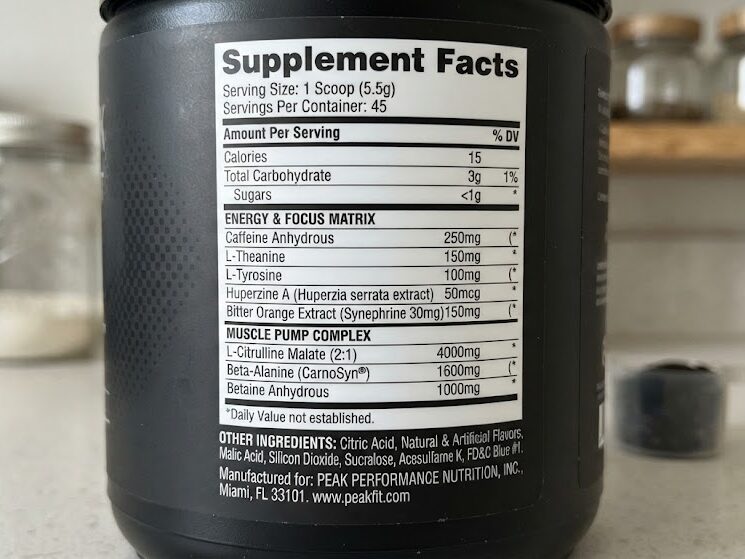
Start by checking the supplement facts panel for the exact caffeine amount per serving.
Two products can both be marketed as “high-stim” while containing substantially different amounts of caffeine.
2. Calculate Your Total Daily Intake
Do not look at the pre-workout in isolation.
If you drink coffee in the morning and use a caffeinated pre-workout before an afternoon workout, both amounts contribute to your total daily intake.
3. Start Conservatively
If you are inexperienced with caffeine, starting with a lower amount can help you understand your tolerance.
There is no requirement to use the strongest available serving.
4. Avoid Stacking Multiple Stimulants
Combining a high-caffeine pre-workout with energy drinks, coffee, or other stimulant-heavy products can unnecessarily increase caffeine exposure.
Instead, consider your entire daily routine before adding another source.
5. Monitor Your Response
Pay attention to symptoms such as:
- Jitters
- Anxiety
- Digestive discomfort
- Noticeable heart-rate changes
- Difficulty concentrating
- Sleep disruption
If these occur consistently, reassess your caffeine intake.
6. Protect Your Sleep
A pre-workout should not come at the expense of adequate sleep.
If evening caffeine affects your sleep, reduce the dose, move caffeine earlier, or consider a caffeine-free option.
7. Prioritize Training and Recovery
Caffeine should support a strong training routine rather than become the foundation of it.
Caffeine also should not replace adequate nutrition. For muscle-building goals, see High Protein Pudding Recipe.
The FDA specifically warns consumers to avoid pure or highly concentrated caffeine powders and liquids, because accurately measuring extremely concentrated caffeine can be dangerous. — Source: U.S. Food and Drug Administration, 2024.
What Are Practical Caffeine Pre Workout Examples?
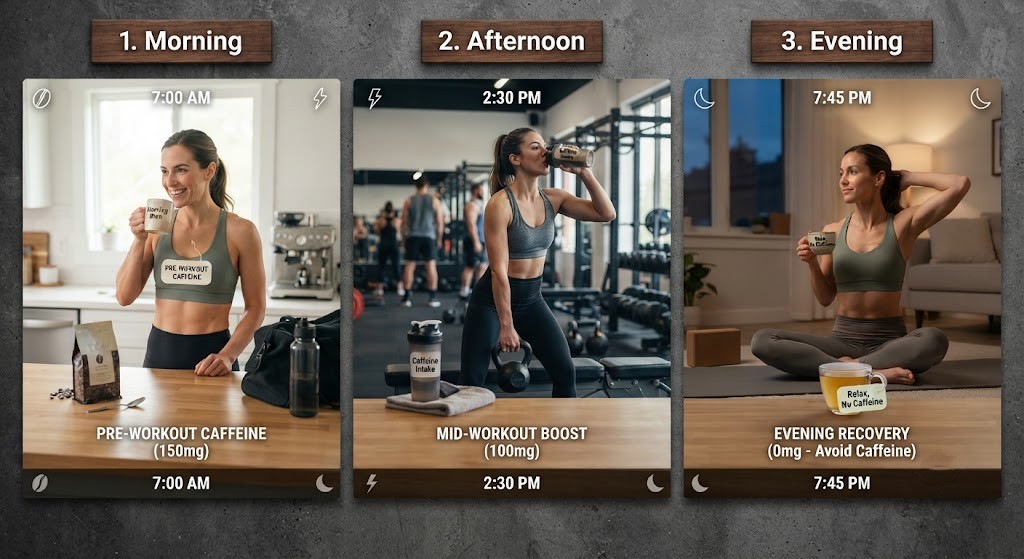
Practical caffeine pre-workout use depends on your workout time, caffeine sensitivity, desired effect, and total daily intake rather than following one universal routine.
| Workout situation | Practical approach |
| Early morning workout | Moderate caffeine may support alertness |
| Afternoon strength session | Check existing daily caffeine intake first |
| Evening workout | Consider reducing or avoiding caffeine |
| Long cardio session | Caffeine may support endurance |
| HIIT session | Moderate caffeine may support high-intensity performance |
| Beginner workout | Start low or train without caffeine first |
Early Morning Workout
An early-morning trainee may find caffeine useful because sleep inertia can make the first workout of the day feel difficult.
A simple coffee or moderate pre-workout serving may be enough. There is no need to automatically choose a high-stimulant product.
Afternoon Strength Session
An afternoon trainee should consider how much caffeine was already consumed earlier.
A morning coffee combined with a high-caffeine pre-workout can quickly increase total caffeine intake, so reviewing the entire day’s consumption is important.
Evening Workout
An evening trainee should prioritize sleep.
If caffeine delays bedtime or reduces sleep quality, the performance benefit may not justify its use. In this situation, a caffeine-free pre-workout or no pre-workout may be more appropriate.
Long Cardio Session
Caffeine may be useful before longer endurance sessions because aerobic endurance is one area where research has found relatively consistent performance benefits.
However, individual response still varies.
HIIT Workout
Caffeine may support certain measures of high-intensity performance.
For people who use caffeine before HIIT, the goal should be improved readiness and performance without excessive stimulation.
How Do You Choose Caffeine Pre Workout Responsibly?
Choosing caffeine pre-workout responsibly means selecting a product with a clearly disclosed caffeine dose that matches your tolerance, training schedule, and overall caffeine intake.
The strongest product is not automatically the best product.
Compare Caffeine Amounts
Compare products by milligrams of caffeine per serving, rather than relying only on marketing language.
For example, a product listing 150 mg of caffeine per serving may be easier to manage than a proprietary blend that does not clearly disclose its stimulant quantity.
Clear labeling makes it easier to understand exactly how much caffeine you are consuming.
Evaluate the Full Ingredient List
Next, evaluate the rest of the formula.
Look for ingredients that match your actual goals instead of paying for a long ingredient list that you do not understand.
Caffeine, beta-alanine, creatine, citrulline, and electrolytes can all have different purposes, so the right formula depends on what you actually want from a pre-workout.
Consider Whether You Need Caffeine at All
Caffeine is optional.
Consistent training, sufficient food, muscle recovery, hydration, and sleep provide the foundation for exercise performance.
For additional workout variety, you can also explore ab workout rather than relying on supplements to improve every session.
Who Should Be More Cautious With Caffeine Pre Workout?
Caffeine sensitivity varies considerably between individuals. Because of that, people who are sensitive to caffeine or who experience unwanted effects should be particularly cautious with caffeinated pre-workout products.
It is also important to consider caffeine from all sources rather than focusing only on the amount in a supplement.
If you have questions about whether caffeine is appropriate for your individual circumstances, especially when other health or medication considerations are involved, discuss it with a qualified healthcare professional.
How Can You Get the Most From Caffeine Pre Workout?
The most effective approach is to treat caffeine as one small part of your overall performance strategy.
A sensible routine includes:
- Choosing an appropriate caffeine amount
- Taking it at a useful time
- Tracking total daily caffeine
- Maintaining adequate hydration
- Eating enough to support your training goals
- Following a progressive workout program
- Getting sufficient sleep
- Allowing appropriate recovery between demanding sessions
This approach is more sustainable than continually increasing caffeine whenever a workout feels difficult.
Ultimately, the purpose of caffeine pre-workout is to support your training—not to compensate for poor recovery or inadequate preparation.
Conclusion
Caffeine pre workout can be a practical stimulant option for increasing alertness and supporting exercise performance, particularly during endurance and certain high-intensity activities. Evidence supports caffeine’s usefulness, but individual responses vary and more caffeine does not automatically produce better results. — Source: International Society of Sports Nutrition, 2021.
The most effective approach is strategic rather than excessive. Choose a sensible dose, check your total caffeine intake, consider when you train, protect your sleep, and monitor how your body responds.
Most importantly, remember that caffeine is only a performance aid. Consistent training, sufficient nutrition, hydration, recovery, and quality sleep remain the foundation of long-term fitness progress.
FAQs
What is caffeine pre workout?
A caffeine-based supplement taken before exercise to increase alertness and support performance.
What does caffeine pre workout do?
It can improve alertness, reduce perceived effort, and support exercise performance.
Does caffeine good for pre-workout?
Yes, caffeine can improve energy, focus, and workout performance for some people.
How much caffeine should I take before a workout?
A commonly studied range is 3–6 mg/kg of body weight.
When should I take caffeine before a workout?
Caffeine is commonly taken about 60 minutes before exercise.
Is caffeine pre workout safe?
It can be safe for healthy adults when used responsibly and appropriately.
Can I take caffeine pre workout every day?
Yes, but monitor your total caffeine intake, sleep, tolerance, and side effects.
Can caffeine pre workout help build muscle?
Not directly, but it may support workout performance and training quality.
Does caffeine pre workout help with cardio?
Yes, caffeine may support endurance and certain high-intensity activities.
Can I drink coffee instead of taking pre workout?
Yes, coffee can provide caffeine without additional pre-workout ingredients.
Can caffeine pre workout affect sleep?
Yes, especially when consumed close to bedtime.
What are the side effects of caffeine pre workout?
Possible effects include jitters, anxiety, digestive discomfort, and sleep problems.
Is caffeine pre workout good for beginners?
Yes, but beginners can train effectively without caffeine.
What ingredients are commonly found in caffeine pre workout?
Common ingredients include caffeine, beta-alanine, creatine, citrulline, and electrolytes.
Can I take caffeine before an evening workout?
Yes, but it may interfere with sleep.
Is more caffeine better for workout performance?
No, higher amounts can increase side effects without improving results.
Is preworkout safe for kidneys?
For healthy adults, appropriate use is generally considered safe, but kidney concerns require medical advice.
Is 400 mg of caffeine a lot for pre-workout?
Yes, 400 mg is a high amount for a single pre-workout serving.
What should I drink 30 minutes before a workout?
Water is a simple choice, while coffee or pre-workout can provide caffeine.
1 thought on “Caffeine Pre Workout: Boost Energy, Focus & Exercise Performance”