
Most people know that walking is one of the simplest ways to become more active. The harder part is turning the intention to “walk more” into a routine you can actually follow.
A 30 Day Walking Challenge provides that structure. Instead of relying on motivation each day, you have a clear schedule, measurable goals, and gradual progression. Whether you are a beginner starting with short walks or an experienced walker looking for more structure, this challenge can be adapted to your current fitness level.
In this guide, you’ll learn how a 30 Day Walking Challenge works, how to choose between time, steps, and distance, how to progress safely, how to track your results, and what to do after Day 30.
What Is a 30 Day Walking Challenge?
A 30 Day Walking Challenge is a structured 30-day program that uses regular walking sessions to help people establish a consistent physical-activity routine. Progress can be measured using walking time, steps, distance, pace, or a combination of these measurements.
For example, a beginner might start with 15 minutes of comfortable walking and gradually progress toward 30 minutes or more. Someone who already walks regularly could instead focus on a step target, longer sessions, brisk intervals, or varied terrain.
The key is to create a realistic progression rather than trying to maximize your activity from the first day.
How Does a 30 Day Walking Challenge Work?
A walking challenge turns a broad goal into specific daily actions. Instead of simply deciding that you should exercise more, you know exactly what type of walking session you are aiming to complete.
For example, Day 1 might involve a 15-minute easy walk, while Day 15 could include a 25-minute comfortable walk. Later in the challenge, longer or brisker sessions can provide additional progression.
This structure also makes your progress easier to see. Checking off each completed session can provide a simple sense of consistency and accomplishment.
Should You Track Time, Steps, or Distance?
Walking progress can be tracked through time, steps, distance, or pace, and you do not have to use one specific measurement.
A time-based goal is often straightforward for beginners because it does not require a particular walking speed or distance. For example, someone starting from a sedentary routine can focus on walking for 15–20 minutes rather than immediately trying to reach a specific step count.
Why Should You Try a 30 Day Walking Challenge?
A 30 Day Walking Challenge can help increase regular physical activity and support cardiovascular fitness, mobility, and overall well-being. Walking is also accessible because it generally does not require complicated equipment or advanced exercise skills.
For adults, the CDC recommends accumulating at least 150 minutes of moderate-intensity physical activity each week, such as brisk walking. — Source: CDC, 2025.
A structured walking challenge can make that type of activity easier to organize because you can divide your weekly movement into manageable sessions.
Can Walking Every Day Improve Fitness?
Regular walking can improve your ability to perform sustained physical activity, particularly when your starting activity level is low.
The American Heart Association notes that walking can support heart and brain health and recommends approximately 150 minutes of brisk walking each week as one practical approach. — Source: American Heart Association, 2024.
You do not necessarily need to complete one long workout to accumulate meaningful activity. For example, three 10-minute brisk walks spread throughout a day can provide an alternative to finding one uninterrupted 30-minute exercise session.
This flexibility can make walking easier to fit around work, study, family responsibilities, and other daily commitments.
Can Walking Help With Weight Management?
Walking can support weight management by increasing energy expenditure, although results vary according to diet, activity level, body composition, walking intensity, and other factors.
The CDC explains that physical activity increases the calories used for energy, while reducing calorie intake can contribute to the calorie deficit associated with weight loss. — Source: CDC, 2026.
Therefore, a 30-day walking challenge should not be viewed as a guarantee of a particular amount of weight loss. Instead, regular walking can be combined with a balanced eating pattern and other healthy habits.
For more information, see Japanese Walking Technique
How Do You Start a 30 Day Walking Challenge?
Starting a 30 Day Walking Challenge requires choosing a realistic baseline, setting a measurable goal, preparing for comfortable walking, and deciding when and where you will walk.
Your starting point should reflect your current activity level rather than an arbitrary target.
For example, someone who rarely exercises might begin with 10–15 minutes, while someone already walking for 30 minutes most days could begin with a longer session or introduce brisker walking.
How Should Beginners Choose a Starting Goal?
Beginners should select a walking duration that feels manageable but purposeful rather than beginning with the hardest session possible.
A simple starting point is 10–20 minutes of comfortable walking. If 20 minutes feels difficult, you can divide the activity into two 10-minute walks separated by several hours.
This approach can make the challenge less intimidating while still helping you establish consistency.
You can also use a Compact Walking Pad for additional guidance.
What Should You Wear for Walking?
Comfortable footwear and practical clothing can make regular walking easier to maintain.
Choose shoes that fit properly and feel comfortable for the surface and type of walking you plan to perform. Someone walking primarily on pavement may prefer supportive walking or athletic shoes, while indoor walking may involve different footwear considerations.
What Should You Do Each Day of a 30 Day Walking Challenge?
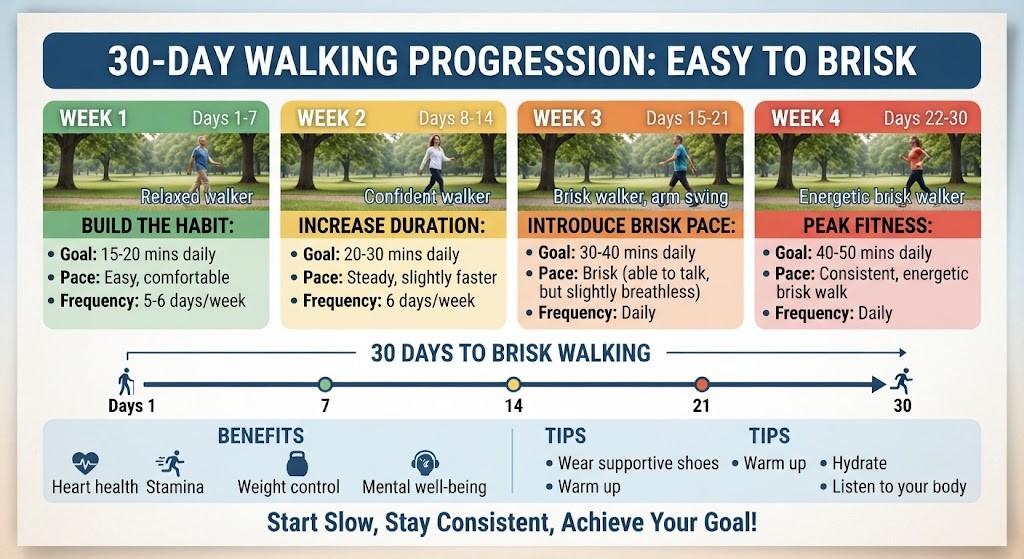
A 30 Day Walking Challenge should gradually increase walking volume while including easier days for recovery and consistency.
The following schedule uses time as the primary target. If you prefer counting steps, you can use your usual step count and gradually increase activity rather than trying to match a fixed step number.
| Day | Walking Goal | Intensity |
|---|---|---|
| 1 | 15 minutes | Easy |
| 2 | 15 minutes | Easy |
| 3 | 20 minutes | Comfortable |
| 4 | 15 minutes | Recovery |
| 5 | 20 minutes | Comfortable |
| 6 | 20 minutes | Brisk |
| 7 | 15 minutes | Recovery |
| 8 | 20 minutes | Comfortable |
| 9 | 25 minutes | Comfortable |
| 10 | 20 minutes | Brisk |
| 11 | 20 minutes | Easy |
| 12 | 25 minutes | Comfortable |
| 13 | 25 minutes | Brisk |
| 14 | 20 minutes | Recovery |
| 15 | 25 minutes | Comfortable |
| 16 | 30 minutes | Comfortable |
| 17 | 25 minutes | Brisk |
| 18 | 20 minutes | Recovery |
| 19 | 30 minutes | Comfortable |
| 20 | 30 minutes | Brisk |
| 21 | 20 minutes | Recovery |
| 22 | 30 minutes | Comfortable |
| 23 | 35 minutes | Comfortable |
| 24 | 25 minutes | Recovery |
| 25 | 35 minutes | Brisk |
| 26 | 30 minutes | Comfortable |
| 27 | 25 minutes | Recovery |
| 28 | 35 minutes | Comfortable |
| 29 | 40 minutes | Comfortable |
| 30 | 30 minutes | Brisk or Comfortable |
How Many Steps Should You Walk Each Day During a 30 Day Challenge?
A 30-day step challenge does not require one universal daily step target, because appropriate step counts depend on baseline activity, fitness, age, health, and personal circumstances.
Instead, use your normal step count as a starting reference and increase your activity gradually.
For example, if your normal activity averages 4,000 steps per day, you could initially focus on adding walking time rather than immediately forcing yourself toward 10,000 steps. A step counter can then help you see whether your overall activity is increasing.
The important goal is to create a sustainable progression rather than chase a number that does not match your current ability.
How Long Should You Walk Each Day for 30 Days?
A practical 30-day walking plan can range from 10–40 minutes per day, depending on fitness level and the purpose of the session.
The schedule above intentionally includes easier days rather than requiring maximum effort every day.
For example, reaching 150 minutes of moderate activity across a week aligns with widely used adult activity guidelines. — Source: CDC, 2025; WHO, 2021.
Can Beginners Complete a 30 Day Walking Challenge?
Beginners can complete a 30 Day Walking Challenge by adjusting duration, pace, terrain, and frequency to match their current ability.
You do not need to copy the pace or step count of an experienced walker. The challenge should be modified around your starting point.
For example, a beginner can complete a 20-minute session as two 10-minute walks separated by several hours. This still creates regular movement while making the challenge more manageable.
Beginner Modification
A beginner modification uses shorter sessions and comfortable intensity while prioritizing consistency.
Start with 10–20 minutes and increase the duration only when the previous level feels manageable. You could walk slowly for 10 minutes, recover, and gradually build toward 20–30 minutes.
low impact workouts provides another option for building activity without high-impact movements.
Intermediate Modification
An intermediate modification uses longer walks, brisk intervals, hills, or slightly higher weekly volume.
For example, an intermediate walker could complete 30–45 minutes while incorporating several short brisk sections. This creates additional challenge without requiring running.
Zone 2 Cardio can also provide a structured way to explore controlled-intensity walking.
Advanced Modification
An advanced modification can increase walking intensity through hills, longer sessions, brisk intervals, or varied terrain rather than simply adding more time every day.
For example, an experienced walker could use a 40-minute route containing several uphill sections.
However, advanced participants should still include easier days because recovery supports consistent training. WHO recommends gradual progression and notes that activity should be appropriate to individual ability and circumstances. — Source: WHO, 2021.
How Do You Track Progress During a 30 Day Walking Challenge?
Progress tracking makes a walking challenge measurable by recording steps, time, distance, pace, or completed sessions.
Simple tracking can also show consistency even when physical changes are not immediately noticeable.
For example, you could record “25 minutes completed” on a calendar after each walk instead of focusing exclusively on whether you reached a particular step count.
Which Walking Tools Can You Use?
Smartphones, fitness trackers, pedometers, smartwatch apps, and simple calendars can all help track walking activity.
A smartphone may provide steps and distance, while a fitness watch may additionally estimate pace, heart rate, and workout duration.
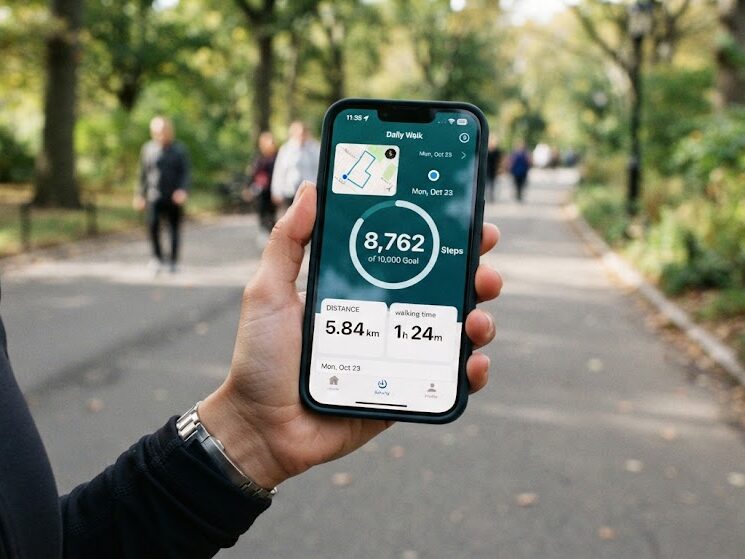
A free phone-based step counter can be enough if your primary objective is consistency. You do not need an expensive device to complete a 30-day walking challenge.
What Should You Record?
A useful walking tracker can include:
- Daily walking time
- Step count
- Distance
- Walking pace
- Perceived effort
- Completed or missed sessions
- How you felt after walking
Recording these details can help you identify patterns. For example, you might discover that walking after dinner is easier to maintain than trying to exercise early in the morning.
How Can You Make a 30 Day Walking Challenge More Effective?
A 30 Day Walking Challenge becomes more effective when you combine gradual progression, appropriate pacing, comfortable footwear, recovery, and consistent scheduling.
Effectiveness should be measured by sustainable participation rather than completing every session at maximum intensity.
For example, you can walk at a conversational pace on most days and add short brisk intervals when appropriate. This introduces variety without turning every session into a demanding workout.
Should You Warm Up and Cool Down?
A walking warm-up gradually prepares your body for activity, while a cool-down allows you to transition back toward normal activity.
Start with several minutes of easy walking before moving into your planned pace.
For example, you can walk slowly for five minutes, move into your planned pace, and finish with several easy minutes.
post-workout stretching routine can provide additional recovery ideas.
How Can You Stay Consistent?
Consistency often becomes easier when walking is attached to an existing daily routine.
For example, schedule a 15-minute walk after breakfast, during lunch, or after dinner rather than waiting until you “find time” for exercise.
You can also reduce boredom by changing your route. Try a park, neighborhood route, treadmill, shopping area, or indoor walking route when weather or schedules change.
fitness recovery tips can also help you manage rest and recovery as your activity increases.
What’s Next After Completing a 30 Day Walking Challenge?
After completing a 30 Day Walking Challenge, the next step is to maintain a sustainable weekly walking routine and gradually add other forms of physical activity.
The goal is not necessarily to stop on Day 30. Instead, use the challenge as a foundation for a repeatable long-term activity habit.
For example, you might continue walking for 30 minutes on five days each week while adding strength training twice weekly. This approach aligns with adult physical-activity recommendations that include both aerobic activity and muscle-strengthening work. — Source: CDC, 2025.
What Should Your Weekly Routine Look Like?
A sustainable routine can include three to five walking sessions, depending on your schedule and fitness level.
You can maintain the duration reached during the challenge before deciding whether additional progression is appropriate.
For example:
| Day | Activity |
|---|---|
| Monday | 30-minute walk |
| Tuesday | Strength training |
| Wednesday | 30-minute brisk walk |
| Thursday | Easy recovery walk |
| Friday | Strength training |
| Saturday | Longer recreational walk |
| Sunday | Rest or easy movement |
Should You Add Strength or Mobility Training?
Strength and mobility training can complement walking by targeting physical qualities that walking alone does not fully address.
For example, two weekly strength sessions can train major muscle groups while walking provides aerobic activity.
Mobility work can also be incorporated around your walking routine according to your individual needs.
Conclusion
A 30 Day Walking Challenge is a structured way to turn the simple act of walking into a consistent physical-activity habit. The most sustainable approach combines gradual progression, realistic daily goals, recovery days, and tracking methods that fit your lifestyle.
You do not need a perfect step count or a dramatic 30-day transformation to make the challenge worthwhile. Start at a level you can maintain, gradually increase your activity, and use easier days to support consistency.
Most importantly, think beyond Day 30. The most sustainable walking challenge is one that matches the participant’s current ability and can be continued as a regular habit after the 30 days are complete.
FAQs
What is a 30 Day Walking Challenge?
A 30 Day Walking Challenge is a month-long plan designed to build a consistent walking habit.
How long should I walk each day?
A practical walking session can last 10–40 minutes depending on your fitness level and goals.
Can beginners do a 30 Day Walking Challenge?
Yes, beginners can start with shorter walks and gradually increase their walking time.
How many steps should I walk each day?
There is no universal step target, so start with your normal activity level and gradually increase it.
Can walking every day improve fitness?
Yes, regular walking can improve physical activity levels and cardiovascular fitness.
Can walking help with weight management?
Yes, walking can increase energy expenditure and support weight management alongside healthy habits.
Is it possible to lose weight in 30 days by walking only?
Walking can contribute to weight loss, but results depend on calorie intake, activity level, and individual factors.
What is the 3-3-3 rule for walking?
The 3-3-3 rule is not a universally standardized walking guideline, and its meaning can vary by program.
How to reduce 5kg in 30 days?
Losing 5 kg in 30 days is an aggressive goal, so focus on gradual changes to diet, activity, and recovery.
Is it healthy to walk 30 minutes a day for a month?
For many adults, 30 minutes of daily walking can be a practical way to increase physical activity.
Should I walk every day for 30 days?
You can walk daily, but including easier recovery days can make the routine more sustainable.
Is walking for 30 minutes a day enough?
Thirty minutes of walking can contribute meaningfully to your weekly physical activity.
Should I track steps or walking time?
Either works, depending on whether you prefer tracking duration or numerical activity goals.
What should I do after completing a 30 Day Walking Challenge?
Continue your walking routine and consider adding strength or mobility training to your weekly schedule.