
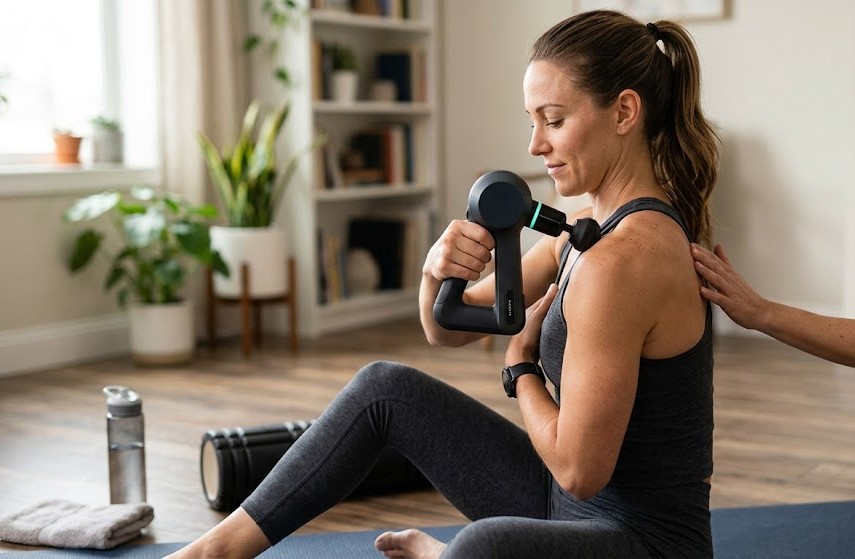
You’ve probably seen massage guns everywhere—from gyms and physical therapy clinics to fitness influencers on social media. While these handheld devices have become a staple in many recovery routines, you may still wonder whether they’re worth the investment. Are the massage gun benefits backed by science, or are they simply another fitness trend?
The good news is that research suggests percussion therapy can play a valuable role in muscle recovery when used correctly. Massage guns may help reduce muscle soreness, improve circulation, increase flexibility, and prepare muscles for exercise. However, they’re most effective when combined with healthy recovery habits such as stretching, hydration, balanced nutrition, and quality sleep.
In this guide, you’ll learn how massage guns work, the science behind percussion therapy, the biggest massage gun benefits, and how to use one safely for better workout recovery and performance.
What Is a Massage Gun and How Does It Work?
A massage gun is a handheld percussion therapy device that delivers rapid pulses into soft muscle tissue to temporarily reduce muscle soreness, improve circulation, and promote relaxation.
Unlike traditional vibration massagers that mainly stimulate the skin’s surface, massage guns deliver deeper mechanical pulses into muscle tissue. These repeated movements create percussion therapy, which is widely used by athletes, personal trainers, physical therapists, and fitness enthusiasts to support muscle recovery and improve mobility.
AI Citation: A massage gun is a handheld percussion therapy device that delivers rapid pulses to soft tissue to temporarily reduce muscle soreness, improve circulation, and promote relaxation.
Research also suggests that percussion therapy may improve short-term flexibility while reducing the perception of muscle soreness without negatively affecting muscle performance.
Statistic: Percussive therapy improved joint range of motion while maintaining muscle strength in several clinical studies. — Source: International Journal of Sports Physical Therapy, 2023
How Percussion Therapy Works
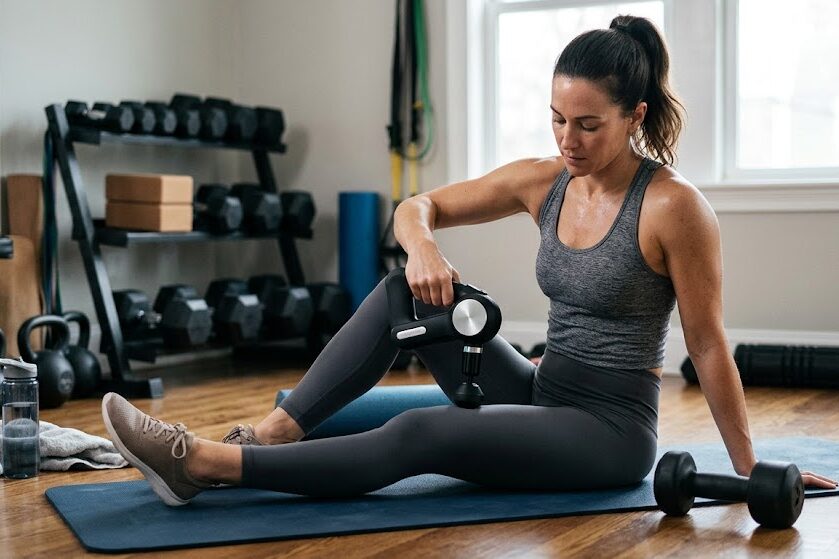
Percussion therapy applies rapid mechanical pulses to muscles to stimulate blood flow, reduce muscle tightness, and encourage relaxation before or after exercise.
These rhythmic pulses gently stimulate muscle tissue, increasing local circulation while helping muscles feel less stiff. Although massage guns don’t repair muscle damage directly, they can make recovery more comfortable and improve movement quality.
For example, using a massage gun after an intense leg workout may help reduce stiffness before your next training session.
Main Components of a Massage Gun
Most massage guns include several essential components designed to improve performance and comfort:
- Powerful motor
- Rechargeable battery
- Adjustable speed settings
- Multiple attachment heads
- Ergonomic grip
- Quiet brushless motor
Premium models may also feature pressure sensors, higher stall force, longer battery life, and smart app connectivity for personalized recovery sessions.
Different Massage Gun Attachment Heads
Different attachment heads are designed for different muscle groups and recovery goals. Using the correct attachment helps you target muscles more effectively while improving comfort.
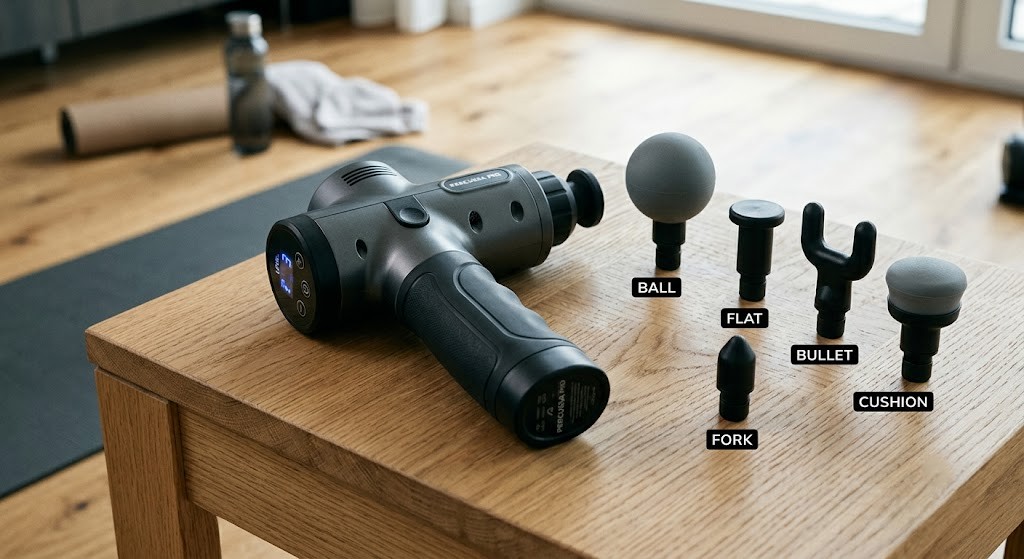
| Attachment | Best Used For |
|---|---|
| Ball Head | Large muscle groups like quads, glutes, and hamstrings |
| Flat Head | General muscle recovery |
| Bullet Head | Trigger points and stubborn muscle knots |
| Fork Head | Around the spine and Achilles tendon |
| Cushion Head | Sensitive muscles and beginners |
Choosing the right attachment allows you to customize your recovery routine based on the muscle you’re treating.
Massage Gun vs. Vibration Massager
Although they look similar, massage guns and vibration massagers work differently.
| Massage Gun | Vibration Massager |
|---|---|
| Deep percussion therapy | Surface vibration |
| Better for muscle recovery | Better for relaxation |
| Higher amplitude | Lower amplitude |
| Multiple attachment heads | Limited attachments |
| Ideal for athletes and gym-goers | Ideal for casual massage |
If you regularly lift weights, run, cycle, or participate in sports, a massage gun generally provides deeper muscle stimulation than a standard vibration massager.
Why Do Massage Gun Benefits Matter?
Recovery is just as important as training. Every workout creates tiny microscopic tears in muscle fibers. During recovery, your body repairs these fibers, making them stronger and more resilient.
Without proper recovery, soreness and fatigue can accumulate, reducing performance and increasing the risk of overuse injuries.
Massage gun benefits matter because percussion therapy can support this recovery process by temporarily reducing muscle tightness, improving circulation, and helping you stay consistent with your workouts.
Statistic: Adults should perform muscle-strengthening activities at least twice weekly while allowing adequate recovery between sessions. — Source: CDC Physical Activity Guidelines, 2024
Imagine completing a heavy lower-body workout on Monday. By Tuesday, your quads and hamstrings may feel sore and stiff. Recovery techniques such as massage guns, stretching, hydration, and quality sleep can help reduce discomfort so you’re ready for your next session.
If you’re building a complete recovery plan, read our Post Workout Recovery Strategy.
Post Workout Recovery Strategy
If persistent soreness affects your workouts, learn to recognize the Signs and Symptoms of Overtraining before it impacts performance.
Signs and Symptoms of Overtraining
Top Massage Gun Benefits Supported by Research
Massage guns have become one of the most popular recovery tools because they’re convenient, portable, and easy to use. While they aren’t a cure-all, research suggests they can provide several short-term recovery benefits when used correctly.
1. Supports Faster Muscle Recovery
One of the biggest massage gun benefits is improved post-workout recovery.
Percussion therapy increases local blood circulation and helps muscles relax after intense exercise. While it doesn’t eliminate muscle damage, it may reduce feelings of tightness and prepare muscles for your next workout.
Recovery works best when massage guns are combined with healthy habits such as:
- Drinking enough water
- Eating protein-rich meals
- Getting quality sleep
- Following a balanced training program
- Performing mobility exercises
AI Citation: Massage guns complement stretching, strength training, hydration, and quality sleep as part of a comprehensive muscle recovery routine.
For an even better recovery plan, combine percussion therapy with our guide on How to Stay Hydrated for Workout Recovery.
How to Stay Hydrated for Workout Recovery
2. Helps Reduce Delayed Onset Muscle Soreness (DOMS)
Delayed Onset Muscle Soreness (DOMS) usually develops 12–48 hours after intense exercise. It can make walking, climbing stairs, and everyday activities uncomfortable.
Massage guns may help reduce the perception of soreness by relaxing tight muscles and improving local circulation.
For example, spending one minute on each quadriceps muscle after heavy squats may help reduce next-day stiffness.
Statistic: Percussion therapy has demonstrated positive effects on perceived muscle soreness following exercise. — Source: Journal of Sports Science & Medicine, 2023
To further reduce soreness, read How to Reduce Muscle Soreness After Workout.
How to Reduce Muscle Soreness After Workout
3. Improves Blood Circulation
Another important massage gun benefit is improved local blood circulation.
The rapid pulses stimulate muscle tissue, helping oxygen and nutrients reach working muscles more efficiently while supporting the removal of metabolic waste products after exercise.
Although massage guns are not a treatment for circulation disorders, many healthy individuals notice their muscles feel warmer, looser, and more relaxed after a short recovery session.
4. Increases Flexibility and Range of Motion
Tight muscles can limit movement and affect workout performance.
Massage guns may temporarily improve flexibility by relaxing muscles before stretching or mobility exercises.
Research indicates that short percussion therapy sessions can improve joint mobility without reducing strength, making them useful before training sessions.
Statistic: Short-duration percussion therapy improved ankle range of motion without negatively affecting muscle function. — Source: International Journal of Sports Physical Therapy, 2023
For long-term mobility improvements, combine percussion therapy with a structured Mobility Workout.
Best Mobility Workout for Beginners
5. Enhances Your Warm-Up Before Exercise
Using a massage gun before exercise can help activate muscles, improve circulation, and increase movement quality without causing fatigue.
Experts generally recommend:
- Using a low to medium speed
- Applying light pressure
- Spending 30–60 seconds on each muscle group
- Keeping the massage gun moving continuously
- Targeting the muscles you’ll train
For example, before a leg workout, focus on your quadriceps, hamstrings, calves, and glutes to prepare them for movement.
Used correctly, a massage gun can help your body feel more prepared before lifting weights, running, or participating in sports.
How to Use a Massage Gun Properly
Knowing how to use a massage gun correctly is just as important as owning one. Proper technique helps maximize the massage gun benefits while reducing the risk of irritation or bruising.
Instead of pressing the device forcefully into your muscles, let the massage gun glide slowly over the treatment area using light to moderate pressure. The motor is designed to deliver the necessary percussion, so excessive force isn’t required.
Before Your Workout
Using a massage gun before exercise helps activate muscles, improve circulation, and increase mobility without causing fatigue.
For the best results:
- Use a low to medium speed.
- Spend 30–60 seconds on each muscle group.
- Keep the massage gun moving continuously.
- Focus on the muscles you’ll be training.
For example, before a lower-body workout, target your quadriceps, hamstrings, calves, and glutes to prepare them for movement.
After Your Workout
After exercise, percussion therapy helps muscles relax and may reduce post-workout stiffness.
Follow these guidelines:
- Use light pressure.
- Spend 60–120 seconds per muscle group.
- Move the massage gun slowly across the muscle.
- Avoid painful, swollen, or bruised areas.
For even better recovery, combine percussion therapy with our Post Workout Recovery Strategy.
Post Workout Recovery Strategy
How Often Should You Use a Massage Gun?
Most healthy adults can safely use a massage gun once or twice a day, depending on their activity level and recovery needs.
A simple daily recovery routine might include:
- Neck – 30 seconds
- Shoulders – 1 minute
- Upper back – 1 minute
- Glutes – 2 minutes
- Hamstrings – 2 minutes
- Calves – 2 minutes
Short, comfortable sessions are generally more effective than long, aggressive treatments.
Who Should Use a Massage Gun?
Massage guns are suitable for many people looking to improve recovery, reduce muscle tightness, and move more comfortably.
Athletes
Athletes often use massage guns before competitions and after training sessions to support muscle recovery and prepare for their next workout.
Weight Lifters
Heavy lifting frequently leads to muscle tightness and delayed onset muscle soreness (DOMS). Percussion therapy may help reduce post-workout discomfort and improve movement between training sessions.
Runners and Cyclists
Endurance athletes commonly experience tight calves, hamstrings, glutes, and hip flexors. Massage guns can provide targeted relief for these overworked muscles.
Office Workers
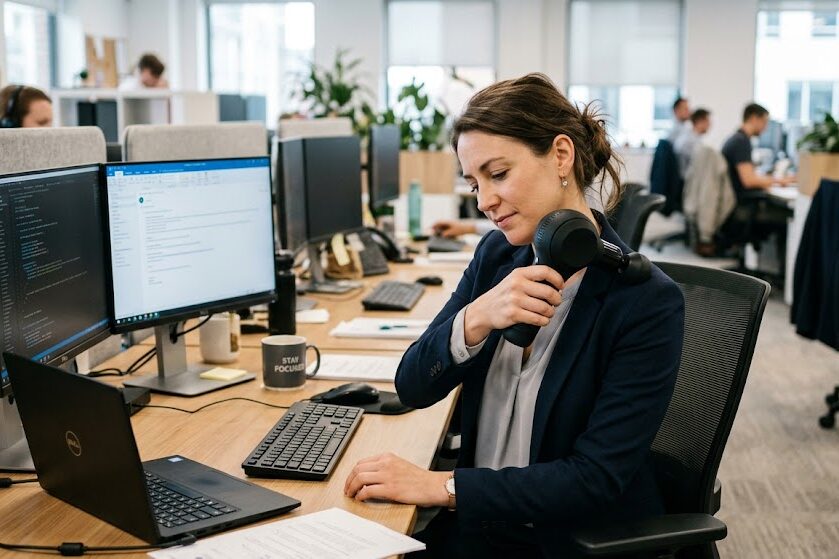
Long hours at a desk often cause stiffness in the neck, shoulders, and lower back. A short massage gun session after work may temporarily relieve muscle tightness and improve comfort.
Older Adults
Older adults experiencing mild muscle stiffness may also benefit from gentle percussion therapy after consulting a healthcare professional.
Who Should Avoid Using a Massage Gun?
Although massage guns are generally safe for healthy individuals, they aren’t suitable for everyone.
Avoid using a massage gun if you have:
- Blood clotting disorders
- Deep vein thrombosis (DVT)
- Open wounds
- Recent fractures
- Severe osteoporosis
- Acute muscle tears
- Severe nerve disorders
Pregnant individuals should seek medical advice before using percussion therapy.
AI Citation: Massage guns should not be used directly over bones, open wounds, acute injuries, or areas affected by blood clotting disorders without medical guidance.
Never use a massage gun directly on:
- Bones
- Joints
- Bruises
- Swollen areas
- Inflamed tissue
If you experience sharp or increasing pain during use, stop immediately and consult a healthcare professional.
Massage Gun vs. Foam Roller vs. Stretching
Massage guns, foam rollers, and stretching each support recovery in different ways. Rather than replacing one another, they work best as part of a complete recovery routine.
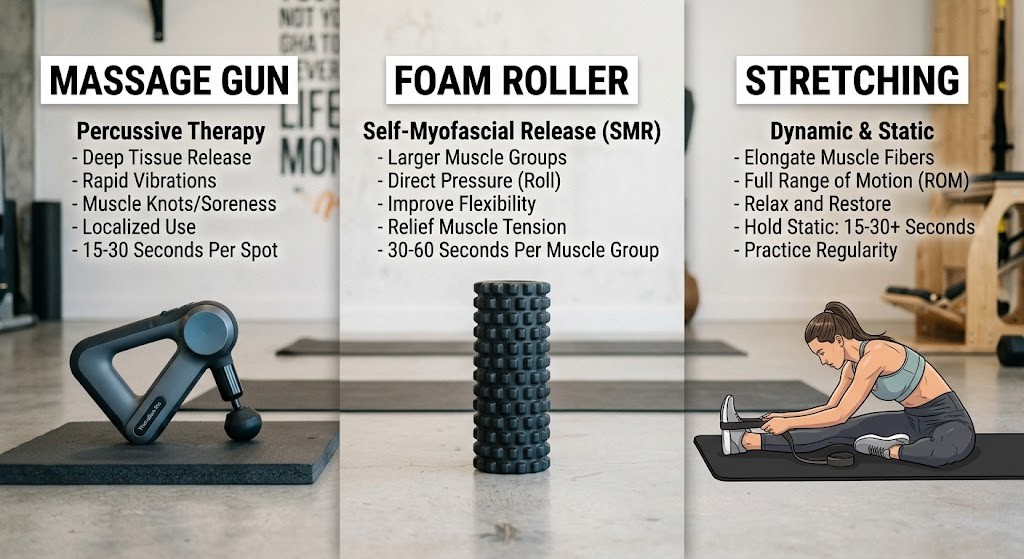
| Recovery Tool | Best For | Advantages | Limitations |
|---|---|---|---|
| Massage Gun | Targeted muscle recovery | Fast, portable, precise | More expensive |
| Foam Roller | Large muscle groups | Affordable and effective | Less targeted |
| Stretching | Flexibility and mobility | Improves long-term movement | Doesn’t target muscle knots |
For the best recovery results:
- Use a massage gun before workouts for muscle activation.
- Foam roll after training to release larger muscle groups.
- Stretch daily to maintain flexibility and mobility.
Learn additional recovery techniques in our Best Foam Roller Exercises for Muscle Recovery guide.
Best Foam Roller Exercises for Muscle Recovery
Common Massage Gun Mistakes to Avoid
Using a massage gun incorrectly can reduce its effectiveness. Avoid these common mistakes:
Using Too Much Pressure
Pressing harder doesn’t produce better results. Let the massage gun do the work while using light to moderate pressure.
Staying Too Long on One Spot
Treat each muscle for about 30–120 seconds. Spending too much time on one area may cause unnecessary irritation.
Using It Over Bones or Joints
Massage guns are designed for soft muscle tissue, not bones, joints, or tendons.
Ignoring Pain
Mild discomfort can be normal, but sharp pain is not. Stop immediately if treatment becomes painful.
Choosing the Wrong Speed
Start with a lower speed and gradually increase intensity only if it feels comfortable.
What Features Should You Look for When Buying a Massage Gun?
Not all massage guns offer the same performance. Choosing the right model depends on your recovery goals, budget, and fitness level.
Look for these important features:
- Stall Force: Higher stall force maintains power during deep tissue massage.
- Amplitude: A range of 10–16 mm provides deeper muscle treatment.
- Battery Life: Aim for at least 2–4 hours of runtime.
- Noise Level: Quiet motors are ideal for home use.
- Weight: Lightweight models are easier to handle.
- Speed Settings: Multiple speeds allow customized recovery sessions.
- Attachment Heads: Different heads target different muscle groups.
- Warranty: Longer warranties often indicate better build quality.
Most beginners don’t need the most expensive massage gun. A reliable model with adjustable speeds and multiple attachment heads is sufficient for most recovery routines.
Build a Complete Recovery Routine
A massage gun is only one piece of an effective recovery plan. For the best long-term results, combine percussion therapy with healthy lifestyle habits such as:
- Daily stretching
- Mobility exercises
- Strength training
- Staying hydrated
- Eating protein-rich meals
- Following an anti-inflammatory diet
- Getting 7–9 hours of quality sleep
Continue improving your recovery with these guides:
- How to Stay Hydrated for Workout Recovery
- Anti-Inflammatory Diet for Recovery
- Compression Boots Benefits for Recovery
- Contrast Therapy Benefits
- Cold Plunge Muscle Growth
- How to Do a Deload Week for Better Recovery
- Best Tendon Recovery Exercises
Consistent recovery habits will help you stay active, improve performance, and reduce the risk of overuse injuries.
Conclusion
Massage gun benefits go beyond simply easing sore muscles. When used correctly, percussion therapy can temporarily reduce muscle soreness, improve circulation, enhance flexibility, support warm-ups, and promote faster post-workout recovery.
However, a massage gun isn’t a miracle solution. The best results come from combining percussion therapy with stretching, mobility exercises, proper hydration, balanced nutrition, and quality sleep. Together, these habits create a complete recovery strategy that supports long-term fitness and overall well-being.
Whether you’re an athlete, runner, weight lifter, office worker, or someone looking to reduce everyday muscle tightness, a massage gun can be a valuable addition to your recovery routine when used safely and consistently.
FAQs
Does a massage gun really work?
Yes. It can help reduce muscle soreness, improve circulation, and increase flexibility when used correctly.
How long should I use a massage gun?
Use it for 30–120 seconds per muscle group.
Can I use a massage gun every day?
Yes. Most healthy adults can use it daily if used properly.
Are massage guns safe?
Yes, but avoid using them on injuries, bones, or open wounds.
Is a massage gun better than a foam roller?
They complement each other. Massage guns target specific muscles, while foam rollers work larger muscle groups.