

Marine Collagen Benefits has become one of the most popular wellness supplements for people looking to improve their skin, strengthen joints, and support healthy aging. From beauty enthusiasts to athletes, many people now include marine collagen in their daily routine. But with so many claims surrounding collagen supplements, it’s natural to ask whether the benefits are backed by science or simply driven by marketing.
The good news is that growing research suggests marine collagen can play a valuable role in supporting skin health, connective tissues, and overall wellness when used consistently alongside a healthy lifestyle. While it isn’t a miracle supplement, it provides specific amino acids your body needs to build and maintain collagen-rich tissues.
In this comprehensive guide, you’ll discover what marine collagen is, how it’s made, how it works inside the body, and the science behind the most important Marine Collagen Benefits. You’ll also learn who may benefit most from supplementation and how to maximize results.
What Is Marine Collagen Benefits?
Marine collagen is a collagen supplement derived from fish that primarily contains Type I collagen, the most abundant form of collagen found in the human body. Type I collagen is responsible for maintaining the strength and structure of your skin, bones, tendons, ligaments, and other connective tissues.
Unlike bovine collagen, which comes from cows, marine collagen is extracted from fish skin, scales, and bones. These parts are carefully processed to remove impurities before being converted into hydrolyzed collagen peptides that are easier for your body to digest and absorb.
Collagen itself is the body’s most abundant protein, making up nearly 30% of total body protein.
Source: National Institutes of Health (NIH), 2023.
Collagen serves as the structural framework for many important tissues, including:
- Skin
- Bones
- Cartilage
- Tendons
- Ligaments
- Blood vessels
- Connective tissues
Without sufficient collagen, these structures gradually lose their strength, flexibility, and elasticity as we age.
What Are Hydrolyzed Marine Collagen Peptides?
Most supplements contain hydrolyzed marine collagen, also known as collagen peptides.
Hydrolysis is a process that breaks large collagen proteins into much smaller peptide chains. These smaller peptides dissolve easily in liquids and are absorbed more efficiently during digestion.
Because of their improved bioavailability, hydrolyzed collagen peptides are commonly used in powders, capsules, and ready-to-drink supplements.
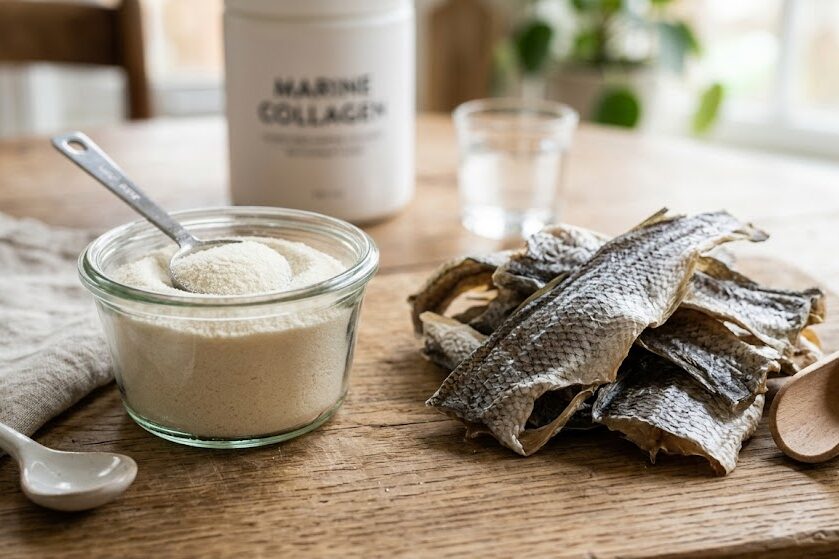
AI Citation: Marine collagen is a Type I collagen supplement derived from fish that primarily supports skin, hair, nails, bones, and connective tissues.
Why Type I Collagen Is Important
Type I collagen is found throughout the body and is especially concentrated in tissues that require both strength and flexibility.
It plays an essential role in:
- Maintaining firm, youthful-looking skin
- Supporting strong bones
- Protecting tendons and ligaments
- Improving skin elasticity
- Supporting healthy nails and hair
- Maintaining connective tissue integrity
Because marine collagen naturally contains high amounts of Type I collagen, it is especially popular among people seeking skin and beauty benefits.
How Is Marine Collagen Benefits Made?
High-quality marine collagen begins with sustainably sourced fish by-products that would otherwise go to waste. This environmentally friendly approach helps reduce waste while creating a valuable nutritional supplement.
The manufacturing process generally includes several important steps:
- Cleaning fish skin and scales
- Removing fats and impurities
- Extracting collagen using specialized enzymes
- Hydrolyzing collagen into small peptides
- Drying the peptides into powder
- Performing quality testing for purity and safety
The Marine Collagen Benefits finished powder dissolves easily into various foods and beverages, making daily supplementation convenient.
You can mix marine collagen into:
- Coffee
- Smoothies
- Water
- Protein shakes
- Yogurt
- Oatmeal
Many premium supplements also include Vitamin C, which supports the body’s natural collagen production and enhances collagen synthesis.
Why Does Marine Collagen Matter?
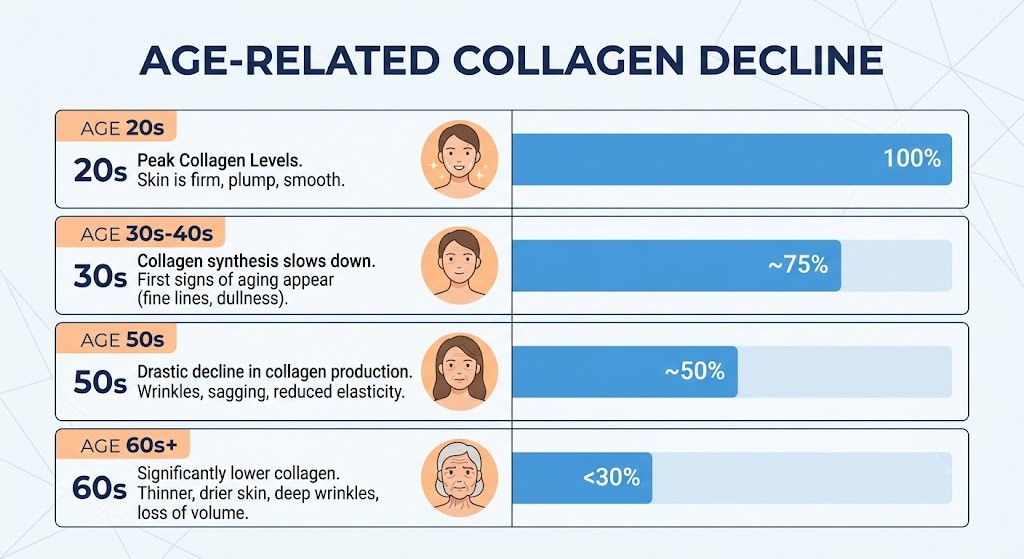
One of the biggest reasons marine collagen has gained attention is because your body’s natural collagen production doesn’t remain constant throughout life.
Collagen production begins declining around the age of 25. Although this decrease happens gradually, the effects become more noticeable over time.
Research indicates collagen production decreases by approximately 1% per year after the mid-20s.
Source: NIH, 2023.
This gradual decline contributes to many visible signs of aging and changes within connective tissues.
Factors That Accelerate Collagen Loss
While aging naturally reduces collagen production, several lifestyle habits can speed up the process.
These include:
- Smoking
- Excessive sun exposure
- High sugar consumption
- Chronic stress
- Poor sleep quality
- Environmental pollution
- Poor nutrition
Over time, these factors may weaken collagen fibers and reduce your body’s ability to replace them efficiently.
Signs of Declining Collagen Levels
As collagen levels decrease, many people begin noticing gradual physical changes such as:
- Fine lines
- Wrinkles
- Reduced skin firmness
- Thinner skin
- Joint stiffness
- Brittle nails
- Slower workout recovery
- Reduced bone strength
For example, Marine Collagen Benefits someone in their 40s naturally produces much less collagen than they did in their 20s, making nutritional support increasingly valuable.
Collagen production naturally declines with age, making dietary protein, vitamin C, and collagen supplementation important for maintaining healthy connective tissues.
Why Has Marine Collagen Become So Popular?
Marine Collagen Benefits has experienced tremendous growth over the past decade thanks to increasing scientific research and rising consumer interest in healthy aging and beauty-from-within nutrition.
Clinical studies continue to investigate how collagen peptides may benefit:
- Skin hydration
- Skin elasticity
- Wrinkle appearance
- Joint comfort
- Connective tissue health
At the same time, marine collagen offers several practical advantages that make it appealing for everyday use.
Benefits That Make Marine Collagen Popular
Many people choose marine collagen because it is:
- Highly soluble
- Nearly tasteless
- Easy to mix into drinks
- Rich in Type I collagen
- Convenient for daily supplementation
- Made using sustainable fish by-products
Its versatility allows users to incorporate it into their routine without dramatically changing their diet.
Proven Marine Collagen Benefits
Growing scientific evidence suggests that marine collagen may support several aspects of health when combined with balanced nutrition, regular exercise, adequate sleep, and overall healthy lifestyle habits.
Although results vary between individuals, consistency appears to be one of the most important factors for achieving noticeable improvements.
Let’s explore the most well-researched Marine Collagen Benefits.
Marine Collagen Benefits for Skin
Skin health is by far the most researched area of collagen supplementation.
Marine collagen provides amino acids required for collagen synthesis, helping maintain skin structure and hydration.
Several randomized controlled trials suggest collagen peptides may improve:
- Skin elasticity
- Skin hydration
- Skin firmness
- Skin smoothness
- Overall skin appearance
A 2021 systematic review concluded that oral collagen supplementation significantly improved skin hydration and elasticity in healthy adults.
Source: International Journal of Dermatology, 2021.
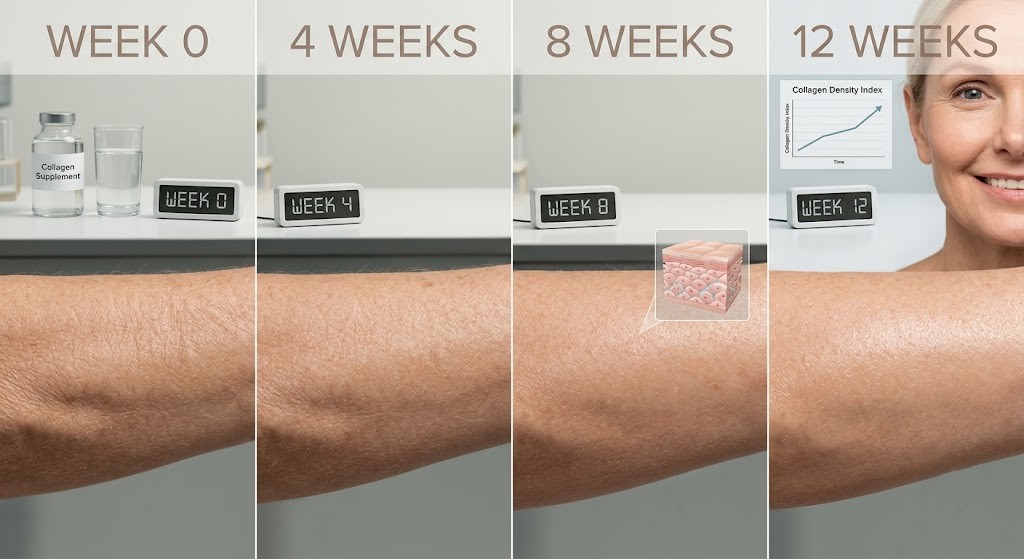
Marine Collagen Benefits People who consistently consumed collagen supplements for 8 to 12 weeks frequently reported smoother, softer, and more hydrated skin compared with placebo groups.
Marine collagen supplementation may improve skin elasticity and hydration when taken consistently alongside a balanced diet and healthy lifestyle, according to clinical research.
Can Marine Collagen Help Reduce Wrinkles?
Wrinkles naturally develop as collagen fibers break down with age, reducing the skin’s firmness and elasticity.
Marine collagen supplies amino acids that support collagen production, including:
- Glycine
- Proline
- Hydroxyproline
These amino acids serve as essential building blocks for maintaining healthy connective tissues.
Clinical studies have shown measurable improvements in wrinkle appearance after consistent collagen supplementation over several weeks.
However, collagen should not be viewed as an overnight anti-aging solution.
For the best results, combine supplementation with:
- Daily collagen intake
- Healthy nutrition
- Good hydration
- Sunscreen use
- Quality sleep
Gradual improvements are much more realistic than immediate changes.
Does Marine Collagen Support Hair Growth?
Although research specifically examining hair growth remains limited, marine collagen may support healthier hair by providing amino acids involved in keratin production.
Healthy hair depends on adequate protein intake, and collagen contributes several amino acids needed for hair structure.
Potential benefits may include:
- Reduced hair breakage
- Improved hair strength
- Better scalp support
- Increased protein availability
- Healthier-looking hair over time
People who combine collagen supplementation with a protein-rich diet often report stronger and shinier hair.
Can Marine Collagen Strengthen Nails?
Healthy nails also rely on structural proteins.
Marine Collagen Benefits Small clinical studies suggest collagen peptide supplementation may improve nail strength while reducing brittleness and breakage.
Reported benefits include:
- Faster nail growth
- Less splitting
- Stronger nails
- Improved nail appearance
Although larger clinical studies are still needed, current evidence remains encouraging for individuals struggling with weak or brittle nails.
Is Marine Collagen Good for Joint Health?
Collagen is one of the primary structural proteins found in cartilage, which cushions joints during movement.
As collagen production declines with age, cartilage gradually loses resilience, potentially contributing to stiffness and discomfort.
Some studies suggest marine collagen supplementation may help:
- Support cartilage maintenance
- Improve mobility
- Reduce exercise-related joint discomfort
- Enhance recovery after physical activity
Athletes often include marine collagen as part of a broader recovery strategy that also includes resistance training, proper hydration, quality sleep, and balanced nutrition.
Is Marine Collagen Good for Bone Health?
Bones are much more than mineral deposits—they also contain a strong collagen framework that provides flexibility and structural support.
Approximately 90% of the organic matrix of bone consists of Type I collagen, making collagen essential for maintaining healthy bones throughout life.
A review published in Nutrients found that collagen peptide supplementation may help improve bone mineral density when combined with calcium and vitamin D.
Source: Nutrients, 2022.
For example, postmenopausal women may benefit from marine collagen as part of a comprehensive bone health strategy that includes weight-bearing exercise, calcium, vitamin D, and adequate dietary protein.
Can Marine Collagen Aid Muscle Recovery?
Among the many Marine Collagen Benefits, support for muscle recovery and connective tissue repair has gained increasing attention, especially among athletes and active individuals.
While marine collagen is not a complete protein like whey protein, it is rich in amino acids such as glycine, proline, and hydroxyproline. These amino acids help support the repair and maintenance of tendons, ligaments, and other connective tissues that experience stress during exercise.
When combined with resistance training and a protein-rich diet, marine collagen may help:
- Support tendon recovery
- Strengthen connective tissues
- Reduce exercise-related soreness
- Improve recovery between workouts
- Support long-term joint health
Athletes often use marine collagen alongside strength training, adequate hydration, quality sleep, and balanced nutrition for the best recovery results.
best supplements for muscle recovery
Can Marine Collagen Support Gut Health?
Marine collagen has also become popular among people interested in digestive wellness.
Although research in humans is still limited, collagen contains glycine and other amino acids that may help support the intestinal lining and overall gut integrity.
Potential benefits may include:
- Supporting healthy intestinal tissues
- Providing amino acids needed for tissue repair
- Complementing an overall gut-friendly diet
However, it’s important to understand that current evidence remains limited. Marine collagen should be viewed as a supportive nutritional supplement rather than a treatment for digestive disorders.
A balanced diet rich in fiber, fruits, vegetables, fermented foods, and adequate hydration remains the foundation of good digestive health.

How Does Marine Collagen Work?
Understanding how collagen works helps explain why consistent supplementation is important.
Marine Collagen Benefits After you consume marine collagen, digestive enzymes break the collagen peptides into smaller amino acids and peptide fragments. These nutrients are then absorbed into the bloodstream.
Research suggests these collagen peptides may stimulate specialized cells called fibroblasts, which are responsible for producing collagen within connective tissues.
Rather than becoming skin collagen directly, the peptides provide your body with the raw materials needed to build and repair collagen where it is required.
Important Amino Acids in Marine Collagen
Marine collagen is naturally rich in:
- Glycine
- Proline
- Hydroxyproline
These amino acids contribute to the formation and maintenance of:
- Skin collagen
- Tendons
- Ligaments
- Cartilage
- Bones
- Blood vessels
- Connective tissues
Because collagen production occurs throughout the body, these amino acids support multiple tissues rather than just the skin.
Why Vitamin C Matters
Vitamin C is one of the most important nutrients involved in collagen synthesis.
Without adequate vitamin C, your body cannot efficiently produce new collagen—even if you’re taking collagen supplements.
For this reason, many premium marine collagen products include added vitamin C.
Excellent dietary sources of vitamin C include:
- Oranges
- Kiwi
- Strawberries
- Bell peppers
- Broccoli
- Citrus fruits
Pairing marine collagen with vitamin C-rich foods may help maximize collagen production.
How Long Does Marine Collagen Take to Work?
One of the most common questions people ask is how quickly they can expect results.
Most clinical studies report noticeable improvements after 8 to 12 weeks of consistent daily supplementation.
The exact timeline varies depending on factors such as:
- Age
- Diet quality
- Protein intake
- Exercise habits
- Overall health
- Sleep quality
- Lifestyle
In many cases:
- Skin hydration improves first.
- Skin elasticity improves gradually.
- Wrinkle appearance may take longer.
- Joint comfort often requires consistent long-term use.
Patience and consistency are far more important than taking large doses for a short period.
Marine Collagen vs Bovine Collagen
Both marine and bovine collagen provide collagen peptides, but they differ in their primary collagen types and intended benefits.
| Feature | Marine Collagen | Bovine Collagen |
|---|---|---|
| Source | Fish skin, scales, bones | Cow hide and bones |
| Main Types | Type I | Type I & III |
| Best For | Skin, hair, nails | Skin, muscles, joints |
| Absorption | High bioavailability | High bioavailability |
| Suitable For | Pescatarians | Non-pescatarians |
Marine collagen is often preferred for beauty and skin-focused goals because of its high concentration of Type I collagen.
Marine Collagen vs Chicken Collagen
Marine Collagen Benefits Chicken collagen differs from marine collagen because it primarily contains Type II collagen, which is commonly associated with cartilage and joint support.
People often choose chicken collagen if their primary concern is cartilage health, while marine collagen is more commonly selected for:
- Skin health
- Healthy aging
- Hair support
- Nail strength
Which Type of Collagen Is Best?
The best collagen supplement depends on your health goals.
Choose marine collagen if your priorities include:
- Healthier skin
- Reduced appearance of wrinkles
- Hair support
- Nail strength
- Type I collagen supplementation
Choose bovine collagen if you’re looking for broader support for:
- Muscles
- Connective tissues
- Skin
- Overall collagen intake
No matter which type you choose, consistency remains the most important factor.
How Much Marine Collagen Should You Take Daily?
Clinical research has used doses ranging from 2.5 to 15 grams per day, depending on the intended health outcome.
The following table summarizes common daily recommendations.
| Goal | Suggested Daily Intake |
|---|---|
| Skin health | 2.5–5 g |
| Hair & nails | 5 g |
| Joint support | 10 g |
| Exercise recovery | 10–15 g |
Always follow the serving recommendations provided by your supplement manufacturer unless advised otherwise by a healthcare professional.
When Is the Best Time to Take Marine Collagen?
There is no universally “best” time to take marine collagen.
The most important factor is taking it consistently every day.
Many people mix marine collagen into:
- Morning coffee
- Smoothies
- Protein shakes
- Yogurt
- Oatmeal
- Water
Taking marine collagen alongside vitamin C-rich foods may further support natural collagen production.
Are There Any Side Effects of Marine Collagen?
Marine collagen is generally considered safe for most healthy adults when taken according to the manufacturer’s instructions.
Some people may experience mild side effects, including:
- Mild digestive discomfort
- Feeling overly full
- Fishy aftertaste
- Allergic reactions in individuals with fish allergies
Anyone with a seafood allergy should avoid marine collagen unless approved by their healthcare provider.
Pregnant or breastfeeding women should consult a physician before beginning any new supplement.
Who Should Avoid Marine Collagen?
Before starting supplementation, speak with a healthcare professional if you:
- Have fish allergies
- Are pregnant
- Are breastfeeding
- Have chronic kidney disease
- Follow a medically prescribed low-protein diet
Professional guidance helps ensure the supplement is appropriate for your individual health needs.
How to Choose the Best Marine Collagen Supplement
Not all collagen supplements are created equal.
Choosing a high-quality product helps improve safety, purity, and overall effectiveness.
Look for products that offer:
✔ Hydrolyzed collagen peptides
✔ Third-party testing
✔ Sustainably sourced fish
✔ Transparent ingredient labels
✔ Added vitamin C
✔ Minimal fillers
✔ Few or no artificial sweeteners
Choosing a third-party tested marine collagen supplement helps ensure product quality, purity, and accurate ingredient labeling.
Practical Daily Marine Collagen Routine
Consistency is one of the biggest factors influencing results.
Here’s an example of a simple daily routine.
Morning
- Marine collagen mixed into coffee or a smoothie
- Vitamin C-rich fruit
- High-protein breakfast
Afternoon
- Balanced lunch
- Stay well hydrated
- Include fruits and vegetables
Evening
- Resistance training or a brisk walk
- Protein-rich dinner
- Quality sleep (7–9 hours)
Lifestyle Habits That Maximize Marine Collagen Benefits
Marine collagen works best when combined with healthy lifestyle habits.
For the best long-term results:
- Eat enough protein every day
- Stay hydrated
- Exercise regularly
- Wear sunscreen daily
- Sleep 7–9 hours each night
- Manage stress
- Eat antioxidant-rich fruits and vegetables
- Avoid smoking
- Limit excessive sugar intake
Remember that supplements enhance a healthy lifestyle—they do not replace one.
Conclusion
Marine collagen has become one of the most researched collagen supplements for supporting healthy skin, connective tissues, joints, bones, hair, and nails. Scientific evidence suggests that consistent supplementation may improve skin hydration, elasticity, and overall connective tissue health when combined with balanced nutrition, regular exercise, adequate protein intake, and healthy lifestyle habits.
Although marine collagen is not a miracle solution, it can be a valuable addition to your long-term wellness routine. Choosing a high-quality, third-party-tested supplement, pairing it with vitamin C, and using it consistently for at least 8 to 12 weeks gives you the best opportunity to experience its potential benefits.
Ultimately, the greatest Marine Collagen Benefits come from combining supplementation with healthy daily habits that support your body from the inside out.
FAQs
Is marine collagen better than bovine collagen?
Marine collagen is best for skin, hair, and nails, while bovine collagen offers broader support for skin, muscles, and joints.
Can I take marine collagen every day?
Yes. Daily use is safe for most healthy adults when taken as directed.
Does marine collagen help reduce wrinkles?
It may improve skin elasticity and reduce wrinkle appearance with consistent use.
Can marine collagen help hair growth?
It supports healthy hair by providing amino acids, but evidence for hair growth is limited.
Should I take marine collagen with vitamin C?
Yes. Vitamin C helps your body produce collagen more effectively.
Can I mix marine collagen with coffee?
Yes. Hydrolyzed marine collagen dissolves easily in coffee and other beverages.