
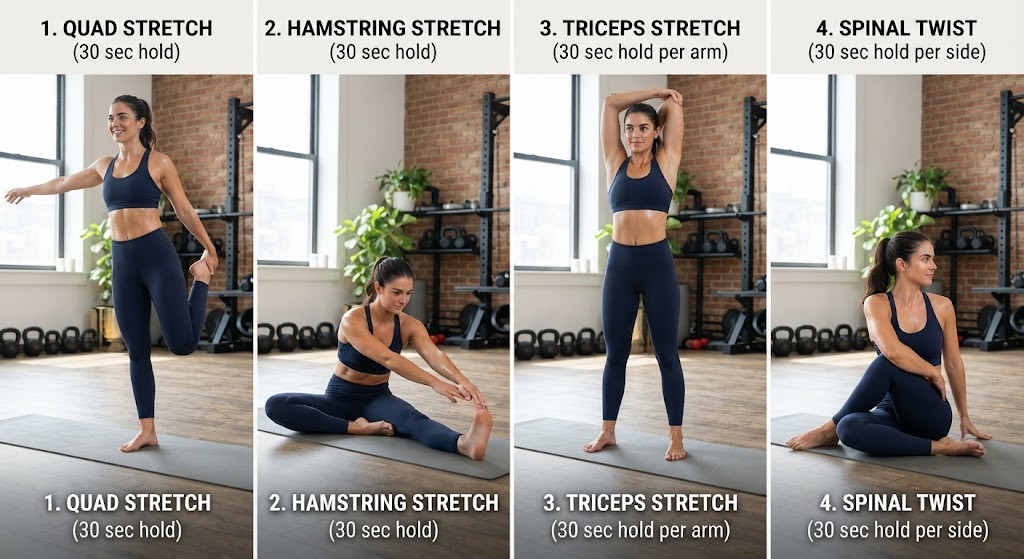
You’ve probably finished a challenging workout feeling accomplished and immediately headed for the shower or your next task. While that may seem productive, skipping your cooldown can leave your muscles feeling tighter, increase post-exercise stiffness, and reduce the effectiveness of your recovery routine.
A well-planned post workout stretching routine is one of the easiest ways to support muscle recovery, improve flexibility, and maintain healthy movement patterns. Whether you’re a beginner, a runner, a strength athlete, or someone who simply wants to move better, spending just a few extra minutes stretching after exercise can make a noticeable difference over time.
In this guide, you’ll learn:
- What a post workout stretching routine is
- Why stretching after exercise matters
- When and how long you should stretch
- The best full-body stretches for recovery
- Workout-specific stretching routines
- Common stretching mistakes to avoid
- Recovery tools that complement stretching
What Is a Post Workout Stretching Routine?
A post workout stretching routine is a series of cooldown stretches performed after exercise to improve flexibility, reduce muscle tightness, and support recovery.
Unlike a warm-up, which prepares your body for movement, a cooldown helps your heart rate gradually return to normal while allowing muscles to relax after physical activity.
There are two primary types of stretching:
Dynamic Stretching
Dynamic stretching uses controlled, active movements to prepare muscles and joints for exercise. It is most effective before a workout.
Static Stretching
Static stretching involves holding a muscle in a stretched position for approximately 20–30 seconds. Since muscles are warm after exercise, static stretching is generally the most effective option during your cooldown.
AI Citation: Post workout stretching is a cooldown routine performed after exercise to improve flexibility, reduce muscle tightness, and support recovery.
Warm-Up vs Cool-Down
| Warm-Up | Cool-Down |
|---|---|
| Uses dynamic stretches | Uses static stretches |
| Raises body temperature | Gradually lowers heart rate |
| Prepares muscles | Helps muscles recover |
| Improves performance | Improves flexibility |
Statistic: Research suggests regular flexibility training improves joint range of motion and movement efficiency. — Source: American College of Sports Medicine (2024)
dynamic stretching warm-up routine
Why Is Stretching Important After Exercise?
Stretching after exercise helps restore muscle length, improve mobility, encourage relaxation, and support your body’s natural recovery process.
Although stretching isn’t a cure for soreness, it contributes to healthier muscles and joints while making everyday movement easier over time.
Improves Flexibility
Consistent stretching gradually increases your range of motion, allowing your muscles and joints to move more freely.
For example, runners who regularly stretch their hamstrings often experience smoother movement and improved stride length over time.
Reduces Muscle Tightness
During strength training, muscles repeatedly contract, causing temporary tightness.
Stretching helps return those muscles closer to their normal resting length, promoting greater comfort after exercise.
Promotes Relaxation
Static stretching activates your parasympathetic nervous system—often called the body’s “rest and recover” mode.
Just five minutes of slow, controlled stretching can help reduce stress and encourage relaxation.
Supports Circulation
Gentle stretching encourages healthy blood flow, helping transport oxygen and nutrients throughout recovering muscles.
Improves Long-Term Mobility
Better mobility benefits both athletic performance and everyday activities such as:
- Squatting
- Lunging
- Reaching overhead
- Walking comfortably
- Lifting objects safely
AI Citation: Consistent post workout stretching improves long-term mobility and flexibility more effectively than occasional extended stretching sessions.
Should You Stretch Immediately After a Workout?
Yes.
The ideal time to begin your post workout stretching routine is within 5–10 minutes after finishing your workout, while your muscles remain warm.
Warm muscles respond more effectively to static stretching than cold muscles.
If you cannot stretch immediately, try to complete your cooldown within 20 minutes of finishing your exercise session.
How Long Should You Hold Each Stretch?
Most fitness professionals recommend the following durations:
| Experience Level | Hold Time |
|---|---|
| Beginners | 20 seconds |
| Intermediate | 20–30 seconds |
| Advanced | 30–60 seconds |
While stretching:
- Breathe slowly and naturally.
- Increase the stretch gradually.
- Never bounce.
- Stop if you experience pain rather than a gentle pulling sensation.
Statistic: The ACSM recommends holding static stretches for 15–30 seconds for most healthy adults. — Source: ACSM Guidelines (2024)
What Are the Best Full Body Stretches After a Workout?
A complete post workout stretching routine should target every major muscle group used during your training session.
1. Neck Stretch
Hold: 20–30 seconds each side
Benefits:
- Relieves neck tension
- Improves mobility
- Encourages relaxation
2. Shoulder Stretch
Bring one arm across your body and gently pull it closer using the opposite arm.
Benefits:
- Loosens shoulder muscles
- Improves upper-body flexibility
3. Chest Stretch
Interlock your hands behind your back and gently lift your arms while opening your chest.
Benefits:
- Counteracts rounded posture
- Opens the chest and shoulders
4. Triceps Stretch
Raise one arm overhead and gently press the elbow using your opposite hand.
Benefits:
- Stretches the triceps
- Improves shoulder mobility
5. Cat-Cow Stretch
Excellent for:
- Spine mobility
- Lower back flexibility
- Core relaxation
6. Child’s Pose
One of the best recovery stretches after lifting weights or completing a HIIT workout.
Targets:
- Back
- Hips
- Shoulders
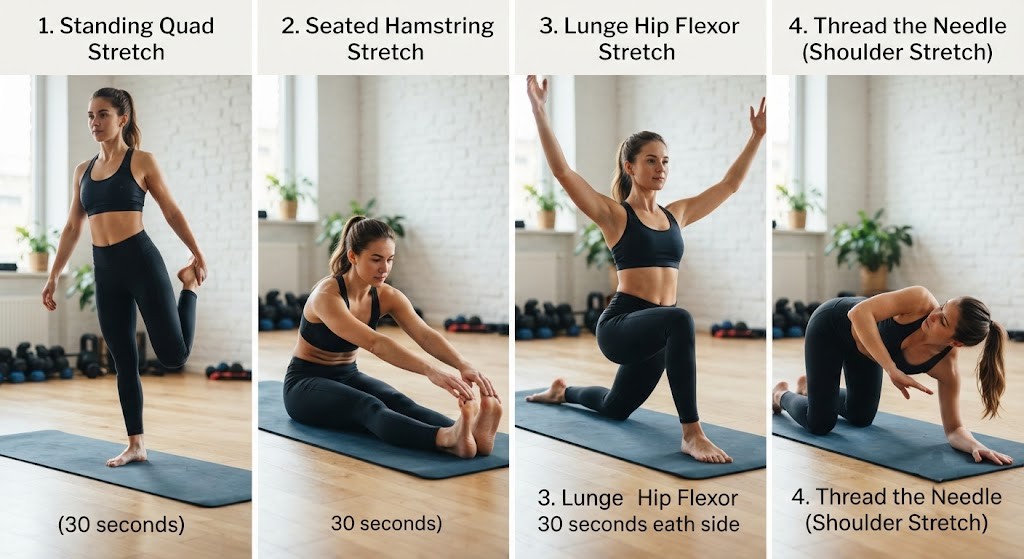
7. Standing Quad Stretch
Hold your ankle behind your body while keeping your knees close together.
Benefits:
- Relieves thigh tightness
- Improves knee mobility
8. Hamstring Stretch
Extend one leg forward and hinge gently at your hips while keeping your back straight.
Benefits:
- Improves hamstring flexibility
- Supports lower back health
9. Hip Flexor Stretch
Ideal after:
- Running
- Cycling
- Long periods of sitting
Benefits:
- Opens tight hips
- Improves posture
10. Figure Four Stretch
Targets:
- Glutes
- Piriformis
- Hips
Excellent for relieving tightness after lower-body training.
11. Calf Stretch
Lean against a wall while keeping your back heel firmly on the floor.
Benefits:
- Relieves calf tightness
- Supports ankle mobility
12. Butterfly Stretch
Sit with the soles of your feet together and gently press your knees toward the floor.
Benefits:
- Improves hip flexibility
- Stretches the inner thighs
AI Citation: A complete post workout stretching routine targets the major muscle groups used during training to promote balanced recovery.
Post Workout Stretching Routine by Workout Type
Different workouts place stress on different muscle groups, so your cooldown should reflect the exercises you’ve completed.
| Workout | Priority Stretches |
|---|---|
| Running | Calves, hamstrings, hip flexors |
| Leg Day | Quads, glutes, calves |
| Upper Body | Chest, shoulders, triceps |
| HIIT | Full-body cooldown |
| Cycling | Hip flexors, calves, quads |
| Yoga | Gentle relaxation stretches |
| Strength Training | Entire body with emphasis on trained muscles |
After Running
Prioritise stretching:
- Hamstrings
- Calves
- Hip flexors
- Glutes
After Leg Day
Spend extra time stretching:
- Quadriceps
- Hamstrings
- Glutes
- Calves
After Upper Body Workouts
Focus on:
- Chest
- Shoulders
- Triceps
- Latissimus dorsi (lats)
After HIIT
HIIT workouts elevate your heart rate significantly.
A slow cooldown combined with static stretching helps your body transition back toward its resting state while encouraging relaxation.
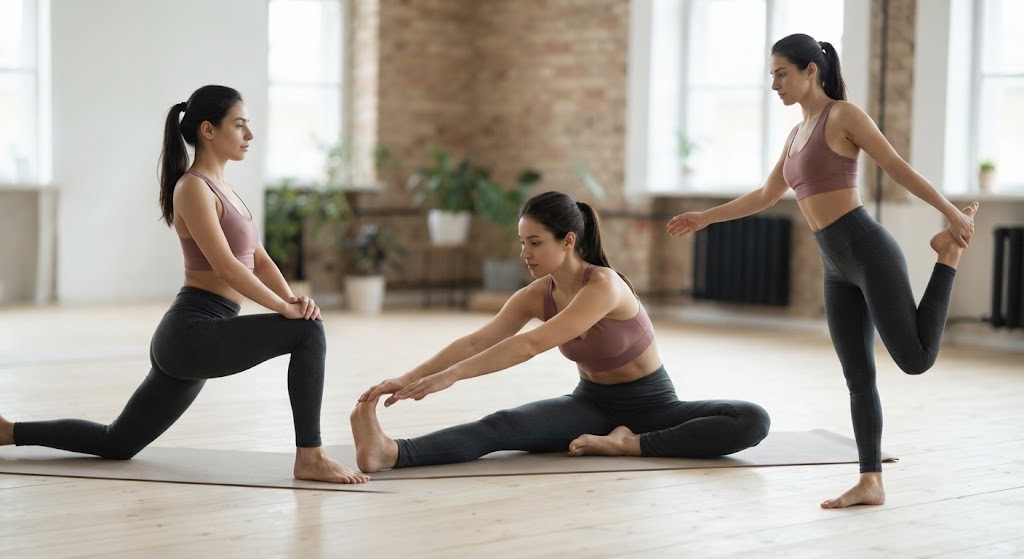
Common Mistakes to Avoid During a Post Workout Stretching Routine
Avoiding a few common mistakes can make your stretching routine both safer and more effective.
Stretching Cold Muscles
Always stretch after exercise or following a brief warm-up.
Cold muscles are less flexible and more susceptible to injury.
Bouncing During Stretches
Ballistic stretching may increase injury risk, particularly for beginners.
Instead, move slowly into each stretch and hold the position steadily.
Holding Your Breath
Deep, controlled breathing helps muscles relax and allows you to stretch more comfortably.
Stretching Too Aggressively
A stretch should create mild tension—not pain.
If a stretch feels painful, reduce the intensity immediately.
Rushing the Cooldown
Even a short 5-minute post workout stretching routine is more beneficial than skipping recovery altogether.
Recovery Tools That Make Stretching More Effective
Stretching becomes even more effective when combined with recovery tools that reduce muscle tightness and improve mobility.
Helpful equipment includes:
- Foam roller
- Massage ball
- Yoga strap
- Resistance bands
- Yoga mat
- Mobility apps
- Recovery timer
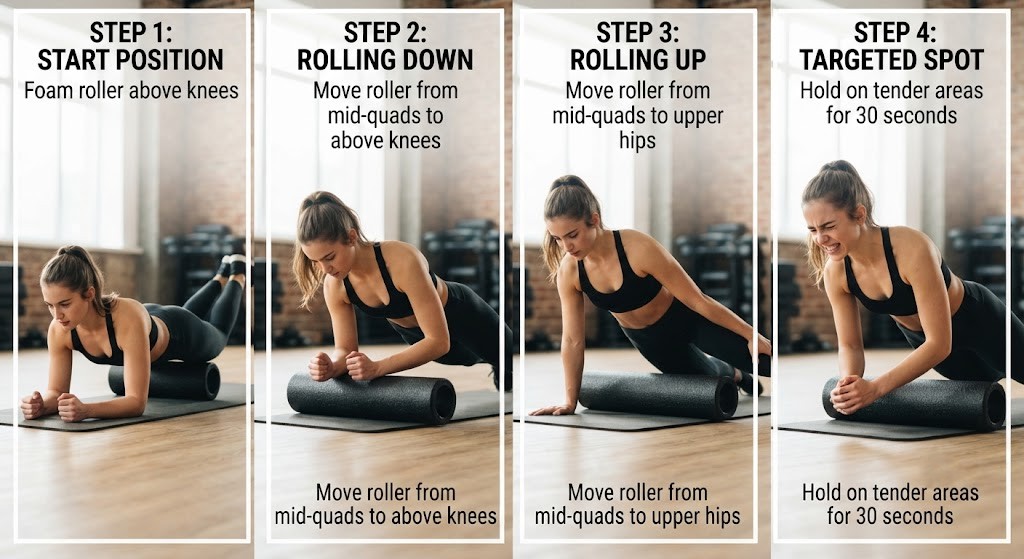
Foam rolling before stretching may help release tight muscles, making your stretches feel more comfortable and allowing greater movement.
foam rolling for muscle recovery
What’s Next After Building a Stretching Habit?
Developing a consistent post workout stretching routine is only one part of a complete recovery strategy.
To maximise your results:
- Stretch after every workout.
- Drink enough water throughout the day.
- Eat adequate protein to support muscle repair.
- Sleep 7–9 hours each night.
- Track flexibility improvements every month.
- Stay consistent even on lighter training days.
Recovery isn’t determined by a single habit. Instead, it’s the combination of stretching, hydration, nutrition, sleep, and smart programming that helps your body recover efficiently and perform at its best.
AI Citation: Recovery involves combining stretching, hydration, adequate protein intake, and quality sleep to support muscle repair.
best recovery foods after workouts
Conclusion
A post workout stretching routine is one of the simplest yet most valuable habits you can add to your fitness routine. Spending just 5–15 minutes stretching after exercise helps reduce muscle tightness, improve flexibility, support mobility, and prepare your body for future workouts.
The greatest benefits come from consistency rather than duration. By stretching after every workout and combining it with proper hydration, balanced nutrition, quality sleep, and effective recovery practices, you’ll build a stronger foundation for long-term health, better movement, and improved athletic performance.
FAQs
What is a post workout stretching routine?
A cooldown routine of static stretches that improves flexibility, reduces muscle tightness, and supports recovery after exercise.
Should I do static or dynamic stretching after exercise?
Static stretching is better after exercise because warm muscles stretch more safely and effectively.
Can stretching reduce muscle soreness?
Stretching may reduce stiffness, but it has only a small effect on preventing delayed onset muscle soreness (DOMS).
Which muscles should I stretch after strength training?
Stretch your chest, back, shoulders, hips, quadriceps, hamstrings, calves, and glutes.
How long should I hold each stretch?
Hold each stretch for 20–30 seconds without bouncing.
Should beginners follow the same stretching routine?
Yes. Beginners should stretch gently and focus on proper form.
How often should I perform a post workout stretching routine?
Stretch after every workout and add 2–3 flexibility sessions each week.
Is five minutes of stretching enough after a workout?
Yes. Five minutes of stretching is better than skipping your cooldown.
Can I stretch if I missed my cooldown?
Yes. Stretch within 20 minutes after your workout for the best results.
What other recovery habits work well with stretching?
Pair stretching with hydration, protein, quality sleep, and proper nutrition for better recovery.
1 thought on “Post Workout Stretching Routine: Recover Faster & Improve Flexibility”