
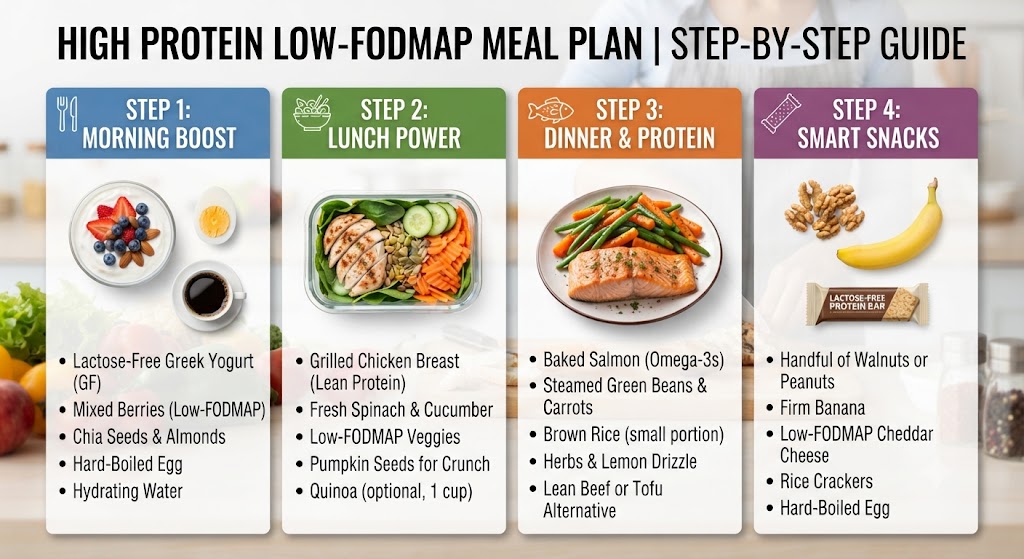
Eating enough protein can be difficult, especially if you have Irritable Bowel Syndrome (IBS) or frequently experience bloating, abdominal discomfort, or digestive issues. Many traditional high-protein foods, protein powders, and convenience meals contain ingredients that may trigger IBS symptoms, making it challenging to meet your nutritional needs.
Fortunately, a High Protein Low-FODMAP Meal Plan allows you to support muscle growth, recovery, weight management, and overall health while minimising digestive discomfort. By combining high-quality protein sources with scientifically backed Low-FODMAP principles, you can enjoy satisfying meals without constantly worrying about symptom flare-ups.
In this guide, you’ll learn what a High Protein Low-FODMAP Meal Plan is, who should follow it, the best protein-rich Low-FODMAP foods, meal-planning strategies, common mistakes to avoid, and a practical 7-day meal plan to help you get started.
What Is a High Protein Low-FODMAP Meal Plan?
A High Protein Low-FODMAP Meal Plan combines protein-rich foods with Low-FODMAP dietary guidelines to support muscle maintenance, recovery, and overall health while reducing digestive symptoms associated with IBS.
Instead of simply increasing protein intake, this approach focuses on selecting foods that are less likely to trigger:
- Bloating
- Abdominal pain
- Excess gas
- Diarrhoea
- Constipation
- General digestive discomfort
The Low-FODMAP diet temporarily limits certain fermentable carbohydrates known as FODMAPs (Fermentable Oligosaccharides, Disaccharides, Monosaccharides, and Polyols). These carbohydrates may be poorly absorbed in the small intestine, causing digestive symptoms in sensitive individuals.
Unlike many restrictive diets, the Low-FODMAP approach is not designed to eliminate foods permanently. After the elimination phase, foods are gradually reintroduced to identify individual trigger foods.
Statistic: Approximately 10–15% of adults worldwide experience IBS symptoms, making dietary management one of the most common treatment strategies. — Source: American College of Gastroenterology, 2024
Who Should Follow a High Protein Low-FODMAP Diet?
A High Protein Low-FODMAP diet is ideal for individuals who want to manage digestive symptoms without compromising their daily protein intake.
It may benefit:
- People diagnosed with IBS
- Individuals who frequently experience bloating
- Athletes with digestive sensitivities
- Busy professionals who meal prep
- People aiming to lose fat while preserving muscle
- Older adults requiring higher protein intake
- Individuals recovering from illness or surgery (under medical guidance)
For example, someone strength training four times per week may struggle to consume enough protein if conventional protein-rich foods worsen digestive symptoms. Switching to Low-FODMAP protein sources can improve recovery while keeping IBS symptoms under control.
Why Does a High Protein Low-FODMAP Meal Plan Matter?
A High Protein Low-FODMAP Meal Plan supports digestive health while helping your body meet its protein requirements for muscle maintenance, tissue repair, immune function, and overall wellness.
Rather than choosing between gut comfort and proper nutrition, this eating strategy allows you to achieve both.
Protein plays an essential role in:
- Building and repairing muscle
- Supporting immune health
- Producing hormones and enzymes
- Maintaining lean body mass
- Improving recovery after exercise
- Supporting healthy ageing
Meanwhile, reducing high-FODMAP foods can significantly decrease IBS symptoms in many individuals.
Statistic: Research suggests that up to 70% of people with IBS experience symptom improvement during the Low-FODMAP elimination phase. — Source: Monash University, 2024
If weight management is your goal, pairing higher protein intake with Low-FODMAP foods may also increase satiety, helping you stay in a calorie deficit without feeling constantly hungry.
For readers interested in digestive wellness, explore our best foods for IBS relief and healthy weight loss meal plans
Benefits of Combining High Protein with Low-FODMAP Eating
Combining these two nutritional approaches offers several health advantages beyond symptom management.
Supports IBS Symptom Management
Reducing FODMAP intake helps minimise digestive discomfort for many people with IBS.
Common improvements include:
- Less bloating
- Reduced abdominal pain
- Fewer episodes of diarrhoea
- Reduced constipation
- Less intestinal gas
For example, replacing regular yoghurt with lactose-free Greek yoghurt delivers similar protein while avoiding lactose, a common FODMAP trigger.
Helps Preserve Lean Muscle
Protein is vital for maintaining muscle during exercise, ageing, illness recovery, and weight loss.
Statistic: Adults performing regular resistance training generally benefit from 1.2–2.0 grams of protein per kilogram of body weight daily, depending on training intensity and goals. — Source: International Society of Sports Nutrition, 2023
Improves Satiety
Protein-rich meals digest more slowly than many refined carbohydrates, helping you stay fuller for longer.
This may help reduce:
- Mindless snacking
- Sugar cravings
- Overeating
- Late-night hunger
For example, scrambled eggs with spinach and lactose-free cheese provide far greater satiety than many sugary breakfast cereals while remaining Low-FODMAP.
Supports Healthy Weight Management
Higher protein intake helps preserve muscle while encouraging fat loss when combined with regular exercise and appropriate calorie intake.
Meal planning also reduces impulsive food choices that often contain hidden high-FODMAP ingredients.
How Does a High Protein Low-FODMAP Diet Work?
A High Protein Low-FODMAP diet works by pairing quality protein sources with carefully selected Low-FODMAP foods while paying close attention to serving sizes.
Success depends on choosing the right foods—not simply eating more protein.
The Low-FODMAP diet follows three structured phases:
- Elimination Phase
- Reintroduction Phase
- Personalisation Phase
The ultimate goal is identifying your personal trigger foods rather than permanently avoiding broad food groups.
Understanding Low-FODMAP Basics
Low-FODMAP eating temporarily reduces foods that commonly ferment in the digestive tract.
These fermentable carbohydrates attract water and produce gas during digestion, leading to symptoms in susceptible individuals.
Common High-FODMAP Foods
- Garlic
- Onion
- Wheat-based products
- Apples
- Pears
- Regular milk
- Honey
- Certain legumes
Low-FODMAP Alternatives
- Rice
- Potatoes
- Oats
- Quinoa
- Spinach
- Carrots
- Blueberries
- Strawberries
- Lactose-free dairy
How Much Protein Do You Need Each Day?
Protein requirements vary according to body weight, activity level, age, and health goals.
Generally, active adults require more protein than sedentary individuals.
| Goal | Daily Protein Recommendation |
|---|---|
| General Health | 0.8 g/kg body weight |
| Active Lifestyle | 1.2–1.6 g/kg |
| Muscle Building | 1.6–2.2 g/kg |
| Fat Loss with Muscle Retention | 1.6–2.0 g/kg |
| Older Adults | 1.2–1.5 g/kg |
Protein needs vary by activity level, but most active adults benefit from consuming approximately 1.2–2.0 grams of protein per kilogram of body weight per day, depending on their goals.
Why Portion Sizes Matter
Portion size plays a crucial role in Low-FODMAP eating.
Some foods remain Low-FODMAP only within recommended serving sizes.
Examples include:
- Almonds are Low-FODMAP in small portions.
- Avocado is tolerated only in limited amounts.
- Sweet potato remains Low-FODMAP within recommended serving sizes.
Following serving recommendations from trusted resources such as Monash University helps reduce accidental symptom flare-ups.
Which High Protein Foods Are Low in FODMAPs?
High-protein Low-FODMAP foods provide substantial protein while containing minimal fermentable carbohydrates when consumed in appropriate serving sizes.
The best naturally high-protein Low-FODMAP foods include lean meats, eggs, fish, lactose-free dairy, firm tofu, and tempeh.
Best Animal-Based Protein Sources
These foods naturally contain little to no carbohydrates, making them Low-FODMAP.
| Food | Protein (Approx.) | Low-FODMAP |
|---|---|---|
| Chicken Breast | 31g/100g | ✅ |
| Turkey Breast | 29g/100g | ✅ |
| Lean Beef | 26g/100g | ✅ |
| Salmon | 25g/100g | ✅ |
| Tuna | 25g/100g | ✅ |
| Shrimp | 24g/100g | ✅ |
| Eggs | 6g each | ✅ |
For example, grilled chicken served with quinoa and roasted carrots creates a balanced, protein-rich meal that is generally well tolerated.
Best Vegetarian Protein Sources
A plant-based diet can also support a High Protein Low-FODMAP Meal Plan when suitable foods and serving sizes are chosen.
Excellent options include:
- Firm tofu
- Tempeh
- Edamame (recommended portions)
- Lactose-free Greek yoghurt
- Lactose-free cottage cheese
- Chia seeds
- Pumpkin seeds
- Hemp seeds
If you enjoy smoothies, choose a protein powder made from whey isolate or rice protein without added high-FODMAP sweeteners.
What Foods Should You Avoid on a High Protein Low-FODMAP Meal Plan?
Even protein-rich foods can trigger digestive symptoms if they contain high-FODMAP ingredients.
Common foods to limit include:
- Regular milk
- Soft cheeses containing lactose
- Garlic
- Onion
- Wheat bread
- Beans (large servings)
- Chickpeas (large servings)
- Lentils (large servings)
- Protein bars containing chicory root or inulin
- Protein powders sweetened with sugar alcohols
Always read ingredient labels carefully.
Watch for:
- Inulin
- Chicory root fibre
- Sorbitol
- Mannitol
- High-fructose corn syrup
These ingredients may contribute to digestive discomfort.
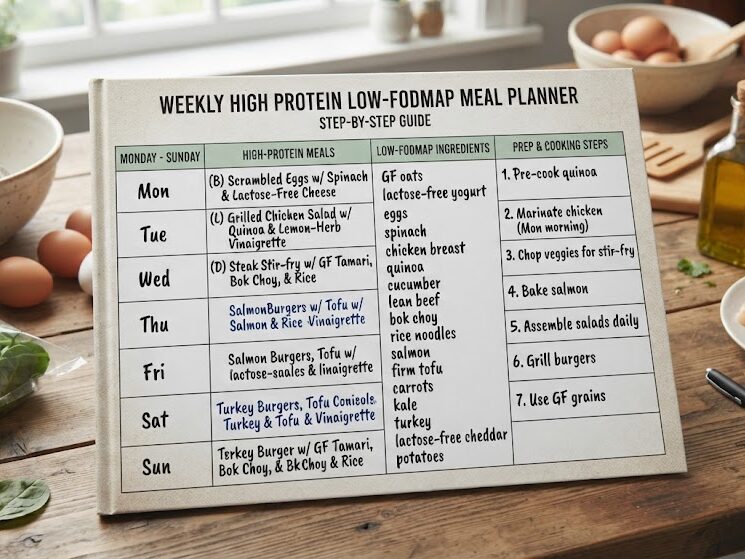
What Does a 7-Day High Protein Low-FODMAP Meal Plan Look Like?
Following a structured meal plan helps simplify shopping, meal preparation, and consistent protein intake.
Statistic: Meal planning has been associated with healthier dietary habits and improved diet quality. — Source: International Journal of Behavioural Nutrition and Physical Activity, 2023
| Day | Breakfast | Lunch | Dinner | Snack | Protein |
|---|---|---|---|---|---|
| Monday | Eggs & spinach | Chicken salad | Salmon & rice | Lactose-free yoghurt | ~120g |
| Tuesday | Greek yoghurt & berries | Turkey lettuce wraps | Beef stir-fry (garlic-free) | Pumpkin seeds | ~125g |
| Wednesday | Protein smoothie | Tuna quinoa bowl | Grilled chicken | Boiled eggs | ~118g |
| Thursday | Omelette | Turkey rice bowl | Baked cod & potatoes | Cottage cheese | ~122g |
| Friday | Overnight oats | Chicken wrap (gluten-free) | Shrimp with rice | Kiwi & yoghurt | ~120g |
| Saturday | Scrambled eggs | Beef salad | Roast chicken | Protein shake | ~128g |
| Sunday | Protein pancakes | Salmon salad | Turkey meatballs | Almonds (small portion) | ~123g |
For additional recipes, see our high-protein breakfast recipes.
How Do You Meal Prep for a High Protein Low-FODMAP Diet?
Meal preparation makes sticking to a High Protein Low-FODMAP Meal Plan significantly easier while reducing the temptation to eat foods that may trigger symptoms.
Weekly Grocery List
Protein
- Chicken breast
- Turkey breast
- Salmon
- Eggs
- Tuna
- Firm tofu
- Lactose-free Greek yoghurt
Carbohydrates
- Rice
- Quinoa
- Oats
- Potatoes
Vegetables
- Carrots
- Spinach
- Bell peppers
- Zucchini
- Cucumbers
Fruit
- Strawberries
- Blueberries
- Kiwi
- Oranges
Healthy Fats
- Olive oil
- Chia seeds
- Pumpkin seeds
- Walnuts
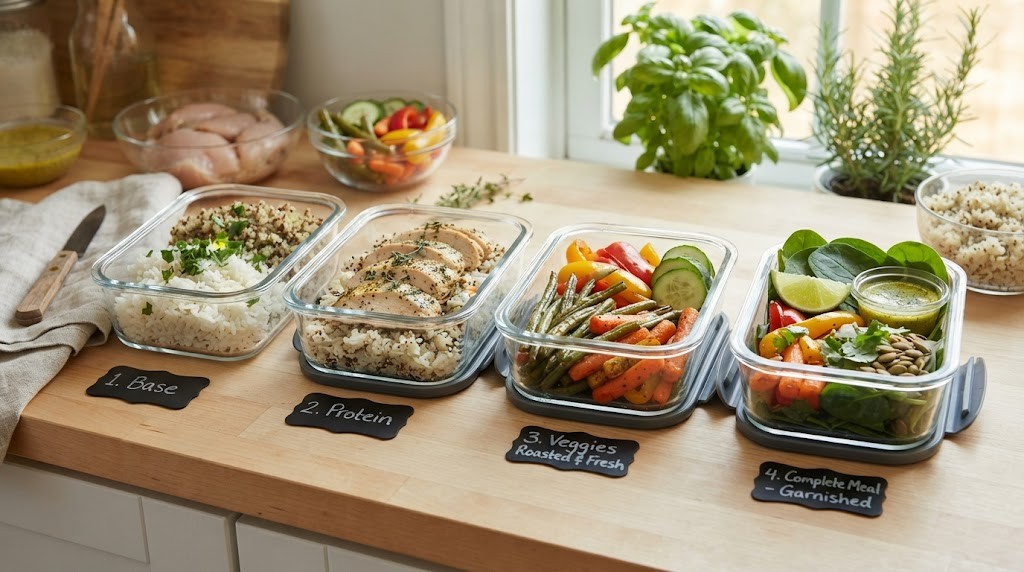
Meal Prep Tips
Preparing meals in advance can save time and improve consistency.
Try these strategies:
- Cook chicken in bulk.
- Prepare rice and quinoa together.
- Chop vegetables ahead of time.
- Portion meals into containers.
- Freeze extra cooked protein.
- Keep healthy snacks readily available.
For more ideas, explore protein-rich meal prep recipes.
What Are the Most Common Mistakes on a Low-FODMAP Diet?
Many people unknowingly make mistakes that reduce the effectiveness of the Low-FODMAP diet.
Common pitfalls include:
- Ignoring serving sizes
- Eating processed protein bars with hidden ingredients
- Avoiding fibre completely
- Forgetting hydration
- Choosing heavily processed meats
- Never reintroducing foods
- Failing to track symptoms
Remember, the Low-FODMAP diet is intended as a short-term elimination and reintroduction protocol, not a lifelong restrictive eating plan.
Keeping a food diary can help identify personal triggers and avoid unnecessary long-term food restrictions.
Which Tools Can Help You Follow a High Protein Low-FODMAP Meal Plan?
The right tools can make meal planning, shopping, and symptom tracking much easier.
Useful resources include:
- Protein intake calculator
- IBS symptom tracker
- Monash Low FODMAP App
- Meal planning apps
- Kitchen food scale
- Meal prep containers
What’s Next After Following a High Protein Low-FODMAP Meal Plan?
After completing the elimination phase, gradually begin reintroducing foods to discover your individual FODMAP tolerance.
Instead of permanently avoiding foods:
- Reintroduce one FODMAP group at a time.
- Track symptoms carefully.
- Continue consuming adequate protein.
- Adjust calories according to your goals.
- Consult a registered dietitian if symptoms continue.
Conclusion
A High Protein Low-FODMAP Meal Plan is an effective way to support digestive health while meeting your daily protein requirements for muscle maintenance, recovery, weight management, and overall wellbeing. By choosing lean protein sources, following recommended serving sizes, planning meals ahead, and paying attention to ingredient labels, you can reduce IBS symptoms without sacrificing balanced nutrition.
Keep in mind that every digestive system is unique. The Low-FODMAP diet is designed to help identify your personal food triggers—not eliminate foods forever. Track your symptoms, personalise your meals during the reintroduction phase, and seek guidance from a registered dietitian when needed. With a thoughtful, evidence-based approach, you can create a sustainable eating pattern that supports both your gut health and your long-term fitness goals.
FAQs
What is a High Protein Low-FODMAP Meal Plan?
A meal plan that combines high-protein foods with Low-FODMAP foods to support digestion and muscle health.
Is a High Protein Low-FODMAP Meal Plan good for IBS?
Yes. It may reduce bloating, gas, and other IBS symptoms while providing enough protein.
What are the best Low-FODMAP protein foods?
Chicken, turkey, fish, eggs, firm tofu, tempeh, lactose-free dairy, and lean beef.
Can vegetarians follow a High Protein Low-FODMAP Meal Plan?
Yes. Firm tofu, tempeh, lactose-free dairy, and seeds are excellent protein sources.
How much protein should I eat each day?
Most active adults need around 1.2–2.0 g of protein per kg of body weight daily.
Is the Low-FODMAP diet permanent?
No. Foods are gradually reintroduced to identify personal trigger foods.
Can I use protein powder on a Low-FODMAP diet?
Yes. Choose whey isolate or rice protein without high-FODMAP ingredients.
Why are portion sizes important on a Low-FODMAP diet?
Some foods are only Low-FODMAP when eaten in recommended serving sizes.
What should I avoid on a High Protein Low-FODMAP Meal Plan?
Avoid garlic, onion, regular milk, wheat bread, and protein products with inulin or sugar alcohols.
Should I consult a dietitian before starting a Low-FODMAP diet?
Yes. A dietitian can help you follow the diet safely and correctly.
How to eat high protein on low FODMAP?
Choose lean meats, fish, eggs, tofu, lactose-free dairy, and Low-FODMAP protein powders.
Is any Indian food low in FODMAP?
Yes. Plain rice, idli, dosa, grilled meats, and selected vegetable dishes are Low-FODMAP.
Is chapati good for IBS?
Regular wheat chapati may trigger IBS symptoms. Small portions or gluten-free alternatives are often better.
Is IDLI low in FODMAP?
Yes. Plain idli is generally Low-FODMAP when eaten in moderate portions.