
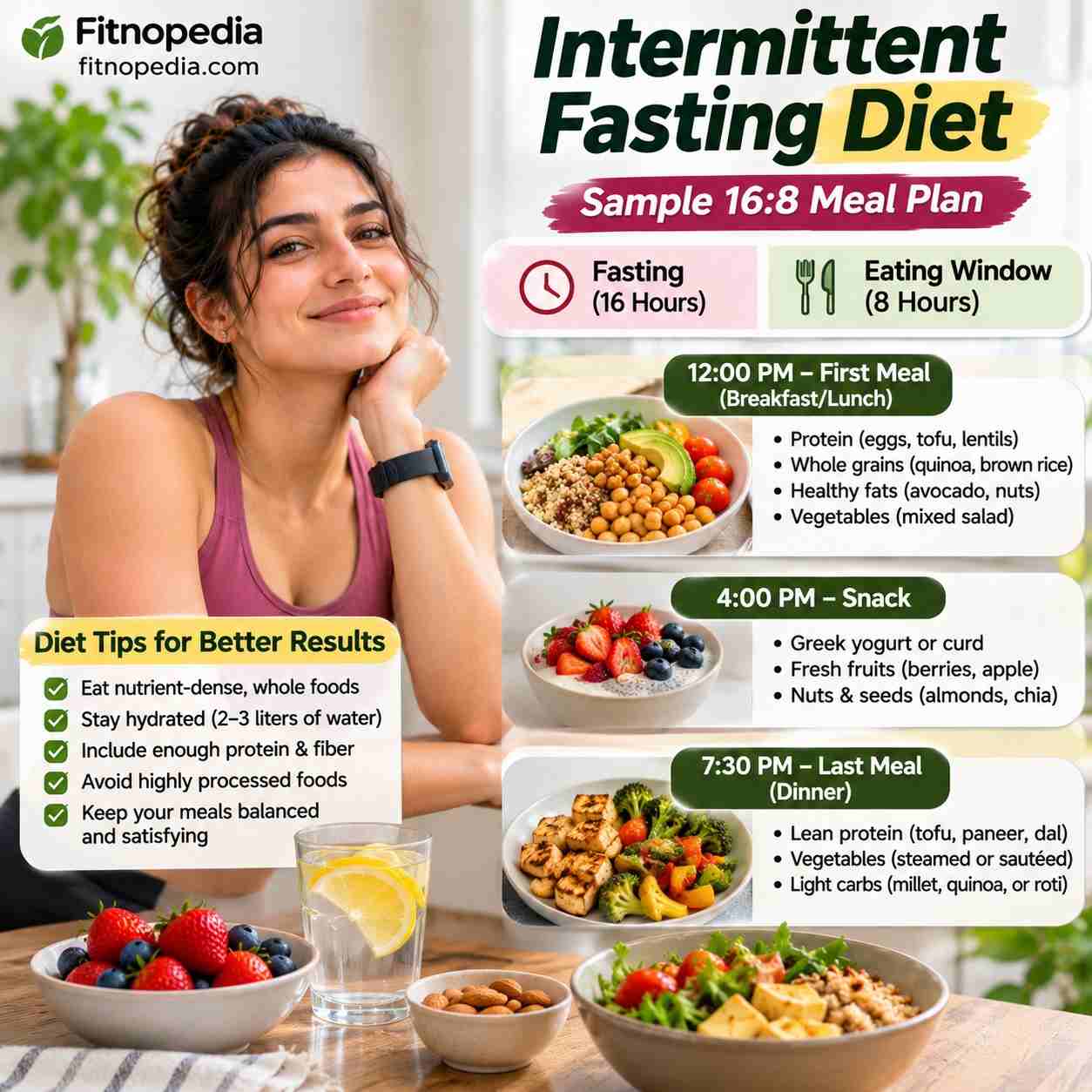
An intermittent fasting diet can be easier to follow when you know exactly what to eat during your eating window. Although intermittent fasting focuses on when you eat, the quality of your meals still matters for weight management, energy levels, muscle maintenance, and overall health.
You do not need expensive diet foods, complicated recipes, or restrictive food rules to build a balanced intermittent fasting meal plan. Everyday foods such as eggs, lentils, vegetables, fruits, whole grains, yogurt, nuts, and seeds can provide important nutrients.
The key is to combine an appropriate fasting schedule with meals that supply enough protein, fiber, healthy fats, vitamins, and minerals.
In this guide, you will discover the best foods to eat during intermittent fasting, foods to limit, drinks that are suitable during fasting, and a practical 7-day intermittent fasting diet plan. You will also find Indian vegetarian meal ideas and tips for beginners.
What Is an Intermittent Fasting Diet?
An intermittent fasting diet is an eating pattern that alternates between planned fasting periods and eating windows while emphasizing nutritious food choices during meals.
Unlike traditional diets that focus primarily on calorie intake or specific food groups, intermittent fasting combines meal timing with overall dietary quality.
Common intermittent fasting methods include:
| Fasting method | Fasting period | Eating window |
|---|---|---|
| 12:12 | 12 hours | 12 hours |
| 14:10 | 14 hours | 10 hours |
| 16:8 | 16 hours | 8 hours |
| 18:6 | 18 hours | 6 hours |
| 5:2 | Two restricted-calorie days | Five regular eating days |
For beginners, a 12:12 or 14:10 schedule may be easier to manage than more restrictive approaches.
The most suitable schedule depends on your lifestyle, nutritional requirements, health status, and ability to maintain consistent eating habits.
Why Does Food Quality Matter During Intermittent Fasting?
Food quality matters during intermittent fasting because your eating window needs to provide enough energy and nutrients to support normal body functions.
Fasting does not automatically make an unhealthy diet nutritious. Regularly eating highly processed foods, sugary drinks, and meals with insufficient protein can make it difficult to meet your nutritional requirements.
A balanced intermittent fasting diet may help you:
- Establish more consistent meal timings.
- Reduce unnecessary snacking.
- Include more nutrient-dense foods.
- Manage overall calorie intake.
- Maintain adequate protein consumption.
- Support digestive health through fiber-rich foods.
- Develop sustainable eating habits.
Research suggests intermittent fasting can help some adults manage body weight and improve certain metabolic health markers. However, it is not consistently more effective than traditional calorie restriction when overall calorie intake is similar.
The goal should be to improve your overall eating pattern rather than simply eating fewer meals.
For more information about potential health outcomes, read health benefits of intermittent fasting.
Best Foods to Eat During Intermittent Fasting
The best foods to eat during intermittent fasting are nutrient-dense options that provide protein, fiber, healthy fats, vitamins, and minerals.
Your eating window should include enough food to meet your daily nutritional requirements. Focus on variety rather than relying on a small selection of foods.
1. Protein-Rich Foods
Protein-rich foods are important during intermittent fasting because they support muscle maintenance, tissue repair, and recovery.
Good protein sources include:
- Eggs
- Greek yogurt
- Chicken
- Fish
- Tofu
- Lentils
- Chickpeas
- Kidney beans
- Milk
- Cottage cheese
Vegetarian options such as lentils, tofu, milk, and yogurt can help you meet your daily protein requirements.
Including a protein source in each main meal can also make meals more satisfying.
high-protein foods for muscle growth
2. Fiber-Rich Foods
Fiber-rich foods support digestive health, help maintain fullness, and contribute to healthy blood glucose regulation.
Include foods such as:
- Oats
- Brown rice
- Whole wheat
- Broccoli
- Spinach
- Apples
- Pears
- Berries
- Beans
- Chia seeds
Combining fiber-rich foods with protein can make your meals more satisfying.
Increase fiber intake gradually and drink enough water to support normal digestion.
3. Healthy Fats
Healthy fats provide essential fatty acids and help your body absorb fat-soluble vitamins.
Useful sources include:
- Almonds
- Walnuts
- Chia seeds
- Flaxseeds
- Pumpkin seeds
- Olive oil
- Avocado
- Natural peanut butter
These foods are nutritious but calorie-dense. Pay attention to portions if your goal is weight management.
4. Fruits and Vegetables
Fruits and vegetables provide vitamins, minerals, antioxidants, and dietary fiber.
Some nutritious choices include:
| Fruits | Vegetables |
|---|---|
| Apples | Spinach |
| Bananas | Broccoli |
| Oranges | Carrots |
| Berries | Cauliflower |
| Papaya | Cucumber |
| Guava | Bell peppers |
Try to include different colors of fruits and vegetables throughout the week.
Whole fruits are generally a better everyday choice than fruit juice because they retain their natural fiber.
5. Complex Carbohydrates
Complex carbohydrates provide energy for everyday activities and exercise.
Good options include:
- Brown rice
- Whole wheat roti
- Quinoa
- Oats
- Sweet potatoes
- Millets
- Whole-grain bread
- Potatoes
Carbohydrates do not need to be eliminated during intermittent fasting. Choose appropriate portions and balance them with protein and vegetables.
6. Nuts and Seeds
Nuts and seeds provide healthy fats, fiber, minerals, and some protein.
Good choices include:
- Almonds
- Walnuts
- Chia seeds
- Flaxseeds
- Pumpkin seeds
- Sunflower seeds
- Sesame seeds
You can add them to yogurt, smoothies, salads, or breakfast meals. Because they contain concentrated calories, moderate portions are usually sufficient.
Foods to Avoid or Limit During Intermittent Fasting
An intermittent fasting diet does not require completely eliminating specific foods, but limiting highly processed and nutrient-poor options can improve overall dietary quality.
Consider reducing the following foods and drinks.
1. Sugary Drinks
Limit frequent consumption of:
- Soft drinks
- Packaged fruit juices
- Sweetened iced tea
- Energy drinks
- Sugar-loaded coffee drinks
These beverages can add substantial calories without providing much nutritional value.
2. Highly Processed Foods
Reduce frequent consumption of:
- Packaged chips
- Processed meat
- Fast food
- Sugary breakfast cereals
- Packaged desserts
- Highly processed snack products
You do not need to follow a perfect diet. Focus on making nutrient-dense foods the foundation of your meals.
3. Excessive Refined Carbohydrates
Limit frequent consumption of foods such as white bread, pastries, and highly refined snack products.
You do not need to eliminate carbohydrates. Instead, prioritize whole grains, legumes, fruits, and other fiber-rich alternatives.
4. Excessive Alcohol
Alcohol provides calories and may interfere with sleep, appetite regulation, and healthy eating habits.
Limiting or avoiding alcohol is generally a better choice when focusing on overall health and weight management.
5. Foods That Make Balanced Eating Difficult
Frequently eating meals that contain little protein or fiber may leave you feeling less satisfied.
For example, a meal consisting mainly of refined carbohydrates and sugary drinks may not provide the same nutritional balance as a meal containing whole grains, vegetables, and a protein source.
Focus on the overall quality of your eating pattern rather than labeling individual foods as completely forbidden.
What Can You Drink During Intermittent Fasting?
During a typical calorie-based fasting window, choose beverages that do not contain significant calories.
The following table explains which drinks are generally suitable during a standard intermittent fasting period.
| Beverage | Suitable during fasting? |
|---|---|
| Plain water | Yes |
| Sparkling water without calories | Yes |
| Black coffee | Yes |
| Unsweetened green tea | Yes |
| Unsweetened herbal tea | Yes |
| Milk | No |
| Fruit juice | No |
| Coconut water | No |
| Protein shakes | No |
| Sweetened beverages | No |
Water should remain your primary beverage throughout the day.
Black coffee and unsweetened tea are optional. Avoid excessive caffeine, particularly if it affects your sleep or causes digestive discomfort.
Milk, coconut water, fruit juice, and protein shakes contain calories and break a typical calorie-based fast. You can consume them during your eating window.
Sample 7-Day Intermittent Fasting Diet Plan
A seven-day intermittent fasting diet plan can help organize your meals and make balanced eating easier.
The following example uses a 14:10 schedule, with an eating window from 8 AM to 6 PM.
This is an illustrative meal plan, not a fixed calorie prescription. Adjust portions according to your age, body size, activity, nutritional needs, and health conditions.
7-Day Intermittent Fasting Meal Plan
| Day | Breakfast – 8 AM | Lunch – 12:30 PM | Snack – 3:30 PM | Dinner – 5:45 PM |
|---|---|---|---|---|
| Monday | Eggs or tofu, whole-grain toast, fruit | Rice, dal, vegetables, curd | Apple and almonds | Roti, mixed vegetables, paneer or tofu |
| Tuesday | Greek yogurt, berries, nuts | Chicken or chickpea salad with rice | Banana and peanut butter | Grilled fish or tofu with potatoes |
| Wednesday | Oats with milk and seeds | Roti, rajma, cucumber salad | Fruit and yogurt | Vegetable khichdi and curd |
| Thursday | Vegetable omelet or besan chilla | Rice, dal, spinach, curd | Roasted chana | Roti, tofu, mixed vegetables |
| Friday | Whole-grain toast and eggs | Quinoa, chickpeas, vegetables | Orange and walnuts | Chicken or paneer with rice |
| Saturday | Yogurt, banana, chia seeds | Roti, dal, vegetable sabzi | Buttermilk and roasted chana | Vegetable pulao and curd |
| Sunday | Besan chilla and curd | Rice, beans, vegetables | Apple and almonds | Roti, dal, tofu or fish |
How to Follow This Intermittent Fasting Meal Plan
- Eat breakfast within your selected eating window.
- Include protein in every main meal.
- Add vegetables and fruits for fiber and micronutrients.
- Adjust carbohydrate portions according to your energy needs.
- Drink water regularly.
- Avoid skipping meals simply to extend your fasting period.
- Make sure your meals provide enough energy for your daily activities.
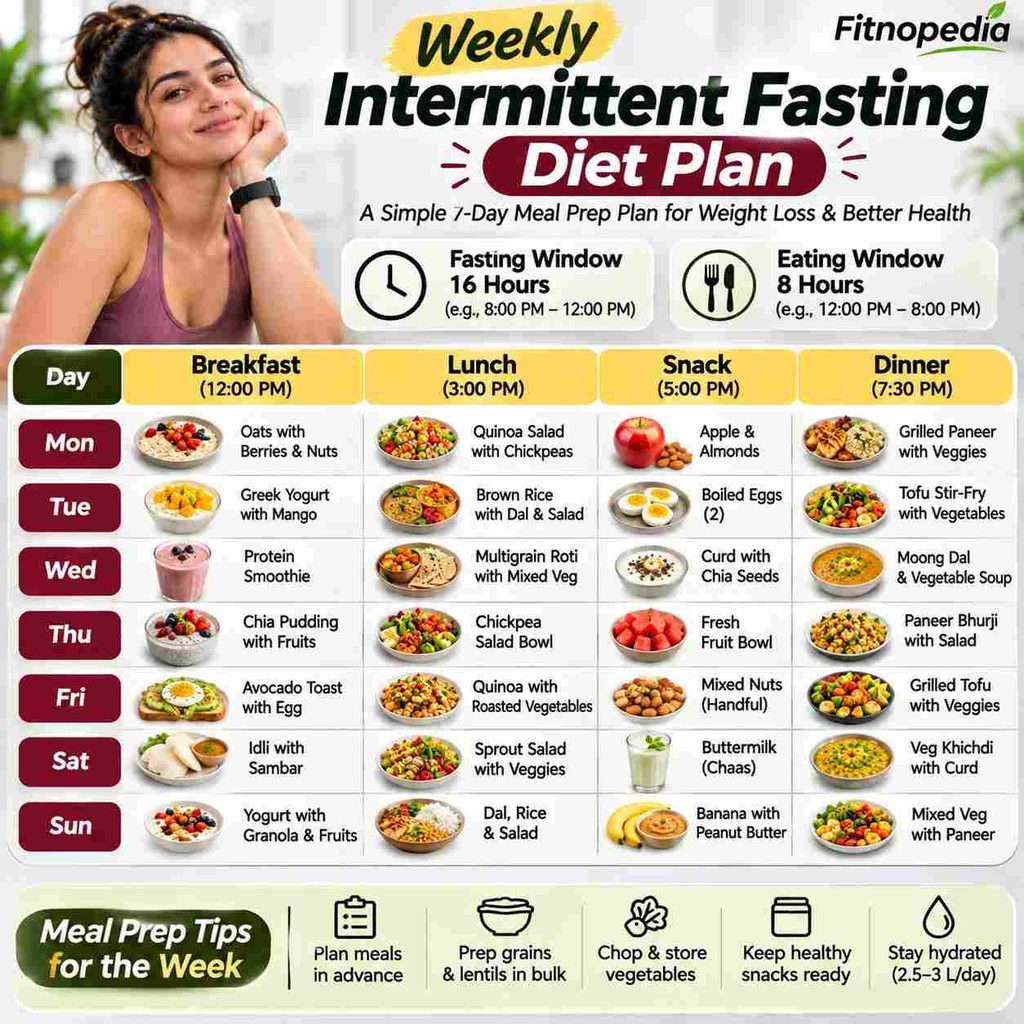
Indian Vegetarian Intermittent Fasting Diet Plan
An Indian vegetarian intermittent fasting diet can provide adequate nutrition through traditional foods such as dal, roti, rice, curd, vegetables, beans, and nuts.
You do not need expensive diet foods or special fasting products to create a balanced Indian meal plan.
Indian Vegetarian Breakfast Options
Choose from:
- Vegetable poha with peanuts
- Besan chilla with curd
- Idli with sambar
- Dalia with milk
- Moong dal chilla
- Whole-grain toast with peanut butter
These meals can provide carbohydrates, protein, fiber, and other essential nutrients.
Indian Vegetarian Lunch Options
Some practical lunch combinations include:
- Roti, dal, and vegetable sabzi
- Rajma with rice
- Chole with whole-wheat roti
- Vegetable khichdi with curd
- Rice, tofu, and mixed vegetables
Combining legumes with grains and vegetables can help create a more balanced meal.
Healthy Indian Snack Options
Useful snack choices include:
- Roasted chana
- Almonds and walnuts
- Seasonal fruits
- Plain yogurt
- Sattu drink without added sugar
- Sprouts chaat
Choose portions that fit your overall energy and nutritional requirements.
Indian Vegetarian Dinner Options
Consider these dinner combinations:
- Roti with dal and spinach
- Vegetable pulao with curd
- Tofu bhurji with roti
- Mixed vegetable khichdi
- Moong dal and vegetable soup with whole-grain bread
For additional meal ideas, explore high-protein vegetarian foods.
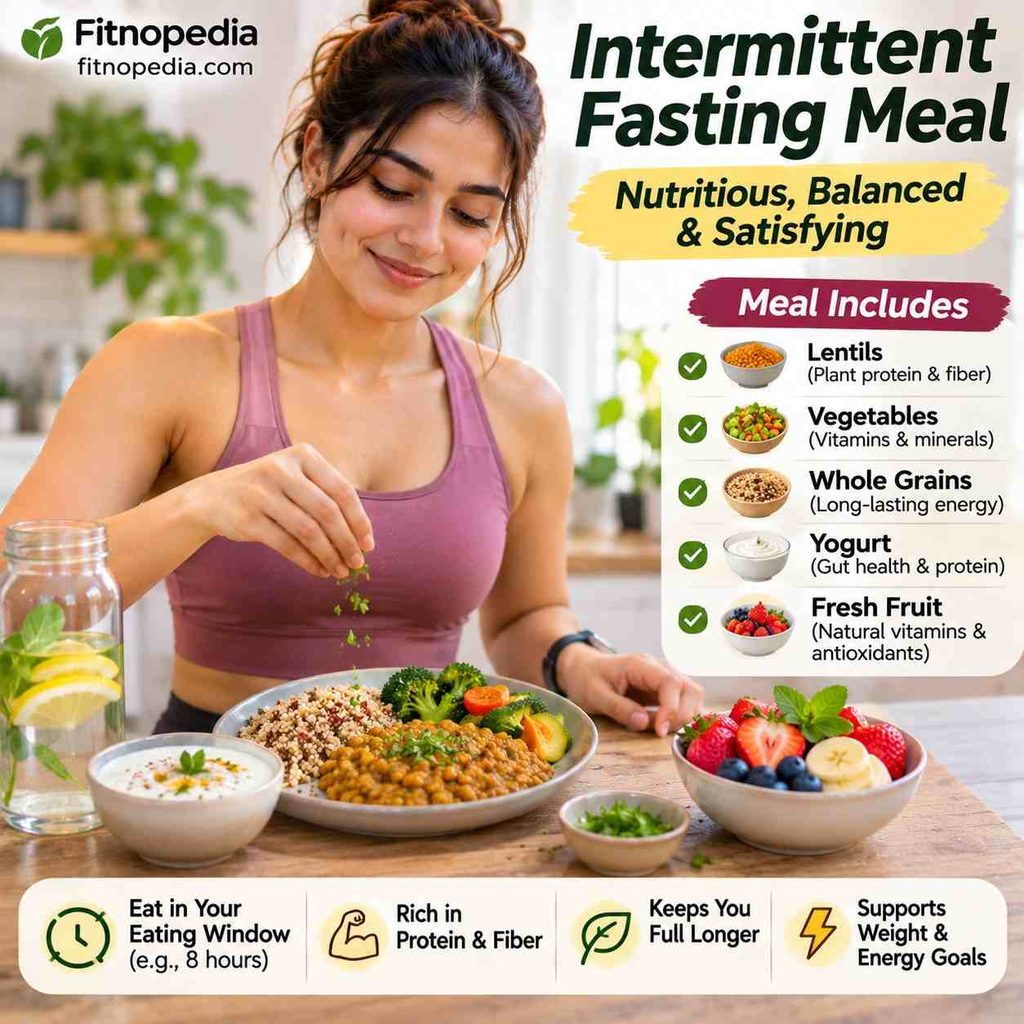
How Many Calories Should You Eat on an Intermittent Fasting Diet?
Your calorie requirements depend on your age, sex, height, weight, physical activity, and health goals.
Intermittent fasting does not determine how many calories your body needs. It changes when you consume them.
For example, two people following a 16:8 schedule may have very different calorie requirements because their body sizes and activity levels differ.
Calculate Your Daily Calorie Requirements
You can estimate your calorie needs using your Total Daily Energy Expenditure (TDEE).
TDEE considers your basal metabolic rate and daily activity.
For weight management, a moderate and sustainable calorie deficit may be appropriate for some adults, but aggressive calorie restriction should be avoided.
Use the TDEE calculator and BMR calculator to estimate your energy requirements.
You can also explore the calorie deficit calculator to understand your estimated calorie deficit.
How to Start an Intermittent Fasting Diet
Starting an intermittent fasting diet should be gradual and focused on building sustainable eating habits.
If you are a healthy adult who is suitable for fasting, the following steps can help you establish a manageable routine.
Step 1: Choose Your Eating Window
Start with a 12:12 schedule if it suits your health and nutritional needs.
For example:
- Finish dinner at 7 PM.
- Fast overnight.
- Have breakfast at 7 AM.
You can continue with this schedule if it is comfortable and sustainable. There is no requirement to progress to a longer fasting period.
Step 2: Prepare Balanced Meals
Plan meals that include:
- Protein-rich foods
- Vegetables
- Fruits
- Whole grains
- Healthy fats
- Fiber-rich foods
Avoid filling your eating window entirely with snacks or highly processed foods.
Step 3: Stay Hydrated
Drink water throughout the day, including during fasting hours.
Do not restrict fluids to make the fasting period more challenging.
Step 4: Exercise Regularly
Combine healthy eating with activities such as walking, resistance training, cycling, or yoga.
Strength training can help preserve muscle mass, especially during weight loss.
Step 5: Monitor Your Progress
Pay attention to:
- Energy levels
- Hunger and appetite
- Sleep quality
- Workout performance
- Body weight trends
- Digestive health
If fasting causes persistent weakness, dizziness, or other concerning symptoms, discontinue the restrictive schedule and seek medical advice.
Who Should Avoid an Intermittent Fasting Diet?
Intermittent fasting is not suitable for everyone, and certain people should avoid restrictive fasting or seek medical advice before starting.
| Group | Recommendation |
|---|---|
| Pregnant women | Avoid intentional restrictive fasting |
| Breastfeeding women | Prioritize adequate nutrition |
| People with an eating disorder history | Avoid restrictive fasting without specialist guidance |
| Underweight individuals | Generally avoid fasting |
| People with diabetes | Consult a healthcare professional |
| People taking medication with food | Discuss fasting with their doctor |
| Adolescents | Avoid restrictive fasting during growth |
People using insulin or certain blood glucose-lowering medications may experience hypoglycemia during fasting. Medical supervision is particularly important. (Source: American Diabetes Association, 2026)
Intermittent fasting may also cause hunger, headaches, weakness, dehydration, difficulty concentrating, or dizziness in some individuals. (Source: JAMA, 2021)
If you have a medical condition, take prescription medication, or have a history of disordered eating, speak with a qualified healthcare professional before considering a fasting routine.
Common Mistakes to Avoid on an Intermittent Fasting Diet
Avoiding common mistakes can make your intermittent fasting diet more sustainable and nutritionally balanced.
- Eating too little: A shorter eating window should not result in inadequate nutrition.
- Ignoring protein: Include protein-rich foods in your main meals.
- Avoiding carbohydrates completely: Whole grains, fruits, and vegetables provide important nutrients.
- Overeating during the eating window: Focus on balanced portions rather than compensating for fasting.
- Not drinking enough water: Maintain adequate hydration throughout the day.
- Starting with prolonged fasting: Begin with a manageable schedule if fasting is appropriate for you.
- Ignoring warning signs: Stop restrictive fasting if you experience concerning symptoms.
- Choosing nutrient-poor meals: Prioritize foods that provide protein, fiber, vitamins, and minerals.
Conclusion
An intermittent fasting diet can be a practical way to organize meal timings and support weight management when combined with balanced nutrition.
Focus on protein-rich foods, vegetables, fruits, whole grains, healthy fats, and adequate hydration. A 12:12 or 14:10 schedule may be a manageable starting point for eligible adults.
You can build a nutritious meal plan using everyday foods, including Indian vegetarian options such as dal, rajma, chickpeas, tofu, curd, roti, rice, and seasonal vegetables.
Remember that fasting is optional. A nutritious, sustainable eating pattern matters more than the number of hours you spend without food.
FAQs
What should I eat during intermittent fasting?
Eat protein-rich foods, vegetables, fruits, whole grains, legumes, nuts, seeds, and healthy fats during your eating window.
Can I eat rice during intermittent fasting?
Yes. Rice can be included in an intermittent fasting diet. Choose appropriate portions and combine it with protein and vegetables.
Can I drink milk during intermittent fasting?
Milk contains calories and breaks a typical calorie-based fast. You can consume milk during your eating window.
Is an intermittent fasting diet good for weight loss?
It may help with weight loss by reducing overall calorie intake. However, research suggests it is generally comparable to traditional calorie restriction when overall calorie intake is similar.
Can I follow intermittent fasting with a vegetarian diet?
Yes. Vegetarian foods such as dal, rajma, chickpeas, tofu, curd, milk, nuts, and seeds can provide essential nutrients.
How many meals should I eat during intermittent fasting?
There is no fixed number. You can have two or three balanced meals and nutritious snacks depending on your eating window and nutritional requirements.
Can I eat fruits during intermittent fasting?
Yes. Fruits are suitable during your eating window and provide fiber, vitamins, minerals, and antioxidants.
Is 16:8 intermittent fasting better than 14:10?
Not necessarily. Both schedules can support structured eating, but a longer fasting period does not guarantee better results.
Can I exercise while following an intermittent fasting diet?
Yes, provided you maintain adequate energy intake and hydration. Adjust workout intensity if you feel weak or uncomfortable.
How long should I follow an intermittent fasting diet?
There is no universally recommended duration. Continue only if the eating pattern is sustainable, nutritionally adequate, and appropriate for your health.
What is the best food to break an intermittent fast?
A balanced meal containing protein, fiber-rich carbohydrates, and healthy fats is a practical choice. Examples include eggs with whole-grain toast, yogurt with fruit and nuts, or dal with rice and vegetables.
Can I drink coconut water during intermittent fasting?
Coconut water contains calories and carbohydrates, so it breaks a typical calorie-based fast. You can drink it during your eating window.
Sources
- Harvard T.H. Chan School of Public Health. Diet Review: Intermittent Fasting for Weight Loss.
- National Institute of Diabetes and Digestive and Kidney Diseases. (2024). What Can You Tell Your Patients About Intermittent Fasting and Type 2 Diabetes?
- American Diabetes Association. (2026). Facilitating Positive Health Behaviors and Well-being to Improve Health Outcomes: Standards of Care in Diabetes.
- Li and Heber. (2021). Intermittent Fasting. JAMA.
- Svendsen and Forslund. (2024). Meal Patterns, Including Intermittent Fasting: A Scoping Review for Nordic Nutrition Recommendations 2023.
- Harvard Health Publishing. (2026). Time to Try Intermittent Fasting?
Disclaimer: This article is for informational and educational purposes only and is not a substitute for personalized medical advice. Consult a qualified healthcare professional before making significant changes to your diet, exercise routine, or supplement use.