
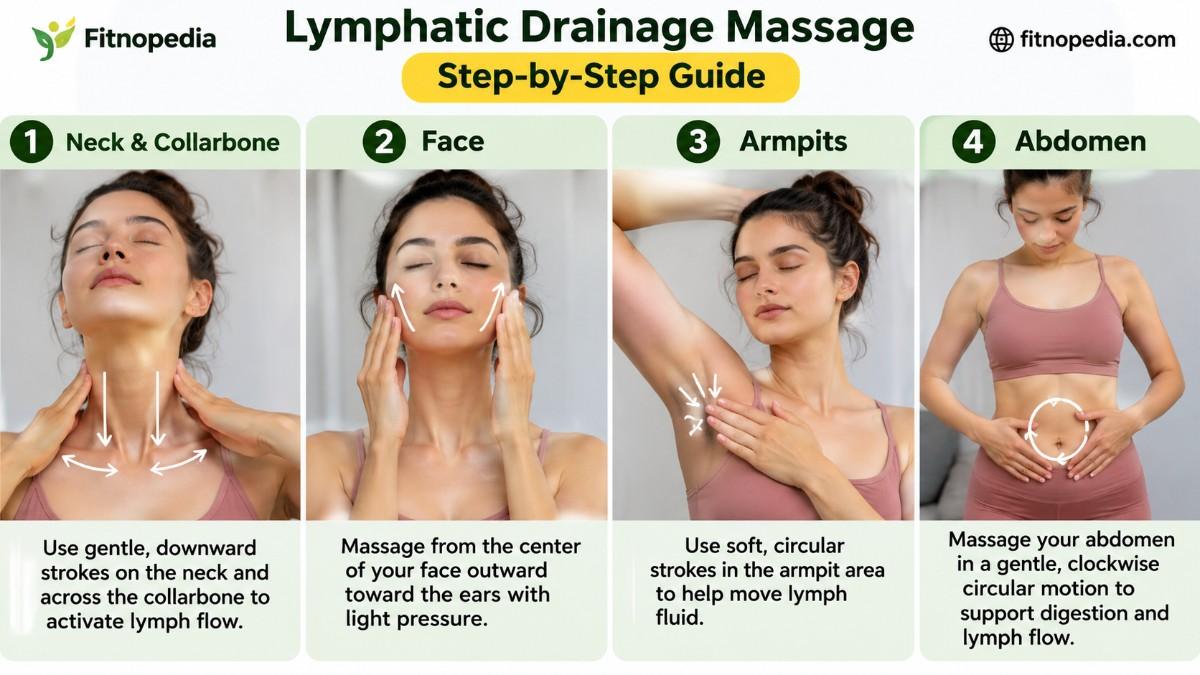
Lymphatic drainage massage is a specialized, gentle massage technique designed to encourage the movement of lymph fluid through the lymphatic system. Also known as manual lymphatic drainage (MLD), it uses slow, rhythmic movements and light pressure to support fluid movement toward functioning lymphatic pathways.
The lymphatic system is an important part of the immune system. It consists of lymph vessels, lymph nodes, and other tissues that help transport lymph fluid, maintain fluid balance, and support the body’s immune response.
When lymph fluid cannot drain properly, it may accumulate in body tissues and cause swelling. This condition is known as lymphedema.
Lymphatic drainage massage differs from traditional massage because it does not involve deep pressure or intense muscle manipulation. Instead, trained therapists use specific movements that gently stretch the skin and stimulate superficial lymphatic vessels.

Why Does Lymphatic Drainage Massage Matter?
Lymphatic drainage massage matters because it can help manage certain types of swelling associated with impaired lymphatic circulation.
The lymphatic system collects excess fluid from body tissues and returns it to the bloodstream. When this process becomes less effective, fluid can accumulate and cause swelling, heaviness, and discomfort.
Manual lymphatic drainage may help:
- Manage swelling associated with lymphedema.
- Reduce feelings of heaviness in affected limbs.
- Support fluid movement through functioning lymphatic pathways.
- Improve comfort in people experiencing certain types of swelling.
- Complement compression therapy and other lymphedema treatments.
- Support recovery in selected postoperative situations when medically approved.
However, lymphatic drainage massage is not a universal treatment for swelling, and it should not be considered a guaranteed detoxification or weight-loss method.
How Does Lymphatic Drainage Massage Work?
Lymphatic drainage massage works by using gentle, controlled skin movements to encourage lymph fluid to move through functioning lymphatic vessels.
Unlike the circulatory system, which uses the heart to pump blood, the lymphatic system relies on several mechanisms, including muscle contractions, breathing, and the natural contractions of lymphatic vessels.
During a professional lymphatic drainage massage treatment, a trained therapist generally:
- Assesses the affected areas: Reviews swelling patterns and medical history.
- Prepares appropriate drainage pathways: Uses gentle movements to prepare functioning lymphatic pathways.
- Applies specific techniques: Uses light, rhythmic movements to encourage fluid movement.
- Directs fluid appropriately: Follows a sequence based on the person’s lymphatic anatomy and condition.
- Combines treatments when necessary: May incorporate compression therapy, exercise, and skincare.
The pressure is generally very light because many lymphatic vessels are located close to the skin’s surface.
Deep pressure is unnecessary and may be inappropriate for people with lymphatic conditions.
7 Potential Benefits of Lymphatic Drainage Massage
Lymphatic drainage massage may offer several benefits, particularly for people experiencing lymphatic dysfunction. The results depend on the individual’s medical condition and treatment requirements.
1. May Help Reduce Swelling
One of the primary applications of lymphatic drainage massage is managing swelling associated with lymphedema.
By encouraging fluid movement through functioning lymphatic pathways, manual lymphatic drainage may help reduce fluid accumulation in affected tissues.
This can be particularly relevant for people who develop swelling following cancer treatment or lymph node removal.
2. May Help Manage Lymphedema
Lymphedema occurs when lymph fluid accumulates in body tissues because the lymphatic system cannot drain it effectively.
Common symptoms include:
- Swelling in the arms or legs.
- A feeling of heaviness or tightness.
- Reduced flexibility.
- Thickening or hardening of the skin.
- Discomfort in the affected area.
Manual lymphatic drainage is one component of complete decongestive therapy, which may also include compression garments, exercise, and skincare.
3. May Improve Comfort and Mobility
Excessive swelling can make everyday movements uncomfortable.
When swelling is managed through an appropriate treatment plan, some individuals may experience improved comfort and movement in the affected area.
However, results depend on the underlying condition, and massage alone may not provide sufficient improvement.
4. May Support Recovery After Certain Surgeries
Lymphatic drainage massage is sometimes incorporated into recovery plans following selected surgical procedures, particularly when swelling or lymphatic disruption is involved.
It may be considered after procedures such as liposuction or other cosmetic surgeries when approved by the treating surgeon.
However, postoperative massage should only be performed after medical clearance.
The appropriate technique and timing depend on the procedure, healing progress, and individual medical circumstances.
5. May Help Relieve Feelings of Heaviness
People experiencing lymphatic swelling sometimes describe their affected limbs as heavy, tight, or uncomfortable.
Managing fluid accumulation may help reduce these sensations and make everyday activities easier.
6. May Support Skin and Tissue Care
Persistent swelling can affect the skin and underlying tissues.
Lymphatic drainage is sometimes included in treatment plans alongside skincare and compression to help manage these complications.
Keeping the skin clean, moisturized, and protected is particularly important for people with lymphedema.
7. May Promote Relaxation
The gentle movements used during lymphatic drainage massage may feel relaxing.
Some people find the treatment calming, although relaxation should not be confused with proven improvements in immune function or detoxification.
Types of Lymphatic Drainage Massage
There are several approaches to lymphatic drainage massage, depending on the treatment goal and the person’s medical condition.
1. Manual Lymphatic Drainage (MLD)
Manual lymphatic drainage is a specialized technique performed by a trained therapist. It uses gentle, rhythmic movements to encourage lymph fluid toward functioning drainage pathways.
It is commonly used as part of lymphedema management and may be combined with compression therapy, exercise, and skincare.
Learn more about Manual Lymphatic Drainage Massage, including its techniques, benefits, and safety precautions.
2. Simple Lymphatic Drainage (SLD)
Simple lymphatic drainage is a simplified technique that a healthcare professional or lymphedema specialist teaches patients to perform themselves.
It is generally used as part of an ongoing self-management routine. The correct movements and sequence depend on the person’s condition.
3. Cosmetic Lymphatic Drainage Massage
Cosmetic lymphatic drainage massage is commonly marketed as a beauty and wellness treatment.
It may temporarily reduce the appearance of puffiness caused by fluid accumulation. However, there is insufficient evidence that it permanently reshapes the face, removes body fat, or improves overall detoxification.
4. Brazilian Lymphatic Drainage Massage
Brazilian lymphatic drainage massage is a cosmetic massage style popularized through beauty and wellness treatments.
It is often marketed as a technique that creates a more sculpted appearance through rhythmic movements and body-focused massage methods.
Some practitioners use more vigorous or sweeping movements than those associated with traditional medical manual lymphatic drainage. Potential short-term changes in body appearance may be related to temporary fluid redistribution or reduced puffiness.
However, Brazilian lymphatic drainage massage should not be confused with medically supervised manual lymphatic drainage.
There is insufficient evidence that it permanently changes body shape, burns fat, or produces lasting weight loss. People with diagnosed lymphedema should follow an individualized treatment plan rather than relying on cosmetic massage techniques.
Explore our guide to Brazilian Lymphatic Drainage Massage to understand its techniques, potential benefits, and limitations.
5. Postoperative Lymphatic Massage
Postoperative lymphatic massage may be incorporated into selected recovery plans to help manage swelling after surgery.
It requires medical clearance and should be adapted to the surgical procedure and stage of healing.
Not every surgical patient needs lymphatic massage, and its timing should be determined by the treating medical team.
Lymphatic Drainage Massage Techniques
Lymphatic drainage massage uses specific movements that differ from traditional massage techniques.
Common techniques include:
| Technique | Description |
|---|---|
| Stationary circles | Gentle circular movements that stretch the skin. |
| Pump technique | Soft rhythmic movements applied to selected areas. |
| Rotary technique | Gentle rotating movements used to encourage fluid movement. |
| Scoop technique | Controlled skin movements used in specific drainage routines. |
| Deep breathing | Diaphragmatic breathing that supports natural lymph movement. |
These techniques should be selected according to the patient’s condition and the therapist’s training.
Important: The correct sequence is not the same for everyone. People with lymphedema should learn their treatment routine from a qualified lymphatic therapist rather than copying generic massage instructions online.
Lymphatic Drainage Massage at Home: How to Do It Safely
Lymphatic drainage massage can sometimes be performed at home, but the technique should first be demonstrated by a qualified healthcare professional.
Self-lymphatic drainage is not simply rubbing or pressing swollen areas. The appropriate pathways, pressure, and sequence depend on the person’s lymphatic condition.
If your healthcare professional recommends self-massage, follow these precautions:
- Choose a comfortable and relaxed environment.
- Wash your hands before starting.
- Use only the gentle pressure demonstrated by your therapist.
- Follow the exact sequence provided for your condition.
- Stop if you experience pain, discomfort, dizziness, or worsening symptoms.
- Follow any prescribed compression and exercise recommendations.
Do not attempt to treat unexplained swelling yourself. New or persistent swelling requires medical assessment to identify its cause.
Lymphatic Drainage Massage Before and After: What Results Can You Expect?
Lymphatic drainage massage before-and-after results depend on the underlying reason for swelling, the technique used, and whether other treatments are necessary.
Some people notice temporary changes in puffiness or fluid-related swelling, while others may require a longer medical treatment plan.
| Before Treatment | Possible Changes After Treatment |
|---|---|
| Fluid-related swelling | Reduced swelling in some patients |
| Feeling of heaviness | Improved comfort |
| Tightness around affected tissues | Reduced tightness in some cases |
| Postoperative swelling | Possible improvement when medically appropriate |
| Facial puffiness | Temporary reduction in some cases |
Some people notice changes after treatment, while others need a longer treatment plan.
A single session does not permanently remove fluid retention or cure lymphedema. Consistent management and appropriate medical care are important.
Lymphatic Drainage Massage vs. Regular Massage
Lymphatic drainage massage and traditional massage differ in their purpose, pressure, and techniques.
| Feature | Lymphatic Drainage Massage | Traditional Massage |
|---|---|---|
| Main purpose | Encourage lymph fluid movement | Relax muscles and relieve tension |
| Pressure | Very gentle | Light to deep |
| Technique | Slow, rhythmic skin movements | Kneading, rubbing, and pressure |
| Main focus | Lymphatic pathways | Muscles and soft tissues |
| Common application | Lymphedema management | Muscle tension and relaxation |
| Practitioner | Specially trained lymphatic therapist | Qualified massage therapist |
Lymphatic drainage massage is not a replacement for sports massage, deep tissue massage, or medical treatment.
Lymphatic Drainage Massage for Face and Body
Lymphatic drainage massage is also popular in cosmetic and wellness settings.
Facial and body treatments have different techniques and goals.
Facial Lymphatic Drainage Massage
Facial lymphatic drainage massage uses gentle movements around the face and neck.
People commonly seek facial lymphatic massage for:
- Temporary reduction in facial puffiness.
- A less swollen appearance around the cheeks.
- Temporary improvement in the appearance of under-eye puffiness.
- A relaxing skincare experience.
The technique generally uses very light movements rather than deep pressure.
However, facial lymphatic drainage massage does not permanently remove facial fat, eliminate wrinkles, or change facial structure.
Anyone experiencing persistent facial swelling should seek medical assessment rather than relying on cosmetic massage.
Discover the techniques and potential benefits in our guide to Facial Lymphatic Drainage Massage.
Body Lymphatic Drainage Massage
Body lymphatic drainage massage focuses on areas such as the arms, legs, abdomen, and other regions affected by fluid accumulation.
For people with diagnosed lymphedema, the treatment should follow an individualized medical plan.
Cosmetic body massage should not be confused with medical lymphedema treatment.
Lymphatic Drainage Massage for Weight Loss: Does It Work?
Lymphatic drainage massage does not directly burn body fat or produce meaningful fat loss.
Some people may notice a temporary reduction in body measurements after treatment because fluid-related swelling has decreased. However, this is not the same as losing body fat.
For sustainable weight management, focus on:
- Maintaining an appropriate calorie intake.
- Eating a balanced diet with sufficient protein.
- Performing regular strength training.
- Including cardiovascular activity.
- Getting adequate sleep.
- Maintaining consistent hydration.
For lasting weight management, consistent dietary and lifestyle habits are more important than massage treatments.
high-protein foods for weight management
How Often Should You Get Lymphatic Drainage Massage?
The frequency of lymphatic drainage massage depends on your health condition and treatment goals.
| Purpose | Treatment Frequency |
|---|---|
| Medical lymphedema management | Individualized by a specialist |
| Postoperative recovery | Determined by the treating surgeon |
| Self-lymphatic drainage | According to the prescribed routine |
| Cosmetic wellness | Depends on individual circumstances |
For people with lymphedema, treatment may initially be more frequent and then transition into a maintenance routine.
There is no scientifically established universal schedule for healthy people seeking cosmetic lymphatic drainage.
Risks and Side Effects of Lymphatic Drainage Massage
Lymphatic drainage massage is generally gentle, but it is not appropriate for everyone.
Some people may experience mild side effects, including:
- Temporary fatigue.
- Headaches.
- Nausea.
- Discomfort if the technique is performed incorrectly.
Who Should Avoid Lymphatic Drainage Massage?
You should avoid lymphatic drainage massage or obtain medical clearance before treatment if you have:
- Deep vein thrombosis or a suspected blood clot.
- Active cellulitis or another acute infection.
- Fever or unexplained inflammation.
- Decompensated heart failure.
- Certain serious circulatory conditions.
- An unexplained swelling condition that has not been diagnosed.
People undergoing cancer treatment or recovering from surgery should consult their medical team before starting treatment.
If you experience sudden swelling in one leg, particularly with pain, warmth, or redness, seek urgent medical assessment. Sudden breathlessness or chest pain requires emergency medical attention.
How to Choose a Qualified Lymphatic Drainage Therapist
Choosing an appropriately trained therapist is important because lymphatic drainage requires specialized knowledge of the lymphatic system.
Before booking a session, consider the following:
- Professional training: Look for a therapist with specific training in manual lymphatic drainage.
- Medical experience: For lymphedema, choose a qualified lymphedema therapist or appropriately trained healthcare professional.
- Initial assessment: The therapist should ask about your medical history, symptoms, and treatment goals.
- Treatment explanation: They should explain the technique, expected results, and possible limitations.
- Individualized approach: Treatment should be adapted to your medical condition rather than following a generic routine.
Avoid practitioners who promise guaranteed detoxification, permanent weight loss, or a complete cure for lymphatic problems.
Lymphatic Drainage Massage: What Does the Research Say?
Research supports the use of manual lymphatic drainage as one possible component of lymphedema management, but evidence for massage as a standalone treatment remains limited.
The National Health Service describes decongestive lymphatic therapy as a treatment approach involving compression, skincare, exercise, and specialized massage techniques. The National Cancer Institute also describes manual lymphatic drainage as part of complete decongestive therapy, particularly for managing cancer-related lymphedema.
A 2024 expert consensus document on complete decongestive therapy highlights the importance of combining appropriate manual techniques with compression, exercise, skincare, and individualized treatment. The Oncology Nursing Society also describes manual lymph drainage as a specialized intervention.
However, available evidence does not establish that lymphatic drainage massage provides general detoxification, substantial fat loss, or immunity-boosting benefits in healthy individuals.
The important distinction is that a treatment can be useful for a specific medical condition without supporting every wellness claim associated with it.
Conclusion
Lymphatic drainage massage is a specialized, gentle massage technique that encourages lymph fluid movement and can help manage swelling associated with lymphedema.
Its strongest established application is as part of a broader medical treatment plan that may include compression therapy, exercise, and skincare.
Although it is increasingly popular for facial puffiness, Brazilian massage techniques, and cosmetic wellness, claims about detoxification and weight loss should be treated cautiously. If you are considering lymphatic drainage massage, consult a qualified healthcare professional to determine whether it is appropriate for your needs.
Understanding its benefits, limitations, and safety precautions can help you make an informed decision.
FAQs
What is lymphatic drainage massage?
Lymphatic drainage massage is a gentle massage technique that encourages lymph fluid movement through functioning lymphatic pathways to help manage swelling.
Does lymphatic drainage massage help with bloating?
It may help with certain types of fluid-related swelling, but it is not an established treatment for digestive bloating caused by gas or gastrointestinal problems.
Can lymphatic drainage massage help lose belly fat?
No. It does not directly burn fat or reduce body fat. Any temporary reduction in abdominal measurements may be related to changes in fluid accumulation.
How long does a lymphatic drainage massage session take?
Session length varies depending on the treatment area, medical condition, and therapist’s approach. There is no universal session duration.
Is lymphatic drainage massage painful?
It should generally be gentle and comfortable. Deep pressure is not required for manual lymphatic drainage.
Can I perform lymphatic drainage massage every day?
Some people with lymphedema are taught daily self-drainage routines. Frequency should follow an individualized recommendation from a qualified therapist.
Does lymphatic drainage massage boost immunity?
The lymphatic system plays an important role in immune function, but there is insufficient evidence that massage directly boosts immunity in otherwise healthy people.
Is lymphatic drainage massage safe after surgery?
It may be appropriate after certain procedures, but only with clearance from the treating surgeon and guidance from a suitably trained practitioner.
What is the difference between lymphatic drainage and detox massage?
Lymphatic drainage is a specialized technique intended to support lymph fluid movement. Detox massage is a broader marketing term that does not establish a scientifically proven detoxification effect.
Who should not get lymphatic drainage massage?
People with blood clots, acute infections, certain heart conditions, and other medical contraindications should avoid treatment unless specifically assessed and cleared by their healthcare professional.
What is Brazilian lymphatic drainage massage?
Brazilian lymphatic drainage massage is a cosmetic massage style marketed to reduce temporary puffiness and create a more sculpted appearance. It is not equivalent to medically supervised manual lymphatic drainage.
What is the difference between facial lymphatic drainage and regular facial massage?
Facial lymphatic drainage uses gentle, specific movements intended to encourage fluid movement, whereas regular facial massage may focus on relaxation, skincare application, or muscle tension.
Sources
- National Health Service (NHS). Lymphoedema: Treatment.
- National Cancer Institute. Lymphedema and Cancer.
- Cancer Research UK. Manual Lymphatic Drainage for Lymphoedema.
- Oncology Nursing Society. Manual Lymph Drainage.
- Complete Decongestive Therapy Phase 1: An Expert Consensus Document. PubMed.
Medical Disclaimer: This article is for informational and educational purposes only and is not a substitute for personalized medical advice. Consult a qualified healthcare professional before starting lymphatic drainage massage, particularly if you have an existing medical condition, unexplained swelling, or are recovering from surgery.
3 thoughts on “Lymphatic Drainage Massage: Benefits, Techniques, and Complete Guide”