
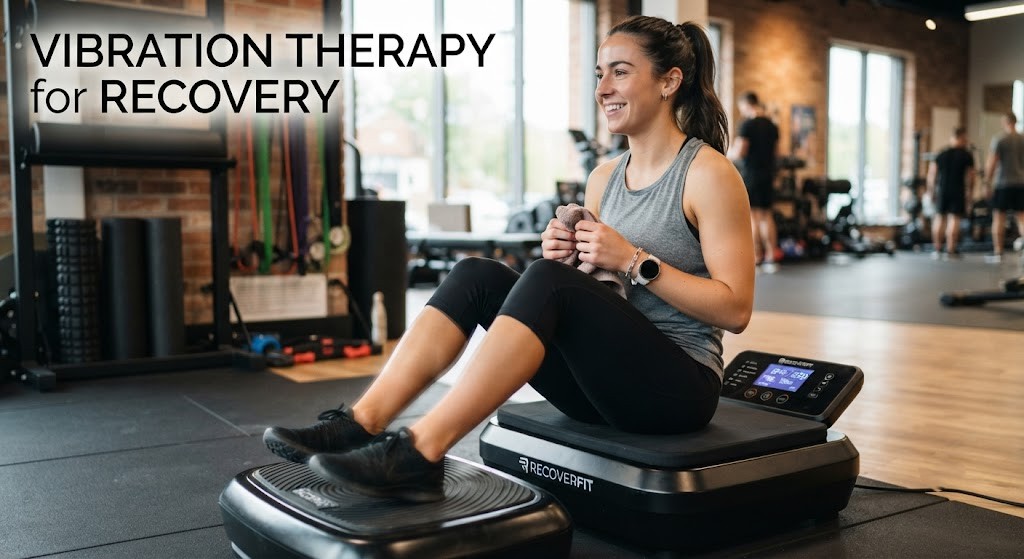
You already know that stretching, hydration, sleep, and proper nutrition can make a difference after a tough workout. But recovery is not limited to the usual routine. Vibration Therapy for Recovery has become another option for people looking to manage post-workout soreness, stiffness, mobility, and muscle relaxation.
Vibration therapy uses controlled mechanical vibrations to stimulate muscles and other tissues. Depending on the device, the vibration may be applied to the entire body or focused on a specific muscle group.
In this guide, you’ll learn what vibration therapy is, how it may support exercise recovery, how whole-body and localized vibration differ, which tools are available, how long to use them, and what safety considerations you should know before getting started.
What Is Vibration Therapy for Recovery?
Vibration therapy is a recovery technique that uses controlled mechanical vibrations to stimulate muscles and other tissues. It can be delivered through a vibration platform, handheld device, vibrating roller, or another specialized tool.
Importantly, vibration therapy is not one single treatment protocol. Different devices produce different forms of mechanical stimulation, and factors such as frequency, amplitude, duration, body position, and application area can influence the response.
For example, someone may stand on a vibration platform after a lower-body workout, while a runner may use a vibrating roller around the quadriceps or calves.
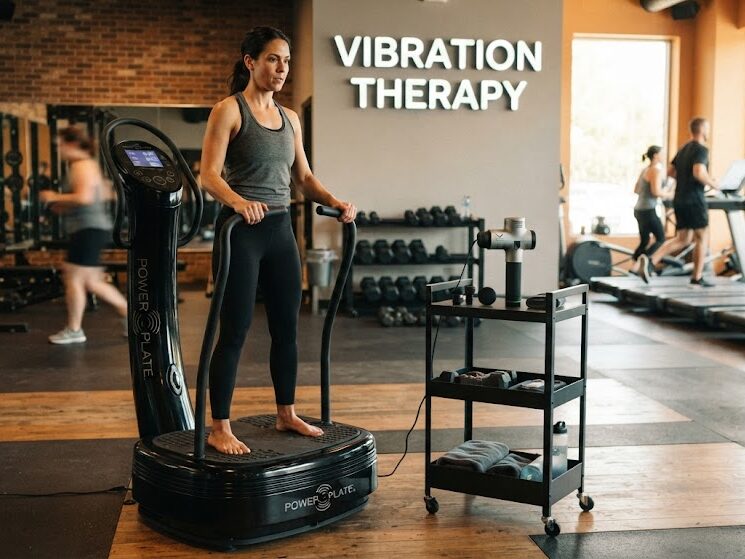
What Is Whole-Body Vibration?
Whole-body vibration involves standing, sitting, or exercising on a vibrating platform. The platform repeatedly moves at a selected frequency and amplitude, creating mechanical stimulation that is transmitted through the feet and lower limbs.
Whole-body vibration has been studied in exercise and rehabilitation settings, although its effects vary depending on the protocol and population being studied.
A 2024 systematic review examined whole-body vibration exercise in older adults and reported effects on muscle responses, demonstrating that this intervention has applications beyond post-workout recovery. — Source: PubMed, 2024
What Is Localized Vibration Therapy?
Localized vibration therapy delivers mechanical vibration directly to a selected muscle or body region. Common examples include vibrating massage devices, vibrating rollers, and handheld vibration tools.
For example, someone experiencing tight calves after running might use a localized vibration device around the surrounding muscle tissue instead of standing on a whole-body vibration platform.
Localized vibration provides greater control over where the stimulus is applied. This makes it particularly relevant when the recovery goal involves a specific area, such as the calves, thighs, glutes, or shoulders.
Why Does Vibration Therapy Matter for Exercise Recovery?
Vibration therapy matters because it may influence perceived soreness, muscle stiffness, flexibility, mobility, and relaxation without requiring another demanding workout. However, current research does not establish that vibration therapy universally speeds recovery after every type of exercise.
For example, WHO recommends that adults generally perform 150–300 minutes of moderate-intensity aerobic activity per week or an equivalent amount of vigorous activity, together with muscle-strengthening activity on at least two days per week. — Source: World Health Organization, 2020
Vibration therapy therefore works best as an optional recovery tool that fits around those fundamentals. It should not be used to compensate for consistently inadequate sleep, excessive training volume, poor nutrition, or an untreated injury.
Can Vibration Therapy Help With Muscle Soreness?
Vibration therapy may reduce perceived delayed-onset muscle soreness (DOMS), but the size and consistency of the effect vary among studies and protocols.
Other research has produced more cautious findings. One randomized trial found vibration therapy was not more effective than stretching and sports massage for several measures of muscle damage and soreness following eccentric exercise. — Source: PubMed, 2014
muscle soreness after exercise
Does Vibration Therapy Improve Circulation?
Vibration may influence local blood-flow-related responses, but claims that it dramatically improves circulation or removes metabolic waste should be treated cautiously.
The physiological response can depend on vibration frequency, amplitude, body position, muscle activity, and individual characteristics.
For example, research involving vibration foam rolling has measured changes in muscle oxygenation alongside pain and movement outcomes. This illustrates why circulation-related responses need to be evaluated according to the specific intervention rather than assumed to occur with every vibration device. — Source: PubMed, 2019
Vibration therapy should not be described as a guaranteed way to flush toxins or accelerate healing. Those claims go beyond what current evidence can reliably establish.
How Does Vibration Therapy Work for Muscle Recovery?
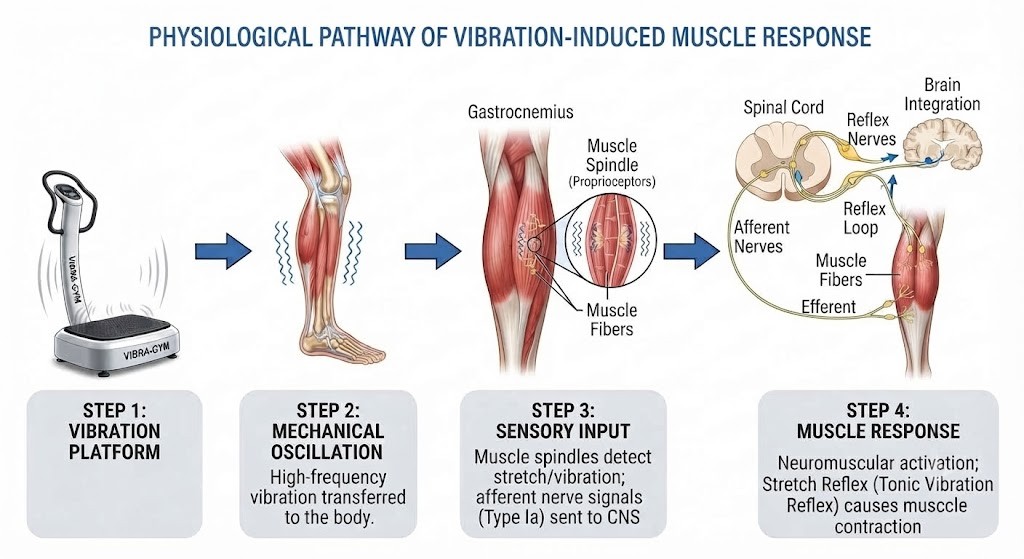
Vibration therapy works by applying repeated mechanical oscillations that can stimulate sensory receptors and muscles. This stimulation may influence muscle activation, perceived stiffness, pain perception, and movement responses.
The exact physiological response depends on several factors, including:
- Vibration frequency
- Vibration amplitude
- Exposure duration
- Body position
- Type of vibration device
- Muscle activity
- Individual response
Mechanical vibration creates rapid changes in muscle-tendon and sensory input. For example, standing on a vibrating platform exposes the lower limbs to repeated mechanical movement.
Vibration can also produce neuromuscular stimulation. The body responds to mechanical input through sensory and motor pathways, which is one reason whole-body vibration has been investigated for strength, balance, and functional performance.
How Does Vibration Affect Muscle Stiffness?
Vibration may temporarily change how a muscle feels and moves by influencing sensory input, muscle activity, and pain perception. As a result, some people may perceive tight muscles as more relaxed after a short session.
For example, a runner may experience less perceived stiffness during ankle or knee movement after using a vibration roller around the surrounding muscles.
However, temporary improvements in mobility or perceived tightness should not automatically be interpreted as tissue healing. Feeling less tight is different from repairing an injury.
How Does Vibration Affect Range of Motion?
Vibration may improve short-term range of motion, particularly when incorporated into vibrating foam rolling. However, results vary depending on the intervention and population.
A systematic review and meta-analysis of eight studies involving 230 healthy participants found that vibration foam rolling produced greater range-of-motion improvements than conventional foam rolling, with the strongest evidence observed around the hip and knee. — Source: PubMed, 2021
What Are the Benefits of Vibration Therapy After a Workout?
Potential Vibration Therapy for Recovery benefits include reduced perceived soreness, temporary improvements in range of motion, muscle relaxation, and a subjective feeling of improved recovery.
However, evidence strength differs between outcomes. Vibration should therefore be viewed as a complementary recovery strategy rather than a guaranteed recovery accelerator.
| Potential outcome | What research suggests | Practical interpretation |
|---|---|---|
| Muscle soreness | May decrease perceived DOMS | Potentially useful for comfort |
| Flexibility | May temporarily increase ROM | Useful before mobility work |
| Muscle relaxation | Some people report reduced tightness | May complement recovery sessions |
| Performance recovery | Findings vary | Do not assume faster full recovery |
| Circulation | Physiological changes are possible | Avoid exaggerated circulation claims |
| Muscle damage | Biomarker findings are inconsistent | Not a proven healing treatment |
Can Vibration Therapy Help With DOMS?
Vibration therapy can help reduce perceived DOMS in some circumstances, but it does not consistently outperform other established recovery methods.
A 2022 meta-analysis reported improvements in subjective pain and pain tolerance while also identifying substantial heterogeneity across studies. — Source: BMC Sports Science, Medicine and Rehabilitation, 2022
One study found that vibration treatment reduced DOMS and improved range-of-motion recovery after strenuous eccentric exercise. However, it did not significantly improve muscle-strength recovery or creatine kinase levels. — Source: PubMed, 2011
Can Vibration Therapy Improve Flexibility?
Vibration therapy may temporarily improve flexibility or joint range of motion, particularly when vibration is incorporated into foam rolling or mobility work.
This may be useful when the goal is easier movement rather than treatment of an injury.
Vibrating foam rolling has demonstrated short-term range-of-motion improvements in healthy adults, although the evidence base includes relatively small studies and differing protocols. — Source: PubMed, 2021
Can Vibration Therapy Relax Tight Muscles?
Vibration therapy may make tight muscles feel more relaxed by altering sensory input and perceived stiffness. This can be particularly useful when a short vibration session is followed by gentle mobility work.
The goal should be comfortable movement, not aggressive pressure or pain. Higher intensity does not automatically mean greater recovery benefits.
What Are the Different Types of Vibration Therapy?
The main types of vibration therapy include:
- Whole-body vibration platforms
- Vibration massage devices
- Vibrating foam rollers
- Localized vibration tools
Each method delivers mechanical vibration differently and may therefore be suited to different recovery goals.
Whole-Body Vibration Platforms
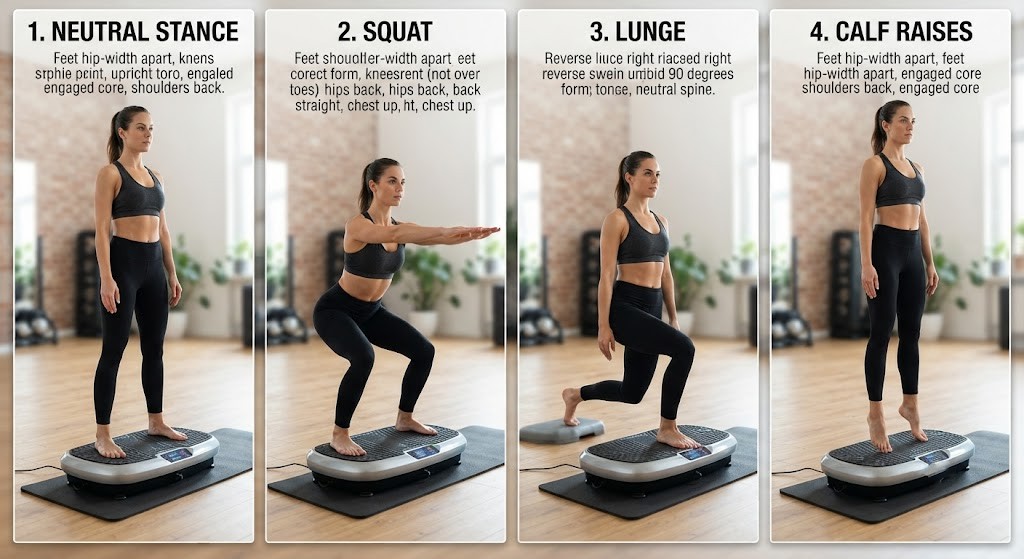
Whole-body vibration platforms deliver vibration through a platform on which you stand, sit, or perform selected exercises.
These machines are commonly used for exercise, conditioning, balance, and rehabilitation applications.
For example, a person may stand with slightly bent knees on a platform for a short session after training rather than performing another strenuous exercise.
Whole-body vibration provides a broad mechanical stimulus rather than a targeted massage technique. Device settings and body position can substantially influence the experience.
Vibration Massage Devices
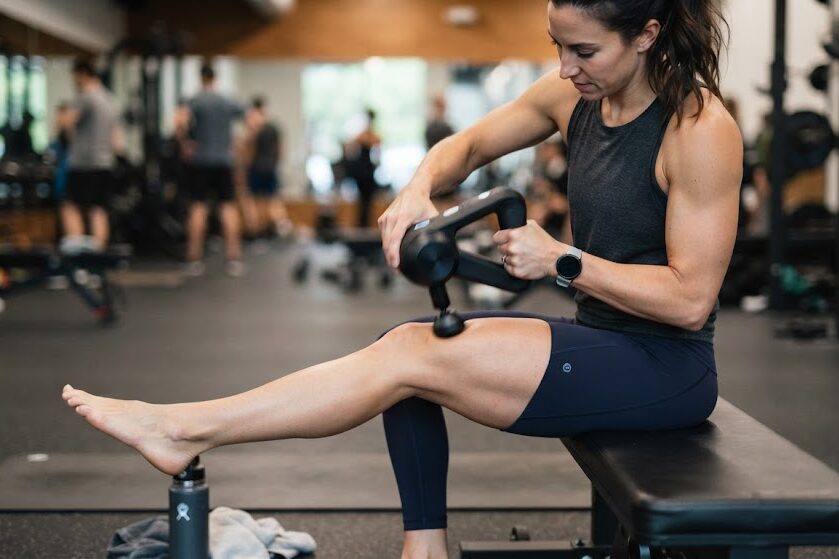
Vibration massage devices apply mechanical movement directly to selected body areas. Some products combine vibration with percussion, making them different from simple vibration-only devices.
An athlete might use one around the:
- Quadriceps
- Hamstrings
- Calves
- Glutes
- Shoulders
Vibrating Foam Rollers
Vibrating foam rollers combine traditional rolling pressure with mechanical vibration.
This approach may be useful when your recovery goal involves both self-myofascial work and temporary changes in mobility.
For example, a runner may use a vibrating roller over the thighs and calves before performing mobility exercises.
Localized Vibration Tools
Localized vibration tools are designed to deliver mechanical vibration to a smaller area.
They can be useful when you want to focus on one muscle group instead of exposing the entire body to vibration.
For example, someone focusing on calf recovery can apply a localized device around the surrounding muscle tissue rather than using a whole-body platform.
How Long Should You Use Vibration Therapy for Recovery?
There is no single universally established recovery duration that applies to every vibration device, frequency, intensity, and person.
The safest practical starting point is to follow the manufacturer’s instructions and begin with the lowest comfortable setting before gradually adjusting exposure when appropriate.
Device protocols vary considerably. A vibrating roller, handheld device, and whole-body vibration platform do not deliver identical mechanical stimulation.
Short exposure can also help you determine how your body responds. A beginner can start with a brief, low-intensity session instead of immediately using the highest setting for an extended period.
A Conservative Beginner Approach
- Start with the lowest comfortable intensity.
- Use a short exposure according to the device instructions.
- Avoid forcing painful areas.
- Assess how you feel during and after the session.
- Increase duration or intensity only if the device instructions permit it and your body responds comfortably.
More vibration is not automatically better recovery. Excessive exposure can create discomfort and may be counterproductive.
When Should You Use Vibration Therapy After a Workout?
Vibration therapy can be used after training when your goal is to complement recovery with temporary muscle relaxation or mobility support.
It can also be incorporated into a broader recovery session rather than treated as a standalone treatment.
For example, a simple post-workout sequence could include:
- Easy cooldown movement
- Hydration and a suitable meal
- Brief vibration therapy
- Gentle mobility exercises
- Normal daily activity
- Adequate sleep
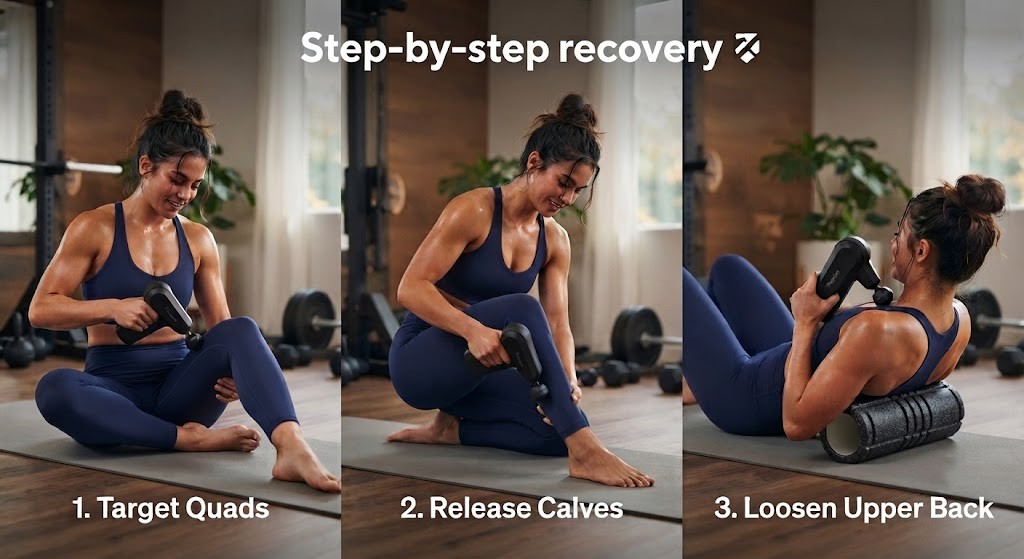
Post-workout vibration therapy should be treated as a complementary recovery method rather than a replacement for sleep, adequate nutrition, hydration, appropriate training, or medical treatment when necessary.
Which Vibration Therapy Tools Can You Use at Home?
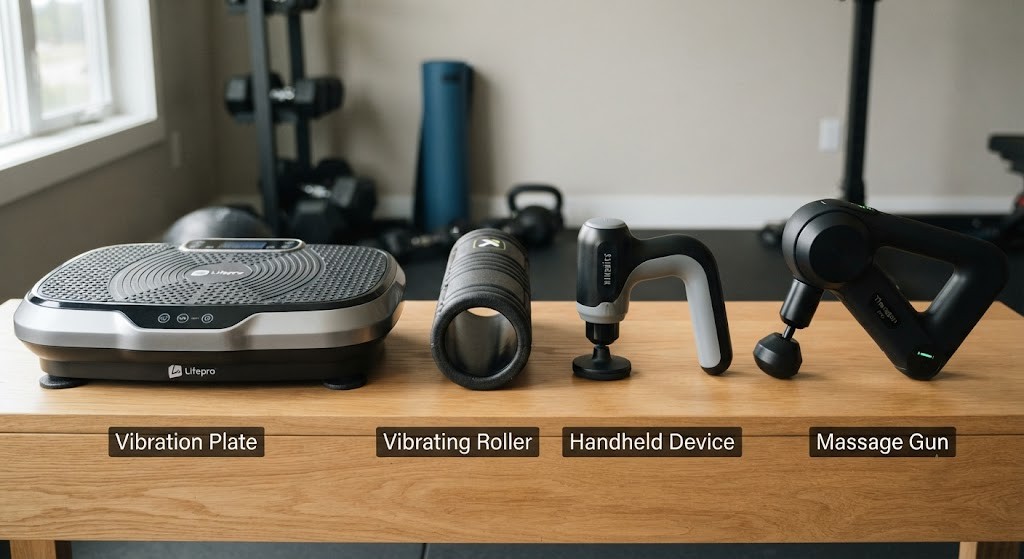
Common at-home vibration therapy tools include vibration plates, vibrating foam rollers, handheld vibration devices, and massage guns that combine vibration or percussion.
The most suitable option depends on whether you want whole-body stimulation or targeted application.
| Tool | Main application | Best suited to |
|---|---|---|
| Vibration plate | Whole-body vibration | General conditioning and recovery |
| Vibrating roller | Rolling plus vibration | Legs, hips, mobility work |
| Handheld vibration device | Localized vibration | Specific muscle areas |
| Massage gun | Percussion and mechanical stimulation | Targeted muscle work |
| Manual foam roller | Pressure and rolling | Low-cost self-myofascial work |
How Do You Choose a Vibration Recovery Tool?
The right vibration recovery tool depends on your goal, available space, budget, and comfort rather than on one universally superior device.
A large platform may make sense for whole-body applications, while a handheld device can be more practical for targeted muscle work.
For example, someone who travels frequently may prefer a compact localized tool, whereas someone who regularly trains at home may have enough space for a vibration platform.
Choose the tool according to the recovery task, not simply the number of vibration settings.
Are Free or Low-Cost Alternatives Available?
You do not need a specialized vibration device to build an effective recovery routine.
Traditional recovery techniques can provide useful alternatives, including:
- Walking
- Controlled mobility exercises
- Stretching
- Conventional foam rolling
- Appropriate rest
- Adequate sleep
- Hydration and nutrition
For example, a short walk followed by gentle mobility and conventional foam rolling can create a practical recovery session without purchasing specialized equipment.
Is Vibration Therapy Safe for Everyone?
Vibration therapy is not appropriate for everyone. People with certain medical conditions, recent injuries or surgery, implanted medical devices, or other health concerns should consult a qualified healthcare professional before using it.
Safety also depends on the specific device, its settings, and how it is applied.
Medical conditions can change the risk profile of vibration exposure. People with significant cardiovascular conditions, recent surgery, acute injuries, or other relevant conditions should seek individualized medical advice before using vibration therapy.
For example, someone recovering from surgery should not assume that a consumer vibration device is safe simply because it is marketed for fitness recovery.
When Should You Avoid Vibration Therapy?
You should avoid or modify vibration therapy when it causes pain, worsens symptoms, or conflicts with medical restrictions.
Professional guidance is particularly important if you have:
- Recent surgery or significant injury
- Acute pain, swelling, or unexplained symptoms
- Pregnancy
- Certain cardiovascular conditions
- Implanted medical devices or other medical considerations
- Conditions affecting balance, sensation, or neurological function
- Any situation where a healthcare professional has restricted exercise or mechanical loading
Vibration therapy should never be used to push through unexplained or worsening pain. A recovery tool cannot replace assessment of a potentially significant injury.
What Symptoms Mean You Should Stop?
Stop vibration therapy if you experience:
- Sharp pain
- Dizziness
- Unusual shortness of breath
- Significant numbness
- Worsening symptoms
- Another concerning or unusual response
Persistent or severe symptoms warrant evaluation by an appropriate healthcare professional.
Mild awareness of mechanical vibration is different from sharp pain or neurological symptoms.
Comfort is an important practical limit when using consumer vibration devices.
How Can You Add Vibration Therapy to a Post-Workout Recovery Routine?
A practical Vibration Therapy for Recovery routine combines brief, comfortable vibration exposure with established recovery habits rather than relying on vibration alone.
Beginners can start with low intensity, monitor their response, and gradually develop a routine that fits their training schedule.
Beginner Post-Workout Vibration Routine
Step 1: Cool down.
First, spend several minutes moving gently after demanding exercise. For example, walk slowly after a hard leg workout rather than stopping abruptly.
Step 2: Hydrate and refuel.
Next, drink fluids according to your needs and consume a balanced meal or snack that supports your overall nutrition.
high protein diet for muscle recovery
Step 3: Use vibration conservatively.
Apply the vibration device according to its instructions at a comfortable setting. Avoid aggressive pressure over painful areas.
Step 4: Add mobility.
Perform controlled mobility exercises through a comfortable range of motion after the vibration session.
Step 5: Recover normally.
Finally, prioritize normal sleep, nutrition, hydration, and appropriate training-load management.
How Can You Combine Vibration With Stretching?
Vibration therapy can be paired with gentle stretching when the goal is to improve comfortable movement rather than force flexibility.
A short vibration session may be followed by controlled static or dynamic mobility work.
For example, you could use a vibrating roller around the thighs before performing a gentle quadriceps stretch.
Vibration and stretching can complement each other without either being mandatory for recovery.
How Can You Track Whether It Helps?
The simplest way to evaluate vibration therapy is to track subjective soreness, stiffness, mobility, and training performance over several sessions.
A consistent record can help determine whether the technique provides a meaningful personal benefit.
For example, record soreness from 0–10, note your range of motion, and record how your next training session feels.
A useful recovery log can include:
- Soreness level
- Muscle stiffness
- Perceived recovery
- Mobility
- Training performance
- Sleep quality
- Vibration duration and intensity
Personal response matters because recovery effects can vary substantially between individuals and protocols.
What Does the Research Say About Vibration Therapy for Recovery?
Research suggests that vibration therapy may influence soreness and range of motion, but evidence remains mixed regarding broader claims about faster recovery.
Studies differ in several important ways, including:
- Vibration frequency
- Vibration amplitude
- Duration
- Device type
- Exercise protocol
- Participant characteristics
- Recovery outcome being measured
A 2022 meta-analysis reported beneficial effects on subjective DOMS pain but acknowledged high statistical heterogeneity and low evidence certainty. — Source: BMC Sports Science, Medicine and Rehabilitation, 2022
At the same time, a 2025 study in experienced runners found no clear superiority of vibrating rolling over non-vibrating rolling or static stretching across several short-term recovery measures. — Source: PubMed, 2025
What Does the Evidence Actually Tell Us?
The research supports a nuanced interpretation:
- Vibration may reduce perceived muscle soreness in some circumstances.
- Vibration may temporarily improve range of motion.
- Some people may experience reduced perceived stiffness or muscle tightness.
- Results differ substantially between devices and protocols.
- Vibration has not been established as a guaranteed way to accelerate complete muscle repair.
- Reduced soreness does not necessarily mean faster biological recovery.
- More research is needed to determine which protocols are most useful for specific populations and recovery goals.
The current evidence supports cautious use rather than sweeping claims about accelerated recovery.
How Should You Start Using Vibration Therapy for Recovery?
The most practical approach is to treat vibration therapy as an experiment within your existing recovery routine rather than as a replacement for established recovery fundamentals.
Start conservatively, monitor your response, and adjust only when the device instructions and your symptoms allow.
A Simple Vibration Recovery Checklist
Before using vibration therapy, ask yourself:
- What is my primary recovery goal?
- Am I targeting a specific muscle or the whole body?
- Is the device appropriate for that goal?
- Am I following the manufacturer’s instructions?
- Am I starting at a comfortable intensity?
- Do I have any medical reason to seek professional guidance first?
- Am I still prioritizing sleep, nutrition, hydration, and sensible training?
If the goal is temporary muscle relaxation or localized mobility, a localized vibration tool may be appropriate. If the goal involves whole-body vibration, a vibration platform may be more suitable.
WHO emphasizes that physical activity should be appropriate to individual ability and that people with certain health circumstances may require additional precautions. — Source: World Health Organization, 2024
Conclusion
Vibration Therapy for Recovery uses controlled mechanical vibration to stimulate muscles and other tissues. It may help with perceived soreness, mobility, flexibility, or muscle relaxation in some situations, but research findings vary considerably.
The distinction between feeling less sore and actually recovering faster is especially important. Vibration therapy may improve how you feel or move temporarily without necessarily accelerating complete muscle repair.
The most useful approach is therefore to place vibration therapy inside a broader recovery strategy. Adequate sleep, appropriate nutrition, hydration, sensible training progression, active recovery, and appropriate medical care remain important foundations.
For example, if vibration therapy makes your legs feel more comfortable before mobility work, it may be a useful addition to your routine without replacing those fundamentals.
FAQs
What is vibration therapy for recovery?
It uses controlled vibrations to stimulate muscles and may support soreness, stiffness, and mobility.
Does vibration therapy help muscle soreness?
It may reduce perceived muscle soreness after exercise, although results vary.
How can I improve my muscle recovery after a workout?
Prioritize sleep, hydration, protein, balanced nutrition, rest, and light activity.
Does vibration help muscle recovery?
It may support muscle relaxation, soreness, and short-term mobility after exercise.
Are vibrations good for healing?
They may affect muscle and sensory responses, but they are not a proven treatment for injuries.
What do 10 minutes on a vibration plate do for your body?
It exposes your muscles to mechanical vibrations that may stimulate muscle activity and mobility.
Can vibration therapy improve range of motion?
It may temporarily improve range of motion, depending on the method and individual.
Is whole-body vibration the same as localized vibration therapy?
No. Whole-body vibration uses a platform, while localized vibration targets a specific area.
How long should you use vibration therapy for recovery?
Start with short sessions at a comfortable intensity and follow the device instructions.
Can you use vibration therapy after a workout?
Yes, it can be included as part of a broader post-workout recovery routine.
Is vibration therapy safe for everyone?
No. Certain medical conditions, injuries, pregnancy, or implanted devices may require medical guidance.
Can vibration therapy heal an injury?
No. It should not replace proper medical evaluation or injury treatment.
Can vibration therapy replace stretching?
No. Vibration and stretching can complement each other but have different purposes.
What is the best vibration therapy tool for recovery?
It depends on your goal, with platforms for whole-body use and rollers or handheld devices for targeted areas.
Can vibration therapy improve circulation?
It may influence local blood-flow responses, but strong circulation claims should be treated cautiously.
Should vibration therapy hurt?
No. Stop if you experience pain, dizziness, numbness, or worsening symptoms.